Wondering how to keep your aluminium fence looking new for more than a decade?
The secret is simple — give it a little care from time to time. By washing away dirt, checking for loose parts, and protecting the surface from sunlight and moisture, you can easily extend your fence’s lifespan well beyond ten years.
In this complete aluminium fence maintenance guide, you’ll learn practical steps for cleaning, protecting, and preserving your fence. Whether you’re in Melbourne’s changing climate or near the salty coast, following the right cleaning and protection routine will dramatically extend your aluminium fence lifespan.
Why Aluminium Fences Last So Long

Many homeowners choose aluminium because it’s built to last. Unlike steel or iron, aluminium fences don’t rust, rot, or warp. But what exactly makes them so durable? Let’s look at the three biggest factors.
Natural corrosion resistance
Aluminium is naturally resistant to corrosion because it forms a protective oxide layer that prevents rust. This property makes it ideal for outdoor use, particularly in humid or rainy climates. Even without paint, aluminium offers strong weatherproof fencing performance — but when coated, that protection increases exponentially.
The oxide layer regenerates itself if scratched, helping the metal “self-heal” from minor surface wear. That’s why aluminium fence durability is considered superior to most other metal fences, even in challenging Australian weather.
Powder-coated protection
Most modern fences come with a powder-coated finish, which adds a smooth, attractive surface that resists scratches and fading. This coating also shields the aluminium underneath from UV rays, moisture, and chemicals — further enhancing aluminium fence lifespan.
Powder-coated finishes are more eco-friendly than traditional paints, contain no solvents, and require minimal upkeep — ideal for low-maintenance fencing around Melbourne homes.
Low-maintenance design
Aluminium fencing doesn’t absorb moisture or suffer from termites, rot, or corrosion like timber or steel. You won’t need to sand, stain, or repaint it every few years. A quick clean, a visual check, and an occasional touch-up are all that’s needed to keep it looking fresh for decades.
When properly installed and maintained, an aluminium fence can easily last 20–30 years, making it one of the most cost-effective and weatherproof fencing solutions available in Australia.
Why Aluminium Fence Maintenance Still Matters?
-
Even though aluminium doesn’t rust, it can oxidise (white chalky layer), the finish can wear, hardware may corrode, posts can shift, and gates may misalign.
-
The coating and finish are your first line of defence: damage to paint or powder-coat means the raw aluminium or fasteners may face accelerated wear.
-
Your climate (especially coastal salt air, high UV, storms) and installation quality both affect lifespan. A good maintenance schedule ensures you catch issues early.
-
As one guide from Perth says: “With proper care … aluminium and composite [fences] 20 to 30 years. Actual life depends on … ongoing maintenance.”
So yes — you bought the “low maintenance” option, but you still need to maintain your aluminium fence. Let’s dive into the practicalities.
Regular Cleaning & Upkeep Routine

Cleaning your aluminium fence is the simplest and most important step in extending its lifespan. Dust, salt, and pollution can build up over time, dulling the surface and weakening the coating.
How often should you clean an aluminium fence?
For most Melbourne homeowners, cleaning once or twice a year is enough. However, if you live near the coast or in a high-pollution area, clean every 3–6 months to remove salt and grime.
A simple garden hose rinse removes surface dust, while a soft cloth and mild soap handle deeper cleaning. If you notice white chalky residue (oxidation), increase your cleaning frequency and add a protective wax afterwards.
Best cleaning products for aluminium fencing
Use mild, eco-friendly soap (like dishwashing liquid) mixed with warm water. Combine this with a soft sponge or microfiber cloth for gentle cleaning. For heavier build-up or mildew, a 50/50 mix of water and white vinegar works wonders.
Avoid harsh degreasers or bleach, which can damage the powder coating. After washing, rinse thoroughly with clean water and let it dry naturally.
This kind of cleaning aluminium fence routine helps prevent premature wear and maintains that polished, showroom finish.
Avoid harsh chemicals or abrasives
One of the most common maintenance mistakes is using pressure washers, steel wool, or acid-based cleaners. These can scratch or weaken the powder-coat finish, leaving the aluminium vulnerable to corrosion.
Stick to gentle hand washing. If you need more pressure, use a low-setting hose sprayer — not a high-pressure washer. Simple consistency beats aggressive cleaning every time when it comes to powder-coated aluminium maintenance.
How to clean and maintain aluminium fence for long life
-
Start with a gentle rinse using a garden hose to remove surface debris, dust and salt (especially for coastal homes).
-
Use a soft sponge or cloth with warm water and mild dish soap to clean surfaces. Avoid abrasive scrubbers, steel wool or harsh chemicals.
-
For more stubborn organic stains (e.g., mould, algae) consider a mix of equal parts water and vinegar, applied gently.
-
Rinse thoroughly after cleaning so no soap residue is left behind. Residue can attract dirt or degrade the finish.
-
Frequency: For many homes, a good clean every 12-18 months suffices. But if you’re in a harsh environment (coastal salt, heavy vegetation, industrial area) you may want to clean every 6-12 months or more.
Protecting the Coating and Finish

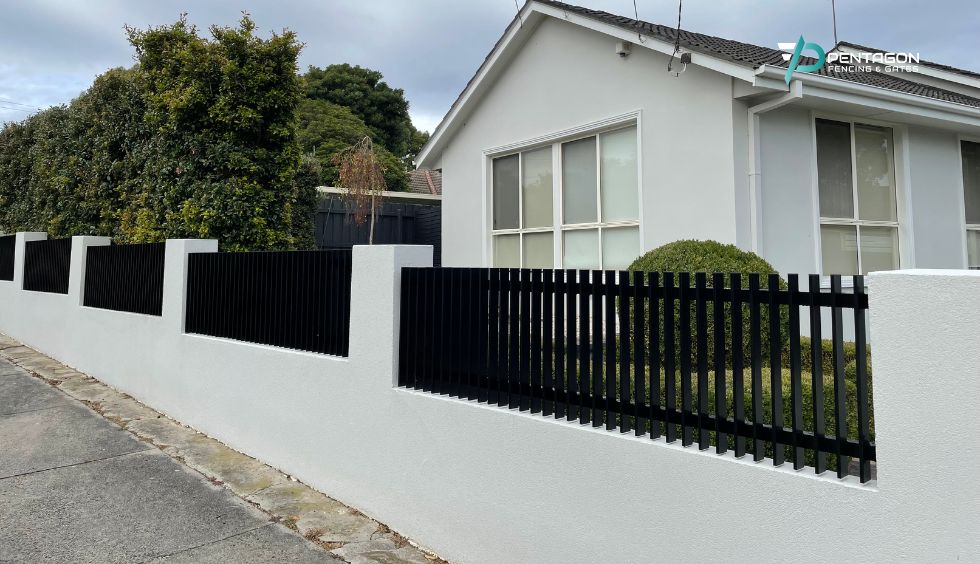
Pentagon’s recently completed front fencing project
The powder coating is your fence’s armour — keeping it glossy, coloured, and corrosion-free. Protecting it properly is key to maintaining your fence’s value and appearance.
Best way to maintain powder-coated aluminium fencing
-
Powder-coated finishes provide strong protection but are vulnerable to scratches, dents or chips. Clean gently so you don’t damage the coating.
-
After cleaning, you may apply a protective wax or sealant (especially for high-UV zones) to prolong the finish and prevent fading. One blog suggests “waxing is simple yet it does wonders … protects the finish from wear and tear.”
-
If you notice any chips: clean the area, lightly sand any rough edges, apply matching exterior paint or finish (for minor patches) to prevent finish failure.
Caring for powder-coated fences
Wipe the fence down after heavy rain or storms to remove residue. Once or twice a year, apply a thin layer of automotive wax or metal protectant — this adds a UV-resistant barrier and makes future cleaning easier.
Inspect your fence regularly for chips or scratches. Small imperfections can be touched up using colour-matched spray paint or enamel to prevent moisture from seeping underneath the coating.
This simple step in powder-coated finish care keeps your fence smooth, shiny, and weather-ready.
Repainting or re-coating aluminium fences
Most aluminium fences will never need a full repaint, but if yours shows signs of fading or chalking, you can rejuvenate it. Lightly sand the affected area, clean it, and apply a thin coat of exterior metal paint compatible with powder coatings.
If the fence is older (15+ years), professional re-coating is an option. This process removes the old layer and applies a new powder finish, restoring UV protection and vibrancy. Regular re-coating aluminium every 15–20 years can easily double your fence’s effective lifespan.
Preventing colour fading and UV damage
Australian sun is strong, and Melbourne summers can be harsh on coloured fences. To combat fading:
-
Choose UV-stabilised coatings at installation.
-
Clean regularly to remove dust that amplifies heat.
-
Use car-grade wax with UV inhibitors once or twice a year.
These steps strengthen UV protection for outdoor metals and keep dark-coloured fences from dulling prematurely.
Specific Maintenance Considerations for Australian Conditions

Working down to specifics: living in Australia (and particularly if you’re in Melbourne or a coastal region) means you’ll face unique challenges. Let’s talk about those.
How long do aluminium fences last in Australia
-
As mentioned earlier: with good installation and care, aluminium fences in Australia can reasonably last 20-30 years or more, even up to 50 years in the best conditions.
-
But that assumes you follow the maintenance regime: regular cleaning, inspection, prompt repairs, keeping vegetation and soil away from bases.
-
For example, one WA-based fence maintenance site states aluminium systems can perform well “with regular inspections, light cleaning and prompt repairs”.
Aluminium fence care tips for coastal homes
Living near the ocean means salt, moisture, and high winds — all enemies of metal. But aluminium’s natural resilience makes it one of the best choices for these environments.
-
Rinse your fence every 3–6 months to remove salt buildup.
-
Avoid using mulch directly under the panels; it traps moisture and accelerates corrosion of hardware.
-
Trim back vegetation to allow air circulation and faster drying.
-
Consider anti-corrosion sprays for hinges and latches.
-
Invest in salt-resistant aluminium fencing hardware rated for marine exposure.
For Melbourne’s coastal suburbs — like St Kilda, Brighton, or Mornington — these habits are essential. Regular rinsing and inspection ensure weatherproof fence maintenance and consistent protection against salty air.
Read more: Top 5 Fence Types for Coastal Areas Like Brighton or Mornington
Aluminium fence rust prevention tips for seaside areas
-
Even though aluminium doesn’t rust in the classic sense, the hardware (hinges, screws, brackets) might if they aren’t specified correctly. Inspect these annually.
-
Use only mild detergents; avoid bleach or acidic cleaners which can damage coatings or accelerate wear.
-
After cleaning, apply a suitable protective finish or wax to inhibit salt build-up and UV degradation.
-
Ensure posts are installed with correct drainage and footing so water doesn’t stand at the base—a common cause of early failure.
Common Problems and Quick Fixes
Even with the best maintenance, small issues may appear. The good news? Most are easy to fix.
Dealing with scratches and chips
Minor scratches are normal and can be repaired with touch-up paint that matches your fence colour.
-
Clean the area.
-
Sand gently if rough.
-
Apply primer if bare aluminium is visible.
-
Finish with a light coat of enamel spray.
For deeper chips or peeling, lightly sand and recoat. Regular attention prevents bigger aluminium fence repair costs later.
Preventing rust in coastal environments
Aluminium doesn’t rust, but the hardware — screws, hinges, and latches — might. Use marine-grade stainless steel components, and lubricate them yearly with silicone spray.
If corrosion starts, remove the rust with fine sandpaper, clean the area, and apply a rust-inhibiting primer. This simple rust prevention habit protects your fence structure in coastal settings.
Fixing loose posts or panels
Loose posts are often caused by soil movement, moisture, or insufficient footing. Tighten bolts or screws regularly and re-secure posts with new concrete if needed.
Check panel connections — if one becomes wobbly, add reinforcement brackets or reattach with fresh fixings. Keeping everything stable ensures structural integrity and long-term coastal fence maintenance reliability.
DIY vs Professional Maintenance

Deciding whether to maintain your fence yourself or call in experts depends on time, tools, and comfort level.
DIY aluminium fence cleaning
DIY is perfect for most homeowners — just follow your regular wash and inspection schedule. Basic materials like soft sponges, soap, and hose water are all you need.
Keep a maintenance checklist to remind yourself of seasonal tasks: cleaning, inspecting hardware, and waxing. These low-effort habits deliver high returns in fence longevity.
Fence maintenance services
If you’re short on time or your fence needs deeper restoration, consider professional fence maintenance services. Many fencing contractors in Melbourne offer deep cleaning, powder-coat touch-ups, and full-service inspections. They use specialised products that enhance shine and protection.
When to hire professionals
Call a pro if you notice:
-
Posts leaning or base movement.
-
Large areas of chalking or peeling paint.
-
Corroded hinges or sagging gates.
-
Structural instability after storms.
Professional inspections every few years can catch small problems before they become expensive replacements.
DIY Aluminium Fence Maintenance Checklist
Here’s a practical checklist you can print or follow annually (or semi-annually) to keep your fence in top shape:
-
Rinse entire fence with hose to remove dust/salt.
-
Wash with mild detergent and soft sponge; rinse thoroughly.
-
Inspect all fixings (screws, bolts, brackets) for signs of rust, loosening or damage. Tighten or replace as needed.
-
Inspect coating/finish: look for scratches, chips, fading or dullness. Touch up where necessary.
-
Inspect posts and panels: check for leaning, shifting, or base issues (especially after heavy rain).
-
Clear vegetation, mulch, leaves from fence base and posts; maintain at least 150–300 mm clearance for airflow.
-
Check gates: ensure smooth swing, no sag, hinges lubricated (silicone spray or outdoor-rated lubricant).
-
In coastal or high salt-air zones: rinse more frequently and check fasteners for corrosion.
-
Document your maintenance (dates, what you did) — this helps for resale value and tracking over time.
-
Every few years (e.g., every 5-10 years) consider a deeper inspection: check post footings, ensure integrity of concrete, look for hidden corrosion in hardware.
FAQs — Aluminium Fence Care & Maintenance
How long will an aluminium fence last with regular maintenance?
With proper care, your aluminium fence can last 20 to 30 years, and even up to 50 years in ideal conditions. Regular cleaning, hardware checks, and powder-coat protection are key to that longevity.
Can I use a pressure washer on aluminium fencing?
It’s best to avoid high-pressure washing. Instead, use a garden hose and soft sponge. If necessary, choose a low-pressure setting and stand at least one metre away to prevent damaging the powder-coat.
Do aluminium fences rust or fade?
Aluminium itself does not rust, but hardware might. As for fading — yes, prolonged sun exposure can dull the colour, but regular cleaning and UV-protective wax help prevent that.
Is it worth repainting an aluminium fence?
In most cases, repainting isn’t needed for 10–15 years. Touch-up small chips as they appear. If large areas fade or peel, professional recoating can restore colour and protect against corrosion.
Conclusion — Keep Your Aluminium Fence Strong for Decades
Aluminium fencing is one of the most reliable and low-maintenance fencing options available — but even the best materials benefit from a little attention.
By following this aluminium fence maintenance guide, you can ensure your fence stays solid, stylish, and rust-free for decades. Clean it gently, protect the powder-coat, fix small issues early, and stay proactive — that’s all it takes to maintain aluminium fence longevity.
If you’re unsure about your fence’s condition or need expert help, book a maintenance check with a local fencing specialist in Melbourne. A quick professional inspection today could add years to your fence’s life — keeping your property safe, attractive, and worry-free for the next generation.