
Table of Contents
If you are choosing a commercial fence designs in Melbourne, the design decision is not just about security. It also changes street presentation, privacy, line-of-sight, maintenance load, noise control, and permit complexity. The best option depends on how the edge of the site is used: public-facing frontage, warehouse perimeter, service yard, loading dock, retail boundary, or high-security plant area.
There is one important local caveat before getting into design ideas. In Victoria, there is no single universal “correct” fence height or material for every site. What counts as a sufficient fence depends on things like land use, privacy and security concerns, and the kinds of fences used in the local area.[1] Building-permit triggers also vary depending on where the fence sits, how tall it is, and whether it is masonry, close to a street, or near an intersection.[2][4] On top of that, planning overlays and heritage controls can add another approval layer in Melbourne.[3]
Where a commercial fence design decision usually goes wrong
A lot of projects choose a commercial fence design by copying what the neighboring site already has. That can work for a back boundary, but it is weak logic for a commercial project. The right question is not “What fence looks familiar?” It is “What does this edge of the site need to do?”
- A warehouse perimeter may prioritize deterrence and visibility.
- A public-facing office or showroom may need a cleaner architectural look.
- A service yard may need screening and durability.
- A site near homes may need noise control, privacy, and after-hours protection.
- A frontage along a public realm may benefit from low or partially transparent fencing.
Key takeaways
- Melbourne commercial fences are usually chosen by use case, not by one universal “best” design.
- Local compliance matters early. In Victoria and metro councils, fence position, height, material, and intersection conditions affect permit requirements.[1][2][4]
- Transparent systems such as tubular steel or welded mesh are often better for frontages that need visibility and surveillance.[3][7]
- Solid systems such as COLORBOND or acoustic walls are useful where privacy, screening, or noise control matter more than visibility.[5][8]
- The most practical commercial shortlist usually includes chain wire, tubular steel, welded mesh or anti-climb, solid steel or slat infill, and acoustic barriers.
1. Chain wire or chain mesh fencing
What it is
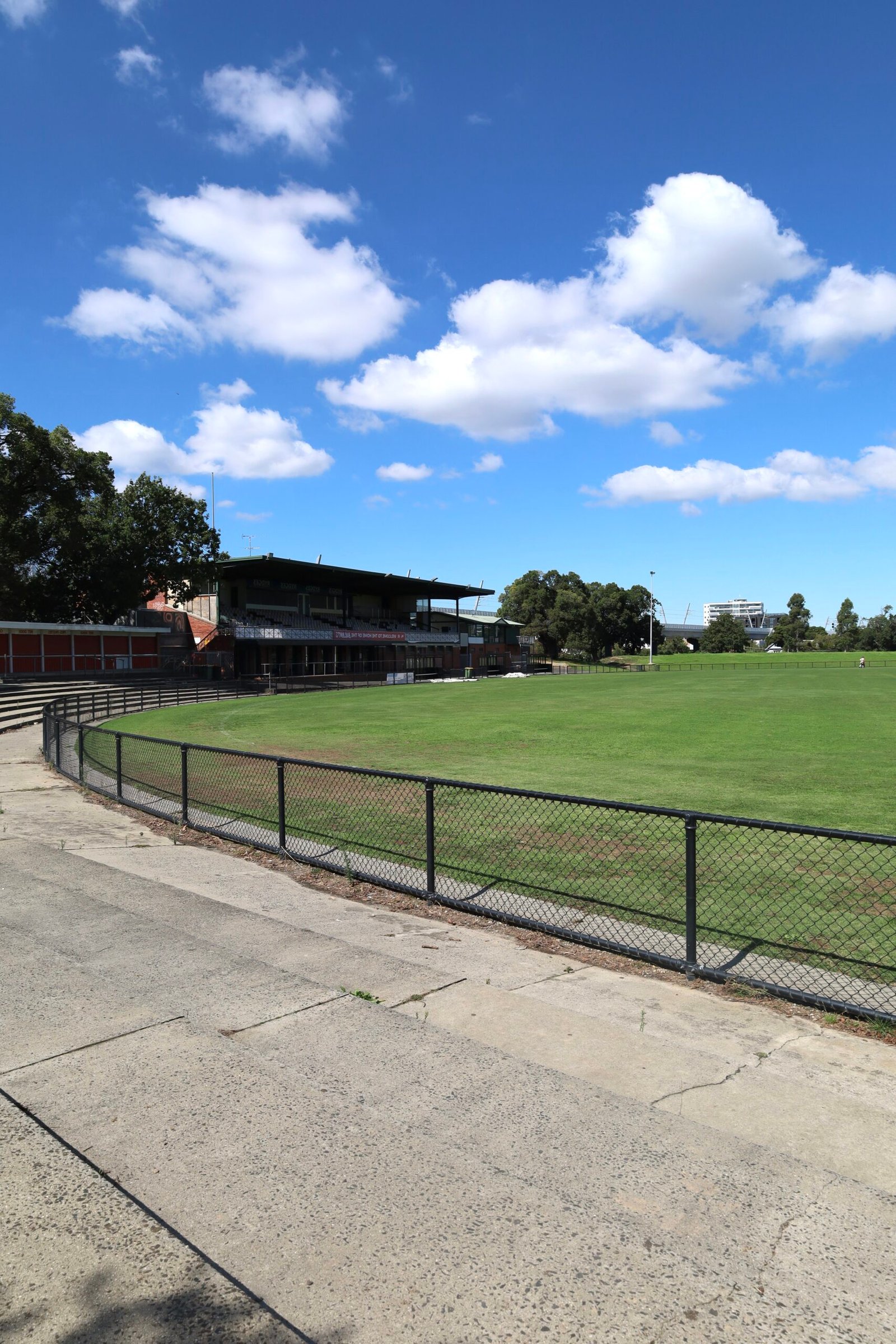
Chain wire is the economical workhorse of commercial fencing. It is usually specified when the site needs a large perimeter enclosed without turning the fence into an architectural feature.
Why teams choose it
- Lower-cost coverage for long runs
- High visibility for surveillance
- Flexible around uneven boundaries and plant zones
- Easy to pair with gates, crash barriers, or internal demarcation
Best project use cases
- Warehouses and logistics yards
- Plant and equipment compounds
- Sporting or utility-adjacent zones
- Temporary or staged commercial works where speed matters
Where it is weaker
It offers less privacy and a lighter visual finish than rigid panel systems. For customer-facing frontages, it can look purely utilitarian unless combined with landscape treatment or architectural framing.
2. Tubular steel or vertical bar fencing
What it is
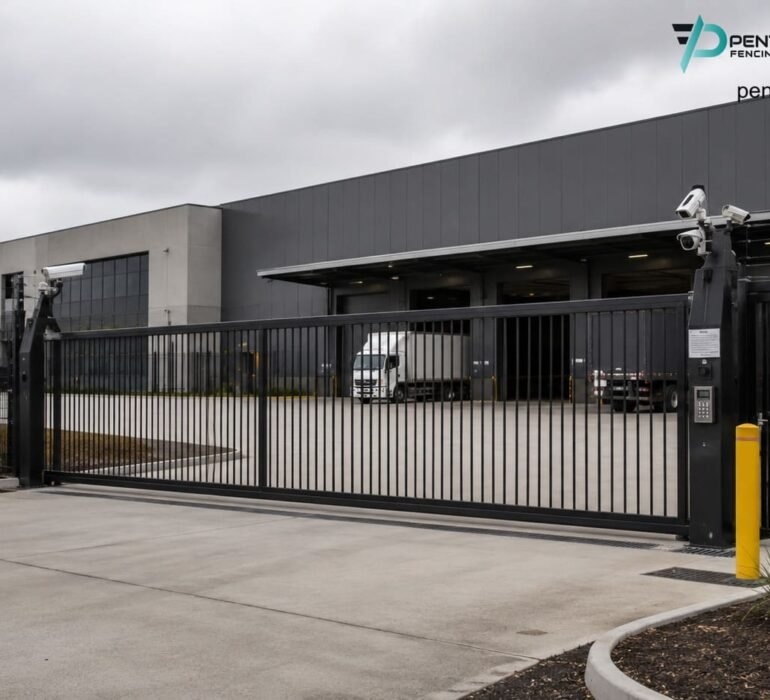
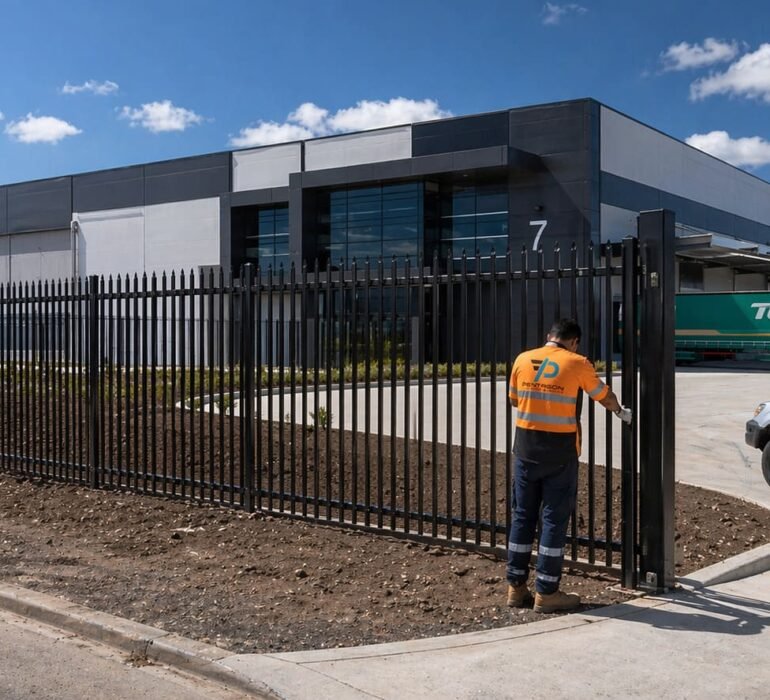
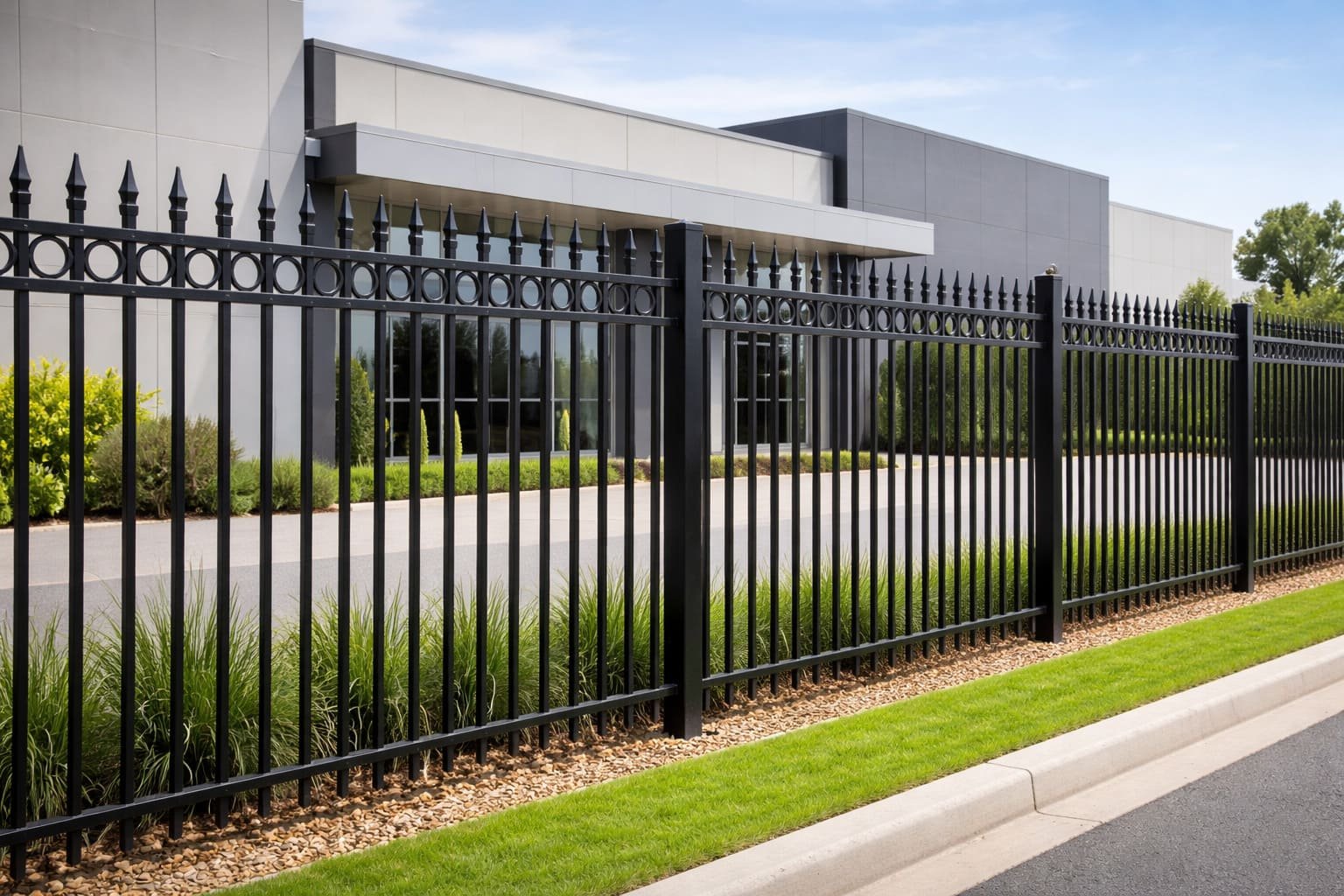
Tubular and vertical-bar systems are common when the site wants a stronger visual standard than chain wire, but still needs clear sightlines. They work well in medium-security environments where surveillance and appearance both matter.
Why teams choose it
Jacksons notes that vertical bar railings provide clear visibility for surveillance and are difficult to climb because of the bar configuration.[7] That combination makes them useful for sites that want deterrence without a heavy, closed-off appearance.
Best project use cases
- Office parks and business parks
- Education and community-facing commercial sites
- Car parks and public-facing boundaries
- Mixed-use projects where the frontage needs to look open and orderly
Where it is weaker
It is not the best choice when you need visual privacy, bin-yard screening, or acoustic performance. It can also be easier to pass items through than very tight mesh systems.
3. Welded mesh and anti-climb mesh
What it is
This is the step up when the project needs visibility plus stronger anti-climb performance. Welded mesh and close-mesh security systems keep the site visually open while making footholds and handholds harder to exploit.
Why teams choose it
Commercial security suppliers position rigid steel and aluminium systems as durable options for commercial properties, and close mesh variants are commonly used when tamper resistance matters more than architectural softness.[6] Mesh systems also preserve camera sightlines better than solid fences.
Best project use cases
- Distribution centres
- Loading docks and service corridors
- Data, utility, or infrastructure-adjacent compounds
- Sites with after-hours access risk
Where it is weaker
It can feel more defensive than tubular fencing on a premium public frontage. If the project is design-led, mesh may need better gate detailing, powder-coat selection, and landscape integration to avoid an industrial feel.
4. Solid steel infill and COLORBOND-style privacy fencing
What it is
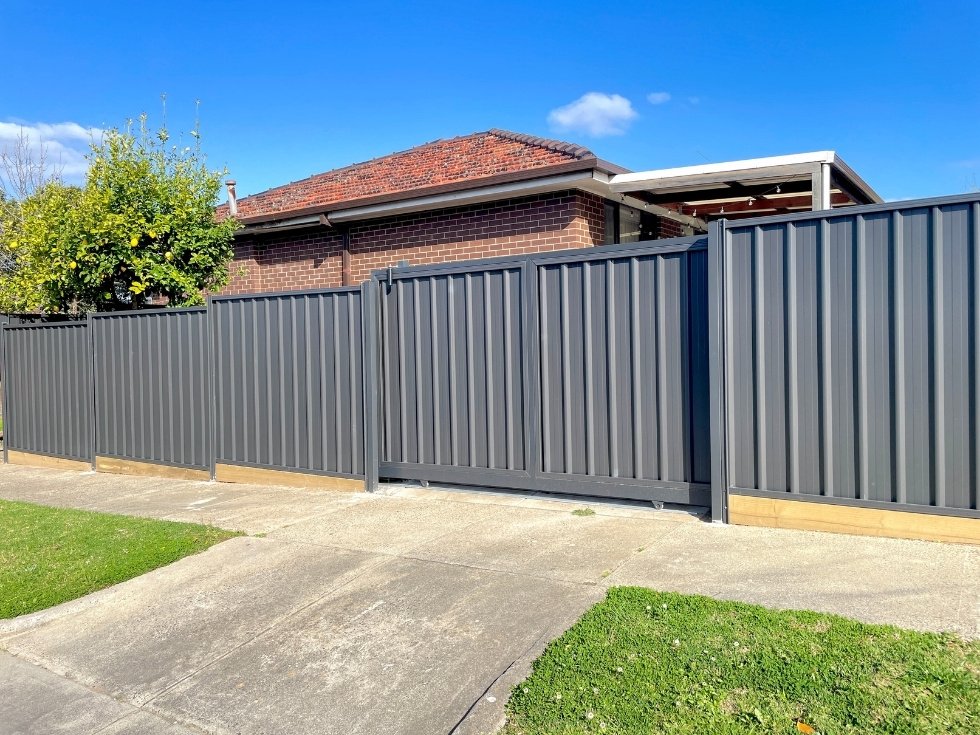
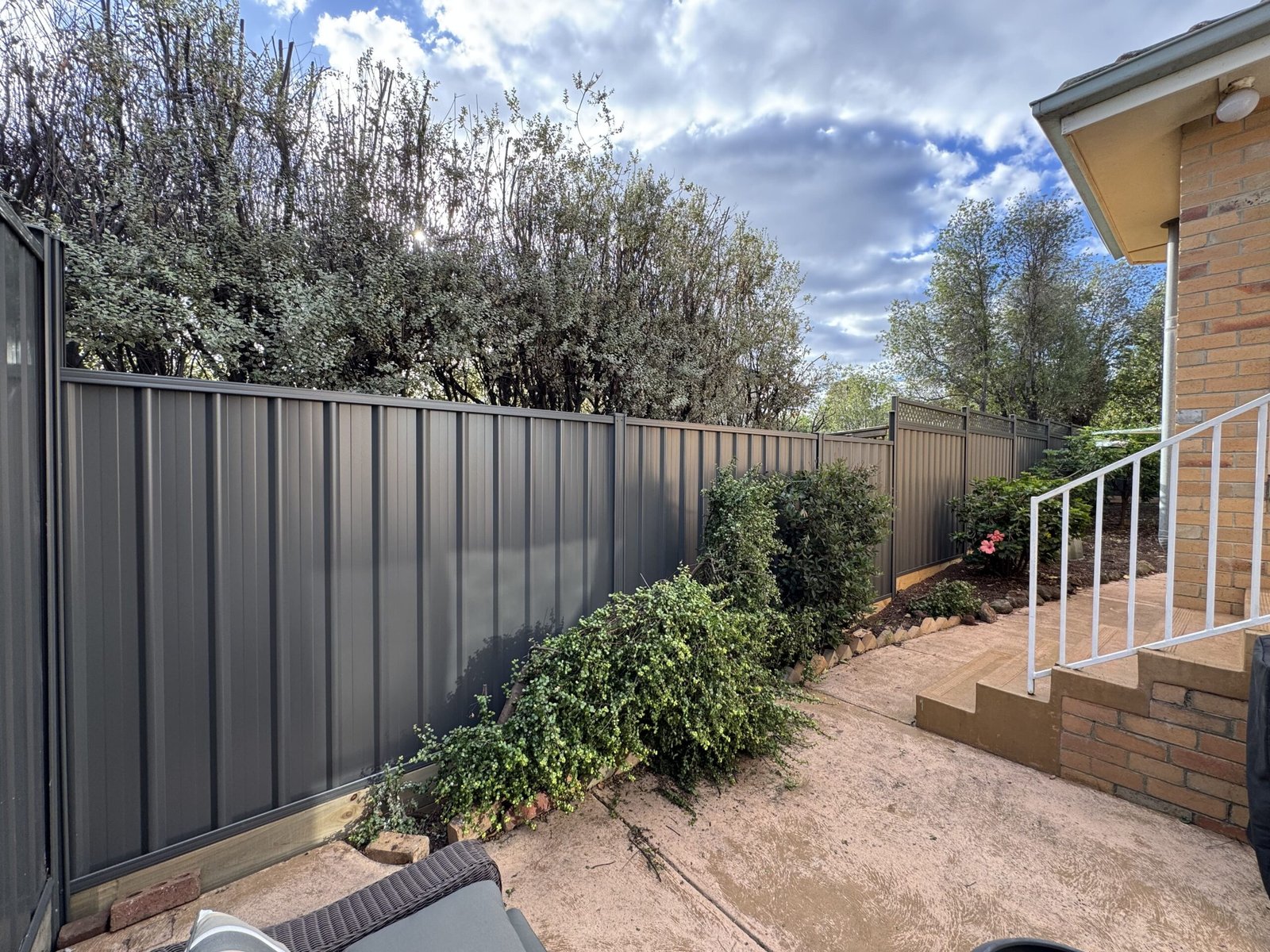
This category is used when privacy, screening, and a clean modern finish are more important than outward visibility. Genuine COLORBOND steel is marketed around durability and testing under Australian conditions, which helps explain why solid steel systems remain a practical option for low-maintenance screening.[5]
Why teams choose it
- Strong privacy and visual screening
- Clean, modern appearance
- Lower maintenance than many timber alternatives
- Useful for service edges, waste zones, and back-of-house boundaries
Best project use cases
- Bin stores and loading or service yards
- Retail or hospitality boundaries with back-of-house areas
- Commercial sites that want plant screening
- Side and rear boundaries where visual permeability is not essential
Where it is weaker
It reduces surveillance and can create a blank edge if used poorly on a public-facing frontage. Planning Victoria’s guidance is a useful reminder that fences along a street or public space often work better when they are low or partially transparent.[3] So a solid screen is usually a better back-of-house move than a default street-front solution.
5. Aluminium slat or architectural infill fencing
What it is
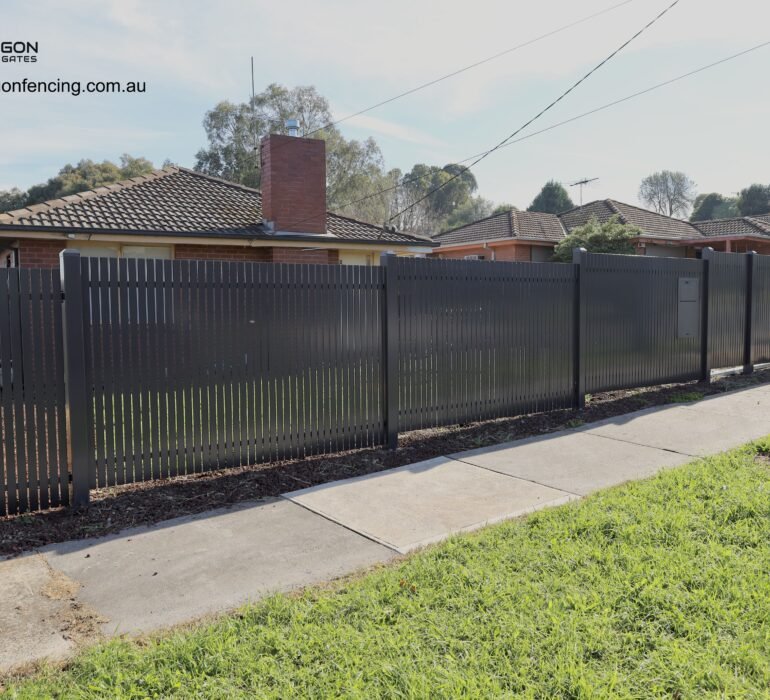
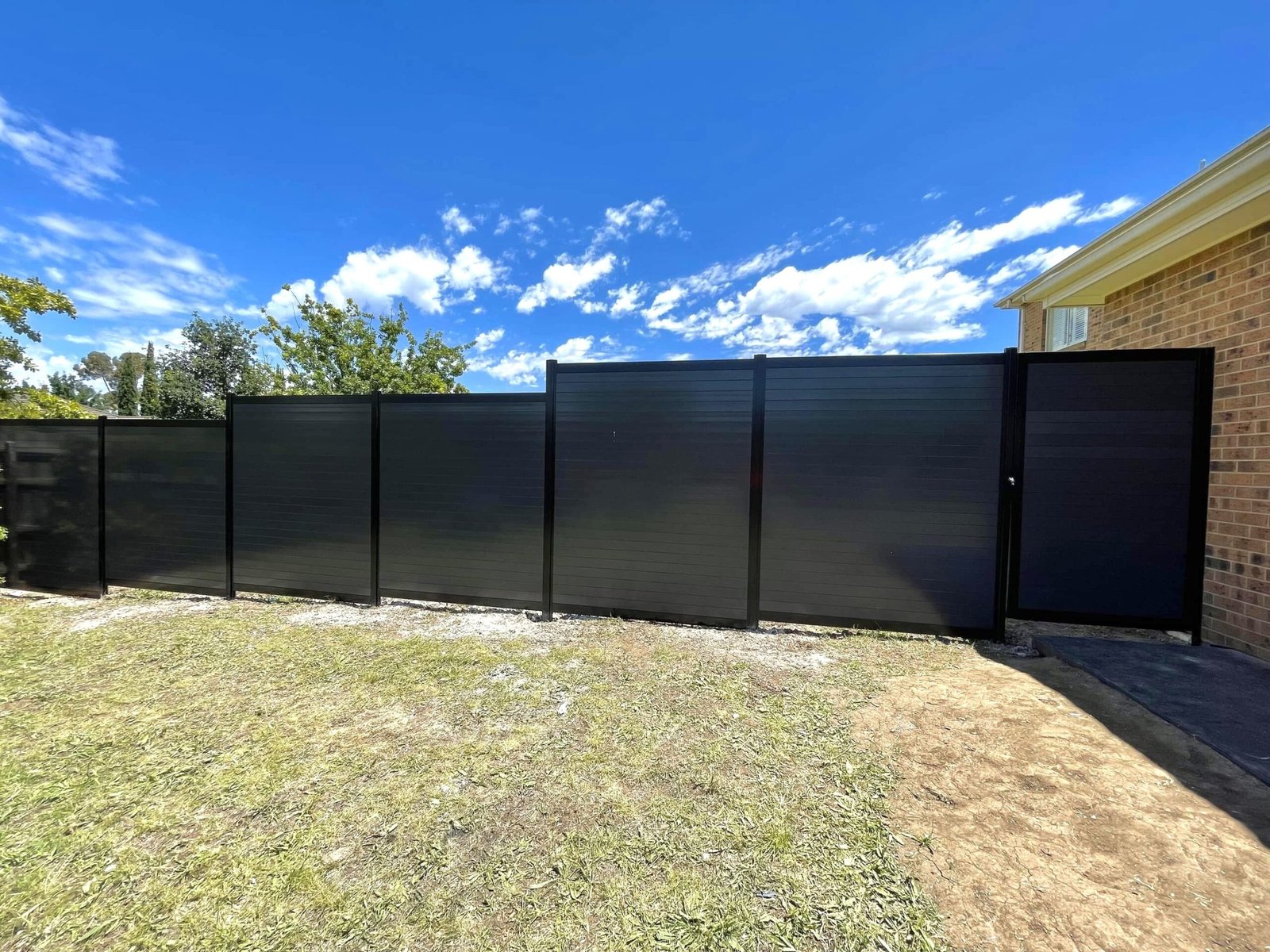
This is the more design-conscious option. Slat and architectural infill systems are often chosen when the fence needs to contribute to brand presentation, not just boundary control.
Why teams choose it
- Cleaner architectural look
- Adjustable balance between privacy and visibility
- Lighter visual feel than heavy solid walls
- Works well with contemporary office, showroom, and mixed-use design language
Best project use cases
- Showrooms
- Business parks
- Medical or professional office sites
- Premium mixed-use commercial edges
Where it is weaker
It is usually not the first choice for high-risk perimeters where anti-climb performance is the priority. It can also cost more than basic chain wire or standard tubular systems depending on the profile and finish.
6. Acoustic fences and noise walls
What it is
Acoustic fencing is the specialist option when the edge of the site is doing two jobs: security and noise control. This matters for drive-thru sites, service yards, HVAC zones, loading docks, and commercial properties that back onto residential uses.
Why teams choose it
ModularWalls positions acoustic fences and noise barriers as tested systems that can reduce noise, with product ranges used across residential, commercial, industrial, and civil applications.[8] That does not mean every acoustic wall performs the same, but it does show why this category is relevant when a normal perimeter fence is not enough.
Best project use cases
- Hospitality drive-thru lanes
- Supermarket and retail service yards
- HVAC or refrigeration plant areas
- Commercial sites near residential boundaries
Where it is weaker
These systems need better acoustic specification and are usually more expensive than basic perimeter fencing. If sound performance matters, the panel system, height, gaps, footing design, and edge sealing should be part of the conversation early.
Comparison table
| Design | Visibility | Privacy | Security posture | Best fit | Watch-out |
|---|---|---|---|---|---|
| Chain wire / chain mesh | High | Low | Basic to moderate | Long perimeters, yards, utility zones | Can look utilitarian on public frontages |
| Tubular steel / vertical bar | High | Low | Moderate | Offices, schools, car parks, premium perimeters | Limited screening and acoustic value |
| Welded mesh / anti-climb | High | Low | Moderate to high | Depots, logistics, loading areas, controlled access | More industrial appearance |
| Solid steel / COLORBOND infill | Low | High | Moderate | Service yards, side or rear boundaries, screening | Can weaken surveillance on street-facing edges |
| Aluminium slat / architectural infill | Medium | Medium to high | Moderate | Showrooms, offices, mixed-use design-led projects | Not ideal as default high-security perimeter |
| Acoustic wall / barrier | Low to medium | High | Moderate | Noisy commercial edges near homes | Needs specialist design and budget |
How to shortlist the right design for a Melbourne project
Use chain wire when
- You need the lowest-friction perimeter solution.
- The site is operationally driven, not architecture-led.
- Visibility matters more than privacy.
Use tubular steel when
- The site needs surveillance and a cleaner public presentation.
- The fence sits near customer or pedestrian interfaces.
- You want a moderate-security option that still feels open.
Use welded mesh when
- The site needs stronger anti-climb performance.
- CCTV sightlines matter.
- The perimeter is operational, controlled, or high-use after hours.
Use solid steel or slat infill when
- The project needs screening, privacy, or visual cleanup.
- Back-of-house functions need concealment.
- The street edge is not relying on open visibility.
Use acoustic barriers when
- The project creates noise complaints without a proper wall system.
- The site backs onto residential or sensitive uses.
- Security alone is not enough; the fence also has to mitigate sound.
Melbourne-specific design and permit checks
- Fence location: front, side, rear, or corner conditions can change the permit path.[2][4]
- Height and material: masonry and street-adjacent fences often trigger tighter rules than simple side or rear fencing.[2][4]
- Streetscape role: on street frontages or public edges, low or partially transparent fencing may be a better planning fit than a blank wall.[3]
- Overlay context: heritage or local planning controls can override the “normally exempt” assumption.[3]
- Adjacent uses: if the site borders homes, schools, or sensitive public areas, privacy and noise performance may matter as much as intrusion resistance.
Common mistakes to avoid
- Using the same fence type on every edge of the site.
- Choosing a solid screen fence on a public frontage without considering surveillance and planning fit.
- Waiting until late design stages to test permit and overlay requirements.
- Treating “commercial fencing” as one category instead of separating public-facing, operational, screened, and high-security edges.
FAQ
Are commercial fences in Melbourne mostly about security?
No. Security matters, but so do visibility, privacy, maintenance, streetscape fit, and in some cases noise control.
Is COLORBOND always the best low-maintenance option?
It is a strong low-maintenance option for screening and clean presentation, but it is not always the best street-front choice if visibility and surveillance matter.[3][5]
Do I always need a permit?
Not always. But the answer depends on fence position, height, materials, corner conditions, and planning context. Check the Victorian rules and the relevant local council guidance early.[2][4]
Closing
The most effective commercial fence in Melbourne is usually not the most secure-looking one. It is the one that matches the job of that site edge. Start with the use case, then choose the design family, then test it against planning, permit, visibility, privacy, and maintenance requirements. That sequence leads to better projects than choosing a fence purely by habit.
Sources
1. State of Victoria. Fencing in Victoria. What counts as a sufficient fence depends on use, privacy/security and local area. Read source ↩
2. Victorian Building Authority. When is a building permit required. Fence building permit trigger basics and exemptions in Victoria. Read source ↩
3. Planning Victoria. 6.4 Barriers and fences. Street-front transparency and surveillance guidance. Read source ↩
4. Hume City Council. Fencing and Retaining Walls. Example local permit thresholds frequently used in metro Melbourne. Read source ↩
5. COLORBOND. Fencing. Material durability, testing, low-maintenance framing. Read source ↩
6. Oxworks. Steel & Aluminium Commercial Security Fencing. Commercial steel/aluminium fence use cases. Read source ↩
7. Jacksons Security. Specifying Security Fencing. Vertical bar visibility and anti-climb value. Read source ↩
8. ModularWalls. Acoustic fences, noise walls & noise barriers. Acoustic fence performance and commercial suitability. Read source ↩