
Table of Contents
Choosing security fencing in Melbourne should not start with a product name. It should start with the level of risk your site needs to control: casual trespass, after-hours access, vehicle movement, public safety, or a higher-security perimeter. The right fence type is the one that matches the site’s security level, gate access, visibility needs, and maintenance expectations. A warehouse yard, school frontage, construction boundary, and commercial car park may all need “security fencing,” but they rarely need the same system.
What usually goes wrong when the security level is unclear
- A site chooses a strong-looking fence but leaves weak entry points at gates, joints, or side access.
- A high-security fence blocks visibility where staff, visitors, or security teams still need clear sightlines.
- A school, public facility, or shared-use site treats security as a barrier only, instead of balancing access, safety, and appearance.
- A warehouse or industrial site specifies the fence but forgets vehicle gates, pedestrian gates, locks, lighting, CCTV, and access control.
- A quote request lists only metres and height, without explaining what the fence must prevent.
Key Takeaways
- Security fencing is a risk-matching decision, not just a material choice. Match the fence type to what the site needs to prevent.
- Chain wire can suit large low-to-medium-risk perimeters, but it should not be treated as the highest-security option.
- Steel tubular and rod-top fencing suit visible, professional boundaries where appearance, durability, and controlled access all matter.
- Weldmesh and palisade fencing are stronger candidates for anti-climb security where visibility, deterrence, or higher-risk boundaries are priorities.
- For commercial and industrial sites, the gate system often decides the real security level. Victoria Police recommends well-built, maintained, and secured fences and gates as part of business premises security. [2]
Start with the security level, not the fence catalogue
Most sites do not need “maximum security” everywhere. They need the right level of perimeter control in the right zones. A visible frontage may need a clean architectural steel fence. A rear loading yard may need higher deterrence. A construction boundary may need fencing that controls unauthorised entry and remains stable under site conditions.
WorkSafe Victoria states that security fencing used to control unauthorised entry onto construction sites should be well constructed, with gates and joints securely connected, stable against anticipated loads, difficult to climb, and able to prevent access from underneath. [1] Those principles are useful beyond construction because they highlight a simple point: weak points usually occur at the details, not only in the panel type.
| Security level | Typical site risk | Fence types to consider | Gate and access notes | Best fit |
|---|---|---|---|---|
| Level 1: Boundary control | Basic property separation, low-risk perimeter, visual boundary. | Chain wire, Colorbond, timber, basic tubular steel. | Manual gates may be enough if access is low frequency. | Large perimeters, storage yards, low-risk commercial boundaries. |
| Level 2: Commercial deterrence | After-hours trespass, public-facing boundaries, professional appearance. | Steel tubular, rod-top steel, vertical blade aluminium, selected weldmesh. | Lockable pedestrian and vehicle gates should be planned with the fence. | Commercial buildings, schools, parks, churches, public facilities. |
| Level 3: Anti-climb perimeter | Sites needing stronger deterrence, reduced climb opportunity, clearer perimeter control. | Palisade fencing, spear-top steel, 358-style weldmesh, anti-climb weldmesh. | Gate design must not create a weaker climb or forced-entry point. | Warehouses, industrial sites, infrastructure, high-risk boundaries. |
| Level 4: Controlled access system | Security depends on who can enter, when, and through which access points. | Fence type matched with automated sliding/swing gates, side gates, bollards, and access control. | Use keypad, intercom, RFID/swipe access, or other controlled entry options where appropriate. | High-traffic warehouses, factories, gated commercial premises, restricted yards. |
Fence type fit by security level
Chain wire or chain link fencing: useful for coverage, not maximum deterrence
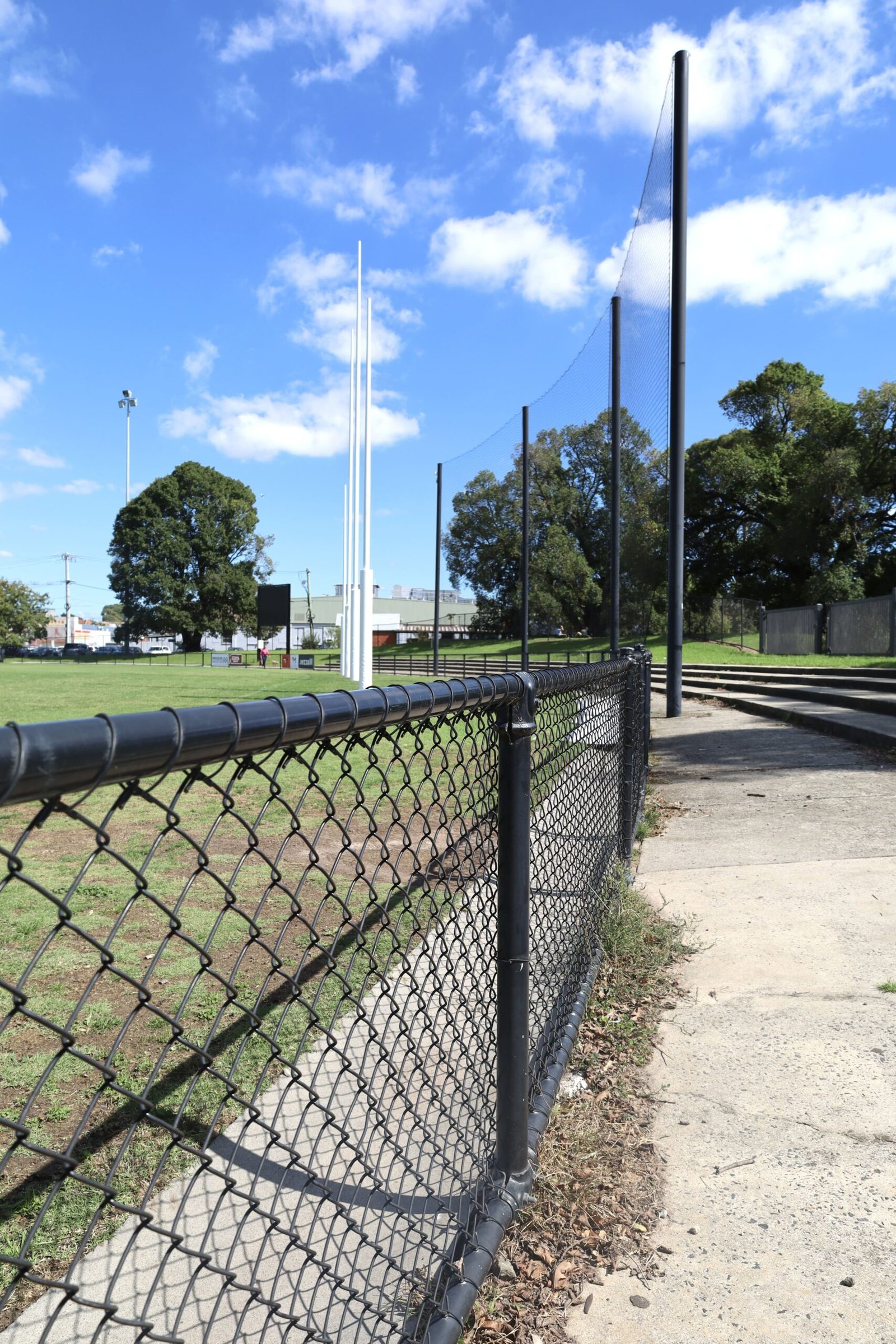
Chain wire fencing can be a practical option when a site needs fast perimeter coverage, visibility, and budget control. It often makes sense for large boundaries, storage areas, temporary zones, and low-to-medium-risk commercial perimeters.
The limitation is that chain wire should not be framed as the strongest security option. If the main risk is climbing, cutting, forced entry, or repeated after-hours trespass, the site may need an upgraded mesh, steel, palisade, or access-control system instead.
Steel tubular fencing: clean commercial security for visible boundaries
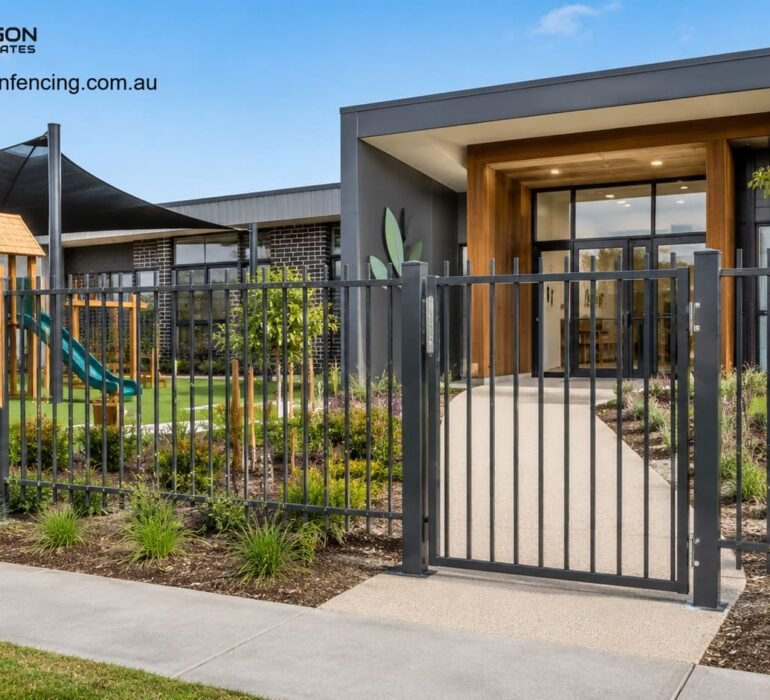
Steel tubular fencing works well when a site needs a durable, professional-looking boundary without making the property feel closed off. Flat-top, loop-top, rod-top, spear-top, and similar styles can be selected depending on whether the priority is public-facing safety, deterrence, or appearance.
This is often a good fit for schools, parks, commercial buildings, public facilities, and sites where the boundary must look maintained as well as secure. The key is to match the top style and height to the risk profile rather than choosing by appearance alone.
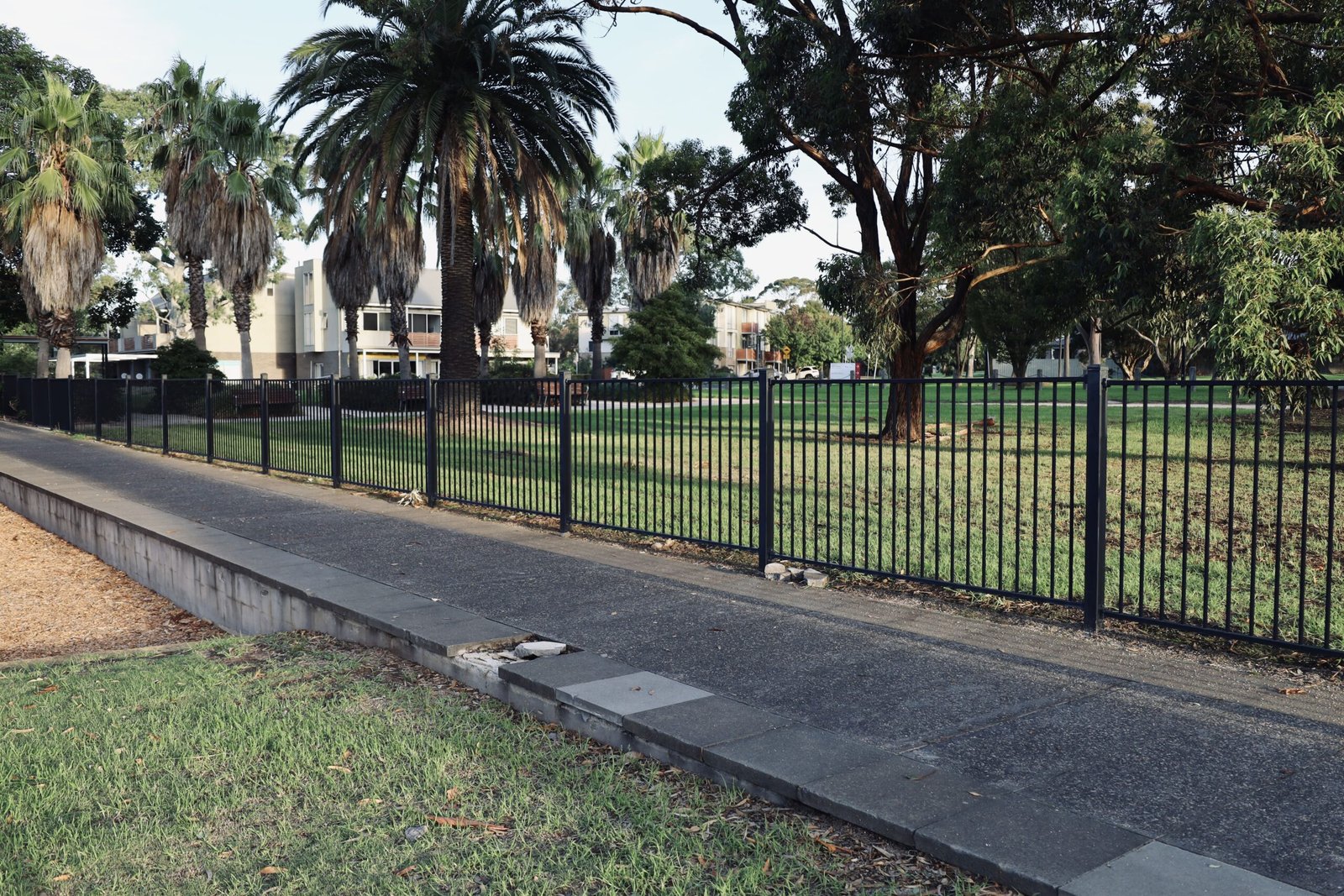
Weldmesh fencing: stronger security while keeping visibility
Weldmesh fencing is useful when the site needs a stronger anti-climb or anti-cut profile while still allowing visibility through the fence line. This can matter for sports facilities, schools, infrastructure, and commercial sites where staff or security teams need to see through the perimeter.
For sites where natural surveillance matters, visibility can be a security feature. Victoria Police recommends exterior lighting at entry points and boundaries, clear surroundings, maintained fences and gates, good locks, and a clear boundary without climbing aids. [2]
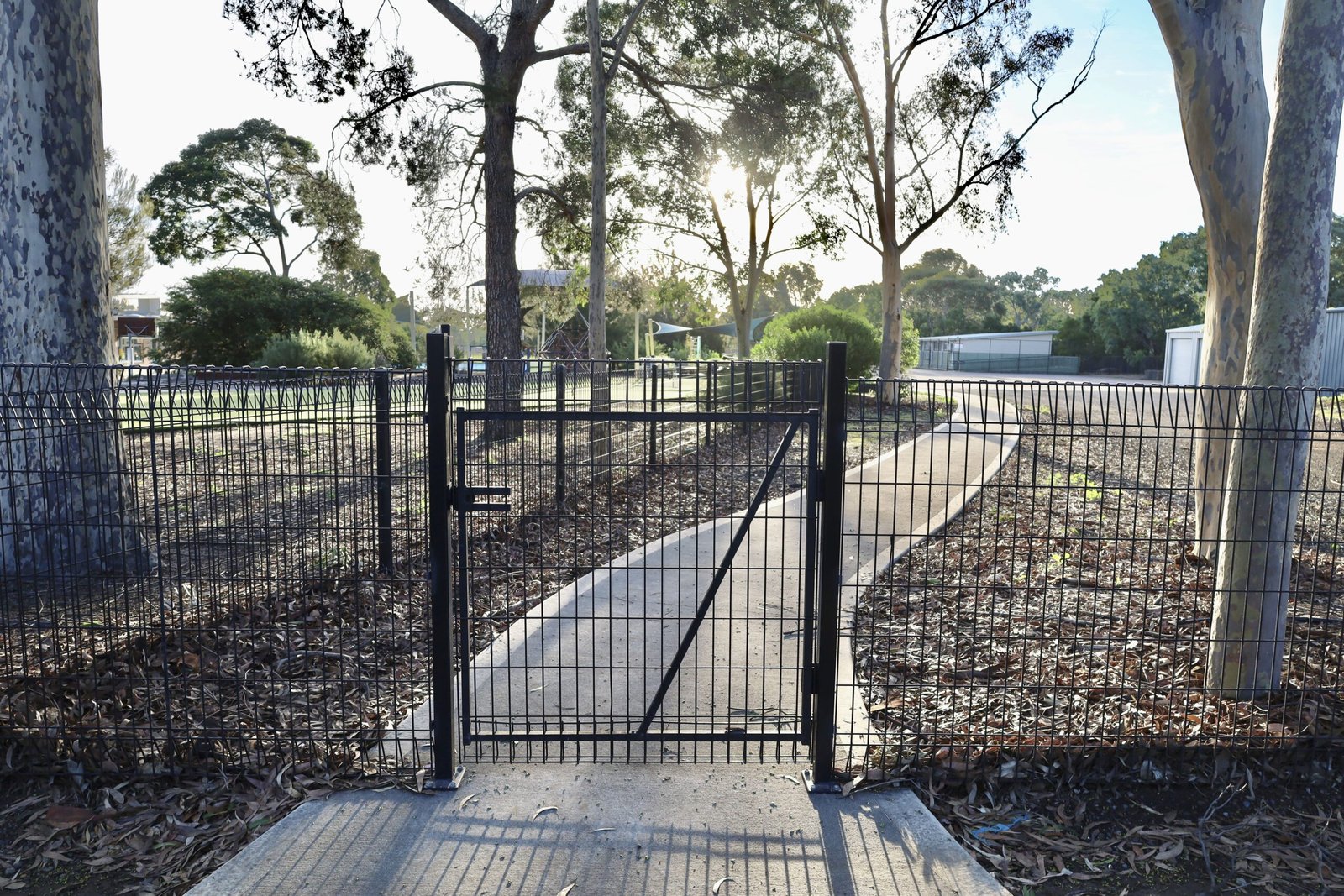
Palisade and spear-top steel fencing: higher deterrence for exposed or higher-risk perimeters
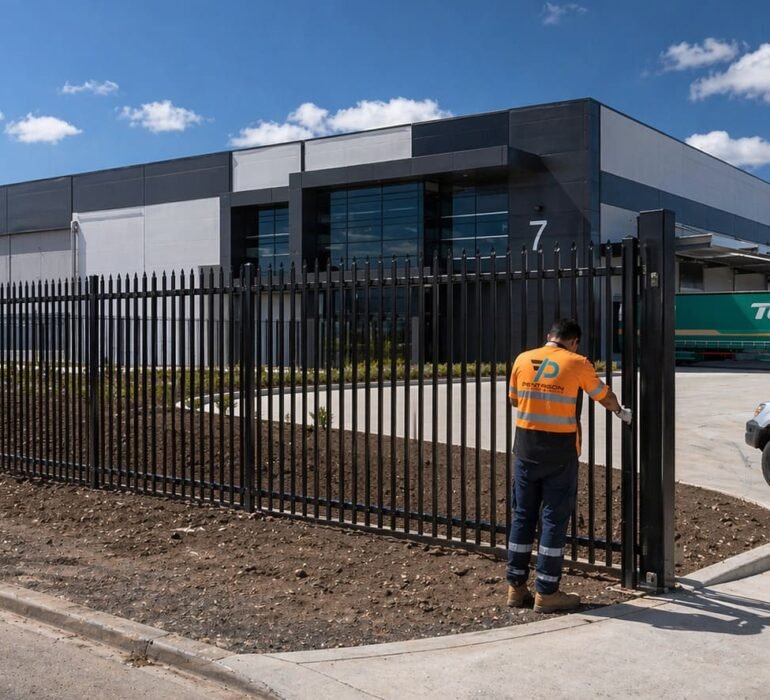
Palisade fencing is usually considered when the fence needs to send a stronger deterrent signal. It is more suitable for exposed perimeters, industrial assets, warehouse yards, or sites where casual climbing must be strongly discouraged.
Victorian school guidance also shows how security level can change by risk context: for new schools, palisade fencing at 2.1 metres is identified where significant security concerns have been assessed through specialist advice, and lockable gates are expected at pedestrian and vehicle entry points except the main school entry. [3]
Aluminium blade or slat fencing: security plus architectural appearance
Aluminium vertical blade, angled blade, and slat fencing can suit sites where presentation, privacy, airflow, and low maintenance matter. It is often better for frontages, mixed-use developments, high-end commercial entries, and residential-commercial interfaces than for the highest-risk industrial boundaries.
For security-focused projects, aluminium should be assessed for climb resistance, spacing, gate integration, and whether the appearance requirement is more important than the deterrent effect.
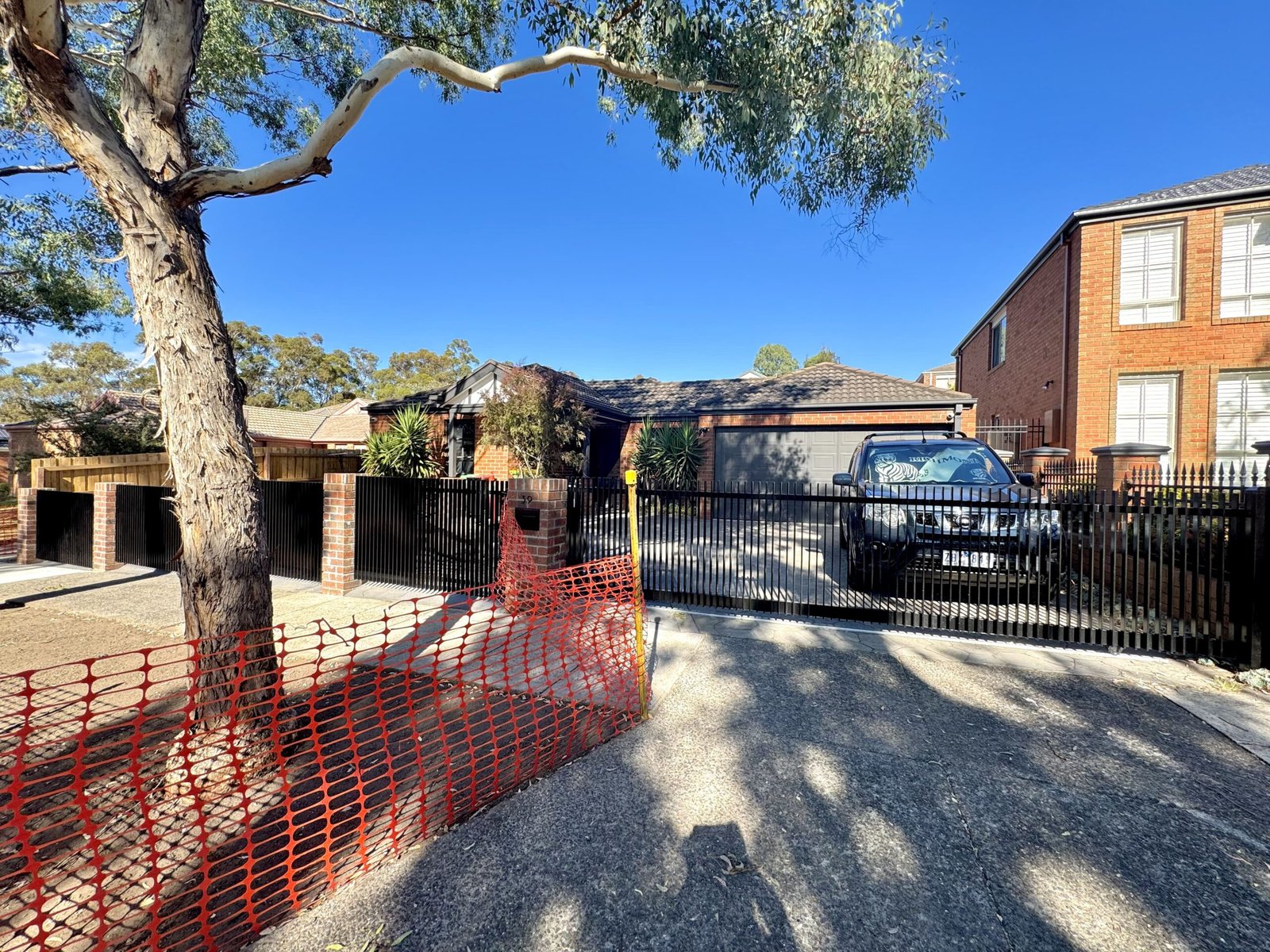
Colorbond, timber, and modular walls: privacy and boundary control, not always security-first
Colorbond, timber, and modular wall systems can be valuable where the priority is privacy, noise reduction, wind screening, or a clean boundary. But a solid fence can also reduce visibility, so it may not be the best answer if the site needs surveillance from staff, neighbours, passers-by, or cameras.
These options should be used carefully in security fencing decisions. They can form part of a secure boundary, but they should be paired with suitable gates, locks, lighting, and site layout when the risk level is higher.
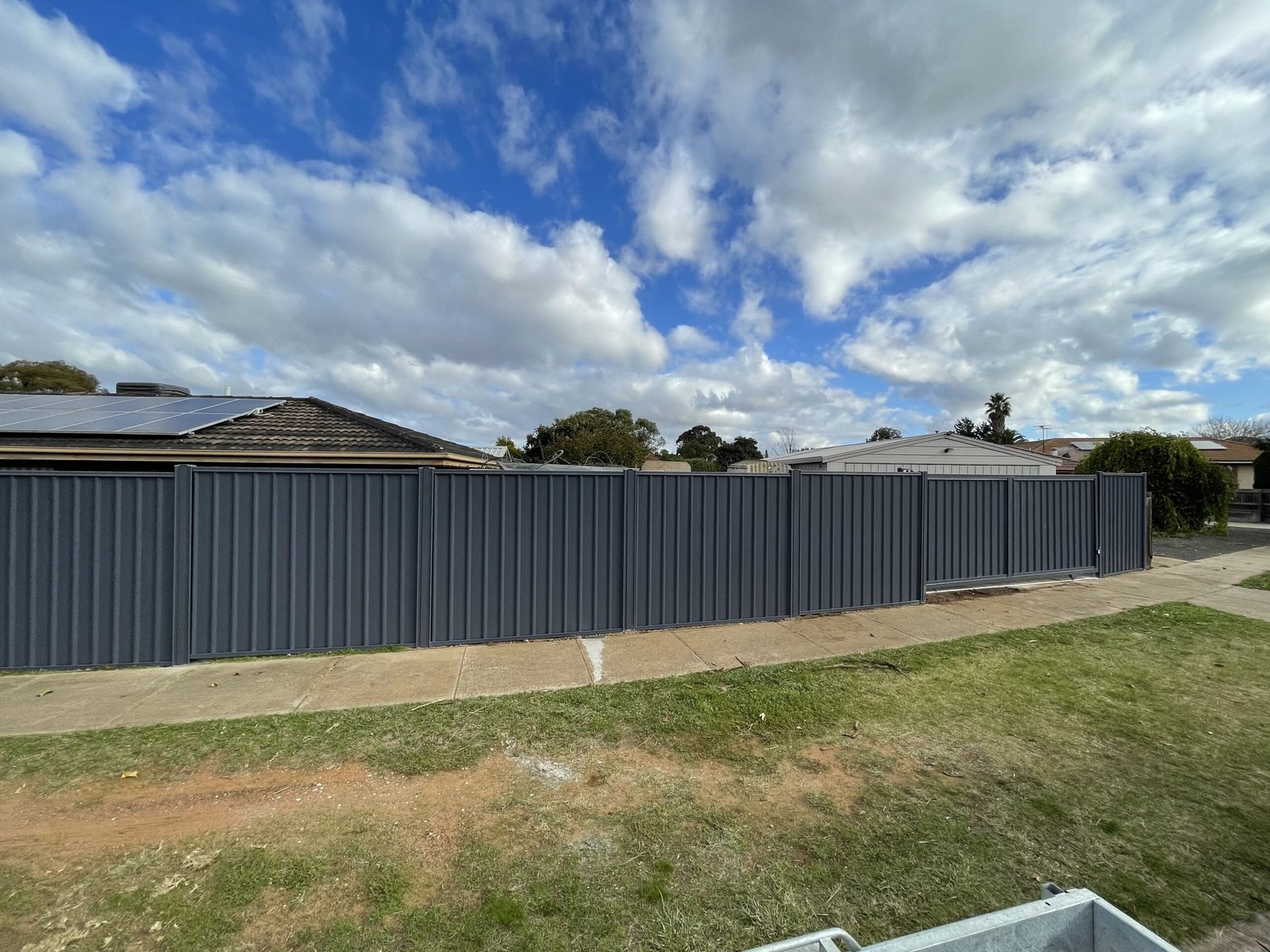
Scenario matrix: matching fence type to site risk
| Site scenario | Main risk | Better-fit fencing options | What to avoid |
|---|---|---|---|
| Warehouse or logistics yard | After-hours trespass, vehicle access, asset protection. | Palisade, weldmesh, steel tubular, sliding gate, access control. | Choosing fence panels without planning vehicle and pedestrian entry points. |
| Factory or industrial site | Controlled access, perimeter durability, maintenance exposure. | Palisade, weldmesh, heavy-duty steel, automated gate systems. | Under-specifying gates compared with the fence. |
| School or public facility | Safe access, visibility, climb resistance, community-facing appearance. | Rod-top steel, weldmesh, palisade where higher risk is identified, lockable gates. | Choosing a harsh-looking solution without considering safe movement and supervised access. |
| Construction or development site | Unauthorised access to hazards, weak temporary boundaries, wind exposure. | Well-constructed site fencing with secure gates and joints, installed to manufacturer specifications. | Loose joins, climbable materials, unsupported shade-cloth/signage loads. |
| Commercial frontage | Balance of appearance, boundary control, and after-hours access. | Steel tubular, aluminium blade/slat, controlled pedestrian gate. | Overbuilding the frontage while leaving rear access exposed. |
Security level is also decided by gates, locks, and access control
A strong fence with a weak gate is not a strong system. Gates are where the design needs to handle people, vehicles, keys, deliveries, visitors, and emergency access.
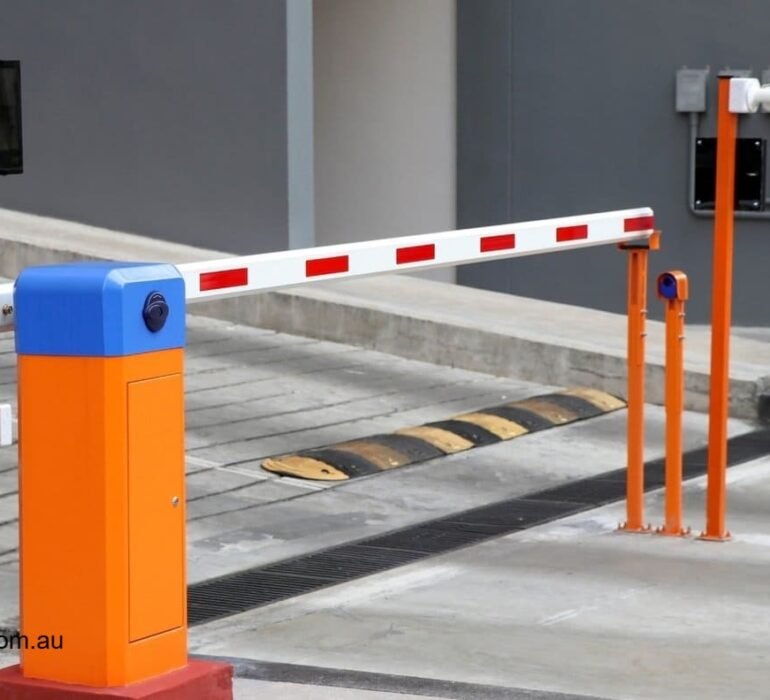
For commercial and industrial properties, the decision is often less about “sliding gate vs swing gate” and more about traffic flow, available swing space, duty cycle, user control, and how access is logged or restricted. Pentagon Fencing describes sliding gates as space-saving systems for commercial premises and industrial facilities where reliable security and efficient access control are needed. [5]
For higher-risk sites, the fence brief should include:
- vehicle gate type and clear opening width;
- pedestrian gate placement and lock type;
- after-hours access requirements;
- keypad, intercom, RFID, swipe access, or remote-control needs;
- lighting and camera visibility around entry points;
- maintenance access and emergency access requirements.
Checklist before asking for a security fencing quote
| Question | Why it matters | What to prepare |
|---|---|---|
| What must the fence prevent? | Trespass, climbing, cutting, vehicle entry, concealment, and public safety risks require different designs. | List the main risk by zone: frontage, side boundary, rear yard, loading area, public edge. |
| How visible should the site remain? | Visibility can support surveillance, but privacy may matter in some zones. | Mark where see-through fencing is preferred and where screening is required. |
| Where are the weak access points? | Most security failures happen at gates, corners, joins, side access, or areas with climbing aids. | Show existing gates, driveways, bins, trees, equipment, walls, and low roof lines. |
| Who needs access? | Staff, trucks, contractors, visitors, students, tenants, and emergency services may need different access points. | List user groups and peak access times. |
| Does the site need automation? | Automation changes gate cost, power, safety, maintenance, and user-control requirements. | Decide whether you need remote, keypad, intercom, RFID, or swipe access. |
How Pentagon Fencing can help
Pentagon Fencing & Gates provides fencing and gate systems for commercial, industrial, and residential projects across Melbourne, including large-scale site perimeters, commercial security fencing, steel fencing, custom gate installation, and secure gate solutions with automation and control systems. [4]
- Assess whether your site needs chain wire, steel tubular, weldmesh, palisade, aluminium, Colorbond, or a mixed-zone system.
- Plan fence lines together with sliding gates, swing gates, side gates, automation, and access-control needs.
- Prepare a clearer project brief for quote, including security level, site zones, access points, and material preferences.
FAQ
What is the best type of security fencing for commercial sites in Melbourne?
There is no single best fence for every commercial site. A visible commercial frontage may suit steel tubular or aluminium blade fencing, while a warehouse or industrial yard may need weldmesh, palisade, sliding gates, and controlled access. Match the fence to the site risk, not just the look.
Is palisade fencing better than weldmesh fencing?
Palisade usually gives stronger visual deterrence, especially for exposed or higher-risk perimeters. Weldmesh can be better where visibility is important and the site still needs anti-climb performance. Many commercial sites compare both before choosing.
When should a site use anti-climb security fencing?
Anti-climb security fencing should be considered when the main concern is unauthorised access, climbing opportunities, low-supervision boundaries, or repeated after-hours trespass. It is especially relevant for warehouses, industrial yards, infrastructure, schools, and construction boundaries.
Does a security fence need an automated gate?
Not always. A low-traffic site may only need a manual gate with secure locking. Higher-traffic commercial or industrial sites may benefit from a sliding or swing gate with automation, keypad, intercom, or RFID access control.
Should security fencing block visibility?
Not automatically. In many commercial and public-facing sites, visibility supports surveillance and reduces concealment. Solid fencing can be useful for privacy or screening, but it should be assessed carefully if security visibility is also needed.
What to Keep in Mind
- Define the risk first: trespass, climbing, vehicle entry, concealment, privacy, or controlled access.
- Choose the fence type by zone; one site may need more than one security level.
- Do not let the gate become the weak point in an otherwise strong fence line.
- Use visibility, lighting, locks, access control, and maintenance as part of the security system.
- Treat this article as a planning guide, then confirm the final design against site conditions and any relevant approval or safety requirements.
References
-
- WorkSafe Victoria, “Construction site security fencing,” WorkSafe Victoria. Accessed: Apr. 30, 2026. [Online]. Available: https://www.worksafe.vic.gov.au/construction-site-security-fencing
- Victoria Police, “Business premises security,” Victoria Police. Accessed: Apr. 30, 2026. [Online]. Available: https://www.police.vic.gov.au/securing-business-premises
- Victorian School Building Authority, “Building Quality Standards Handbook: Technical specifications,” School Buildings Victoria. Accessed: Apr. 30, 2026. [Online]. Available: https://www.schoolbuildings.vic.gov.au/building-quality-standards-handbook/technical-specifications
- Pentagon Fencing, “Pentagon Fencing & Gates – Trusted Fencing & Gates Contractor in Melbourne,” Pentagon Fencing. Accessed: Apr. 30, 2026. [Online]. Available: https://pentagonfencing.com.au/
- Pentagon Fencing, “Gates & Automation,” Pentagon Fencing. Accessed: Apr. 30, 2026. [Online]. Available: https://pentagonfencing.com.au/gates-automation/