
Table of Contents
Metal fencing Melbourne projects usually start with a practical material question: should the site use aluminium or steel? Aluminium can be a strong fit for modern frontages, privacy screens, architectural boundaries and lower-maintenance residential or commercial entries. Steel is usually the stronger starting point for higher-security, industrial, infrastructure and public-facing sites where impact resistance, deterrence and rigid perimeter control matter more.
The decision should not be reduced to “aluminium is modern” or “steel is stronger”. A commercial office frontage, warehouse boundary, childcare entry, townhouse development, public facility, driveway gate and residential front fence can all need different balances of security, privacy, airflow, visibility, maintenance and street appeal. Pentagon Fencing & Gates positions aluminium fencing for residential, commercial and architectural projects, while its steel range covers palisade, spear top, rod top, weldmesh, tubular steel and chain wire options across Melbourne [1] [2].
Why aluminium vs steel fencing is easy to choose incorrectly
- You choose aluminium because it looks clean without checking whether the site actually needs higher security, anti-climb resistance or stronger impact protection.
- You choose steel because it sounds stronger without checking whether the frontage needs privacy, airflow, architectural consistency or a softer public interface.
- You compare metal fence quotes without checking height, infill, post size, coating, gates, automation readiness, removals and site access.
- You treat a residential front boundary, a commercial car park, a school frontage and an industrial perimeter as the same material decision.
- You select the fence first and only later discover that the matching gate, pedestrian access or sliding gate layout changes the best material choice.
Key Takeaways
- Aluminium is usually better when the project is frontage-led, privacy-led or design-led, and the site needs a lighter, corrosion-resistant, low-maintenance metal fence with good street appeal.
- Steel is usually better when the project is security-led, impact-led or industrial, and the site needs stronger deterrence, rigid panels, anti-climb options or heavy-duty gate integration.
- Privacy does not automatically mean aluminium. Aluminium slats, blades and battens can screen a frontage, but steel or Colorbond-style options may suit some privacy/security combinations better.
- Visibility does not automatically mean weak security. Weldmesh, palisade, rod top and tubular steel can preserve sightlines while supporting stronger site control than many decorative front fence systems [2].
- Cost should be compared by complete scope, including material, height, posts, coating, gates, automation, ground conditions, removals and maintenance, not by headline metre rate alone.
Aluminium vs steel fencing: quick comparison
This aluminium vs steel fencing table is a first-pass material filter. It helps separate the material-family decision from later product choices such as slat, blade, picket, tubular, weldmesh, palisade, chain wire or gates.
| Decision factor | Aluminium fencing tends to suit | Steel fencing tends to suit | What to verify before quoting |
|---|---|---|---|
| Primary objective | Street appeal, privacy screening, architectural frontage, lightweight gates and clean residential or commercial boundaries. | Perimeter security, deterrence, public facility protection, industrial yards, infrastructure edges and heavy-duty access control. | Define whether the buyer is trying to solve privacy, security, presentation, airflow, safety, access or a mix of these. |
| Security level | Moderate boundary control when design and privacy are also important. | Higher-risk sites needing palisade, weldmesh, tubular steel, rod top, chain wire or matching steel gates. | Check climbing risk, cutting risk, impact exposure, asset value, public access and gate vulnerability. |
| Privacy and airflow | Slat, blade and batten systems where gap size, angle and spacing can tune privacy and airflow. | Open security systems where visibility matters, or solid/opaque systems when privacy is the main boundary task. | Confirm sightlines from street, building, CCTV, neighbours, car parks and pedestrian paths. |
| Maintenance profile | Often selected for corrosion resistance and lower routine maintenance, especially for modern frontages. | Can be durable when galvanised, powder coated or otherwise specified for the environment and use case. | Check coating system, scratches, impact exposure, cleaning access and repair expectations. |
| Gate integration | Matching aluminium sliding, swing or pedestrian gates where the project needs consistent frontage design. | Sliding, swing, side and cantilever gates where the access point must continue a steel security perimeter. | Decide gate type, opening width, automation readiness and pedestrian access before fabrication. |
| Best next step | Move into aluminium slat, blade, batten, picket, front fence or aluminium gate selection. | Move into palisade, weldmesh, tubular, rod top, chain wire, steel gate or security-level selection. | Avoid final pricing until material family, style, height, gate package and site works are aligned. |
When aluminium fencing is the better starting point
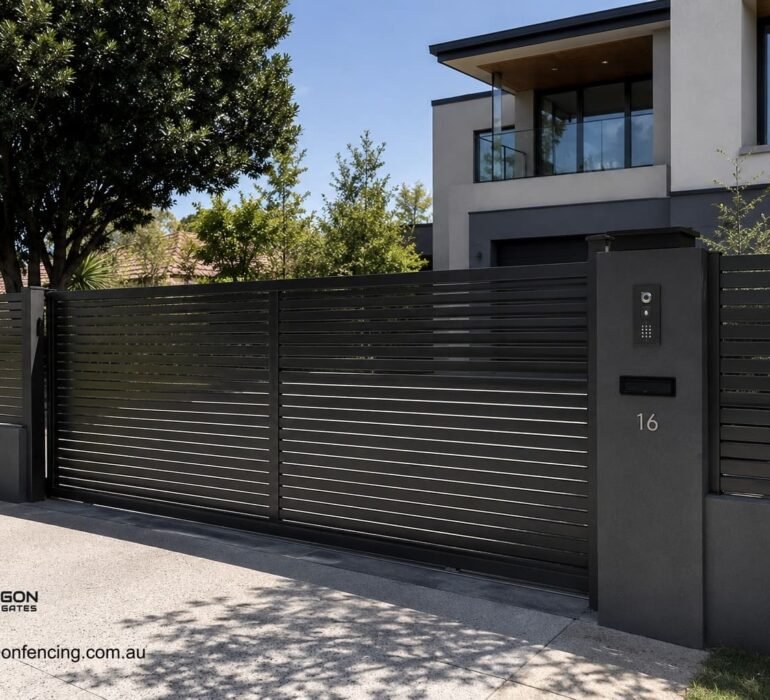
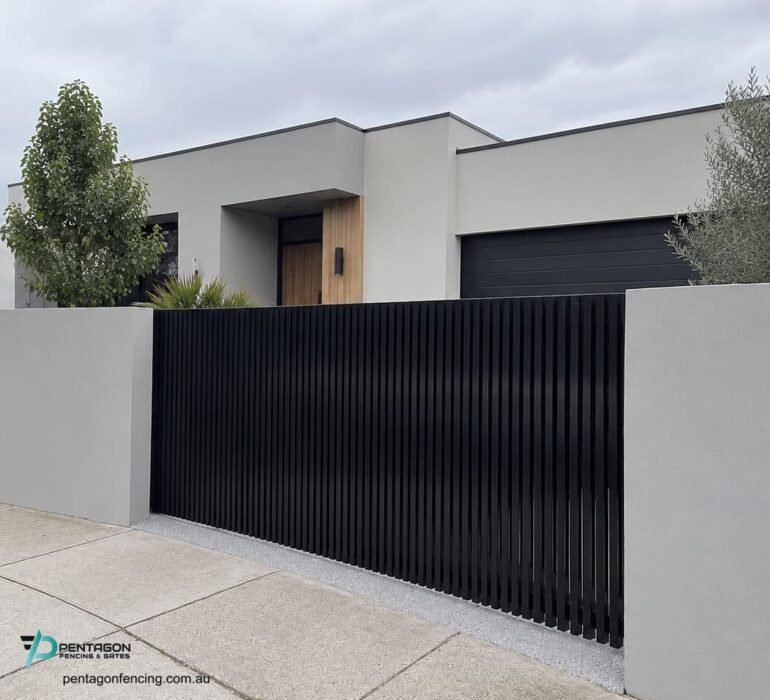
Aluminium is often the better first shortlist when the fence has to look refined from the street, screen a residential or commercial frontage, support airflow, avoid a heavy industrial feel and integrate with a matching gate. Pentagon’s aluminium fencing service describes modern aluminium fencing for residential, commercial and architectural projects, combining durability, low maintenance, privacy, security and contemporary street appeal [1].
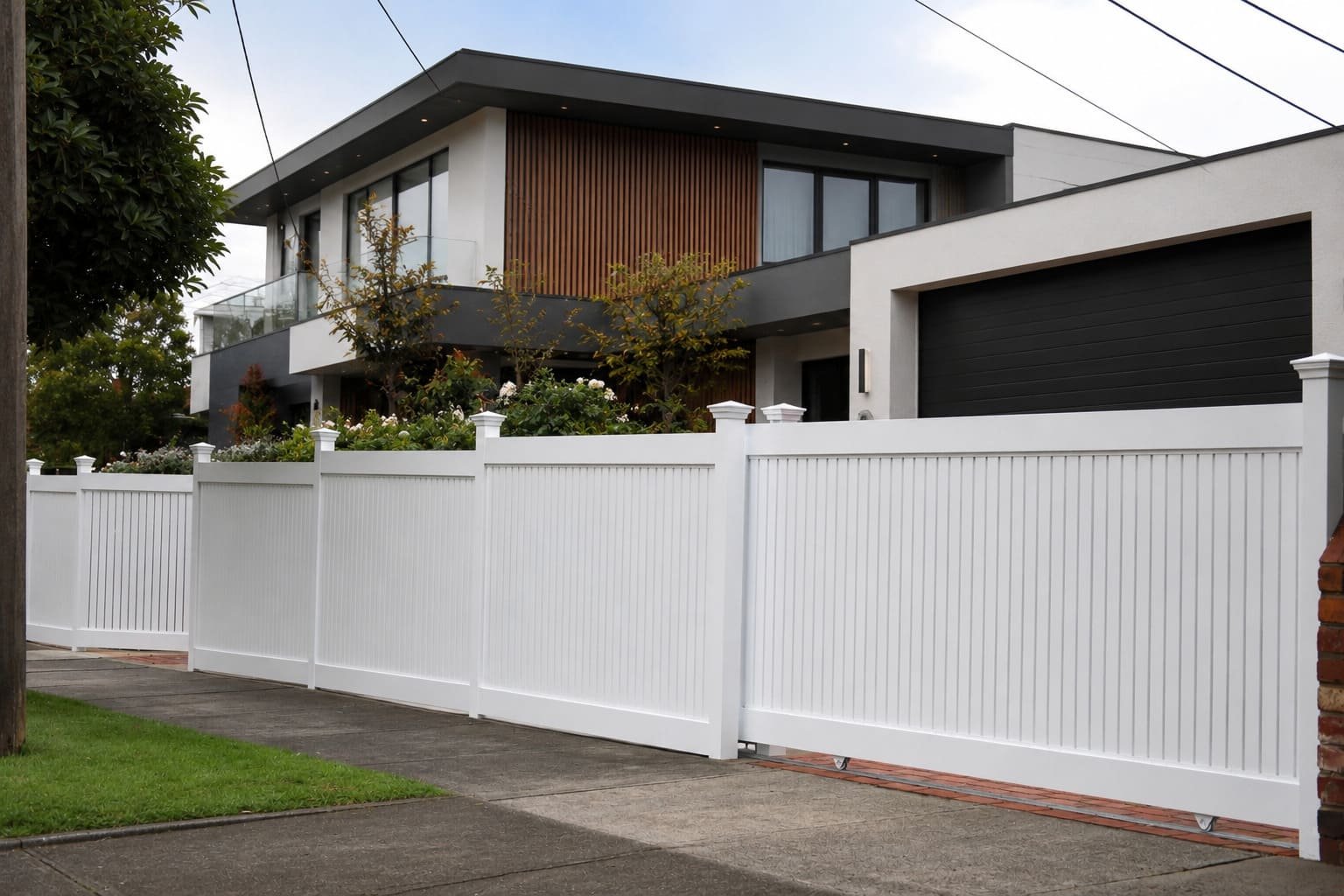
Aluminium also has material properties that explain why it is often chosen for external architectural work. The Australian Aluminium Council describes aluminium as lightweight, strong, durable, corrosion resistant and about one-third the density of steel [6]. In fencing terms, that does not make every aluminium fence suitable for high-security use, but it does make aluminium useful where appearance, corrosion resistance and manageable gate weight matter.
| Aluminium use case | Why aluminium fits | Watch-out |
|---|---|---|
| Modern residential frontage | Slats, blades, battens and pickets can create a clean front boundary while balancing screening and openness. | Confirm local height, transparency and street-interface expectations before final design. |
| Townhouse or developer frontage | A repeated aluminium system can keep the frontage consistent across multiple dwellings, driveways and pedestrian entries. | Gate rhythm, mailbox position, bin movement and pedestrian access can affect the final layout. |
| Commercial office or showroom | Aluminium can provide a more architectural edge where brand presentation and entry experience matter. | If after-hours security is the main risk, check whether steel gates or steel boundary sections are needed in higher-risk zones. |
| Privacy screen or side boundary | Slat spacing, blade angle and batten layout can adjust privacy and airflow without a fully solid wall. | Do not assume privacy screening also delivers high-security performance unless the full system is specified for it. |
When steel fencing is the better starting point
Steel is usually the better starting point when the site needs more visible deterrence, stronger perimeter control, impact resistance or a security-led boundary. Pentagon’s steel fencing guide lists palisade, spear top, rod top, weldmesh, tubular steel and chain wire options for industrial, commercial, government, infrastructure, school and selected residential applications [2].
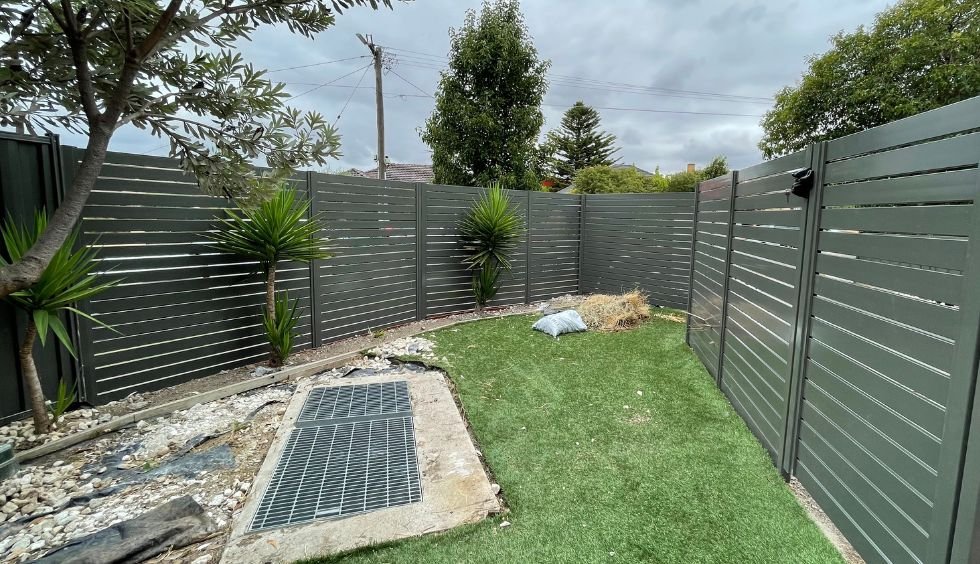
Steel still needs the right finish and maintenance strategy. The Galvanizers Association of Australia identifies key Australian galvanizing standards, including AS/NZS 4680 for batch galvanizing and AS/NZS 2312.2 for design and durability [7]. In practical terms, a steel fence should be specified as a system: steel type, section size, welding, coating, fixings, ground conditions, gates and maintenance access.
| Steel use case | Why steel fits | Watch-out |
|---|---|---|
| Warehouse or industrial perimeter | Steel options can support higher deterrence, stronger gates and visible perimeter control around loading, storage and vehicle areas. | Do not use one steel type everywhere; divide the site by risk zone, visibility and access requirements. |
| School, childcare or public facility | Weldmesh, rod top or tubular steel can provide open visibility with a stronger boundary than decorative frontage fencing. | Public-facing sites may need safer top profiles and clear visibility rather than aggressive spear-top treatments. |
| Infrastructure or restricted access area | Rigid panels, anti-climb mesh or palisade-style systems can be selected around access control and asset protection. | Gate hardware, locks, service entries and emergency access often decide real security performance. |
| Large perimeter or storage yard | Chain wire can cover long runs where visibility and cost control matter, while stronger steel systems can protect higher-risk zones. | Do not treat chain wire as the highest-security option by default; match each zone to the risk. |
Security, privacy and frontage matrix
A useful steel vs aluminium fencing decision should separate security, privacy and frontage instead of forcing one material to solve every problem. Many Melbourne projects need a mixed package: aluminium at the front boundary, steel at the service yard, weldmesh near public access, and matching gates where vehicles or pedestrians enter.
| Project priority | Better material direction | Suitable option examples | Buyer implication |
|---|---|---|---|
| Maximum deterrence | Steel first | Palisade, spear top, high-security weldmesh, steel gates. | Prioritise anti-climb, anti-cut, height, gate strength and access control before street softness. |
| Street-facing privacy | Aluminium first, with caveats | Horizontal slats, vertical slats, angled blades, battens, matching gates. | Tune gap size and viewing angle; check whether public visibility or council expectations limit full screening. |
| Passive surveillance | Open steel or open aluminium | Weldmesh, rod top, tubular steel, aluminium picket, open blade layouts. | Planning Victoria recommends low or partially transparent fence types on street or public-space boundaries to support informal surveillance [5]. |
| Architectural frontage | Aluminium first | Slat, blade, batten, picket or custom front boundary fencing. | Start with facade rhythm, height, colour, gate alignment and street presentation. |
| Large visible boundary | Steel first | Chain wire, tubular steel, weldmesh or mixed steel perimeter. | Use stronger systems at gates, corners, storage areas and repeated-risk zones. |
| Complete fence-and-gate package | Depends on the weakest access point | Aluminium or steel sliding gates, swing gates, pedestrian gates and side gates. | The gate should match the security, privacy and maintenance requirement of the fence, not just its colour. |
Commercial, industrial and residential site fit
Aluminium fencing vs steel fencing is easier to evaluate when the project is grouped by site type. The same material can be correct in one zone and wrong in another. A mixed commercial site might use aluminium at the customer-facing frontage, weldmesh around the car park, palisade near restricted storage and a steel sliding gate at the vehicle entry.
| Site type | Aluminium direction | Steel direction | Recommended decision path |
|---|---|---|---|
| Residential front fence | Strong fit for street appeal, privacy, modern gates and lightweight frontage systems. | Useful where the property needs stronger boundary definition, tubular style or higher-impact resistance. | Start with frontage, privacy and gate movement, then check security expectations. |
| Commercial office or retail frontage | Good fit where design consistency, brand presentation and controlled openness matter. | Better fit where after-hours asset protection, loading access or car-park control is a priority. | Split public frontage from service and back-of-house zones. |
| Warehouse, factory or logistics site | May suit office frontage or selected lightweight gates, but is rarely the only perimeter answer. | Usually stronger for industrial perimeter, high-traffic gates, storage zones and restricted access. | Choose steel for risk zones first, then decide whether aluminium belongs at visible frontage zones. |
| School, childcare or public facility | Can suit softer frontage or picket-style boundaries where presentation matters. | Often better for weldmesh, rod top or tubular systems where visibility and access control matter. | Prioritise safe visibility, gate control, pedestrian access and non-hostile public edges. |
| Mixed-use development | Strong fit for residential-facing and architectural frontage zones. | Strong fit for car parks, waste areas, plant, service entries and higher-impact zones. | Use a zone-by-zone material schedule rather than one material everywhere. |
What affects metal fence cost in Melbourne?
Metal fence cost Melbourne comparisons are often misleading when quotes do not include the same scope. Aluminium can be cheaper or more expensive than steel depending on the profile, height, spacing, coating, fabrication complexity, gate design and installation conditions. Steel can also vary widely depending on whether the system is chain wire, tubular, weldmesh, rod top, palisade or a custom gate package.
The safest way to compare metal fencing Melbourne quotes is to standardise the scope first. Ask each contractor to price the same height, line length, material family, infill, posts, footings, gates, coating, removals, access constraints and handover requirements.
| Cost driver | How it affects aluminium | How it affects steel | Quote evidence to request |
|---|---|---|---|
| Fence height and total length | More height and length increase material, posts, labour and coating surface area. | Higher steel systems can require stronger posts, bracing, footing design and security detailing. | Measured line length, height schedule and post spacing assumptions. |
| Profile or infill type | Slat size, blade angle, batten spacing and custom frontage details can change fabrication time. | Palisade, weldmesh, chain wire, tubular and rod top systems have different material and installation requirements. | Infill schedule, profile dimensions, aperture or spacing, and security rating assumptions. |
| Coating and finish | Powder coating, colour selection and finish consistency affect supply and lead time. | Galvanising, powder coating and repair methods affect durability and maintenance cost. | Finish type, colour, coating standard, touch-up method and maintenance notes. |
| Gates and automation readiness | Matching aluminium gates can require careful frame and slat alignment. | Steel gates can require heavier posts, hinges, rollers, motors or access-control preparation. | Gate schedule, clear openings, motor readiness, safety devices and manual release plan. |
| Site conditions | Slopes, retaining walls and difficult access can affect alignment and installation time. | Ground conditions, rock, concrete, services and industrial access constraints can affect footings and staging. | Site measure, service checks, removals, disposal, staging and work-hour constraints. |
Decision shortcut: choose aluminium, steel or a mixed package
- Start with the main job of the fence. Decide whether the project is primarily about security, privacy, street appeal, airflow, access control, safety or asset protection.
- Map the site into zones. Separate front boundary, side boundary, car park, loading zone, pedestrian entry, public edge, storage area and vehicle gate.
- Choose aluminium where presentation and screening lead. Use aluminium when slats, blades, battens, pickets or matching gates solve the visible frontage brief.
- Choose steel where security and durability lead. Use steel when palisade, weldmesh, tubular, rod top, chain wire or steel gates better match the risk profile.
- Check visibility and public interface. Avoid solid or overly aggressive fencing where passive surveillance, public access or a non-hostile frontage matters.
- Price the complete system. Include posts, footings, coating, gates, automation readiness, removals, access, staging and maintenance, not just panels.
Quote-ready checklist for metal fencing Melbourne
- Site type: residential frontage, commercial office, retail, warehouse, factory, school, public facility, mixed-use development or infrastructure edge.
- Main priority: security, privacy, airflow, visibility, street appeal, access control, public safety, asset protection or maintenance.
- Material shortlist: aluminium, steel or mixed material package by site zone.
- Style shortlist: aluminium slat, blade, batten, picket, tubular steel, rod top, weldmesh, palisade, chain wire or matching gate system.
- Measurements: line length, height, slope, driveway width, gate openings, post positions and existing fence removal.
- Gate plan: sliding gate, swing gate, pedestrian gate, side gate, automation readiness, access control and emergency/manual access.
- Finish: powder coating, galvanising, colour, coating repair, corrosion exposure and cleaning expectations.
- Handover: keys, access credentials, gate instructions, coating care, maintenance schedule and defect process.
Common mistakes to avoid
- Choosing one material for the whole site too early. Mixed-use and commercial sites often need different materials across frontage, service, storage and access zones.
- Equating privacy with security. A screening fence may reduce visibility, but it does not automatically improve intrusion resistance.
- Equating visibility with weak protection. Weldmesh, palisade, rod top and tubular steel can keep sightlines open while supporting stronger boundary control.
- Ignoring the gate package. A strong fence can be undermined by a poorly matched gate, weak hardware or unsafe access route.
- Comparing quotes without matching specifications. Different post sizes, coatings, heights, infill profiles and removals can make two quotes look comparable when they are not.
- Over-screening public frontages. Very solid or high fencing can reduce informal surveillance where a partially transparent boundary would be more appropriate.
How Pentagon Fencing can help
Pentagon Fencing & Gates can support metal fencing Melbourne projects by helping compare aluminium and steel options before the final material, profile, gate and installation scope are locked. Its service range includes aluminium fencing, aluminium gates, automated gate systems, steel security fencing, weldmesh, rod top, palisade, chain wire and matching gate systems across Melbourne [1] [2] [3] [4].
- Map the site into frontage, privacy, security, vehicle access, pedestrian access and service zones.
- Compare aluminium and steel options against security, privacy, airflow, durability, maintenance and street presentation.
- Prepare a quote-ready brief covering material family, style, height, gates, coating, ground conditions, removals and handover requirements.
FAQ
Is aluminium or steel fencing better?
Neither material is automatically better. Aluminium is often better for modern frontages, privacy screens, lightweight gates and lower-maintenance architectural boundaries. Steel is often better for higher-security, industrial, infrastructure and public-facing sites that need stronger deterrence or rigid perimeter control.
Is aluminium fencing good for security?
Aluminium can provide boundary control and privacy, especially when designed with appropriate height, spacing and gate hardware. For higher-risk sites exposed to climbing, cutting, impact or repeated intrusion attempts, steel systems such as weldmesh, palisade or tubular steel may be more suitable.
Is steel fencing better for industrial sites?
Steel is usually the stronger starting point for industrial sites because it can support heavy-duty fencing, higher-security panels, large gates and more robust perimeter control. Some industrial sites may still use aluminium at office frontages or presentation-led areas.
Which metal fence is best for privacy?
Aluminium slat, blade and batten systems are common choices for privacy-led frontages because spacing and angles can be adjusted. The best option depends on viewing angle, height, street interface, airflow, gate layout and whether security is also a major requirement.
What affects metal fence cost in Melbourne?
Major cost drivers include material, height, length, profile, infill spacing, posts, footings, coating, gates, automation readiness, removals, ground conditions, access, staging and maintenance requirements.
What to Keep in Mind
- Use aluminium when the project is led by frontage, privacy, airflow, street appeal and lower-maintenance design.
- Use steel when the project is led by security, deterrence, impact resistance, industrial access or stronger perimeter control.
- Do not force one material across every site zone if a mixed aluminium and steel package would solve the project better.
- Plan gates, pedestrian access, coatings and maintenance before finalising the material choice.
- Compare complete scopes, not headline panel or metre rates.
References
- Pentagon Fencing & Gates, “Aluminium Fencing Melbourne,” Pentagon Fencing & Gates. Accessed: Jul. 8, 2026. [Online]. Available: https://pentagonfencing.com.au/service/aluminium-fencing-melbourne/
- Pentagon Fencing & Gates, “Steel Fencing Melbourne: Palisade, Weldmesh, Tubular, Rod Top and Chain Wire Options,” Pentagon Fencing & Gates. Accessed: Jul. 8, 2026. [Online]. Available: https://pentagonfencing.com.au/steel-fencing-melbourne/
- Pentagon Fencing & Gates, “Aluminium Fencing Melbourne: Slat, Blade, Batten, Picket and Front Fence Options,” Pentagon Fencing & Gates. Accessed: Jul. 8, 2026. [Online]. Available: https://pentagonfencing.com.au/aluminium-fencing-melbourne/
- Pentagon Fencing & Gates, “Palisade Fencing & Steel Security Fencing Melbourne,” Pentagon Fencing & Gates. Accessed: Jul. 8, 2026. [Online]. Available: https://pentagonfencing.com.au/service/steel-security-fencing-melbourne/
- Department of Transport and Planning Victoria, “6.4 Barriers and fences,” Planning Victoria. Accessed: Jul. 8, 2026. [Online]. Available: https://www.planning.vic.gov.au/guides-and-resources/guides/urban-design-guidelines-for-victoria/objects-in-the-public-realm/barriers-and-fences
- Australian Aluminium Council, “FAQs,” Australian Aluminium Council. Accessed: Jul. 8, 2026. [Online]. Available: https://aluminium.org.au/faqs/
- Galvanizers Association of Australia, “Hot Dip Galvanizing Standards,” GAA. Accessed: Jul. 8, 2026. [Online]. Available: https://gaa.com.au/hot-dip-galvanizing-standards/