
Table of Contents
Why choosing a steel fence is not a one-product decision
- You know the site needs steel, but you have not separated deterrence, anti-climb performance, visibility, presentation and budget priorities.
- You are comparing palisade, weldmesh, tubular, rod top and chain wire as if every system provides the same security level.
- The front boundary, side boundary, loading area and internal compound may need different fence types rather than one specification around the entire site.
- The fence has been selected before sliding gates, pedestrian gates, automation, access control and vehicle movement have been mapped.
- The coating and maintenance brief does not reflect the site’s exposure, damaged finishes, vegetation, ground conditions or long-term inspection needs.
Key Takeaways
- Palisade fencing is generally routed to higher-deterrence industrial, infrastructure and restricted-site applications where an assertive perimeter is acceptable.
- Weldmesh fencing is strongest when the project needs rigid panels, clear sightlines and a specification matched to the required aperture and security level.
- Tubular steel and rod top fencing can provide a cleaner public-facing boundary where visibility and presentation matter alongside controlled access.
- Chain wire fencing is often considered for long runs, large compounds and practical perimeter coverage, but its posts, wire, rails, gates and toppings still need to match the risk.
- Steel durability depends on more than the base metal. The Australian Steel Institute recommends a fit-for-purpose corrosion-protection specification that considers the exposure environment and whole-of-life maintenance [2].
Steel fencing options compared
The matrix below provides broad routing for commercial steel fencing Melbourne, industrial, public-facing and selected residential projects. Final performance depends on the complete system, including height, spacing, posts, rails, fixings, footings, gates, coatings and nearby climb points.
| Steel fence option | Best-fit direction | Main strength | Watch-out | Next specification check |
|---|---|---|---|---|
| Palisade | Warehouses, utilities, infrastructure, industrial compounds and restricted perimeters requiring a strong visual deterrent. | Rigid steel pales and assertive top profiles can support a high-deterrence perimeter specification. Manufactured palisade systems are available with different pale centres, heights, posts and rail arrangements [3]. | Spear or tri-point profiles may be unsuitable for some public-facing or injury-sensitive locations. Appearance can also be too severe for customer-facing frontages. | Pale profile, top type, spacing, height, post/rail system, ground rake, gates and risk assessment. |
| Weldmesh | Commercial compounds, infrastructure, schools, construction interfaces and high-visibility perimeters. | Rigid welded panels maintain visibility. Close-aperture 358 mesh products are designed to resist climbing, cutting and hand-tool penetration while retaining sightlines [4]. | “Weldmesh” covers different apertures, wire sizes, panel forms and post systems. Standard decorative mesh should not be treated as equivalent to a high-security close-mesh system. | Aperture, wire diameter, panel height, bends or reinforcing profiles, post type, fixings and gate infill. |
| Tubular steel | Commercial frontages, schools, parks, car yards and residential boundaries where visibility and presentation matter. | Open vertical bars provide clear visibility and can use flat, loop or spear top treatments. Tubular flat-top and loop-top systems are marketed for public-space and residential applications [5]. | Security varies with bar spacing, rails, height and top profile. Horizontal rails or nearby objects can create climb opportunities if the system is poorly configured. | Top profile, bar spacing, rail position, panel height, public exposure, finish and matching gate detail. |
| Rod top / square top | Schools, public facilities, commercial sites and boundaries needing a strong vertical-bar appearance without sharp spear points. | Pentagon positions steel rod top or square top fencing as a non-sharp alternative to spear top for public environments [1]. | A non-pointed top does not automatically make the full fence safe, anti-climb or suitable for every school or public project. | Rod section, spacing, rail position, finished height, entrapment/climb review, gate top and user group. |
| Chain wire | Large yards, sporting or utility areas, internal compounds, temporary/permanent works and long perimeter runs. | Chain wire provides high visibility and can be configured with different wire diameters, heights, posts, rails, cables, finishes and gates [6]. | It has a more utilitarian appearance and should not be assumed to provide the same rigidity or anti-climb performance as palisade or close-aperture weldmesh. | Mesh aperture, wire diameter, selvedge, tensioning, rails/cables, height, bottom security, toppings and gates. |
Project-fit table: match the steel system to the site
For industrial steel fencing Melbourne and mixed commercial sites, a broad steel-material article should help shortlist systems, not force one fence type onto every boundary. Mixed-zone sites may use more than one product where risk, presentation and access conditions change.
| Site scenario | Stronger shortlist | Why | Route away when |
|---|---|---|---|
| Warehouse or logistics perimeter | Palisade or security-grade weldmesh; chain wire for selected lower-risk or internal zones. | The site may need visible surveillance, vehicle gates, loading-zone control and stronger after-hours deterrence. | A customer-facing entrance needs a less industrial presentation, in which case tubular or a mixed system may be better. |
| Factory or restricted industrial compound | Palisade, close-aperture weldmesh or a site-specific combination. | Higher-risk zones usually require the fence, gates and access controls to operate as one perimeter system. | The project is only defining internal movement zones rather than the secure outer perimeter. |
| School, park or public-facing facility | Rod top, flat-top/loop-top tubular or suitable weldmesh, subject to project requirements. | These options can keep the boundary visible and avoid an unnecessarily aggressive top profile. | A restricted service yard or high-risk back-of-house boundary needs a stronger security specification. |
| Commercial frontage or car yard | Tubular steel, rod top or selected weldmesh. | Visibility supports display, surveillance and a cleaner architectural presentation. | The frontage is exposed to high intrusion risk and the appearance compromise is acceptable. |
| Large utility, sports or broad perimeter | Chain wire or weldmesh, with higher-security zones upgraded separately. | Long runs may prioritise visibility, practical coverage, terrain response and gate placement. | The entire perimeter requires rigid anti-climb or high-deterrence protection. |
| Residential or mixed residential-commercial frontage | Flat-top, loop-top, rod top or decorative tubular steel. | These systems can provide an open steel boundary without the visual severity of industrial palisade. | Privacy is the primary goal, in which case aluminium slat, steel infill or another screening system may fit better. |
Security-level routing: which option deserves a deeper specification?
The terms “secure” and “anti-climb” should not be applied to every steel fence equally. Use the table as an early routing tool, then assess the actual site, complete system and required evidence.
| Perimeter need | Options to investigate | Evidence or design detail to request | Common mistake |
|---|---|---|---|
| Boundary definition and casual access control | Tubular, rod top or chain wire. | Height, gaps, gate locks, bottom clearance, user group and visibility needs. | Paying for an aggressive system when the site mainly needs an orderly, visible boundary. |
| Moderate commercial deterrence | Tubular spear top, rod top, rigid weldmesh or upgraded chain wire. | Climb points, wire/picket spacing, rails, gates, lighting, surveillance and after-hours use. | Specifying the fence panel without checking gates and adjacent objects. |
| High-deterrence industrial perimeter | Palisade or security-grade close-aperture weldmesh. | Tested system information, height, aperture/pale spacing, secure fixings, post foundations, gate equivalence and topping policy. | Using “anti-climb steel fencing Melbourne” as a label without defining how the installed system addresses climbing and penetration. |
| Construction or changing worksite risk | A site-security solution selected from the risk assessment, which may include temporary fencing, chain wire, mesh or permanent steel sections. | WorkSafe Victoria states that appropriate site-security measures should control unauthorised entry and protect workers and the public, including outside working hours [7]. | Treating permanent product selection as a substitute for a current construction-site risk assessment. |
Palisade fencing: for a visible high-deterrence perimeter
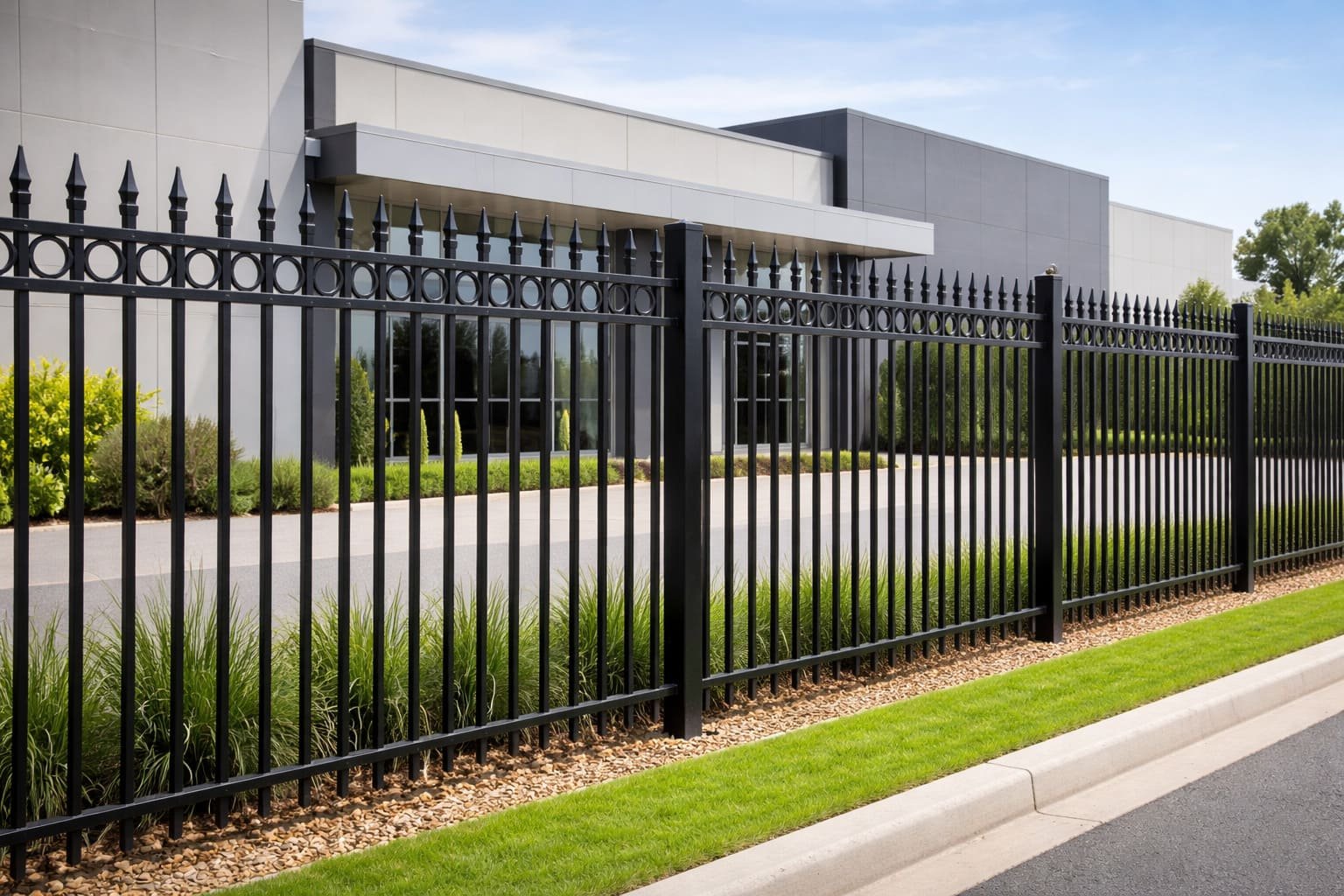
Palisade uses formed steel pales fixed to horizontal rails and posts. Its visual language is deliberately assertive, which makes it a common shortlist for warehouses, infrastructure, utilities and restricted industrial boundaries. Pentagon includes pressed spear top palisade within its steel security fencing Melbourne offer [1].
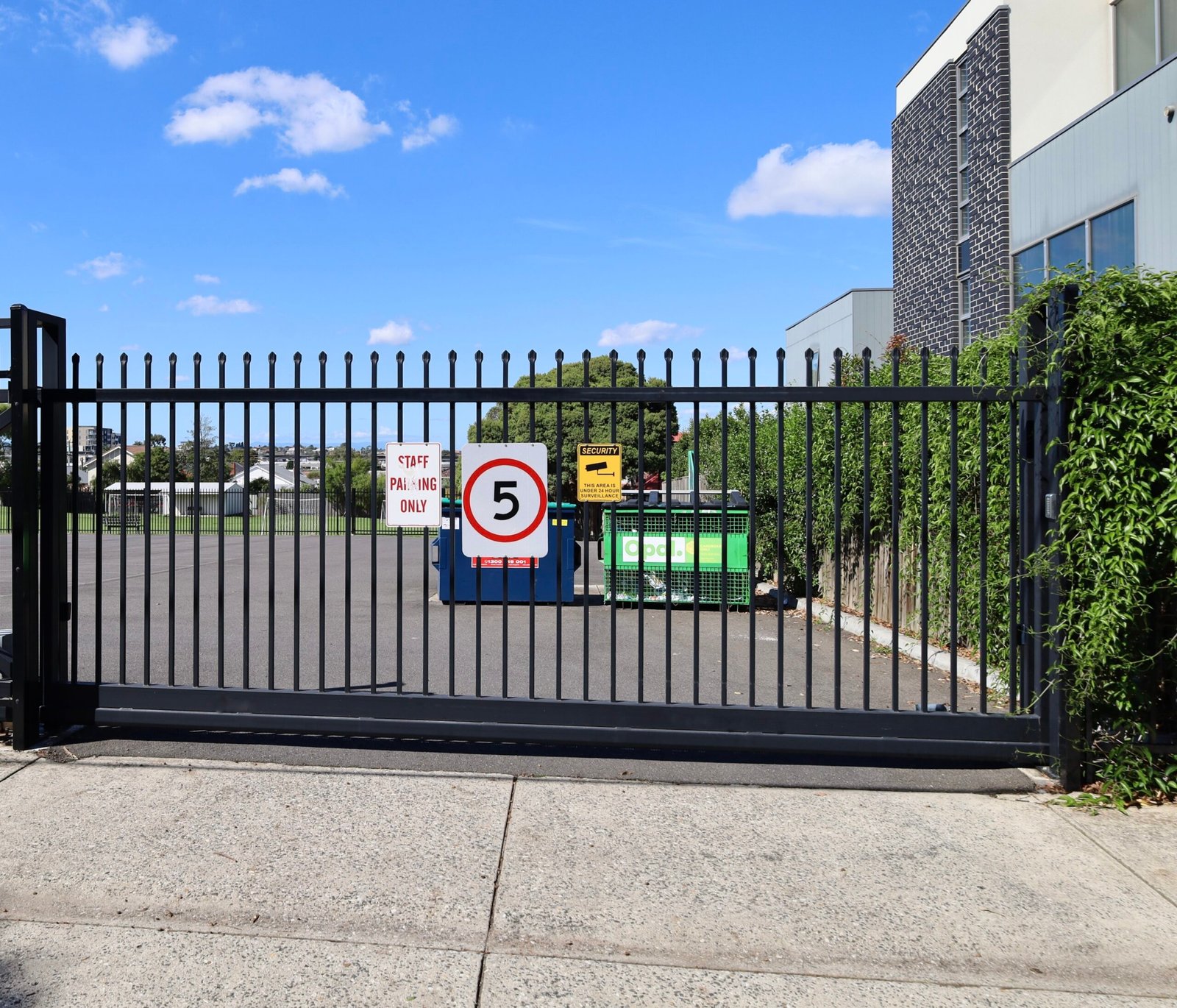
Do not specify palisade from the product name alone. Confirm the pale profile, spacing, height, rail system, post size, fixings, coating and gate construction. For public-facing locations, also check whether a pointed top is appropriate or whether rod top, weldmesh or another non-pointed system should be considered.
Weldmesh fencing: when visibility and panel rigidity matter
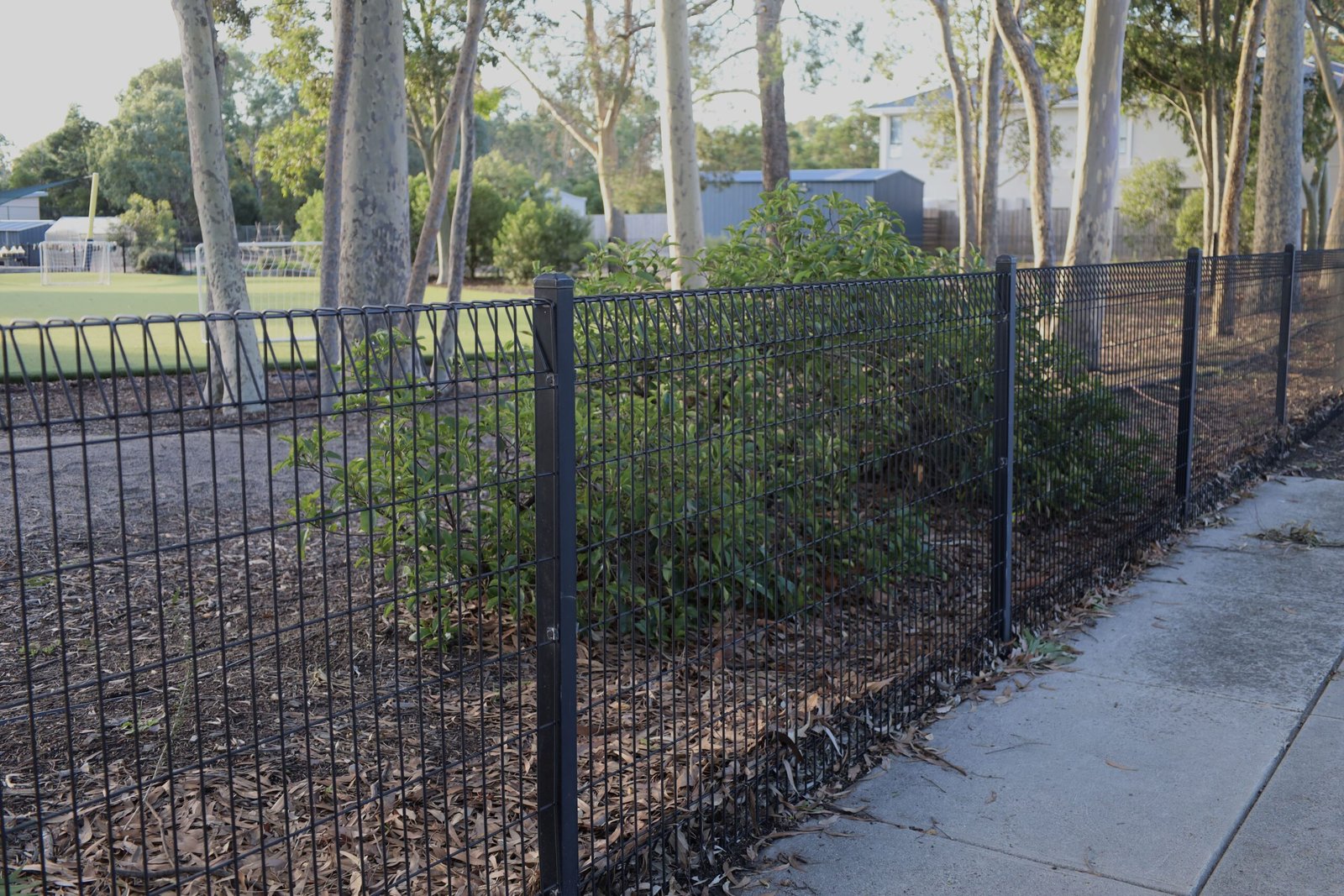
Weldmesh uses wires welded at intersections to create rigid panels. The category includes open architectural meshes, general commercial panels and close-aperture security mesh. This range is why a phrase such as “weldmesh fencing Melbourne” is not a complete specification.
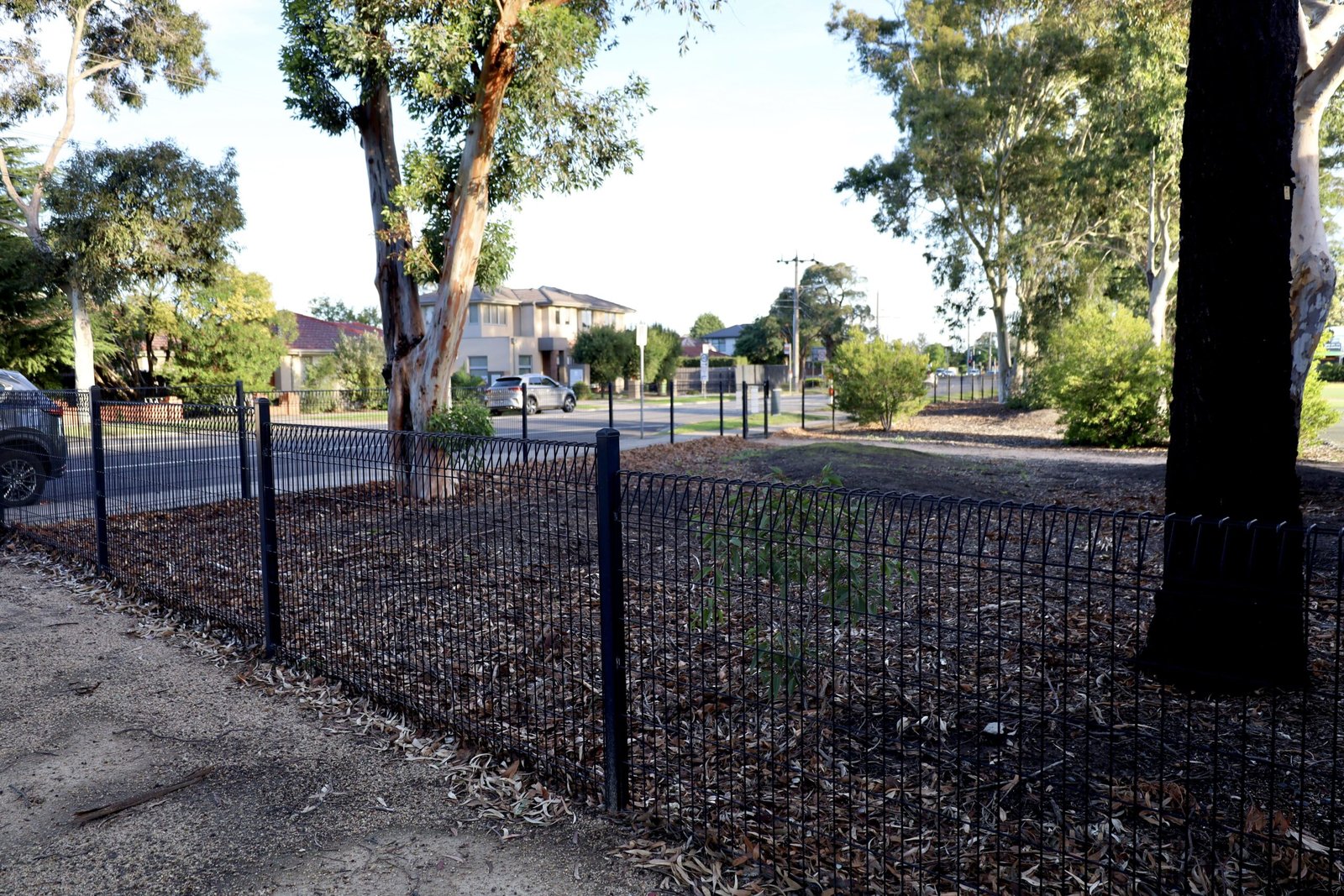
For surveillance-led boundaries, rigid mesh can maintain sightlines while providing a clear physical barrier. For anti-climb requirements, ask for the aperture, wire diameter, panel configuration, fixings and tested or documented system properties rather than relying on appearance. Close-aperture 358 mesh is one example designed around restricted hand and foot purchase, but the actual installed performance still depends on posts, fixings, height, ground gaps and gates [4].
Tubular steel fencing: balancing presentation and controlled access
Tubular steel fencing Melbourne projects use open vertical bars with top profiles such as flat, loop, spear, ring or decorative combinations. Pentagon positions tubular steel as a cleaner architectural option where security and presentation both matter [1].
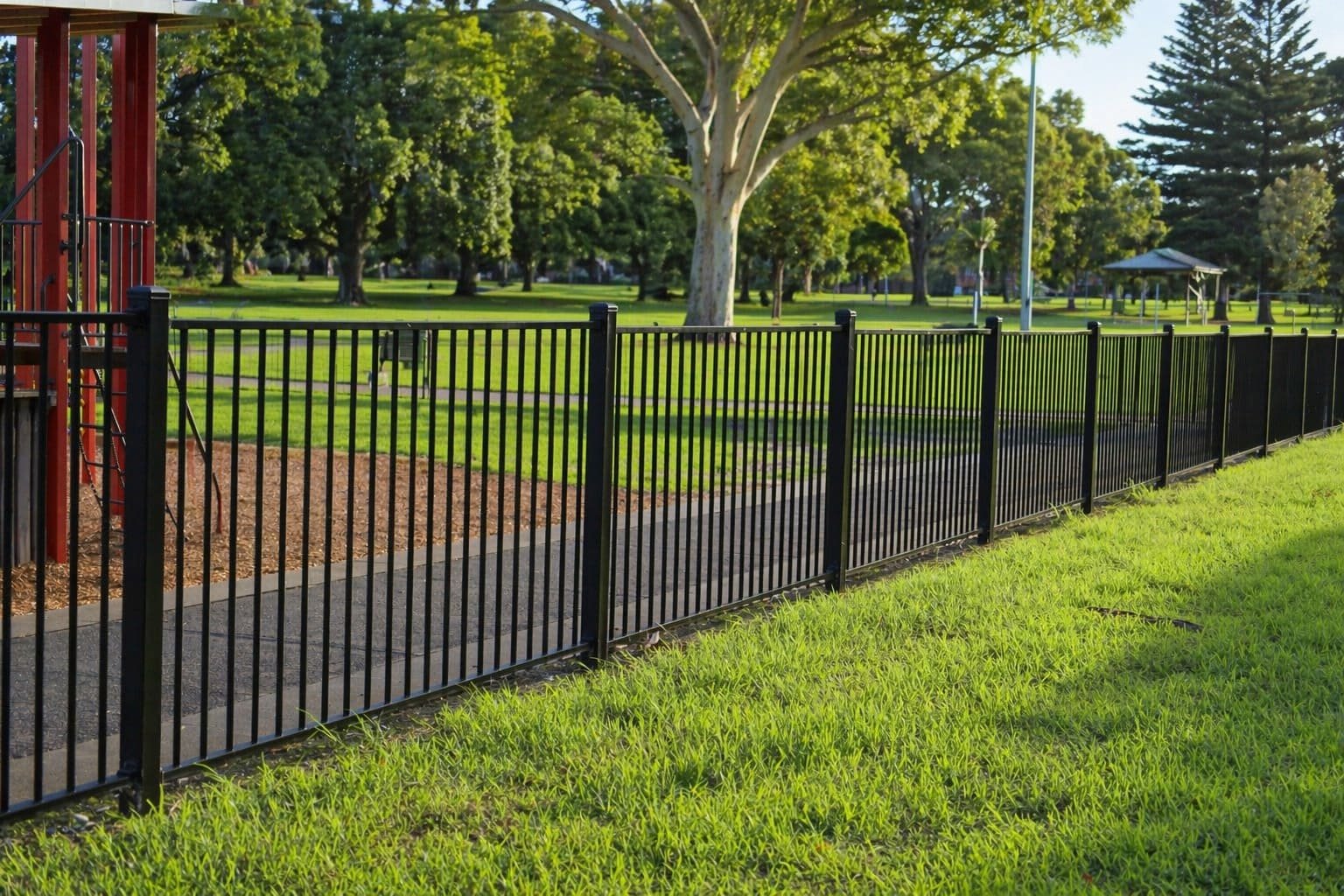
Tubular systems can suit customer-facing commercial sites, schools, parks, car yards and selected residential boundaries. Their security level depends on the height, bar spacing, rail position, top profile, frame and gates. Use flat or rounded profiles where a non-injurious appearance is important, and only use spear details after considering public exposure and the site risk.
Rod top fencing: a non-pointed steel boundary option
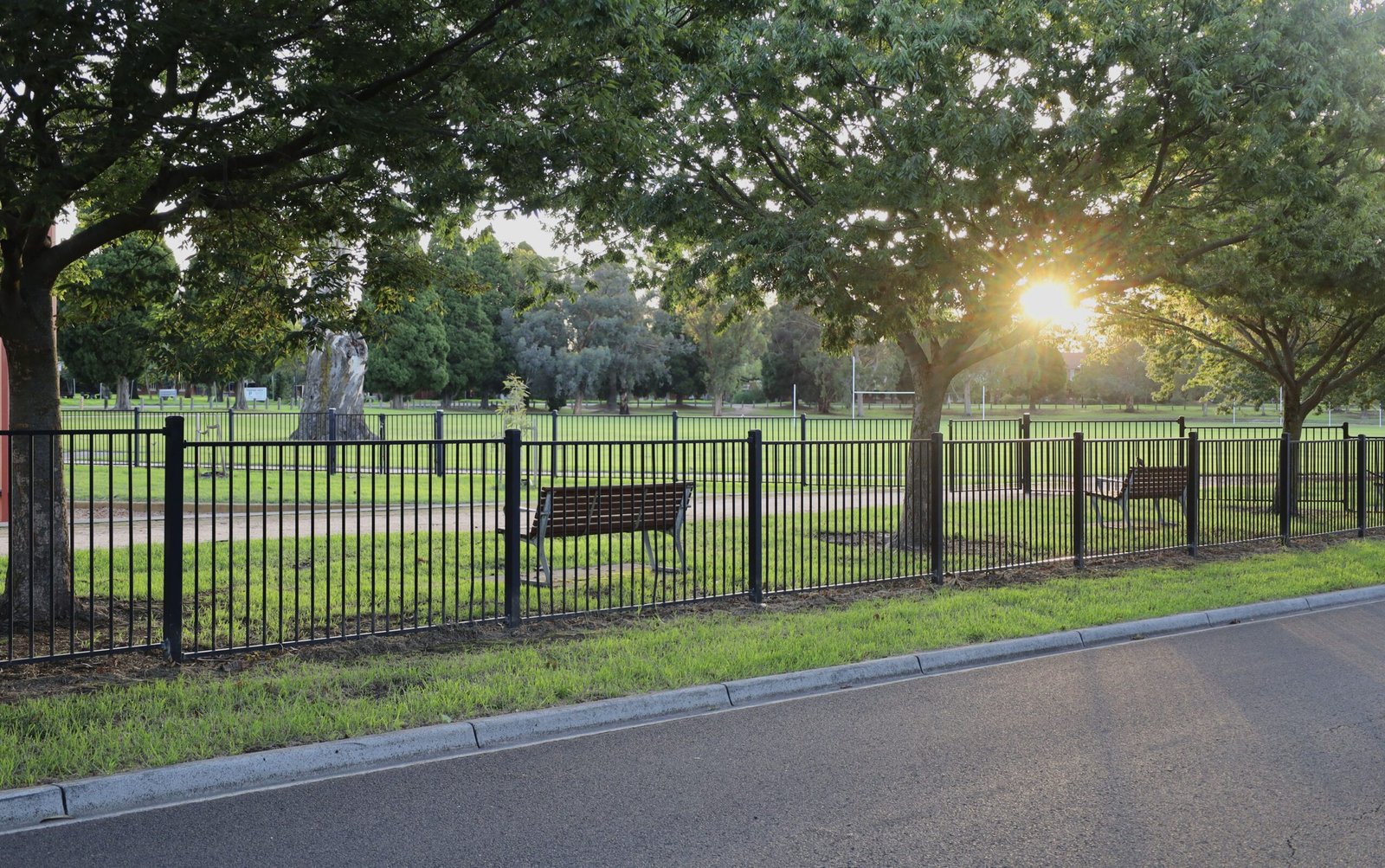
Rod top or square top fencing uses upright steel rods or bars without a sharp spear point. It can be useful where the project wants a robust vertical steel appearance while reducing the injury concern associated with pointed top profiles.
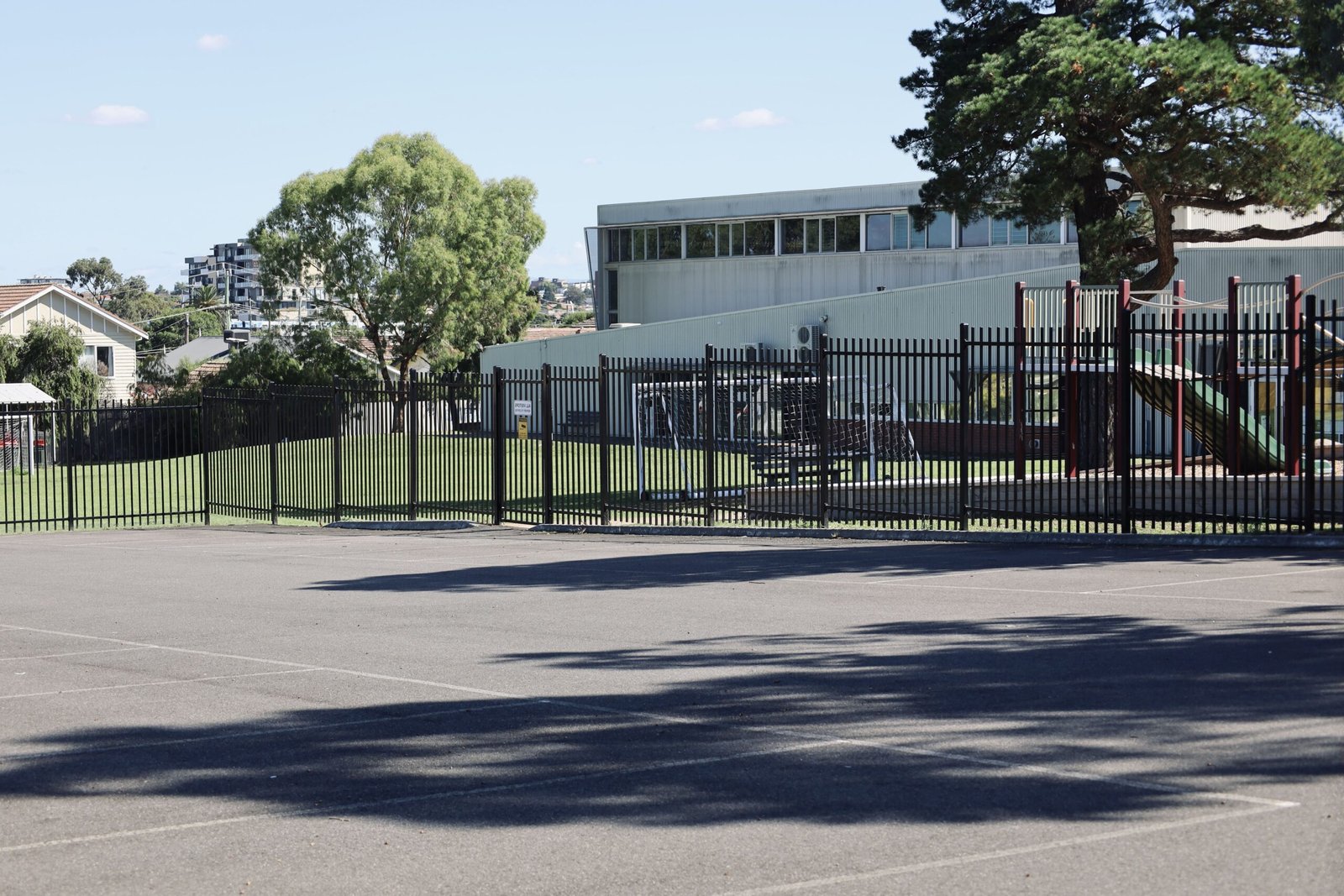
That does not make rod top a universal answer for schools, public facilities or residential sites. Review bar spacing, rails, finished height, climb opportunities, gates and the relevant user group. Where street character and informal surveillance matter, Planning Victoria advises that fence style, scale and materials should contribute to the area and that low or partially transparent front fences can support visibility to public space [8].
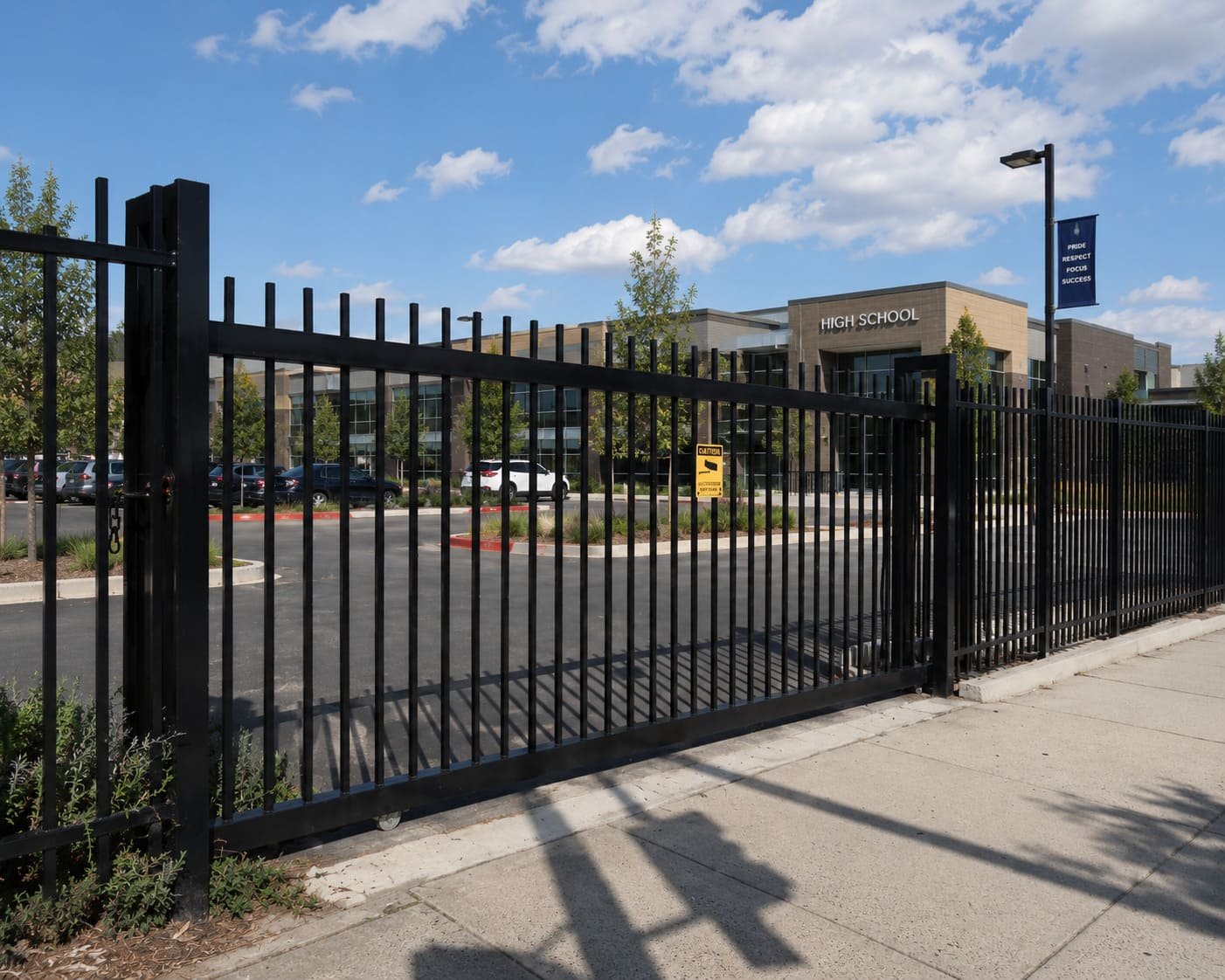
Chain wire fencing: practical coverage for long perimeters
Chain wire fencing Melbourne projects are commonly considered where the site needs visible coverage across long or irregular boundaries. The system can be configured through wire diameter, mesh aperture, selvedge, height, posts, rails, cable wires, coatings and gates [6].
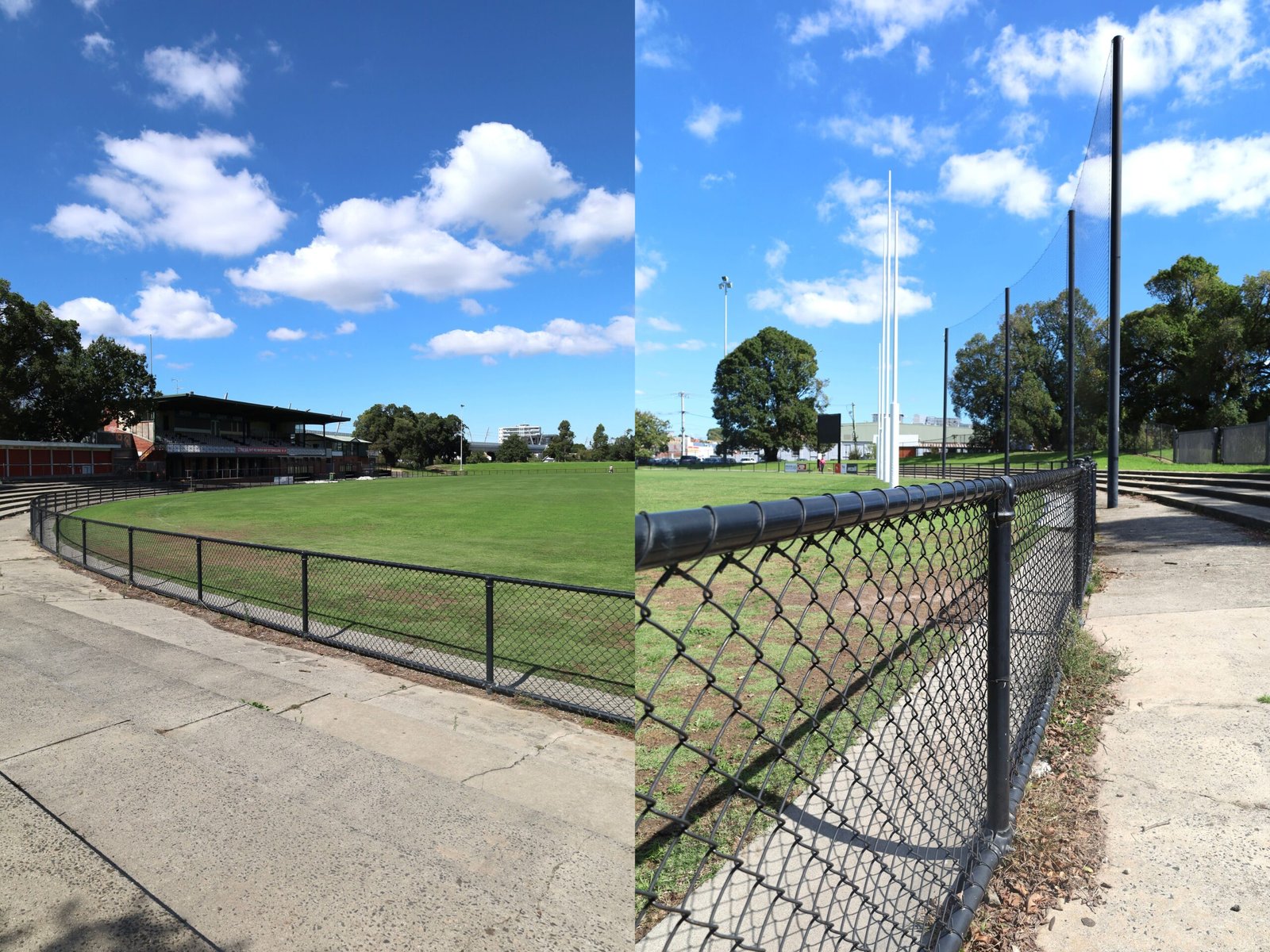
Chain wire can suit yards, utility areas, sporting boundaries, internal compounds and staged work. It is less architectural than tubular or rod top fencing and may need upgrades where cutting, climbing or high-deterrence risk is material. Avoid comparing chain wire only by linear metres; the supporting framework, gates, bottom restraint and toppings can significantly change the installed scope.
Coating and corrosion protection should be part of the steel specification
Steel fencing is exposed to weather, ground interfaces, damaged finishes, vegetation and site contaminants. The coating approach should therefore be selected for the actual environment rather than treated as a colour choice. The Australian Steel Institute states that protective coatings are a recognised method for inhibiting steel corrosion and points specifiers to paint and hot-dip galvanizing guidance under AS/NZS 2312 [2].
- Confirm whether components are pre-galvanised, hot-dip galvanised after fabrication, powder coated, painted or use a combined system.
- Ask how welds, cut edges, drilled areas and installation damage are protected or repaired.
- Consider coastal exposure, industrial contaminants, irrigation, soil contact and trapped debris around posts.
- Include inspection, cleaning, vegetation control, gate adjustment and coating repair in the maintenance plan.
- Do not assume that two black steel fences have the same substrate preparation or corrosion-protection system.
Plan steel fencing with gates, automation and access control
The gate should provide a security and presentation level consistent with the adjoining fence. Pentagon’s steel fencing service includes automated gate systems, while its wider gate range covers sliding, swing, side and cantilever configurations [1] [9].
- Vehicle movement: confirm clear opening, turning path, queueing, loading operations and emergency access.
- Gate type: compare sliding, cantilever and swing operation against slope, side run-off, track conditions and wind exposure.
- Pedestrian access: decide whether people need a separate gate with controlled entry rather than sharing the vehicle opening.
- Security equivalence: match the gate infill, height, bottom gap, top profile, locks and hardware to the fence risk level.
- Automation pathway: plan power, controls, safety devices, manual release, intercoms, keypads and maintenance access before fabrication.
Melbourne frontage and permit checks
Where steel fencing forms part of a residential or mixed-use front boundary, the design may need to respond to street character, visibility and height controls. Planning Victoria states that residential front fences should complement the dwelling and adjoining fences, and provides height standards for fences within 3 metres of a street, subject to the applicable zone schedule and site context [10].
Commercial, industrial, infrastructure and public-facility projects can have different planning, building, authority and asset-owner requirements. Check the specific address, council, overlays, easements, traffic visibility, title conditions and any project standard before treating a generic fence height or product detail as approved.
Quote-readiness checklist for steel fence installation
Before contacting steel fencing contractors Melbourne, prepare enough information for contractors to compare the same scope. This is more reliable than requesting a price from the fence type alone.
- Site and zones: mark the front boundary, secure perimeter, lower-risk sides, internal compounds and all gates.
- Risk: define casual access control, vandalism, climbing, cutting, asset theft and after-hours risks by zone.
- Preferred shortlist: note where palisade, weldmesh, tubular, rod top or chain wire appears suitable, without fixing the product before site review.
- Dimensions: provide approximate lengths, heights, slopes, corners, retaining edges and ground conditions.
- Access: list pedestrian gates, vehicle gates, automation, access control and emergency/service requirements.
- Finish: identify the exposure environment, colour, galvanizing/coating expectation and maintenance constraints.
- Existing works: clarify removal, disposal, vegetation, services, concrete, traffic management and work near the public realm.
- Evidence: request the proposed system specification, exclusions, gate details, coating description and any project-relevant technical documentation.
Decision shortcut
- Choose palisade for the shortlist when high deterrence and an industrial security appearance are acceptable.
- Choose weldmesh for the shortlist when rigid visibility and a clearly defined aperture/security specification are priorities.
- Choose tubular or rod top for the shortlist when public-facing presentation, visibility and non-pointed options matter.
- Choose chain wire for the shortlist when practical coverage, long runs and configurable perimeter construction are central to the brief.
- Use a mixed-zone design when the frontage, loading area, restricted compound and internal boundaries have different risks.
Common mistakes to avoid
- Treating all steel fences as high security. Material family alone does not establish anti-climb, anti-cut or deterrence performance.
- Choosing the same system for every site zone. A public frontage and a restricted rear compound often need different balances of appearance and security.
- Using product names instead of specifications. Terms such as weldmesh, tubular and chain wire cover multiple configurations.
- Leaving gates until after the fence design. Openings, posts, access control and moving-gate hardware can change the perimeter layout.
- Ignoring coating details. Colour does not explain how the steel was prepared, galvanised, coated or repaired after fabrication and installation.
How Pentagon Fencing can help
Pentagon Fencing & Gates supplies and installs steel fencing and gate systems across Melbourne, including palisade, spear top, rod top, weldmesh, tubular steel and chain wire options for industrial, commercial, government, infrastructure, school and selected residential applications [1].
- Compare steel fence options by site zone, security level, visibility, public exposure and frontage presentation.
- Plan fence lines together with pedestrian gates, sliding or swing gates, automation and access-control requirements.
- Prepare a site-specific brief for steel fence installation Melbourne, covering system type, dimensions, coatings, removals and access constraints.
FAQ
What is the best steel fencing option for a commercial site?
There is no universal best option. Palisade may suit a high-deterrence industrial boundary, weldmesh can support visibility and anti-climb specifications, tubular or rod top can suit public-facing areas, and chain wire can cover long or lower-risk runs. Match the system to each site zone and access point.
Is weldmesh or palisade better for anti-climb fencing?
Both can be specified for anti-climb outcomes, but they work differently. Palisade uses rigid steel pales and deterrent profiles, while security weldmesh uses aperture and wire configuration to restrict grip and penetration. Compare the complete installed systems, not only the fence panels.
Is tubular steel fencing suitable for residential properties?
Yes, selected flat-top, loop-top, rod-top or decorative tubular systems can suit residential steel fencing Melbourne projects where an open boundary and visible frontage are preferred. Front-fence and local approval checks still apply to the specific property.
When should chain wire fencing be used?
Chain wire can suit large compounds, sports or utility areas, long boundaries and internal zones where visibility and practical coverage matter. Wire diameter, aperture, height, framework, gates and toppings should be selected for the actual risk.
Does a steel fence need galvanising or another protective coating?
Outdoor steel needs a corrosion-protection approach suited to its exposure and maintenance environment. Ask the contractor to describe the galvanising, paint, powder-coating or combined system, including how cut edges, welds and installation damage are treated.
What to Keep in Mind
- Choose the steel system by site risk, visibility, public exposure and presentation rather than by material name alone.
- Use palisade, weldmesh, tubular, rod top and chain wire as different routing options, not interchangeable specifications.
- Plan gates, automation and access control with the fence so openings do not become the weak or impractical part of the perimeter.
- Define the coating, damaged-finish repair and maintenance requirements for the actual Melbourne exposure environment.
- Keep product-specific, gate-specific and cost questions in their own detailed scopes after this broad steel shortlist is established.
References
- Pentagon Fencing, “Palisade Fencing & Steel Security Fencing Melbourne,” Pentagon Fencing. Accessed: Jun. 13, 2026. [Online]. Available: https://pentagonfencing.com.au/service/steel-security-fencing-melbourne/
- Australian Steel Institute, “Corrosion Protection,” Australian Steel Institute. Accessed: Jun. 13, 2026. [Online]. Available: https://www.steel.org.au/what-we-do/focus-areas/steel-and-design/corrosion-protection/
- Profence, “PROPALE Palisade – W Pales Straight Top,” Profence. Accessed: Jun. 13, 2026. [Online]. Available: https://profence.com.au/palisade-fencing/w-pales-straight/
- Profence, “Promax 358 Mesh Fencing: High Security Anti-Climb Perimeter Protection,” Profence. Accessed: Jun. 13, 2026. [Online]. Available: https://profence.com.au/promax-security-fencing/358-mesh/
- Profence, “Security Fencing Tubular – Flat Top Fence,” Profence. Accessed: Jun. 13, 2026. [Online]. Available: https://profence.com.au/tubular-fencing/flat-top/
- Profence, “Heavy Galvanised Chainwire Wire Mesh Fencing,” Profence. Accessed: Jun. 13, 2026. [Online]. Available: https://profence.com.au/chainwire/heavy-galvanised/
- WorkSafe Victoria, “Construction Site Security Fencing,” WorkSafe Victoria. Accessed: Jun. 13, 2026. [Online]. Available: https://www.worksafe.vic.gov.au/construction-site-security-fencing
- Department of Transport and Planning Victoria, “6.4 Barriers and Fences,” Planning Victoria. Accessed: Jun. 13, 2026. [Online]. Available: https://www.planning.vic.gov.au/guides-and-resources/guides/urban-design-guidelines-for-victoria/objects-in-the-public-realm/barriers-and-fences
- Pentagon Fencing, “Gates,” Pentagon Fencing. Accessed: Jun. 13, 2026. [Online]. Available: https://pentagonfencing.com.au/service-category/gates/
- Department of Transport and Planning Victoria, “PPN27: Understanding the Residential Development Provisions,” Planning Victoria. Accessed: Jun. 13, 2026. [Online]. Available: https://www.planning.vic.gov.au/guides-and-resources/guides/planning-practice-notes/understanding-the-residential-development-provisions