
Table of Contents
Sliding gate vs swing gate is usually a site-layout decision before it is a style decision. A sliding gate moves sideways along a fence line, which can suit tight driveways, busy commercial entries and industrial access points where a gate leaf cannot swing into traffic. A swing gate opens on hinges, which can suit wider, simpler and more design-led entries when there is enough clear arc for the leaf to open safely.
For commercial, industrial and residential sites in Melbourne, the right answer depends on opening width, driveway slope, vehicle movement, pedestrian separation, automation plans, safety devices, maintenance access, budget and the look of the adjoining fence. Pentagon Fencing & Gates lists sliding gates as a space-saving option where swing space is limited and swing gates as single or double-leaf gate solutions for residential, commercial and industrial properties [1].
Key Takeaways
- Choose a sliding gate when the site has limited swing clearance, frequent vehicle movement, a high-traffic driveway, a wide commercial opening or a need to keep the gate leaf out of the driveway path.
- Choose a swing gate when the entry has enough inward or outward arc clearance, lower traffic pressure, simpler hardware requirements or a design preference for a hinged gate.
- Cantilever sliding gates can help where a ground track is unsuitable because Pentagon describes cantilever gates as sliding gates that move horizontally without a ground track across the entrance [2].
- Automation should not be treated as an add-on. Powered gates need to be properly designed, installed, checked and maintained because moving gates can create impact, crushing and trapping hazards [3].
- The best gate quote should compare the complete system: gate type, frame, infill, posts, footings, motor readiness, safety devices, access control, manual release, maintenance and integration with the adjoining fence.
Sliding gate vs swing gate: the quick decision shortcut
Use this driveway gate comparison as a first filter before moving into detailed design. It does not replace a site measure, but it helps identify which movement type is more likely to fit the access problem.
| Decision factor | Sliding gate usually fits when | Swing gate usually fits when | What to verify on site |
|---|---|---|---|
| Driveway depth | There is not enough clear space for a gate leaf to open inward without blocking vehicles, pedestrians or loading activity. | There is enough clear arc inside the property and the opening movement will not conflict with parked cars or users. | Measure swing arc, vehicle waiting space, pedestrian paths, bins, landscaping, kerbs and existing structures. |
| Side run-back | There is enough side space for the gate to slide fully open along the fence line or into a cantilever run-back zone. | Side space is limited, but the entry has enough clear front or rear depth for hinged movement. | Check fence returns, boundary lines, retaining walls, service cabinets, trees and gate leaf storage position. |
| Traffic volume | The gate is used frequently by staff, trucks, delivery vehicles, residents, visitors or contractors. | The gate is used less often, traffic can wait safely and the opening speed is not a major operational issue. | Review peak-hour queues, truck turning, visitor flow, emergency access and how long a vehicle can safely wait. |
| Ground conditions | A tracked sliding gate can work on a prepared surface, or a cantilever gate can avoid a ground track where surface conditions make tracks difficult. | The hinge posts and opening arc can be installed on stable ground without the leaf dragging, dropping or clashing with the surface. | Check slope, drainage, gravel, asphalt, concrete, ruts, debris, services and footing conditions. |
| Security and access control | The site needs a controlled vehicle entry that can pair with automation, intercoms, keypads or other access-control planning. | The site needs a secure hinged entry and has a simpler access pattern or a specific architectural appearance requirement. | Separate pedestrian and vehicle access where possible; define who enters, when, how and under whose control. |
| Budget and maintenance | The site can justify extra track, guide, cantilever or motor-ready components because traffic flow and clearance are critical. | The opening is straightforward and the project benefits from simpler hinges, posts and gate leaves. | Compare complete lifecycle scope rather than only the gate leaf price. |
When a sliding gate makes more sense
A sliding gate opens sideways rather than swinging across the driveway. Pentagon’s sliding gate page describes these systems as tailored for commercial, industrial and large-scale projects, including warehouses, logistics hubs, construction sites and manufacturing facilities, while also supporting residential driveway entrances [4].
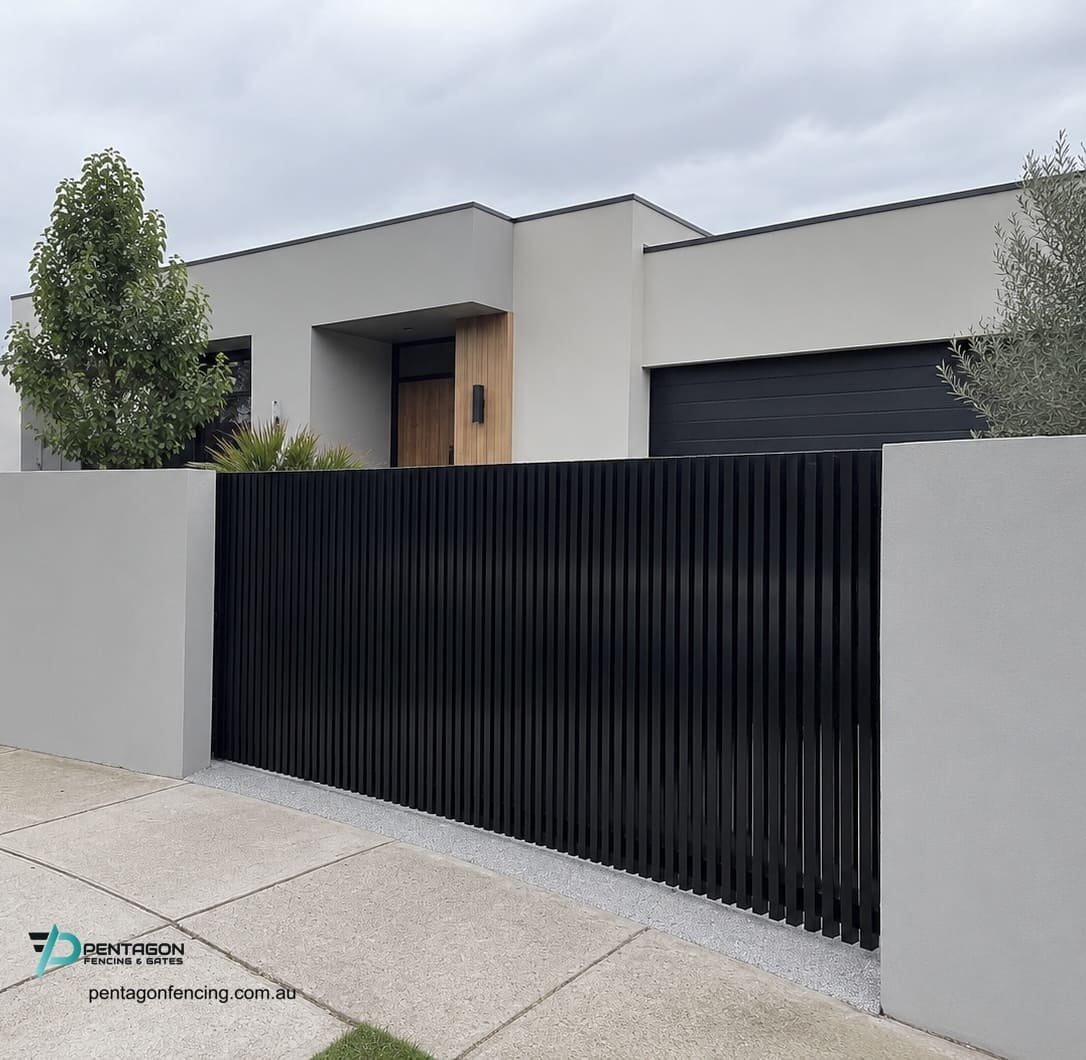
This makes a sliding gate a strong option when the site cannot afford a large swing arc. On a busy entry, a gate leaf swinging across the driveway can interfere with queuing vehicles, turning trucks, pedestrians or parked cars. A sliding gate can keep the opening movement parallel to the fence line, provided there is enough side run-back.
| Sliding gate fit | Why it helps | Design watch-out |
|---|---|---|
| Industrial or warehouse entry | An industrial sliding gate can keep heavy vehicle access aligned with the fence line and reduce conflicts with trucks or forklifts near the entry. | Check run-back, opening width, motor duty cycle, safety devices, manual release, emergency access and maintenance clearance. |
| Commercial car park or mixed-use site | The gate can support controlled vehicle entry without requiring vehicles to stop inside the swing path. | Do not allow vehicles to queue into public roads, pedestrian crossings or loading zones. |
| Residential driveway with limited depth | A sliding gate can preserve usable driveway depth where a swing gate would clash with parked cars or landscaping. | Confirm there is enough fence-line length for the gate leaf or a suitable cantilever arrangement. |
| Uneven or debris-prone entrance | A cantilever gate may avoid track obstruction because it does not need a ground track across the driveway [2]. | Cantilever gates still need suitable posts, counterbalance space, structural design and safe stopping points. |
When a swing gate makes more sense
A swing gate opens on hinges, either as a single leaf or double leaf. Pentagon’s gates category describes swing gates as strong, versatile gate solutions for residential, commercial and industrial properties, available in single or double-leaf configurations [1]. Pentagon’s side gate page also notes that it supplies and installs swing gates in Melbourne using materials suited to commercial, industrial and residential applications [5].
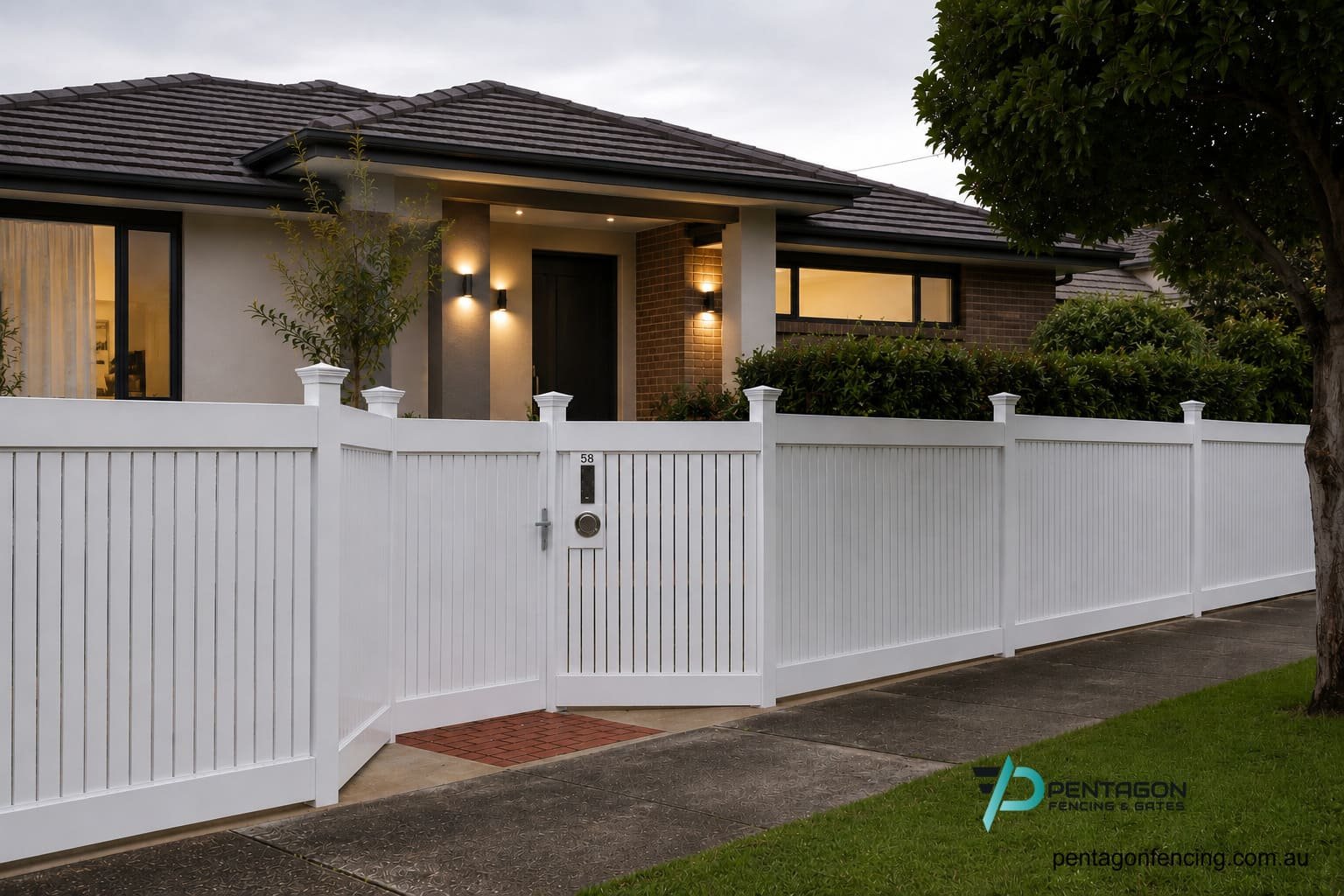
Swing gates can be practical where the site has enough opening arc, traffic pressure is manageable and the project wants a classic gate movement. A hinged gate can also pair well with pedestrian access gates, side entries and lower-traffic driveways. For a large industrial entry, however, the arc clearance, wind exposure, hinge loading and vehicle waiting area need to be checked carefully before choosing a double-leaf layout.
| Swing gate fit | Why it helps | Design watch-out |
|---|---|---|
| Residential front boundary | A swing gate can support a traditional driveway entry when there is enough private-space clearance for the gate leaf. | Check car parking position, path grades, mailbox, bins, landscaping and whether the gate opens toward any public area. |
| Lower-traffic commercial access | A hinged gate can be enough for occasional staff, contractor or service access where queuing and high-cycle operation are not the main issue. | Allow enough waiting space so vehicles do not stop across footpaths, roads or shared driveways. |
| Wide opening with enough arc | A double-leaf gate can reduce the length of each leaf compared with one large leaf, which can suit some wide entries. | For double swing gate industrial applications, verify wind load, hinge posts, leaf sag, automation force, locking and safe stopping positions. |
| Side or pedestrian access | Swing movement is often simple and intuitive for people entering on foot when the gate is sized and latched correctly. | Keep pedestrian gates separate from vehicle gates where user safety and access control require different routes. |
Commercial and industrial sites: compare access flow before gate style
A commercial gate comparison should start with operational movement. The gate is not only a boundary element. It affects how vehicles arrive, wait, turn, enter, exit and share space with pedestrians. For warehouses, factories, logistics yards, schools, childcare centres, public infrastructure sites and business premises across Melbourne, the gate also affects after-hours security and emergency access.
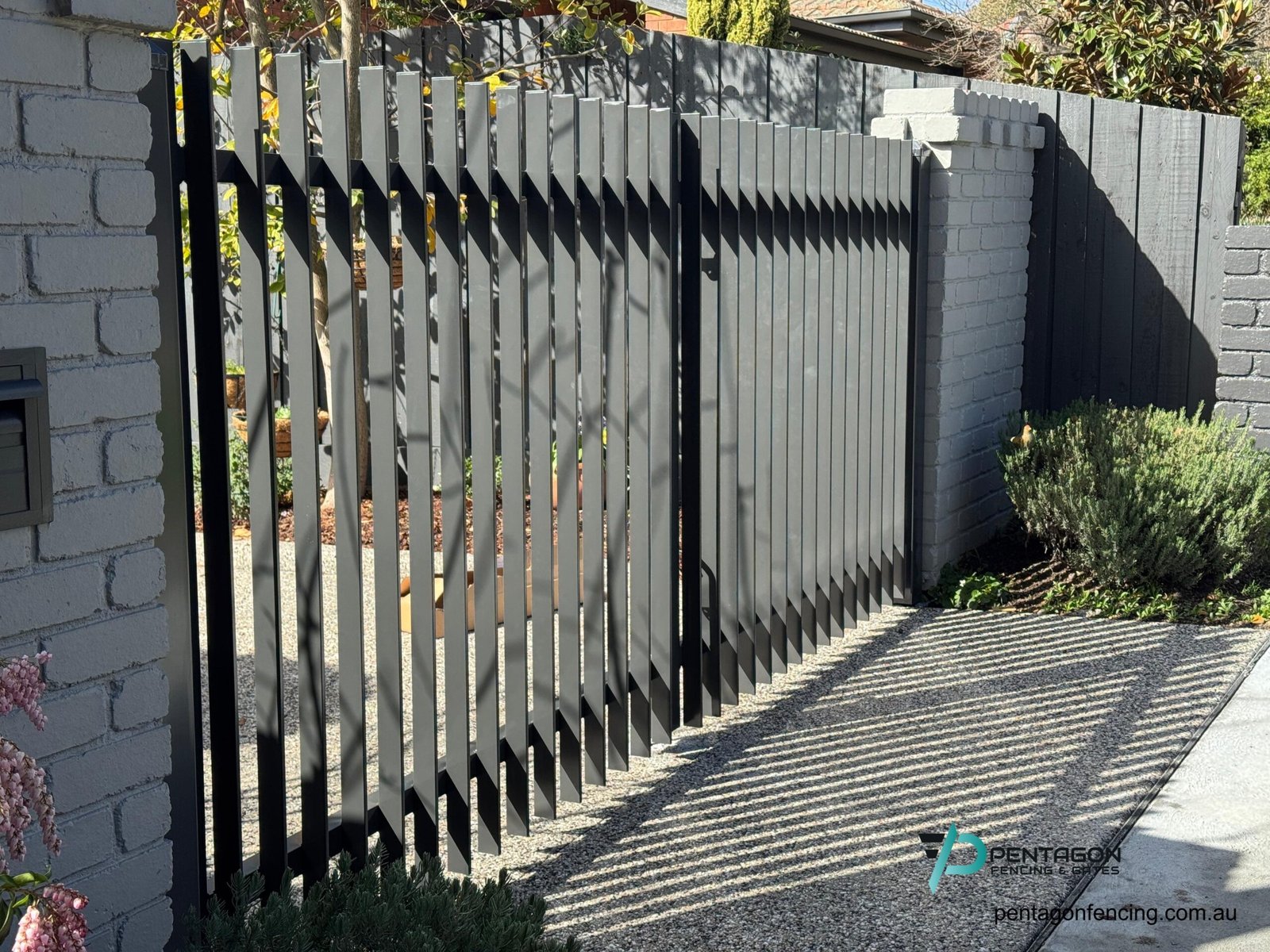
For a busy industrial driveway, a sliding gate or cantilever gate is often the more practical starting point because it keeps the moving leaf out of the vehicle path. For a lower-traffic service yard or a secondary entry, a swing gate may still be suitable if the swing arc is clear and users can wait safely. The mistake is to choose the gate because it looks familiar rather than because it fits the site movement.
- Truck and delivery movement: check turning radius, queuing space, loading-bay conflicts and the distance from the road to the closed gate.
- Pedestrian separation: avoid forcing staff, visitors, students or residents through the same opening used by vehicles.
- Security workflow: define who opens the gate, how access is logged, what happens after hours and how a manual release is controlled.
- Emergency access: ensure emergency vehicles can enter without blocked paths, unclear key processes or unsafe manual gate handling.
- Maintenance responsibility: industrial gates can be heavy and should be inspected and maintained; SafeWork NSW notes that lack of maintenance was the main cause in reported industrial gate incidents involving gates falling or becoming unhinged [6].
Residential sites: compare driveway depth, street presentation and daily use
For a Melbourne home, the sliding gate vs swing gate decision is usually shaped by driveway depth, fence style, car parking habits, budget and how often the gate opens each day. A swing gate can look simple and traditional, but it needs a clear opening arc. A sliding gate can protect driveway space, but it needs run-back along the fence line.
Residential buyers should also check how the gate works with parcel deliveries, bins, visitor parking, pedestrian access and landscaping. A gate that looks right in a front elevation drawing can still be frustrating if it blocks the car, opens into a path, leaves no space for visitors to wait or prevents easy access for maintenance.
| Residential question | Why it matters | Gate implication |
|---|---|---|
| Can a car park behind the gate while it opens? | A gate should not force a car to stop unsafely on the road or footpath while waiting. | Limited depth often favours sliding; generous private depth may allow swing. |
| Is there enough fence-line run-back? | A sliding gate needs somewhere to go when open. | No run-back may push the design toward swing, bi-parting, redesign or a different opening location. |
| Will the gate match the fence? | Gate frame, infill, colour and hardware need to suit the adjoining aluminium, steel, timber, Colorbond or modular wall boundary. | Both sliding and swing gates can be designed to match, but weight and span affect the structure. |
| Does the property need separate pedestrian access? | People should not need to open a full vehicle gate every time they enter on foot. | Add a pedestrian gate or side gate where daily access patterns make it safer and more convenient. |
Automation and safety: plan the system before fabrication
Automatic gate installation can change the design requirements for both sliding and swing gates. The gate leaf, posts, track or hinges, motor position, safety devices, manual release and access controls need to be considered together. Treating automation as a later upgrade can create layout problems if the gate was not built with motor load, safety clearances or cabling in mind.
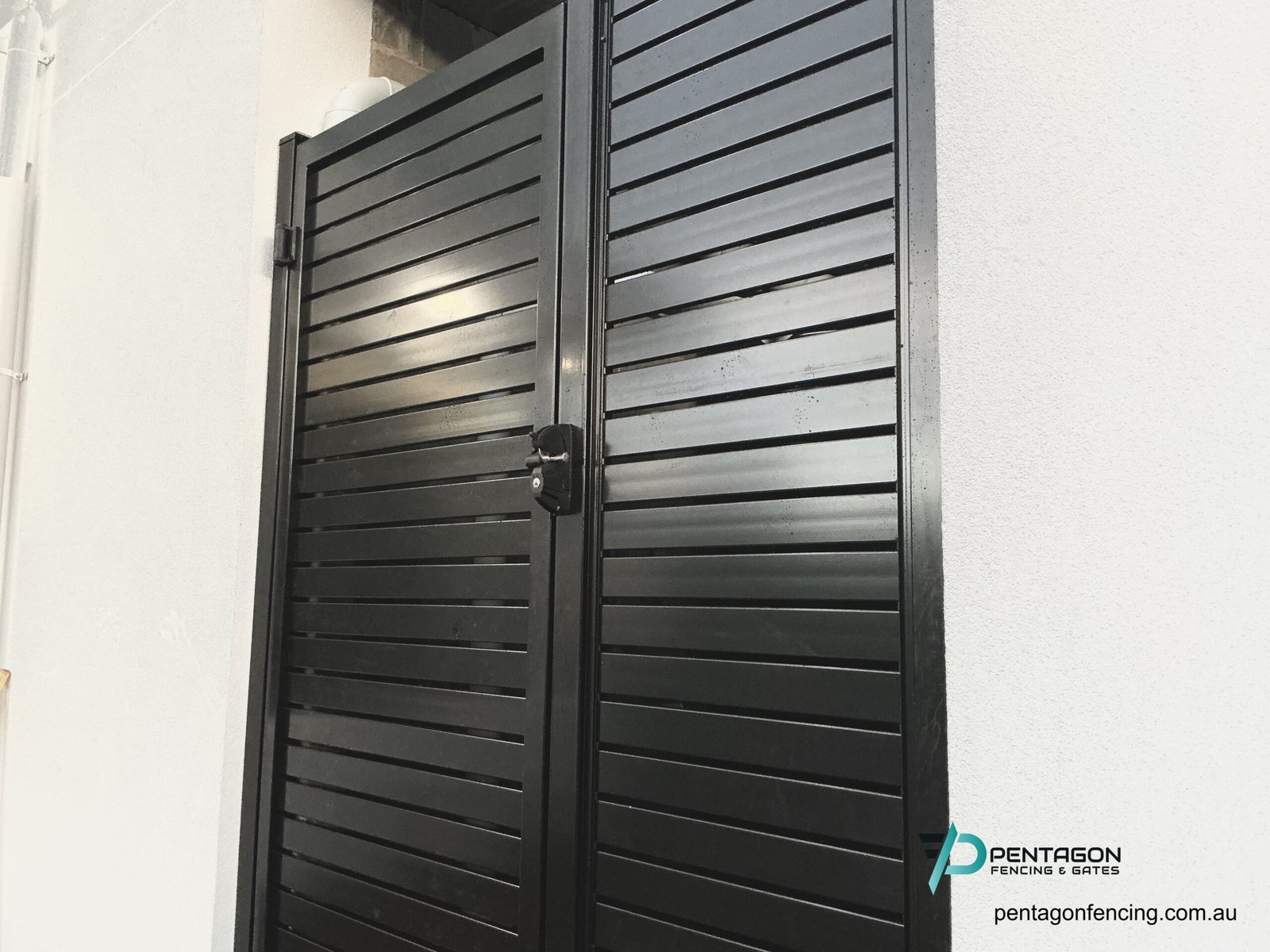
Powered gates are moving machines. The UK Health and Safety Executive notes that powered gates need proper design, manufacture, installation, maintenance, regular checks and risk assessment, and that hazards can include being hit, crushed, trapped, caught on moving parts or exposed to electrical risks [3]. In Victoria, WorkSafe reported a fatal incident involving automatic double sliding gates at a truck depot, where the gate could run beyond support posts and fall from its rails after repair work [7]. These are reminders to design and maintain gate systems carefully, not reasons to avoid automation altogether.
| Automation check | Sliding gate implication | Swing gate implication |
|---|---|---|
| Movement path | Protect the sliding path, guide area, track or cantilever support zone from obstruction and uncontrolled over-travel. | Protect the swing arc from people, vehicles, walls, posts, bins, landscaping and other pinch or crush points. |
| Access control | Keypad, intercom, remote or card access should be positioned so vehicles can stop safely outside the moving path. | Controls should not require a driver or pedestrian to stand inside the swing arc. |
| Manual release | Confirm how the gate is secured, isolated and manually operated during power failure, service or repair. | Confirm how each leaf is restrained so it does not move unexpectedly in wind, on slope or during maintenance. |
| Maintenance access | Track, rollers, guides, stops, motor and safety equipment should remain accessible for inspection and servicing. | Hinges, operators, stops, locks and leaf alignment should be accessible without unsafe handling. |
Cost drivers: compare the full gate package, not only the leaf
The cost difference between sliding and swing gates is not only about material. A sliding gate can need track preparation, run-back space, guide posts, end stops, rollers, cantilever hardware or motor-ready details. A swing gate can need stronger hinge posts, wider leaf clearance, drop bolts, stops, wind restraint, ground clearances and careful alignment. Both types may need automation, safety devices, cabling, access control and matching fence infill.
Because of this, a quote should describe what is included and excluded. A simple hinged residential gate and a motorised high-cycle industrial sliding gate are not comparable just because both are “gates”, even before budget, access control and site preparation are considered. Compare the full scope, including site preparation and long-term maintenance.
| Cost driver | Why it changes price | Question to ask |
|---|---|---|
| Opening width and gate weight | Wider and heavier gates need stronger frames, posts, hinges, rollers, guides, motors or structural allowances. | Is the quote based on measured clear opening, gate weight and daily usage? |
| Track, cantilever or hinge system | A tracked slider, cantilever slider and hinged swing gate use different support systems and preparation work. | Which movement system is included and why is it suitable for the ground condition? |
| Automation readiness | Motors, electrical preparation, safety devices, access controls and manual release planning add cost and design complexity. | Is the gate being built for manual use only, automation now or automation later? |
| Gate infill and finish | Aluminium slats, tubular steel, weldmesh, chain wire, timber-look finishes and Colorbond-style panels have different weights and detailing needs. | Does the gate match the adjacent fence in security, visibility, privacy and finish? |
| Site access and removals | Existing gates, concrete, underground services, poor access, slope and staged works can increase labour and risk. | Does the quote include removals, disposal, service checks, footing assumptions and temporary access? |
Quote-ready checklist before choosing sliding or swing
Before requesting a final quote, collect enough information for a contractor to compare the gate types on the same basis. This prevents the common problem where one quote includes automation and site preparation while another only includes a manual gate leaf.
- Opening details: clear width, fence height, boundary position, driveway slope, surface type, drainage and available run-back or swing arc.
- Users: residents, staff, visitors, delivery drivers, trucks, emergency services, cleaners, contractors and pedestrians.
- Traffic pattern: daily use frequency, peak times, vehicle waiting space, turning movement and whether vehicles must queue near a public road.
- Security need: after-hours locking, access control, intercom, keypad, card access, CCTV integration or separate pedestrian gate.
- Gate design: sliding, cantilever, single swing, double swing, manual, automated now or automation-ready for later.
- Infill and finish: aluminium, steel, weldmesh, chain wire, Colorbond-style, timber feature or a material matched to the adjoining fence.
- Safety and maintenance: gate stops, guides, hinges, track, manual release, inspection access, service plan and clear responsibility after handover.
How Pentagon Fencing can help
Pentagon Fencing & Gates supplies and installs sliding gates, swing gates, side gates and cantilever gates across Melbourne, with gate systems positioned for residential, commercial and industrial applications [1] [2] [4] [5].
- Assess whether a sliding, cantilever, single swing or double swing gate fits the site layout, traffic pattern and fence line.
- Match the gate frame, infill, finish and access-control readiness to the adjoining fence and daily use case.
- Prepare a quote-ready scope covering opening width, posts, ground condition, automation planning, safety checks and maintenance access.
FAQ
Is a sliding gate better than a swing gate?
Not always. A sliding gate is usually better where swing clearance is limited, traffic is frequent or the gate needs to stay out of the driveway path. A swing gate can be better where the site has enough opening arc, simpler traffic movement and a preference for hinged operation.
Which gate is better for a commercial or industrial site?
For high-traffic commercial and industrial entries, a sliding gate or cantilever gate is often the stronger starting point because it can keep the moving leaf parallel to the fence line. A swing gate can still work for lower-traffic entries if there is enough clearance and safe vehicle waiting space.
Can a swing gate be automated?
Yes, swing gates can be automated, but the design should account for gate weight, leaf movement, hinge loading, wind exposure, safety devices, access controls and manual release. Automation should be planned before fabrication rather than treated as a last-minute add-on.
What is the difference between a sliding gate and a cantilever gate?
A cantilever gate is a type of sliding gate that moves horizontally without a ground track across the entrance. Instead, it is supported from posts and roller carriages, which can help where a track across the driveway would be difficult to keep clear [2].
What affects the cost of sliding and swing gates?
Cost is affected by opening width, gate weight, material, infill, posts, footings, track or hinge system, automation, safety devices, access control, site access, removals and maintenance requirements. Compare the complete package rather than only the gate leaf.
What to Keep in Mind
- Start the sliding gate vs swing gate decision with clearance, traffic flow and user safety before choosing a visual style.
- Use sliding or cantilever gates where side movement solves driveway depth, high-traffic or track-clearance issues.
- Use swing gates where the site has enough arc clearance, manageable traffic and a simple hinged entry makes practical sense.
- Plan automation, access control, manual release and maintenance access before the gate is fabricated.
- Compare complete gate systems, including posts, hardware, safety checks, ground conditions, finish and integration with the fence.
References
- Pentagon Fencing & Gates, “Gates,” Pentagon Fencing & Gates. Accessed: Jul. 8, 2026. [Online]. Available: https://pentagonfencing.com.au/service-category/gates/
- Pentagon Fencing & Gates, “Cantilever Gates,” Pentagon Fencing & Gates. Accessed: Jul. 8, 2026. [Online]. Available: https://pentagonfencing.com.au/service/cantilever-gates/
- Health and Safety Executive, “The basics,” HSE. Accessed: Jul. 8, 2026. [Online]. Available: https://www.hse.gov.uk/work-equipment-machinery/powered-gates/basics.htm
- Pentagon Fencing & Gates, “Sliding Gates,” Pentagon Fencing & Gates. Accessed: Jul. 8, 2026. [Online]. Available: https://pentagonfencing.com.au/service/sliding-gates/
- Pentagon Fencing & Gates, “Side Gate,” Pentagon Fencing & Gates. Accessed: Jul. 8, 2026. [Online]. Available: https://pentagonfencing.com.au/service/side-gate/
- SafeWork NSW, “Industrial gate safety,” SafeWork NSW. Accessed: Jul. 8, 2026. [Online]. Available: https://www.safework.nsw.gov.au/advice-and-resources/campaigns/industrial-gate-safety
- WorkSafe Victoria, “Company fined $350,000 after fatal gate crush,” WorkSafe Victoria. Accessed: Jul. 8, 2026. [Online]. Available: https://www.worksafe.vic.gov.au/news/2024-12/company-fined-350000-after-fatal-gate-crush