
Table of Contents
Where the aluminium slat fence decision gets difficult
- You want a modern aluminium slat fence, but the same colour and height can look very different depending on whether the slats run horizontally or vertically.
- You need privacy from the street without blocking too much airflow, natural light or passive visibility around the entry.
- You are trying to match a pedestrian gate, sliding gate or driveway gate, not just choose a standalone fence panel.
- Your frontage may include slope, short returns, letterboxes, intercoms, bins, side access or existing masonry that changes the best slat direction.
- You want the design to improve street appeal while still staying quote-ready for height, spacing, finish, posts, gate hardware and installation.
Key Takeaways
- Horizontal aluminium slat fencing is usually better when the goal is a clean, modern, wider-looking frontage with controlled screening.
- Aluminium vertical slat fencing is usually better when the frontage needs a taller visual rhythm, more open vertical lines or easier alignment with blade-style gates and posts.
- Privacy is not controlled by slat direction alone. Gap size, fence height, viewing angle and gate placement can change how exposed the property feels.
- Airflow is usually stronger when the design uses more open spacing; Pentagon describes vertical slat fencing as offering adjustable spacing for privacy and airflow [1].
- Aluminium is widely used in construction because it is lightweight, durable, flexible and corrosion resistant, but the final fence outcome still depends on profile choice, coating, fabrication and installation quality [2] [3].
Horizontal vs vertical aluminium slats compared
The table below compares horizontal and vertical slat fencing for the decision points that matter most in Melbourne frontage projects: privacy, airflow, street appeal, gate matching and quote readiness.
| Decision factor | Horizontal aluminium slat fencing | Aluminium vertical slat fencing | Best next check |
|---|---|---|---|
| Street appeal | Creates clean horizontal lines and can make the frontage feel wider and more contemporary. | Creates a taller, more upright rhythm that can suit narrow frontages or vertical facade details. | Compare against the house, office facade, driveway width and gate position. |
| Privacy | Can provide a strong privacy-screen effect when the gaps are tight and the fence height is suitable. | Can remain visually lighter while still controlling sightlines through spacing and height. | Check what people can see from the footpath, driveway, neighbouring property and inside the site. |
| Airflow and light | Depends heavily on gap size; tight horizontal spacing can feel more enclosed. | Often easier to keep visually open when a lighter, more ventilated boundary is preferred. | Set a target for privacy before deciding the gap size. |
| Gate matching | Works well for matching sliding gates when the horizontal slat rhythm can continue through the gate frame. | Works well when the project also uses vertical posts, vertical blade details or upright architectural lines. | Plan the gate frame, latch, intercom, automation and pedestrian access before fabrication. |
| Site conditions | Can highlight slope or uneven ground if the panels are not stepped or designed carefully. | Can sometimes handle changing ground levels with less visual emphasis on long horizontal lines. | Measure slope, driveway crossover, footpath level and return sections before quoting. |
Privacy, airflow and street appeal matrix
For aluminium privacy slat fencing, the most important design variable is not only the slat direction. Gap size, profile width, angle of view and gate placement all affect the result.
| Project goal | Stronger fit | Why | Trade-off to review |
|---|---|---|---|
| Maximum modern street appeal | Horizontal slat fence Melbourne style | Horizontal lines usually read as clean, modern and frontage-focused. | Check that long lines do not make a narrow or sloped frontage feel awkward. |
| Balanced privacy and airflow | Vertical slat fence Melbourne style with adjusted spacing | Vertical spacing can keep the fence visually lighter while still marking a clear boundary. | Spacing must still be checked from street-level sightlines. |
| More screening for bins, courtyards or front windows | Closer-spaced horizontal or vertical aluminium slats | Closer gaps reduce visibility, regardless of direction. | Too much screening can reduce airflow and make the frontage feel heavier. |
| Narrow frontage or strong vertical architecture | Vertical aluminium slat fencing | The upright rhythm can complement narrow lots, vertical windows, posts or blade-style details. | Check whether the final look still feels warm and residential enough for the street. |
| Fence and gate as one frontage system | Direction that best matches the gate frame and access hardware | A gate that uses the same slat rhythm makes the frontage feel intentional. | Gate clearance, automation, intercom and latch positions can interrupt the slat rhythm. |
Gap-size checklist for aluminium slat fencing Melbourne
Slat spacing is where design preference becomes a practical quote detail. Use this checklist before asking for an aluminium slat fence quote Melbourne.
- Street view: stand where pedestrians and drivers will see the fence, then decide how much of the garden, parking area, windows or entry should remain visible.
- Inside view: check whether you want to see out from the house, office or courtyard, especially near the front door or driveway.
- Airflow: decide whether the fence should feel open, semi-screened or highly private before reducing the gap size.
- Gate line-up: confirm whether the same horizontal or vertical spacing should continue through the pedestrian gate or sliding gate.
- Height and council context: check local rules before locking a taller front fence. Victorian and council guidance can vary by location, height, zone, overlay and corner context [4] [5] [6].
- Finish and maintenance: confirm powder coat colour, texture and cleaning expectations because the same slat layout can look different in dark, light or textured finishes.
How to choose horizontal slats fencing
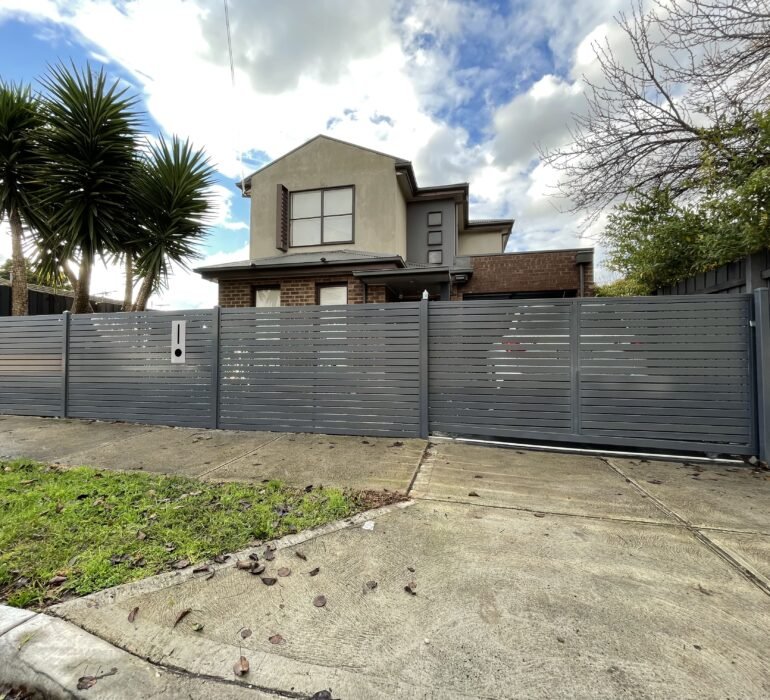
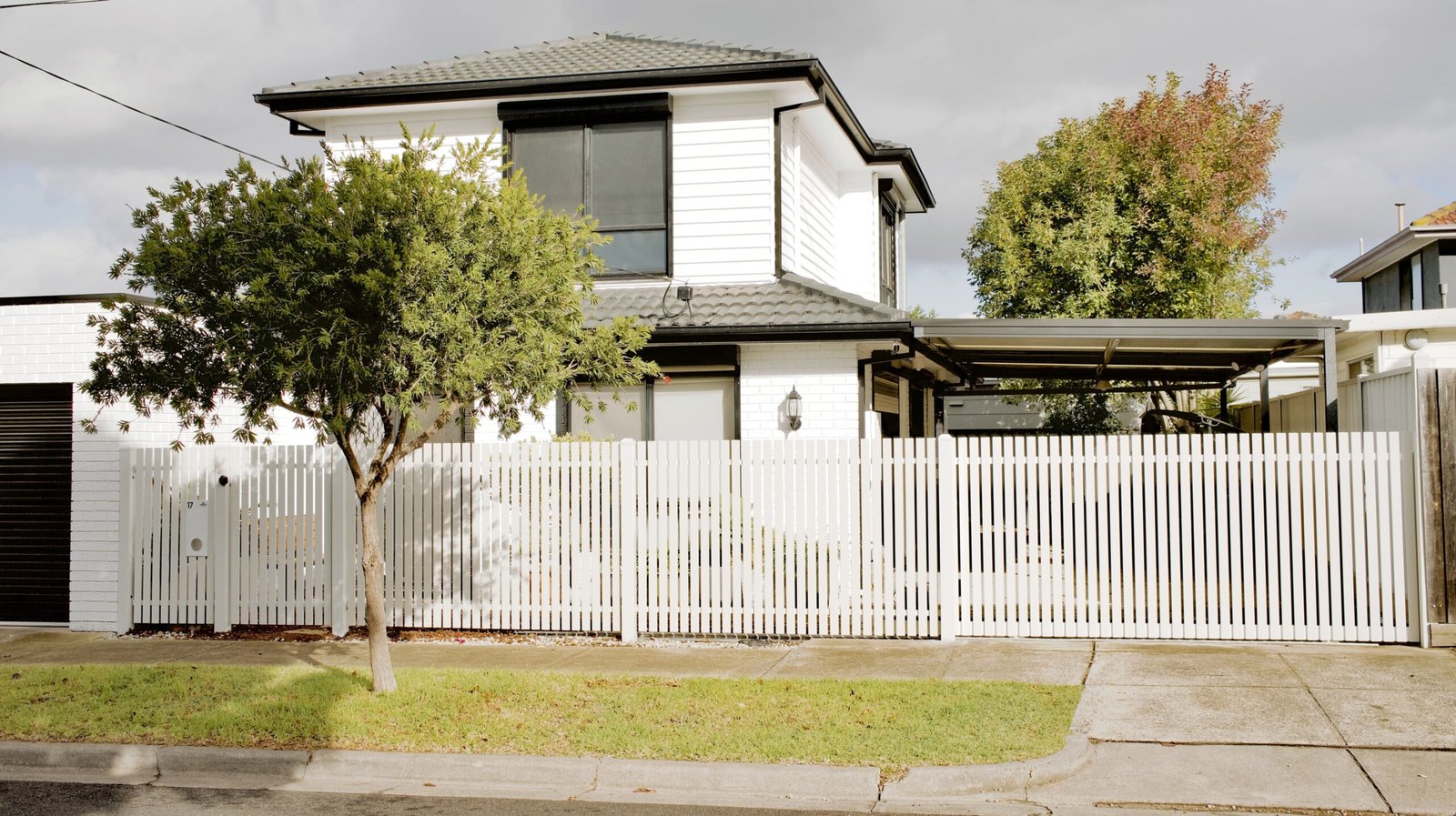
Choose aluminium horizontal slat fencing when the main goal is a clean modern frontage, a wider visual line and a strong street-facing design. Pentagon positions horizontal slat fencing as a modern aluminium style for residential developments, commercial offices and front boundary fencing [1].
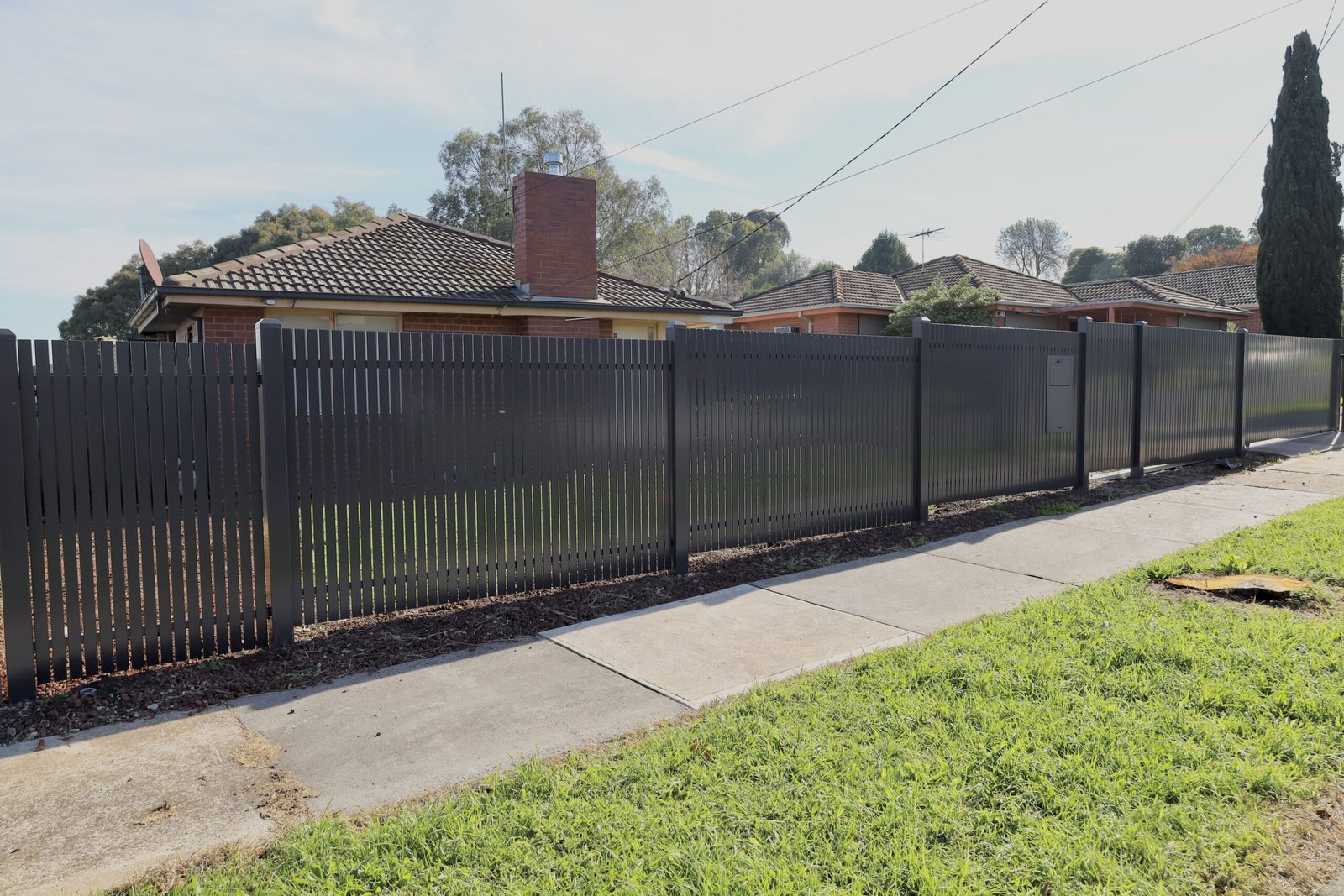
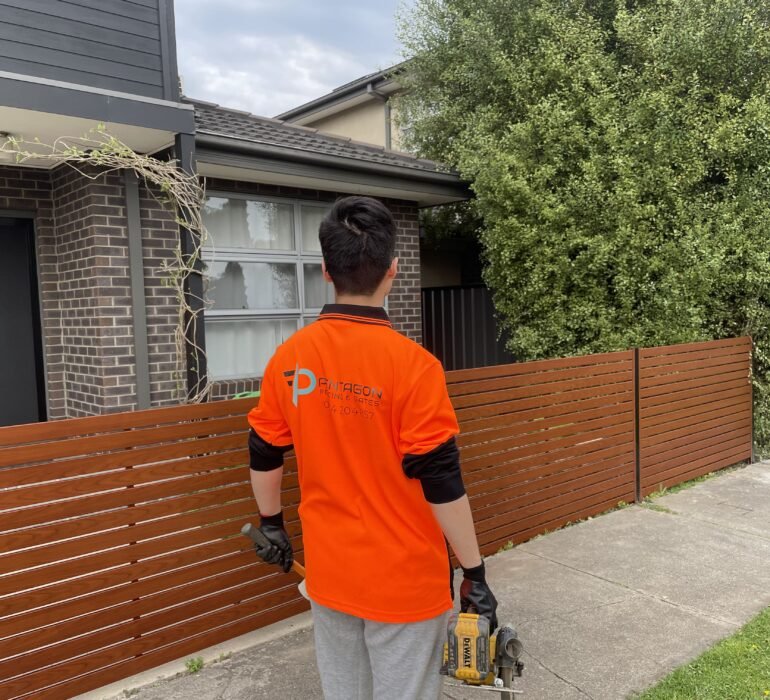
Horizontal slats are especially useful when the design needs to match a contemporary facade, a rendered wall, a wide driveway gate or a low-profile front boundary. The trade-off is that long horizontal lines can make slope, uneven ground or mismatched gate panels more noticeable, so the site measure and panel layout matter.
How to choose vertical slats fencing
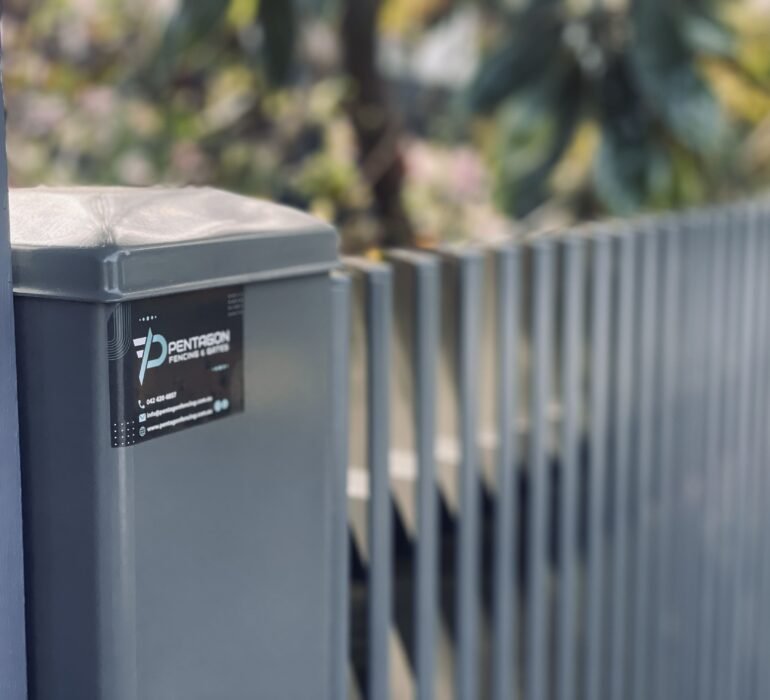
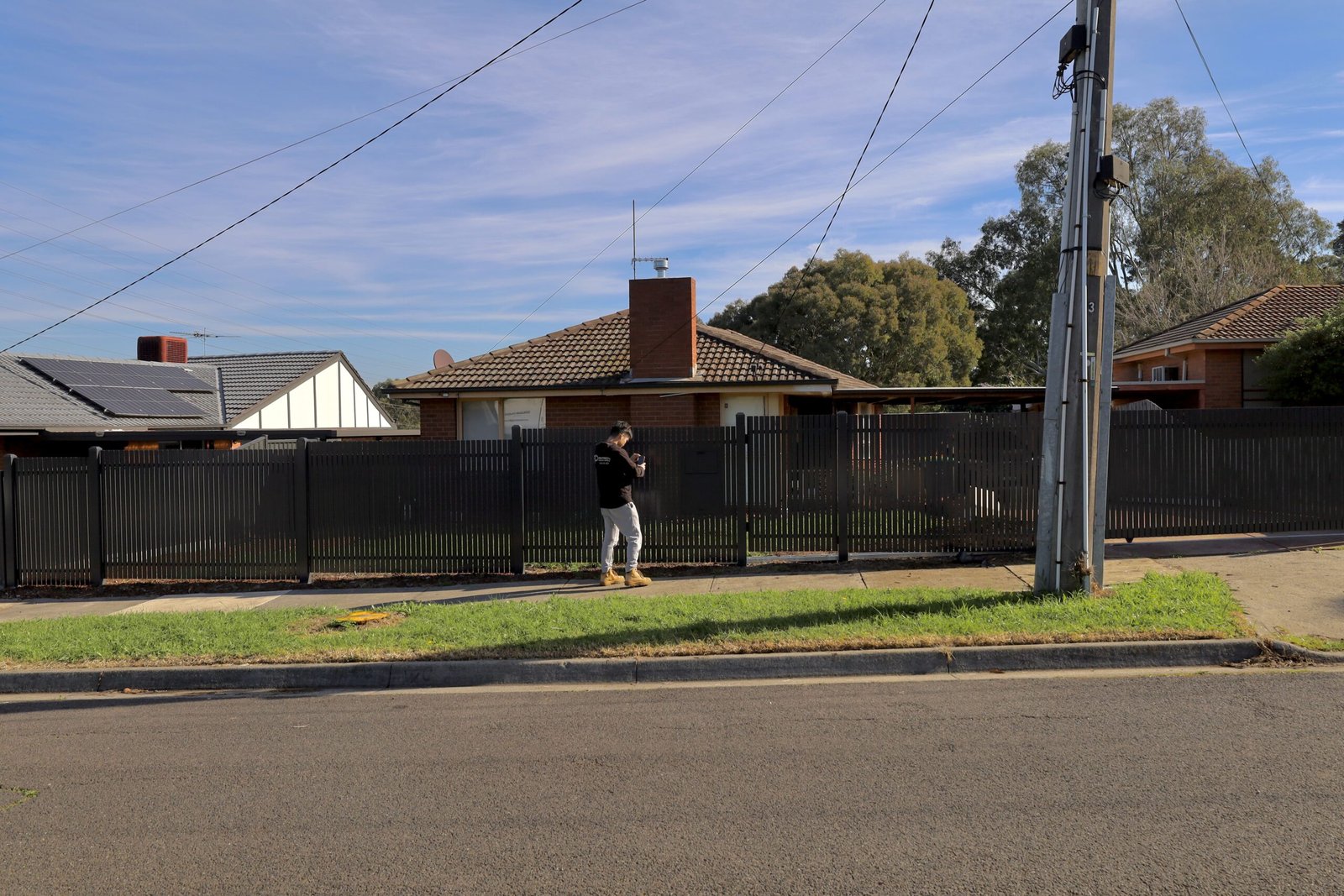
Choose aluminium vertical slat fencing when the frontage needs a taller visual rhythm, a more open feel or better alignment with vertical posts, blade-style elements and narrow frontages. Pentagon describes vertical slat fencing as a versatile system with adjustable spacing for privacy and airflow [1].
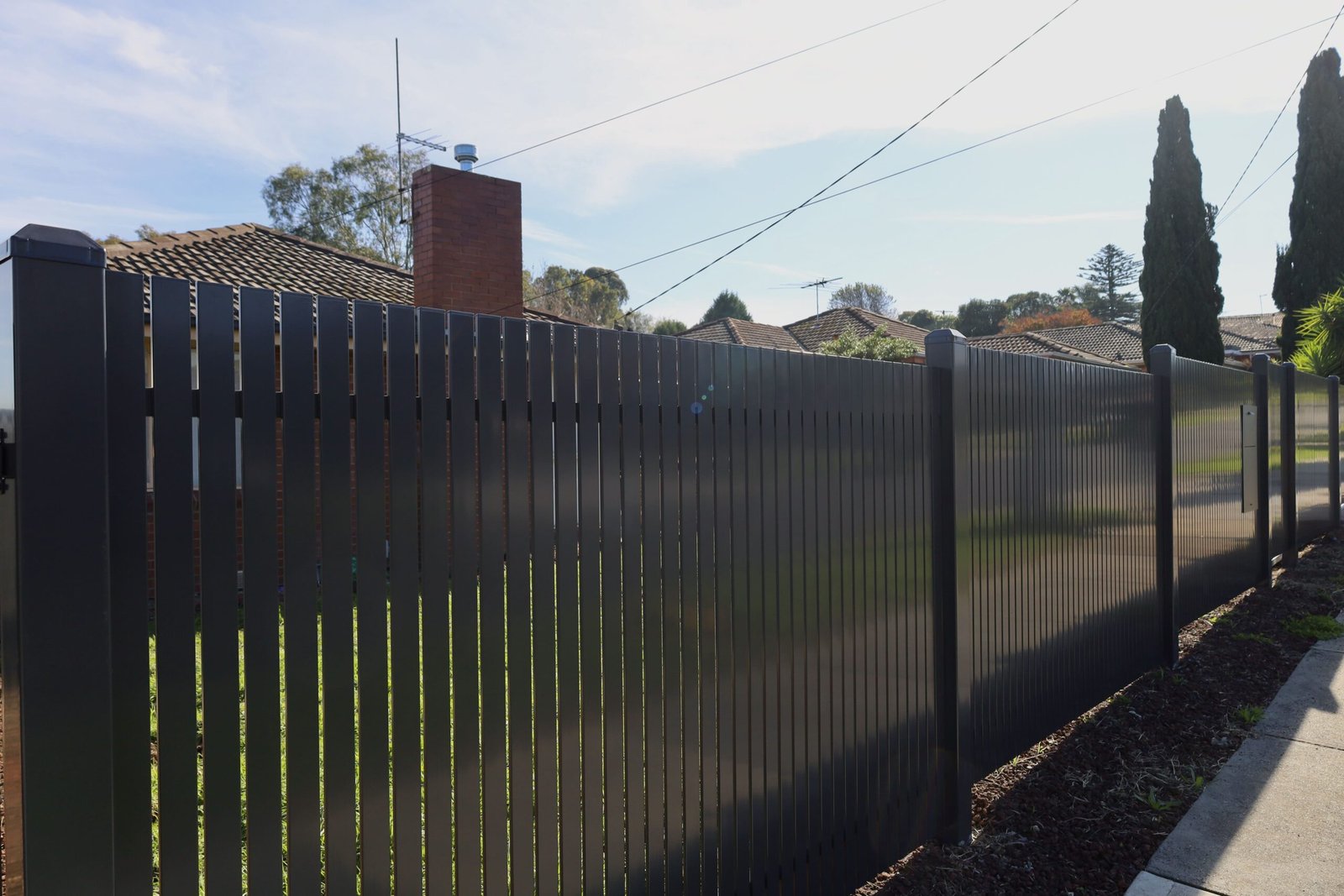
Vertical slats can be a stronger fit when the frontage should remain visually open, when the design needs to avoid a heavy privacy-screen look, or when the fence must match upright architectural details. The trade-off is that very open spacing may not provide enough privacy for front windows, bins or courtyard areas.
Why material and finish still matter
Aluminium is often chosen for fencing because it can support a clean modern profile while staying relatively lightweight and corrosion resistant. The Australian Aluminium Council describes aluminium as strong, durable, flexible, lightweight and corrosion resistant, and notes that it can take many forms and surface finishes [2]. Its aluminium properties page also explains that aluminium forms a natural aluminium oxide film that helps protect the surface [3]. Geoscience Australia similarly notes that aluminium is light, strong, rust-resistant, malleable and ductile [7].
For a slat fence, those material advantages still need the right detailing. Profile size, spacing, coating, posts, fixings and gate integration will determine how well the finished fence performs on the actual site.
Gate matching for aluminium slat fences
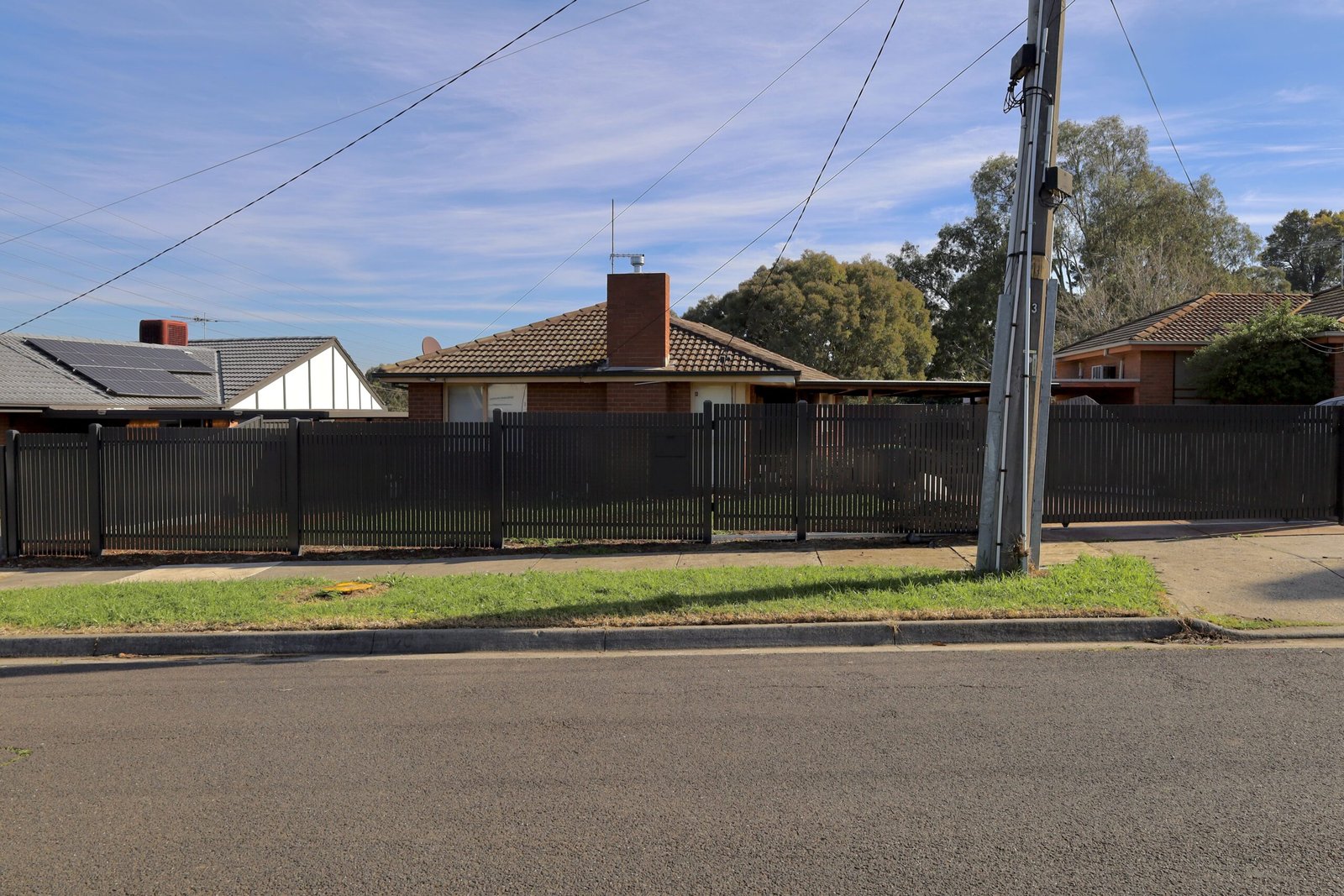
Slat direction should be chosen with gates in mind. Pentagon’s aluminium fencing page lists custom aluminium gates in swing, sliding and pedestrian access styles, with optional automation [1]. Its homepage also describes aluminium fencing systems that include automated sliding gates and custom front boundary fencing for residential, commercial, builder and developer projects [8].
- For sliding gates: check whether the horizontal or vertical slat rhythm can continue cleanly across the gate frame.
- For pedestrian gates: plan latch, lock, hinge and intercom positions before finalising slat spacing.
- For automated gates: allow for motor, safety accessories, power access and future servicing without disrupting the front fence design.
- For side access: decide whether the side gate should match the main frontage or use a simpler, more practical layout.
Decision shortcut
- Choose horizontal slats if you want a modern, wider-looking frontage with a clean privacy-screen effect.
- Choose vertical slats if you want a more open, upright frontage that can feel lighter and more architectural.
- Use tighter spacing if privacy is the priority, but review airflow, natural light and the street-facing weight of the design.
- Use wider spacing if openness and airflow matter more, but check whether the fence still screens the areas you care about.
- Plan the gate early if the project includes sliding, swing, pedestrian or automated access.
Common mistakes to avoid
- Choosing slat direction from a single photo. A fence can look different from the footpath, driveway, front door and neighbouring property.
- Ignoring gap size. Direction alone does not decide privacy; spacing, height and sightline are just as important.
- Forgetting the gate. A slat fence can look unfinished if the pedestrian gate or driveway gate uses a mismatched rhythm.
- Over-screening the frontage. Too much privacy can reduce airflow, natural light and the open feel of the entry.
- Skipping council checks. Front fence requirements can vary by height, location, corner context, zone and overlay, so confirm the relevant rules before installation [5] [6].
How Pentagon Fencing can help
Pentagon Fencing & Gates designs, fabricates and installs custom aluminium fencing, aluminium gates and automated gate systems across Melbourne, including vertical slat fencing, horizontal slat fencing and matching gate options [1].
- Compare horizontal and vertical slat layouts against privacy, airflow, street appeal and site access requirements.
- Plan aluminium slat fencing with pedestrian gates, sliding gates, swing gates or automation where the frontage needs a complete fence-and-gate package.
- Prepare a quote-ready brief covering height, slat direction, gap size, finish, gate hardware, access constraints and existing fence removal.
FAQ
Is horizontal or vertical aluminium slat fencing better for privacy?
Neither direction is automatically better for every site. Horizontal aluminium slat fencing can create a stronger privacy-screen look when gaps are tight, while vertical slats can keep the frontage lighter. Gap size, height and viewing angle matter as much as direction.
Which aluminium slat fence style is better for airflow?
Airflow depends mainly on spacing and openness. Wider spacing usually improves ventilation, while tighter spacing improves screening. Pentagon describes vertical slat fencing as offering adjustable spacing for privacy and airflow [1].
Is aluminium slat fencing suitable for front fences in Melbourne?
Yes, aluminium slat fencing can suit Melbourne front boundary fencing when the design matches the property, gate layout and local requirements. Pentagon positions horizontal slat fencing for front boundary fencing and modern residential or commercial projects [1].
Can an aluminium slat fence include a matching sliding gate?
Yes. Aluminium slat fencing can be planned with matching swing, sliding or pedestrian access gates. The key is to decide the gate type, frame, hardware and automation needs before fabrication so the slat rhythm remains consistent.
Do I need council approval for an aluminium slat front fence?
It depends on the property, council area, height, street location, zone, overlays and corner visibility. Check the relevant council or a qualified building/planning professional before installation, especially for taller front fences or properties with overlays.
What to Keep in Mind
- Choose horizontal slats for a clean, wider-looking modern frontage; choose vertical slats for a taller, lighter and more upright rhythm.
- Set the privacy target before choosing the gap size, because spacing often matters more than direction.
- Plan gates, intercoms, locks and automation before fabrication so the slat rhythm works across the full frontage.
- Check local front-fence requirements before locking height, location or corner-fence details.
- Keep blade, batten, picket and cost questions separate unless they directly affect this slat-fence decision.
References
- Pentagon Fencing, “Aluminium Fencing Melbourne – Commercial & Residential,” Pentagon Fencing. Accessed: Jun. 09, 2026. [Online]. Available: https://pentagonfencing.com.au/service/aluminium-fencing-melbourne/
- The Australian Aluminium Council, “What is Aluminium?” The Australian Aluminium Council. Accessed: Jun. 09, 2026. [Online]. Available: https://aluminium.org.au/about-aluminium/what-is-aluminium/
- The Australian Aluminium Council, “Aluminium properties,” The Australian Aluminium Council. Accessed: Jun. 09, 2026. [Online]. Available: https://aluminium.org.au/about-aluminium/aluminium-properties/
- Department of Transport and Planning Victoria, “PPN27: Understanding the residential development provisions,” Planning Victoria. Accessed: Jun. 09, 2026. [Online]. Available: https://www.planning.vic.gov.au/guides-and-resources/guides/planning-practice-notes/understanding-the-residential-development-provisions
- City of Kingston, “Fencing permits,” City of Kingston. Accessed: Jun. 09, 2026. [Online]. Available: https://www.kingston.vic.gov.au/property/planning-and-building/do-I-need-a-planning-or-building-permit/fencing/fencing-permits
- Yarra City Council, “Fencing and planning permits,” Yarra City Council. Accessed: Jun. 09, 2026. [Online]. Available: https://www.yarracity.vic.gov.au/planning-and-building/planning-permits/guides-and-resources/fencing-and-planning-permits
- Geoscience Australia, “Aluminium,” Geoscience Australia. Accessed: Jun. 09, 2026. [Online]. Available: https://www.ga.gov.au/education/minerals-energy/australian-mineral-facts/aluminium
- Pentagon Fencing, “Pentagon Fencing & Gates,” Pentagon Fencing. Accessed: Jun. 09, 2026. [Online]. Available: https://pentagonfencing.com.au/