
Table of Contents
What makes an aluminium front fence hard to choose?
- You want the front fence to improve street appeal without making the home, office or commercial frontage feel closed off.
- You need privacy from the street, but still want airflow, natural light and enough visibility for a safe-looking entry.
- You are comparing aluminium slat fencing, blade fencing and picket fencing, but the real decision also depends on pedestrian gates, driveway gates and access points.
- You want a modern aluminium front fence, but your frontage may also need to consider height, corner visibility, overlays or council requirements.
- You need the design to be quote-ready: height, spacing, finish, gate type, site access and existing fence removal should be clear before installation.
Key Takeaways
- Horizontal aluminium slat fencing is usually the cleanest fit for a modern front fence where street appeal and adjustable privacy are both important.
- Vertical blade or angled blade fencing works well when the frontage needs a sharper architectural look, stronger vertical lines or more controlled sightlines.
- Aluminium picket fencing suits classic, school, church, heritage-style or softer residential frontages where openness matters more than full screening.
- Aluminium is widely used in construction because it is strong, durable, lightweight, corrosion resistant and can take different forms and surface finishes [2].
- Front-fence planning should check streetscape fit, height, road context, corner visibility and local council rules before the final design is locked.
Frontage option matrix: slat, blade, picket and gate styles
This matrix compares common aluminium front fencing Melbourne options by how they affect street appearance, privacy and gate matching. It is useful for both residential aluminium front fence projects and commercial aluminium frontage fencing where the street-facing boundary must look intentional.
| Front fence option | Street appeal effect | Best fit | Watch-out |
|---|---|---|---|
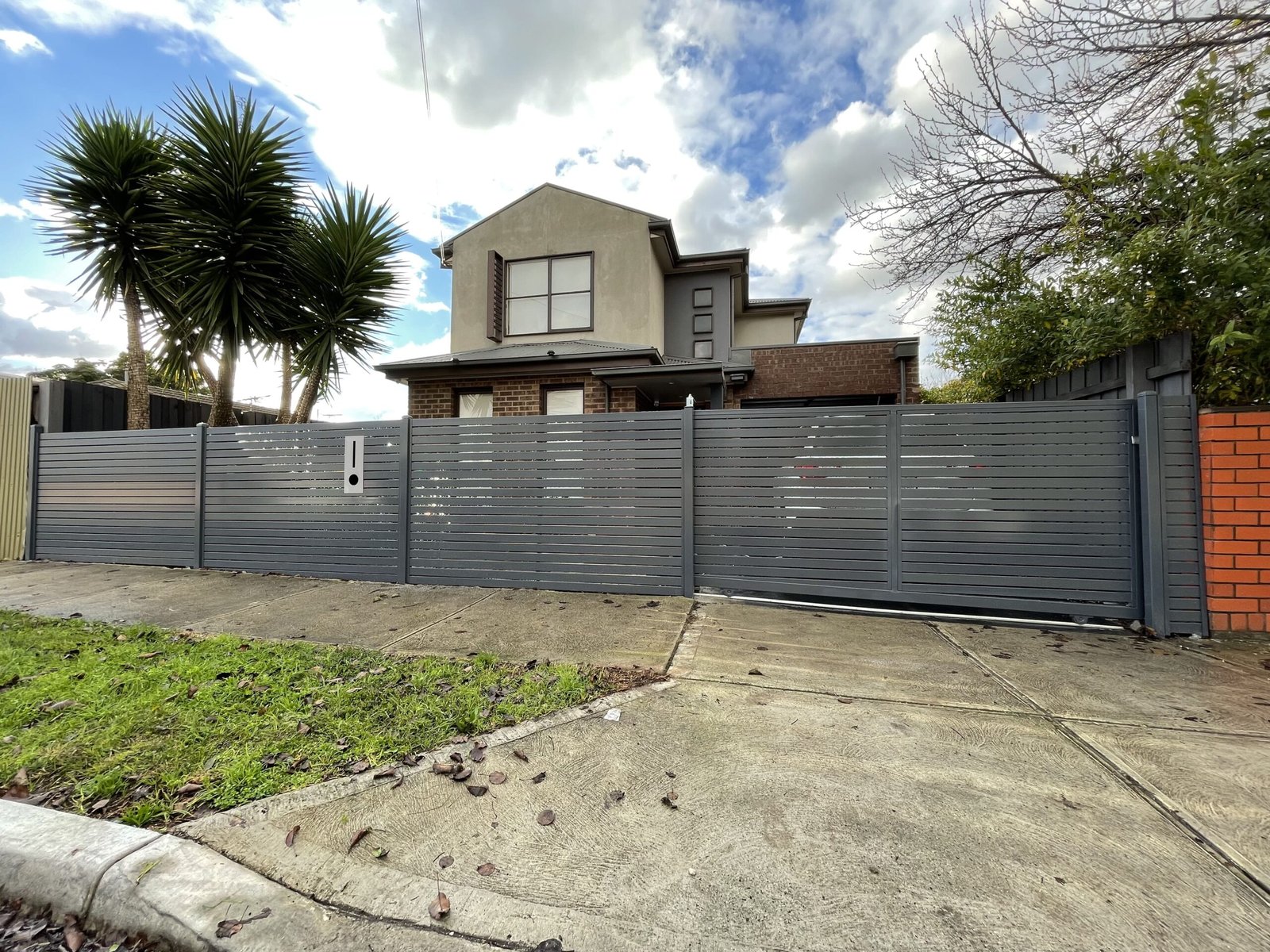
| Horizontal aluminium slat fencing | Clean, modern and visually wide. Strong fit for contemporary street-facing boundaries. | Homes, townhouses, offices and mixed-use frontages that need privacy control and a neat facade. | Gap size, slat width and gate alignment change both privacy and the final visual weight. |
| Vertical blade fencing | Sharper and more architectural. Vertical lines can make the frontage feel taller and more defined. | Modern homes, commercial frontages and properties that want a more structured entry line. | Spacing should be checked from the footpath, driveway and inside view, not only from the elevation drawing. |
| Angled blade fencing | More screened from selected angles while still avoiding a fully solid wall effect. | Street-facing areas where privacy, airflow and contemporary design all matter. | The blade direction matters because the same fence can look more open or more private depending on viewing angle. |
| Aluminium picket fencing | Softer, more classic and more open than slat or blade styles. | Residential front fences, schools, churches and heritage-style projects that need character and visibility. | It is not the right choice when the main goal is strong street privacy. |
| Matching aluminium gates | Makes the frontage feel complete by carrying the same rhythm through pedestrian or driveway access. | Frontages with a side gate, pedestrian gate, sliding driveway gate or swing gate. | Gate frame, clearance, hardware, intercom and automation should be planned before fabrication. |
Style-by-privacy table
A front fence can look good and still fail if it gives too much exposure, too little airflow or poor entry visibility. Use the table below to match the design style to the practical frontage goal.
| Frontage goal | Better-fit aluminium style | Why it fits | Design input to confirm |
|---|---|---|---|
| More street privacy | Angled blade or closer-spaced slat | Both can reduce direct views while keeping a designed frontage rather than a blank wall. | Viewing angle, gap size, fence height and driveway sightline. |
| Cleaner modern street appeal | Horizontal slat or vertical blade | These styles give a consistent rhythm across the front boundary and can be matched to a gate. | Facade line, colour, gate frame, mailbox and entry hardware. |
| More open and welcoming frontage | Picket or wider-spaced vertical blade | The fence keeps the boundary clear without heavily screening the building or garden. | Picket profile, spacing, post detail, pedestrian gate and front path alignment. |
| Airflow and light | Vertical slat, blade or open picket | Open spacing supports ventilation and avoids a heavy enclosed look. | Gap tolerance, privacy expectation and areas that should remain screened. |
| Integrated fence and gate frontage | Same-style slat, blade or picket gate | The gate becomes part of the street-facing design rather than a separate add-on. | Gate opening, swing or slide direction, pedestrian access, motor position and lock hardware. |
Gate-matching checklist for aluminium front fences
Front fencing should be planned with access from the start. For an aluminium fence and gate frontage, the fixed panels and moving gates should be designed as one system. Pentagon’s aluminium fencing page notes custom aluminium gates in swing, sliding and pedestrian access styles, with optional automation [1].
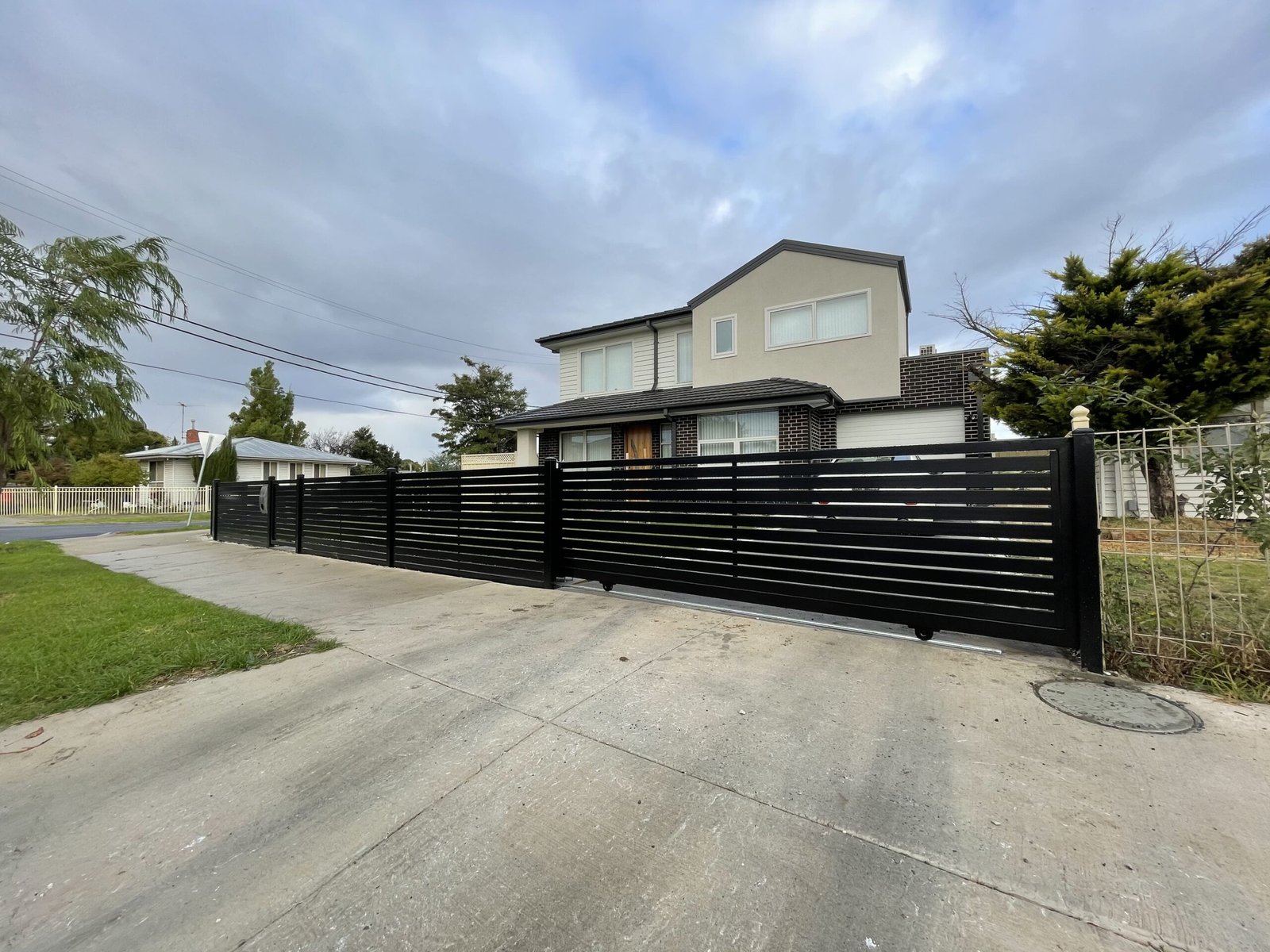
Pentagon also describes aluminium sliding gates as lightweight, corrosion-resistant and low maintenance for modern commercial and residential applications [4], while its side-gate page positions aluminium side gates as durable, corrosion-resistant and contemporary [5].
- Match the rhythm: slats, blades or pickets should line up visually between the fixed fence panels and the gate where possible.
- Check the opening type: sliding gates suit frontages where swing space is limited; swing gates need enough clear arc inside the property.
- Separate pedestrian and vehicle access: a front fence may need a pedestrian gate, a driveway gate and a side gate, each with different security and convenience needs.
- Plan hardware early: mailbox, intercom, lock, latch, motor, safety beams and access-control points can affect post positions and panel layout.
- Confirm site constraints: slope, driveway width, footpath level, existing fence removal and underground services can change the installation approach.
Why aluminium works for street-facing fences
Aluminium is a practical material for front fencing because it can be formed into clean slat, blade, batten, picket and gate profiles while keeping a lighter visual footprint than many solid boundary options. The Australian Aluminium Council describes aluminium as strong, durable, flexible, lightweight, corrosion resistant and suited to construction and building applications [2]. Geoscience Australia also notes that aluminium is light yet strong, rust-resistant, malleable and ductile; it forms a thin aluminium oxide layer that helps prevent further rusting [3].
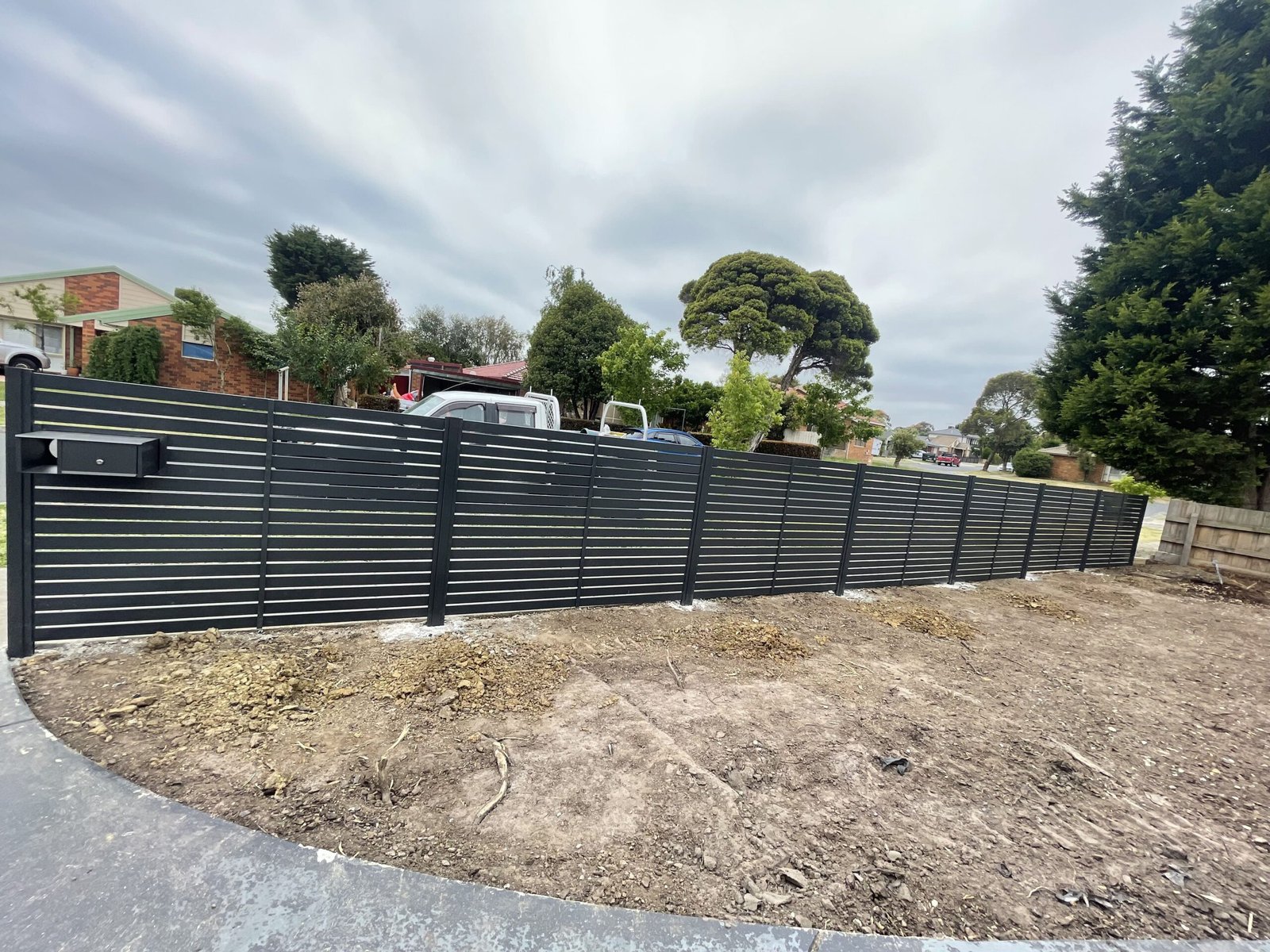
For a front fence, those material properties matter most when combined with the right finish, spacing and site-specific design. A powder-coated aluminium slat fence can look very different from an aluminium picket fence, even when both use the same material family.
Melbourne front fence checks before you lock the design
Front fencing in Victoria should be treated as a design and planning checkpoint, not only a product choice. Planning Victoria says front fences should complement the dwelling and adjoining front fences, and that a front fence within 3 metres of a street should not exceed the maximum height in the zone schedule or, where no schedule height is specified, the listed height for the relevant street context [6].
Local council guidance can add practical checks. City of Kingston states that front fences under 1.2 metres high generally do not need a building permit or report and consent, while front fences taller than 1.2 metres should be checked against planning zones or discussed with Council [7]. City of Boroondara also points to overlays, commercial-zone context, corner-property visibility, building permits and report-and-consent checks for front fences [8].
This is not legal or building advice. Before installation, check the relevant council, planning controls and building-surveyor requirements for the specific Melbourne property.
Decision shortcut
- Choose aluminium slat fencing when the main goal is a modern, clean front fence with adjustable screening.
- Choose vertical blade fencing when the frontage needs sharper architectural lines and a stronger entry statement.
- Choose angled blade fencing when privacy matters, but the front boundary should still feel designed and ventilated.
- Choose aluminium picket fencing when the site needs a softer, more open, classic frontage rather than a privacy screen.
- Choose matching aluminium gates when pedestrian access, driveway access and street appeal need to feel like one complete frontage package.
Common mistakes to avoid
- Choosing from a photo only. A front fence can look different from the street, the driveway and the inside of the property.
- Leaving the gate until later. Gate width, motor position, latch hardware and pedestrian access can affect the whole fence layout.
- Using privacy as the only decision factor. Too much screening can reduce airflow, light, street visibility and the openness of the frontage.
- Forgetting council checks. Height, overlays, corner visibility and road context can change what needs to be reviewed before construction.
- Letting adjacent intents take over. Cost, automation and security-level decisions matter, but this article’s main job is to help choose the right aluminium front fence style for street appeal and access.
How Pentagon Fencing can help
Pentagon Fencing & Gates designs, fabricates and installs aluminium fencing, aluminium gates and automated gate systems across Melbourne, including slat, vertical blade, angled blade, vertical slat, horizontal slat, vertical batten, Windsor picket and custom front boundary solutions [1].
- Compare aluminium front fence styles against street appeal, privacy, airflow and access requirements.
- Plan the fence, pedestrian gate, side gate, sliding gate or swing gate as one connected frontage package.
- Prepare a quote-ready brief covering style, height, spacing, colour, gate type, hardware, site access and installation constraints.
FAQ
What is the best aluminium front fence style for street appeal?
There is no single best style for every frontage. Aluminium slat fencing usually suits clean modern street appeal, while aluminium blade fencing or vertical blade fencing suits a sharper architectural look, and aluminium picket fencing suits more open or traditional frontages.
Is aluminium slat fencing good for privacy?
Yes, aluminium slat fencing can support privacy, but the result depends on slat width, gap size, fence height and viewing angle. For more directional privacy, angled blade fencing may be worth comparing.
Can an aluminium front fence include a matching driveway gate?
Yes. Aluminium front fencing can be matched with pedestrian, swing or sliding gates. The gate should be planned early so the frame, opening type, hardware, automation and panel rhythm work with the rest of the frontage.
Do Melbourne front fences need a permit?
It depends on the property, height, road context, zone, overlays and council requirements. Check the relevant council or a qualified building/planning professional before installation, especially for taller front fences, corner properties, commercial zones or properties with overlays.
What to Keep in Mind
- Start with the frontage goal: street appeal, privacy, airflow, visibility, access or a balanced mix.
- Choose slat, blade or picket profiles based on how the fence looks from the street, not only from a product image.
- Plan matching aluminium gates before fabrication so panel rhythm, access hardware and opening direction work together.
- Check council, planning and building requirements before locking height, location and corner-fence details.
- Keep cost, automation and security-level decisions in scope only when they affect this aluminium front fence brief.
References
- Pentagon Fencing, “Aluminium Fencing Melbourne – Commercial & Residential,” Pentagon Fencing. Accessed: Jun. 09, 2026. [Online]. Available: https://pentagonfencing.com.au/service/aluminium-fencing-melbourne/
- The Australian Aluminium Council, “What is Aluminium?” The Australian Aluminium Council. Accessed: Jun. 09, 2026. [Online]. Available: https://aluminium.org.au/about-aluminium/what-is-aluminium/
- Geoscience Australia, “Aluminium,” Geoscience Australia. Accessed: Jun. 09, 2026. [Online]. Available: https://www.ga.gov.au/education/minerals-energy/australian-mineral-facts/aluminium
- Pentagon Fencing, “Sliding Gates,” Pentagon Fencing. Accessed: Jun. 09, 2026. [Online]. Available: https://pentagonfencing.com.au/service/sliding-gates/
- Pentagon Fencing, “Side Gate,” Pentagon Fencing. Accessed: Jun. 09, 2026. [Online]. Available: https://pentagonfencing.com.au/service/side-gate/
- Department of Transport and Planning Victoria, “PPN27: Understanding the residential development provisions,” Planning Victoria. Accessed: Jun. 09, 2026. [Online]. Available: https://www.planning.vic.gov.au/guides-and-resources/guides/planning-practice-notes/understanding-the-residential-development-provisions
- City of Kingston, “Fencing permits,” City of Kingston. Accessed: Jun. 09, 2026. [Online]. Available: https://www.kingston.vic.gov.au/property/planning-and-building/do-I-need-a-planning-or-building-permit/fencing/fencing-permits
- City of Boroondara, “Build or replace a front fence,” City of Boroondara. Accessed: Jun. 09, 2026. [Online]. Available: https://www.boroondara.vic.gov.au/services/planning-and-building/building/your-property-improvements/fences/build-or-replace-front-fence