
Table of Contents
Where aluminium blade fencing decisions usually get stuck
- You want a premium modern frontage, but you are not sure whether vertical, flat or angled blade fencing will look too open, too heavy or too commercial.
- You need privacy from the street without blocking airflow or making the entry feel closed off.
- You want a stronger security impression, but you do not want to overclaim that every blade layout is an anti-climb aluminium fence.
- You need the blade pattern to work with pedestrian gates, sliding gates, side access, intercoms, latches and driveway sightlines.
- You are comparing aluminium blade fencing with slat, batten or steel options, but the actual decision is about facade presentation, visibility, spacing and risk level.
Key Takeaways
- Vertical blade fencing is usually the cleanest fit when the design needs sharp upright lines and a modern architectural frontage.
- Angled blade fencing is usually stronger when the project needs privacy and airflow together, because the blade angle can reduce direct visibility while keeping ventilation in the design [1].
- Flat blade fencing should be treated as a straight, non-angled blade profile; confirm the exact blade size, spacing and orientation with the installer before comparing it with angled options.
- For higher-risk security projects, aluminium blade or slat fencing may suit frontages and mixed-use entries, but should be assessed for climb resistance, spacing, gate integration and whether appearance matters more than deterrence [2].
- Aluminium can support modern blade profiles because it is lightweight, durable, corrosion resistant and able to take different forms and finishes [3] [4].
Vertical, flat and angled blade options compared
This comparison table is designed for aluminium blade fencing Melbourne decisions where the buyer needs to compare appearance, privacy, airflow, security impression and gate matching before requesting a quote.
| Blade option | Best fit | Privacy and airflow effect | Watch-out |
|---|---|---|---|
| Aluminium vertical blade fencing | Commercial buildings, contemporary homes, premium frontages and entries that need clean vertical lines. | Can feel open or semi-screened depending on blade width, gap size and viewing angle. | If privacy is the main goal, straight vertical blades may need closer spacing or a different orientation. |
| Flat blade fencing | Frontages that need a simple, straight blade profile without the directional screening effect of angled blades. | Usually depends more on blade width and spacing than blade angle. | The term can be used differently by suppliers, so confirm whether it means a flat bar, flat face, rectangular blade or non-angled blade. |
| Aluminium angled blade fencing | High-end residential, commercial facade and street-facing areas where privacy, airflow and presentation all matter. | The angle can reduce direct visibility from selected viewpoints while maintaining ventilation [1]. | Blade direction matters; the same fence can look more private or more open depending on where people stand. |
| Blade fence with matching gate | Frontages, commercial entries and residential-commercial interfaces where the gate should match the fence rhythm. | Privacy and airflow can change at the gate because the frame, latch, lock and automation hardware interrupt the blade pattern. | Plan pedestrian access, swing or sliding operation, intercoms and hardware before fabrication. |
Visibility, privacy and airflow matrix
For aluminium angled blade fencing and vertical blade fencing Melbourne projects, the practical question is: what should people see from the street, the driveway and inside the site?
| Project goal | Better-fit blade choice | Why it fits | Design input to confirm |
|---|---|---|---|
| Modern architectural frontage | Vertical or flat blade fencing | Straight blade lines give the frontage a clean and structured appearance. | Blade width, gap size, height, colour and gate alignment. |
| Privacy from footpath sightlines | Angled blade fencing | Angled blades can reduce direct visibility while keeping the fence ventilated [1]. | Viewing direction from the footpath, road, driveway and neighbouring boundary. |
| Airflow around entry or garden | Angled or wider-spaced vertical blades | Open spacing and blade orientation can avoid the heavy effect of a solid screen. | Ventilation target, screening target and whether bins, parking or windows need to be hidden. |
| Security impression without industrial appearance | Vertical blade fencing with project-specific spacing and gate planning | Blade fencing can look more controlled than an open decorative fence while still keeping an architectural finish. | Risk level, climb points, gate hardware, lighting, surveillance and whether a steel security system is more appropriate. |
| Commercial facade or mixed-use entry | Vertical or angled blade fencing | These options can balance appearance, controlled visibility and access planning for public-facing entries. | Pedestrian flow, driveway access, gate type, after-hours security and maintenance access. |
Anti-climb and security fit checklist
An anti-climb aluminium fence decision should be treated carefully. Blade spacing, fence height, climb points, footholds, gate hardware and nearby objects all affect whether a fence is difficult to climb. WorkSafe Victoria’s construction-site security guidance says security fencing can control unauthorised entry and should be difficult to climb and prevent access from underneath in that construction-site context [6]. For permanent blade fencing, use that as a risk-assessment mindset rather than a one-size-fits-all product claim.
- Check climb points: look for rails, low walls, bins, landscaping, gate frames or hardware that could create footholds.
- Check blade spacing: tighter spacing may improve screening, but the spacing must also suit airflow, visibility and fabrication requirements.
- Check gate integration: the gate can become the weakest point if latches, hinges, motors or frames are not planned with the same security logic.
- Check risk level: for high-risk industrial boundaries, compare aluminium blade fencing with palisade, weldmesh, tubular steel or other security-focused systems before deciding.
- Check public-facing context: schools, public facilities, commercial entries and residential-commercial interfaces may need different balances of visibility, deterrence and appearance.
When vertical blade fencing makes sense
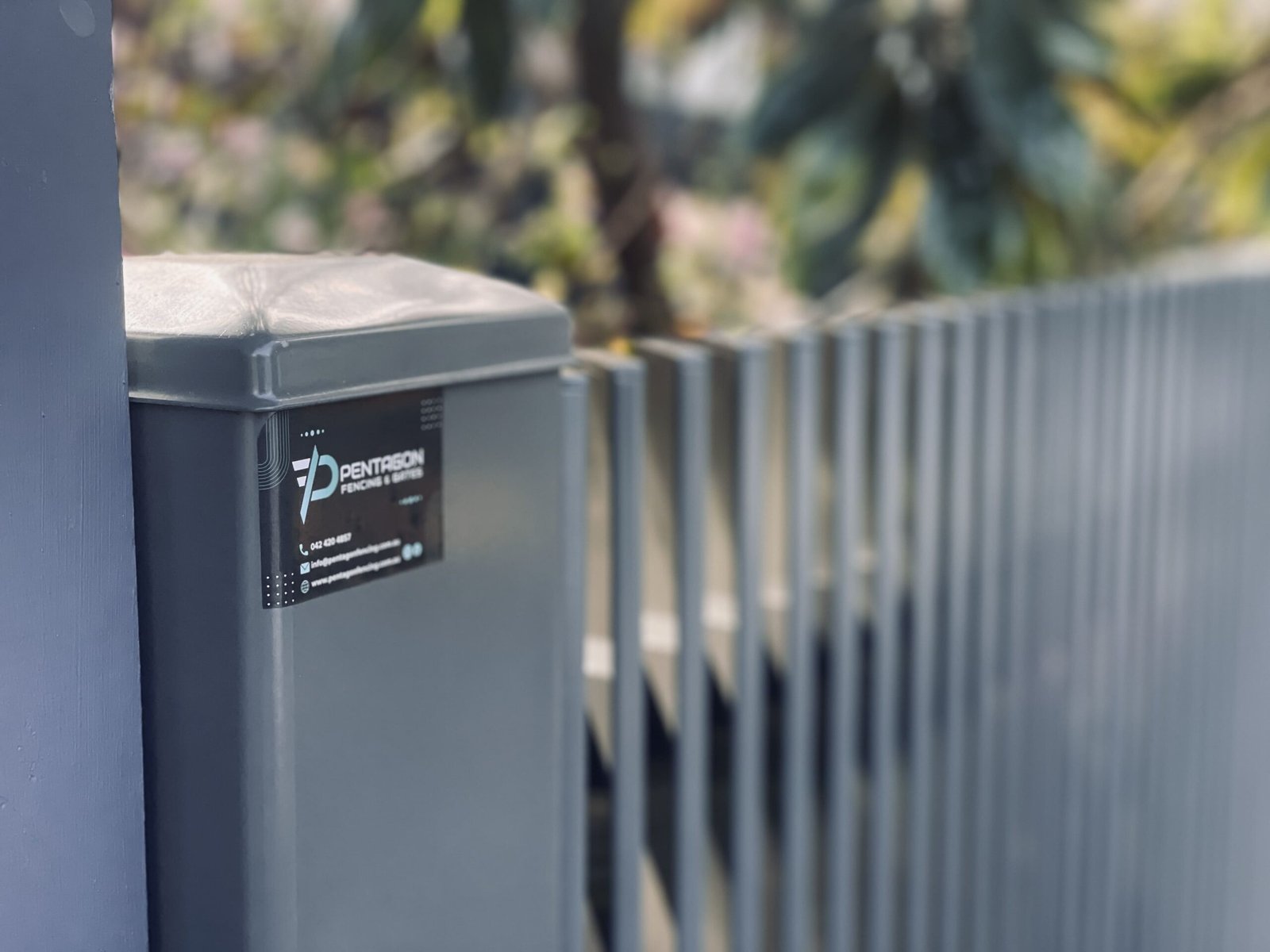
Aluminium vertical blade fencing is the stronger fit when the site needs a clean upright rhythm. Pentagon describes its aluminium vertical blade fencing as a sleek and modern option with clean vertical lines, suited to commercial buildings and contemporary homes that need security and architectural appeal [1].
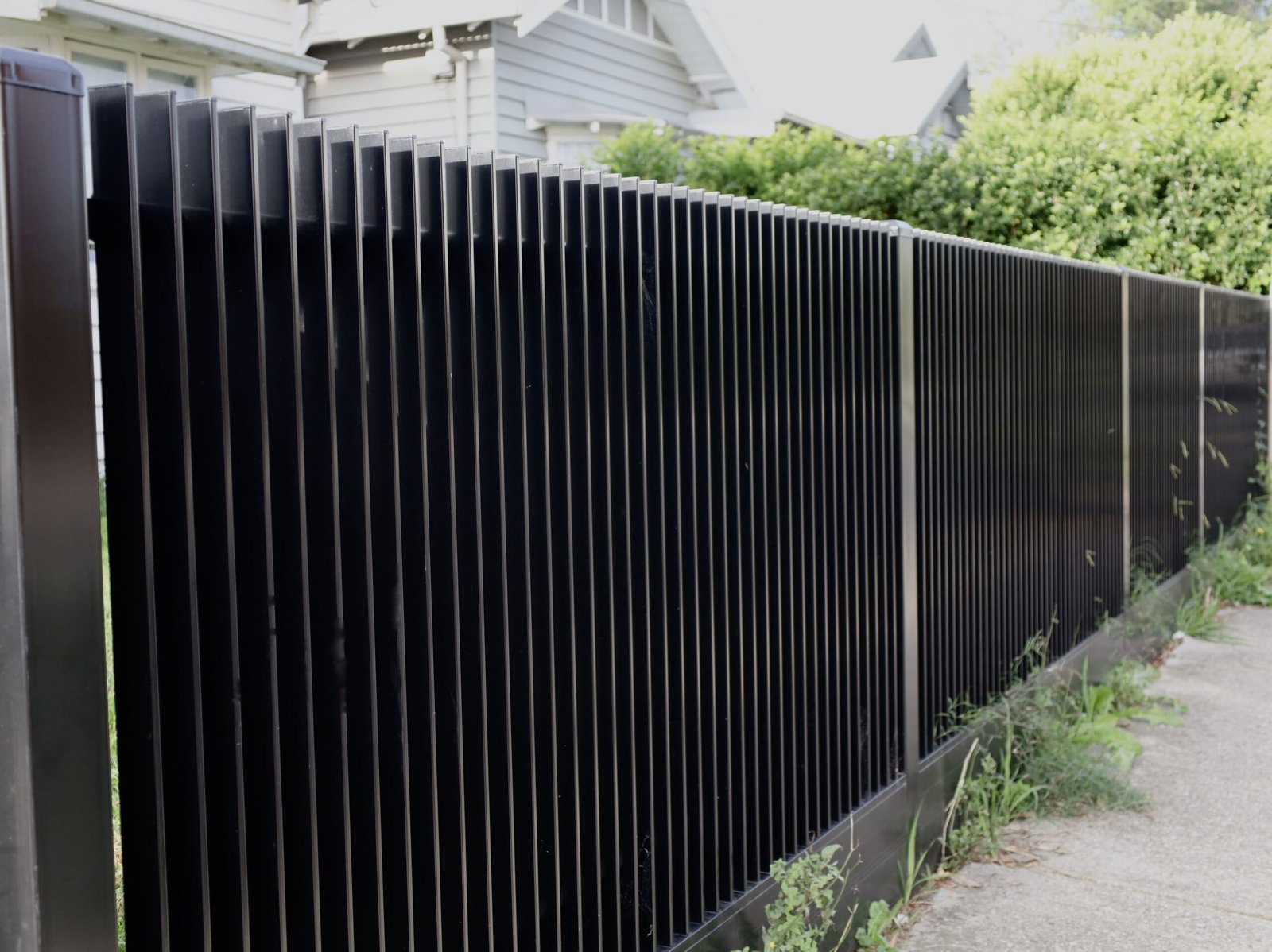
Use vertical blades when the frontage should feel structured and premium, but not fully screened. This can suit commercial facades, office entries, townhouse frontages, residential-commercial interfaces and projects where the fence should look more architectural than a standard boundary panel.
When flat blade fencing makes sense
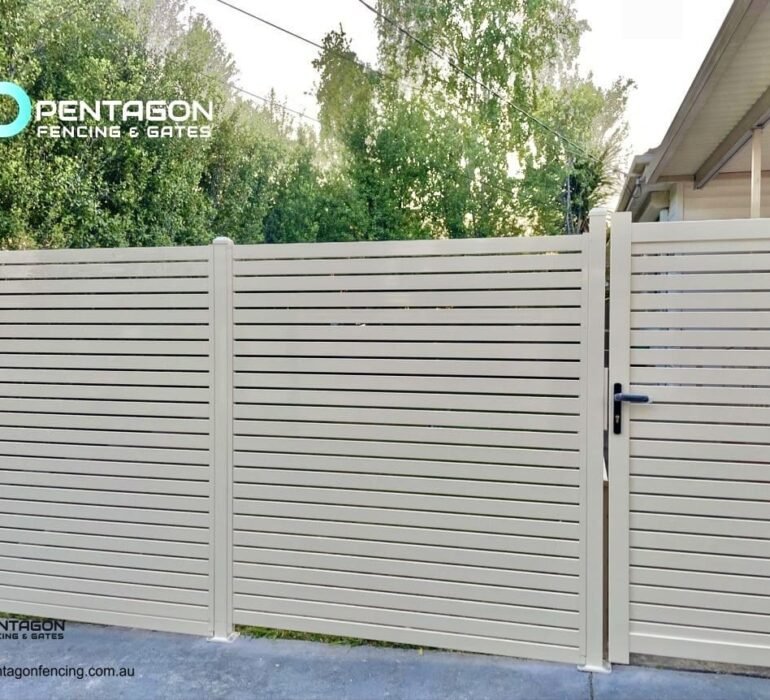
Flat blade fencing is useful when the design calls for a simple blade face rather than an angled privacy profile. Because suppliers may use the term differently, clarify whether the quote means a flat bar, flat-faced blade, rectangular blade, or straight non-angled vertical blade.
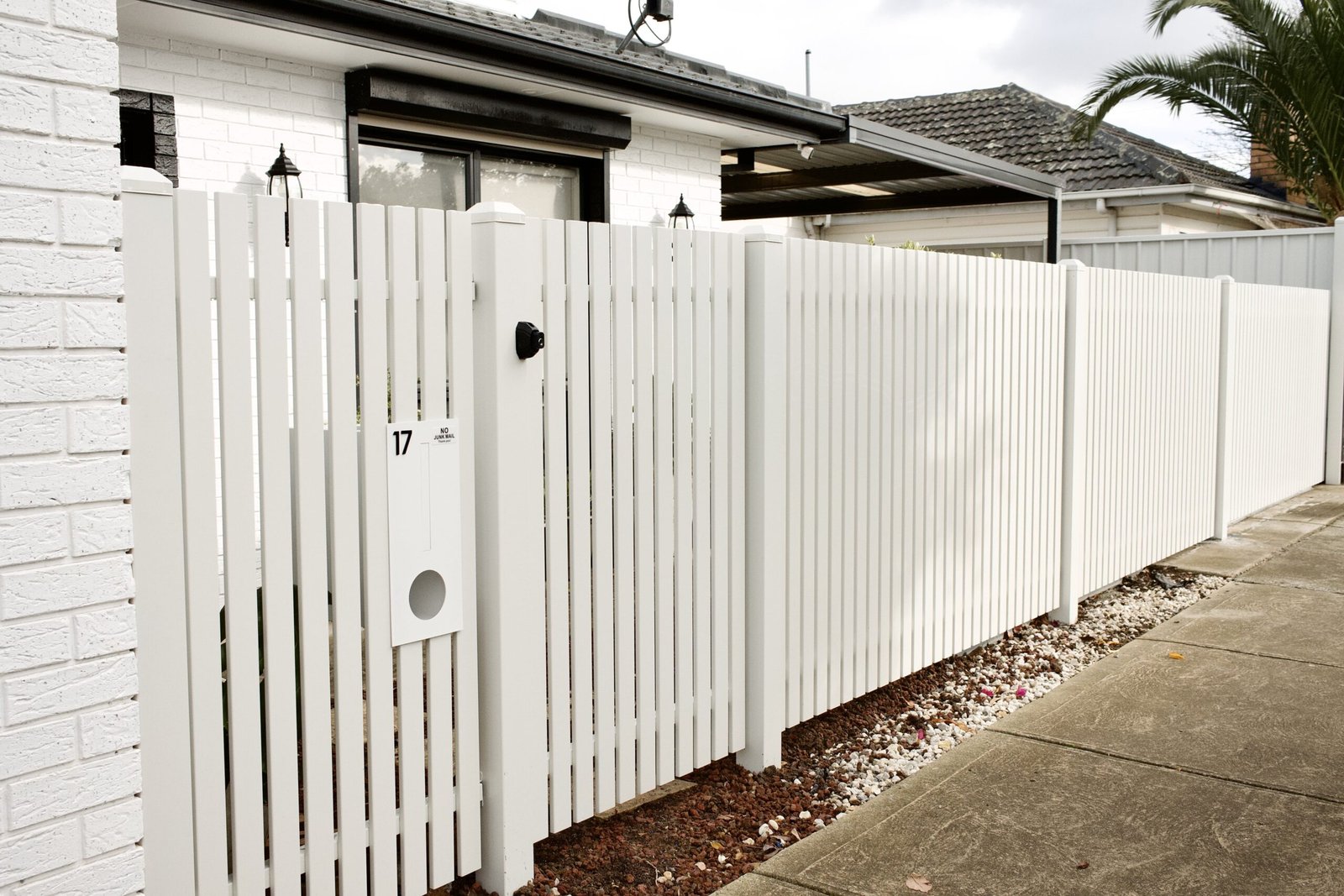
Use flat blade profiles when the goal is crisp architectural repetition and straightforward visibility control. If the project needs stronger directional privacy from the street, compare the same frontage against angled blade fencing before finalising the design.
When angled blade fencing makes sense
Aluminium angled blade fencing is the stronger fit when the project needs privacy and airflow together. Pentagon describes aluminium vertical angled blade fencing as using angled blades to reduce visibility while maintaining ventilation, making it suitable for high-end residential and commercial facades [1].
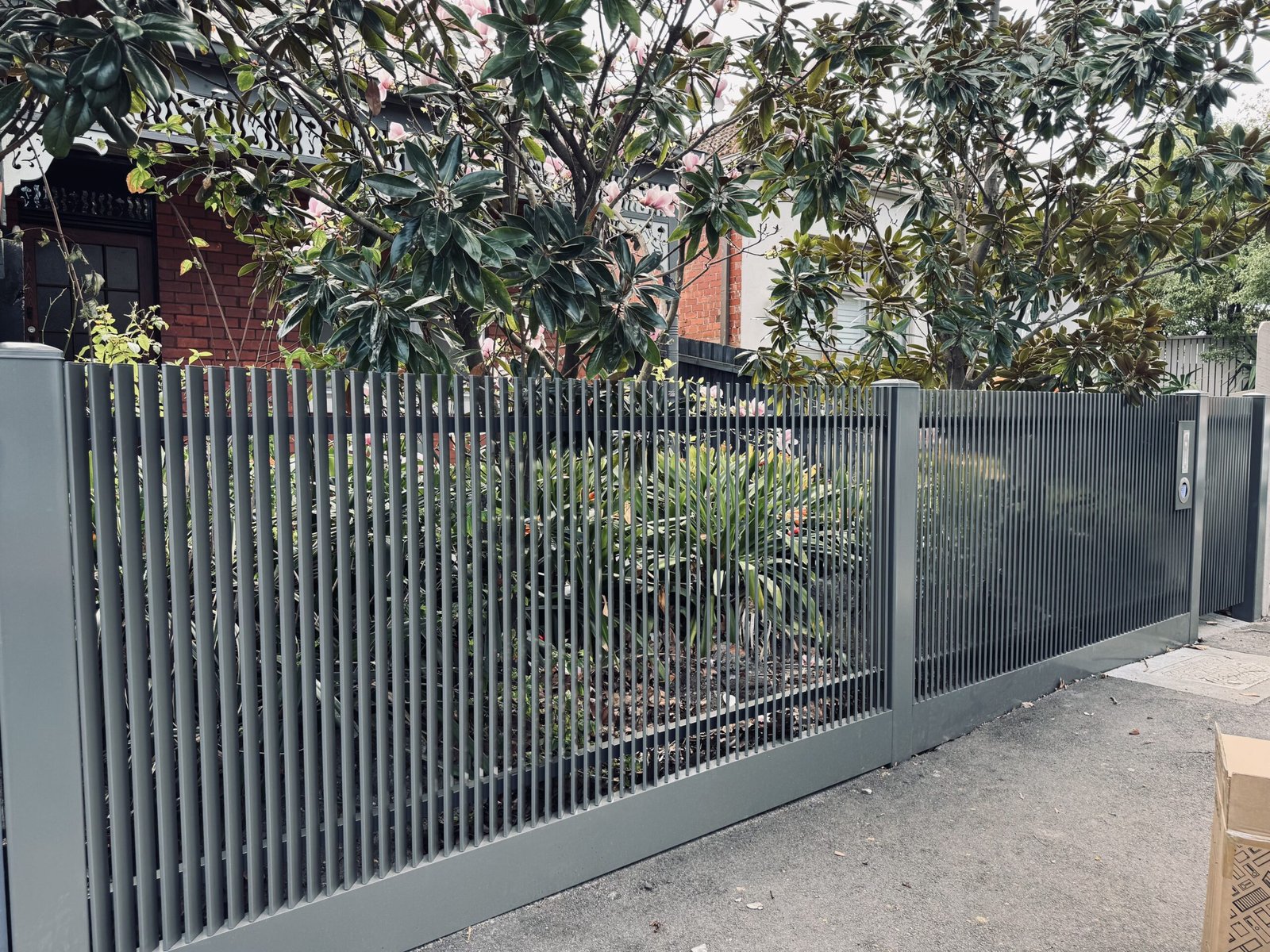
Use angled blades when people should not have a direct view into the site from one direction, but the frontage should still avoid the look and feel of a solid privacy wall. The main design check is blade direction: the fence should be reviewed from the footpath, road, driveway, front entry and inside the property.
Why material and finish still matter
Blade style controls the look and sightline behaviour, but material and finish affect the final result. The Australian Aluminium Council describes aluminium as strong, durable, flexible, lightweight, corrosion resistant and able to take many forms and surface finishes [3]. Its aluminium properties page also explains that aluminium forms a natural aluminium oxide film that protects the surface and can reform if scratched or damaged [4]. Geoscience Australia similarly notes that aluminium alloys can be strong, lightweight and resistant to rusting [5].
For blade fencing, those material properties matter most when combined with the right profile size, coating, spacing, post design, gate frame and installation detail.
Front fence and council checks for Melbourne projects
If blade fencing is used as a front fence, height and location should be checked before the design is locked. Planning Victoria says front fences should complement the dwelling and adjoining front fences, and that a front fence within 3 metres of a street should not exceed the relevant zone-schedule height or the listed table height where no schedule height applies [7]. City of Kingston notes that front fences under 1.2 metres high do not require a building permit or report and consent in its table, while taller front fences should be checked against planning zones or council advice [8].
City of Boroondara’s front-fence guidance also shows why site context matters: planning permits, building permits, overlays, commercial-zone conditions and corner-property sightlines can all change the approval pathway [9]. Treat this as a planning checkpoint, not legal advice.
Decision shortcut
- Choose vertical blade fencing when the priority is a sharp architectural frontage with clean upright lines.
- Choose flat blade fencing when the project needs a simple straight blade profile and the supplier can define the exact blade section clearly.
- Choose angled blade fencing when privacy and airflow need to work together without creating a fully solid boundary.
- Review anti-climb needs separately when the site has a real security risk; do not assume all blade layouts provide the same climb resistance.
- Plan gates early so blade spacing, frame detail, latches, intercoms and automation do not weaken the design or disrupt the frontage.
Common mistakes to avoid
- Comparing blade options by photos only. The same blade pattern can look more open or more private depending on the viewing angle.
- Using “flat blade” without a profile definition. Always confirm blade size, face, spacing, orientation and finish before comparing quotes.
- Overclaiming anti-climb performance. Security depends on the full system: height, spacing, footholds, gates, locks, access control and site layout.
- Forgetting airflow. A privacy-focused design can feel too enclosed if ventilation and light are not considered.
- Leaving council checks until late. Front-fence height, overlays, commercial-zone context and corner visibility can affect design and approval requirements.
How Pentagon Fencing can help
Pentagon Fencing & Gates designs and installs custom aluminium fencing, aluminium gates and automated gate systems across Melbourne, including aluminium vertical blade fencing, aluminium vertical angled blade fencing and matching gate options for residential, commercial and architectural projects [1].
- Compare vertical, flat and angled blade options against privacy, airflow, security impression and street appeal.
- Plan blade spacing, height, finish, gate frames, latches, intercoms and automation as one connected frontage system.
- Prepare a quote-ready brief that reflects the site’s facade, access points, visibility needs, risk level and local permit checks.
FAQ
What is aluminium blade fencing?
Aluminium blade fencing uses repeated blade-style vertical profiles to create a modern frontage or boundary. Depending on the blade size, spacing and orientation, it can look open, semi-private or more screened. Some buyers use the phrase angle blade fencing when they mean angled blade fencing; the quote should confirm the actual blade angle and profile.
Is vertical blade fencing better than angled blade fencing?
Neither is universally better. Vertical blade fencing is usually stronger for clean architectural lines, while angled blade fencing is usually stronger when the design needs more privacy while keeping airflow.
What is flat blade fencing?
Flat blade fencing generally refers to a straight or non-angled blade profile, but suppliers may define the term differently. Before comparing quotes, confirm the blade section, width, depth, spacing, orientation and finish.
Can aluminium blade fencing be anti-climb?
It can contribute to a security-focused frontage when the height, spacing, gates, locks and site layout are designed appropriately, but it should not be assumed to be anti-climb by default. For high-risk sites, compare aluminium blade fencing with steel security options and ask for a site-specific recommendation.
Is aluminium blade fencing suitable for front fences in Melbourne?
Yes, it can suit Melbourne front fences where modern street appeal, privacy, airflow and gate matching are important. However, front-fence height, overlays, corner visibility and council requirements should be checked before installation.
What to Keep in Mind
- Use vertical blade fencing for clean upright lines; use angled blade fencing when privacy and airflow need to work together.
- Define flat blade fencing clearly before comparing quotes, because the term can describe different blade profiles.
- Review climb resistance, gate hardware and access points as a full system, not as a blade-profile claim only.
- Check front-fence height, overlays and corner visibility before locking a Melbourne frontage design.
- Keep slat, batten, picket and broad cost questions separate unless they directly affect this blade-fence decision.
References
- Pentagon Fencing, “Aluminium Fencing Melbourne – Commercial & Residential,” Pentagon Fencing. Accessed: Jun. 09, 2026. [Online]. Available: https://pentagonfencing.com.au/service/aluminium-fencing-melbourne/
- Pentagon Fencing, “Security Fencing Melbourne: 5 Things Should Know about How to Avoid Choosing the Wrong Fence,” Pentagon Fencing. Accessed: Jun. 09, 2026. [Online]. Available: https://pentagonfencing.com.au/security-fencing-melbourne/
- The Australian Aluminium Council, “What is Aluminium?” The Australian Aluminium Council. Accessed: Jun. 09, 2026. [Online]. Available: https://aluminium.org.au/about-aluminium/what-is-aluminium/
- The Australian Aluminium Council, “Aluminium properties,” The Australian Aluminium Council. Accessed: Jun. 09, 2026. [Online]. Available: https://aluminium.org.au/about-aluminium/aluminium-properties/
- Geoscience Australia, “Aluminium,” Geoscience Australia. Accessed: Jun. 09, 2026. [Online]. Available: https://www.ga.gov.au/education/minerals-energy/australian-mineral-facts/aluminium
- WorkSafe Victoria, “Construction site security fencing,” WorkSafe Victoria. Accessed: Jun. 09, 2026. [Online]. Available: https://www.worksafe.vic.gov.au/construction-site-security-fencing
- Department of Transport and Planning Victoria, “PPN27: Understanding the residential development provisions,” Planning Victoria. Accessed: Jun. 09, 2026. [Online]. Available: https://www.planning.vic.gov.au/guides-and-resources/guides/planning-practice-notes/understanding-the-residential-development-provisions
- City of Kingston, “Fencing permits,” City of Kingston. Accessed: Jun. 09, 2026. [Online]. Available: https://www.kingston.vic.gov.au/property/planning-and-building/do-I-need-a-planning-or-building-permit/fencing/fencing-permits
- City of Boroondara, “Build or replace a front fence,” City of Boroondara. Accessed: Jun. 09, 2026. [Online]. Available: https://www.boroondara.vic.gov.au/services/planning-and-building/building/your-property-improvements/fences/build-or-replace-front-fence