
Table of Contents
Why side gates and pedestrian gates are easy to specify incorrectly
- You add the pedestrian gate after the main fence and vehicle gate have already been designed, so the access point does not match the real movement of people on site.
- You choose a gate leaf and latch without defining who uses it: staff, students, visitors, contractors, residents, cleaners, deliveries, maintenance teams or emergency responders.
- You allow people to walk through a vehicle gate because it seems simpler, even though a separate pedestrian access gate would reduce interaction with cars, trucks or forklifts.
- You treat a school, warehouse, factory, apartment, childcare and commercial side passage as the same gate problem.
- You add electric release, keypad or intercom hardware without planning manual release, emergency egress, safety devices, power loss or access revocation.
Key Takeaways
- Side security gates are strongest when they give people a dedicated, controlled route instead of forcing them through a driveway, warehouse gate or loading-zone opening.
- A school pedestrian gate should be planned with site fencing and vehicle access, not as an isolated latch. Victorian government school guidance says fencing and associated gates should be fit-for-purpose, strong, durable, safe and integrated with pedestrian and vehicle site access gates [3].
- For commercial and industrial properties, pedestrian access should be coordinated with the traffic-management plan. WorkSafe Victoria recommends separating people from powered mobile plant with physical barriers where practicable [4].
- Where forklifts operate, the pedestrian gate should not release people into a shared forklift route. WorkSafe Victoria identifies forklifts sharing areas with pedestrians and a lack of physical separation as collision hazards [5].
- Automated or electrically released pedestrian gates require site-specific safety thinking. HSE states that powered gates should be assessed individually and holistically, with routine maintenance and safety checks included in user instructions [6].
What is a side security gate?
A side security gate is a controlled pedestrian or small-access gate installed in a side passage, fence line, building perimeter, service yard, school boundary, commercial frontage or residential development. It is usually smaller than a vehicle gate, but it can be just as important because it controls how people move through the boundary.
A pedestrian swing gate is one common form. It typically uses a hinged leaf with a latch, lock, closer or access-control device. Depending on the site, it may be manual, self-closing, key-lockable, keypad-controlled, intercom-released, swipe-card-enabled or integrated with a broader access-control system.
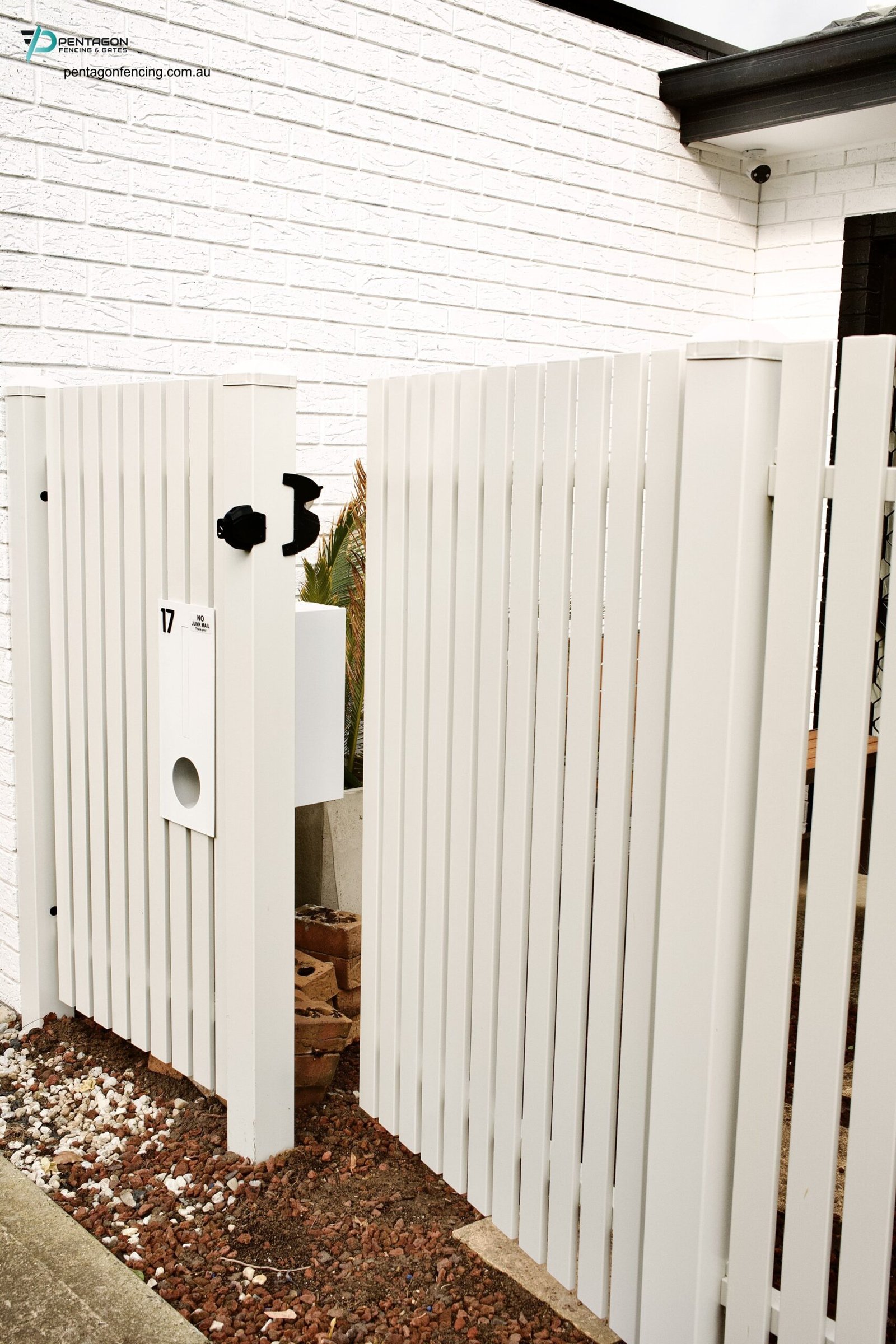
The quote should identify the gate material, width, height, frame, hinges, latch, lock, closer, panic or egress needs, access-control hardware, emergency release, fence transition, ground clearance and whether the gate must align with staff, student, visitor or contractor movement.
Site-zone matrix: where pedestrian gates create value
The table below shows where a pedestrian access gate can improve site flow, safety and boundary control. It also clarifies when the gate should route to another fence, vehicle gate or traffic-control decision.
| Site zone | User flow | Gate implication | Access-control check | Watch-out |
|---|---|---|---|---|
| School or childcare pedestrian entry | Students, staff, parents, visitors and contractors often arrive at predictable peak times. | Plan a gate that guides pedestrians toward the right reception, sign-in or supervised entry point. | Locking method, intercom, visitor release, staff credentials, self-closing and emergency egress. | Do not release pedestrians into a driveway or car-park crossing without a controlled path. |
| Warehouse staff entrance | Staff and contractors may enter near truck routes, loading areas or forklift zones. | Use the pedestrian gate to connect directly with a separated walkway or safe waiting area. | Swipe, keypad, intercom, shift access, after-hours access and visitor escort process. | A gate is not enough if the path beyond it still crosses mobile plant without controls. |
| Commercial side passage | Cleaners, deliveries, staff and maintenance users need controlled access outside public trading areas. | A commercial side gate can protect back-of-house access while keeping the public frontage uncluttered. | Key control, restricted hours, lighting, CCTV sightline and lock protection. | A narrow side passage can conceal users if lighting, visibility and exit path are poor. |
| Residential side access | Residents, gardeners, bins, bikes, pets and visitors may use the side path daily. | Match the gate to the front fence, side fence or boundary privacy requirement. | Latch height, lock type, self-closing needs, privacy gaps and boundary coordination. | A heavy or poorly aligned gate becomes inconvenient and is often left open. |
| Visitor entry at public-facing facility | Visitors need a route that is easy to identify without wandering into restricted areas. | The gate should support wayfinding, reception control and informal surveillance. | Intercom, signage, camera view, night lighting and out-of-hours lock state. | A secure gate that is hard to find can push visitors toward a vehicle entry. |
Separate pedestrian and vehicle movement first
For high-use sites, the most important decision is not the gate material. It is whether the pedestrian route is separated from vehicle movement. WorkSafe Victoria advises that traffic-management planning should identify hazards, assess risk, consult workers and include controls to keep people safe; it also recommends separating people and powered mobile plant with permanent physical barriers where practicable [4].
This matters at warehouses, factories, schools, healthcare facilities, car parks, depots and mixed-use developments. A pedestrian gate that opens into a driveway still leaves staff, students or visitors exposed to cars, vans, trucks or forklifts. The gate should connect to a clear path, waiting area, crossing point, reception route or supervised entry.
Where forklifts operate, WorkSafe Victoria notes that collisions with pedestrians can cause serious injuries and fatalities, and that incidents often occur where physical separation is missing [5]. A side gate should therefore be considered alongside line marking, physical barriers, signs, lighting, speed controls, visitor escort rules and site-specific traffic procedures.
Access-control options for side and pedestrian gates
Access control should follow the user groups and the risk level. The gate for a family home, school reception, staff side passage, warehouse turnstile substitute and commercial service yard will not need the same hardware.
| Access method | Best fit | Strength | Watch-out | Evidence to request |
|---|---|---|---|---|
| Keyed lock | Residential side access, lower-traffic commercial entries and maintenance-only gates. | Simple, familiar and does not depend on power. | Keys are hard to revoke if copied or not returned. | Lock type, key-control process, egress method and latch protection. |
| Mechanical keypad | Small teams, bin access, low-to-medium traffic and temporary contractor access. | No electronic reader or network required. | Codes can be shared unless changed and controlled. | Code-change process, weather rating, latch compatibility and user instructions. |
| Electronic strike or maglock | Staff gates, apartment entries, schools, commercial receptions and visitor-controlled access. | Can connect to swipe, fob, keypad, intercom or access-control system. | Power loss, egress requirements and emergency access must be defined. | Electrical scope, fail-safe/fail-secure setting, release method and access logs if applicable. |
| Intercom or video release | Visitor gates, school reception entries, apartment entries and commercial frontages. | Supports visitor verification before release. | Poor signage can leave visitors waiting at the wrong gate. | Camera view, release process, reception workflow, lighting and connectivity. |
| Swipe, fob, RFID or mobile credential | Staff, residents, recurring contractors and managed commercial entries. | Credentials can be issued, removed and sometimes logged. | Requires administration, reader placement and weather-protected cabling. | User groups, credential owner, revocation process, audit needs and integration responsibility. |
School pedestrian gates: staff, students and visitors
A school pedestrian gate needs to support more than perimeter security. It affects morning and afternoon flow, supervision, visitor arrival, emergency access, out-of-hours control and whether children are guided away from vehicle movement.
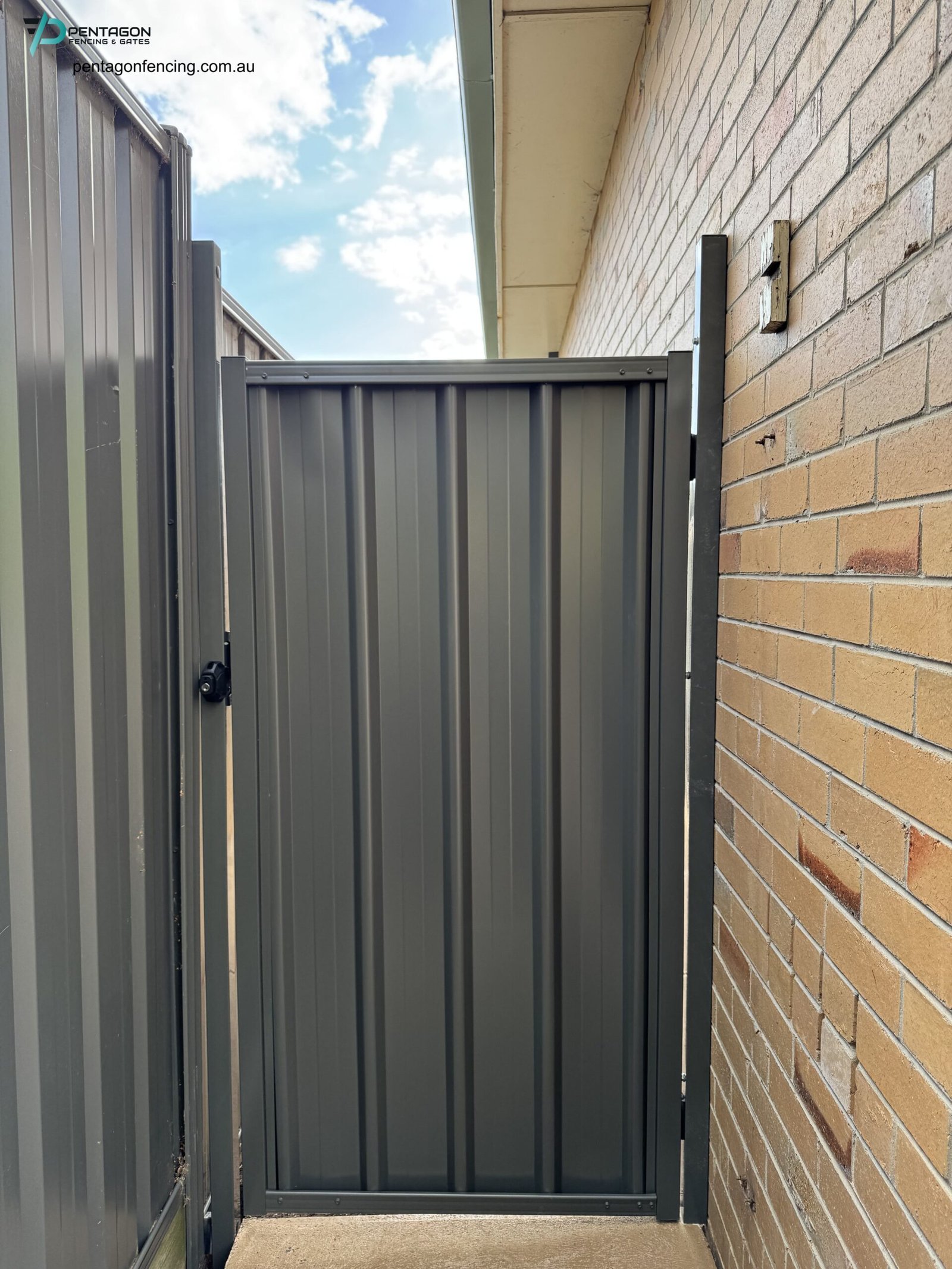
Victorian government school building guidance says fencing design should consider the safety of staff, students and children, site isolation, sight lines, external lighting and community information. It also states that fencing and gates should be integrated with pedestrian and vehicle site access gates [3].
- Student entry: route students through clear, supervised access points rather than informal side openings.
- Visitor entry: make the correct gate obvious with signage, intercom or direction to reception.
- Staff access: provide credentials that are easy to use but revocable when roles change.
- Emergency access: plan how authorised responders, maintenance teams and after-hours staff enter without compromising normal security.
- Public interface: consider sightlines, lighting, fence transparency and avoid creating hidden waiting spots outside the gate.
Manual, self-closing or automated pedestrian gate?
Not every pedestrian gate should be automated. In many side passages, a robust manual gate with the right latch, closer, lock and signage is better than a complicated system that is poorly maintained. Where automation or electric release is used, the gate becomes part of a powered access system and needs more careful planning.
HSE states that powered-gate safety should consider design, specification, construction, user instructions, routine maintenance and periodic safety checks [6]. HSENI also advises duty holders to ensure electrically powered gate systems have a suitable risk assessment and planned preventative maintenance system [7].
| Gate operation | Best fit | Main design question | Maintenance note |
|---|---|---|---|
| Manual hinged gate | Residential side access, low-use service access and controlled manual entry points. | Will users reliably close and lock it after every use? | Inspect hinges, latch alignment, post movement, lock condition and ground clearance. |
| Self-closing gate | Schools, childcare, apartment side entries and sites where an open gate would create risk. | Does the closer work across real wind, slope, latch and user conditions? | Test closing speed, latch engagement, pinch points and seasonal movement. |
| Electrically released gate | Staff, visitor, apartment and commercial entries using intercom, reader or remote release. | What happens during power loss, emergency egress or access-control failure? | Maintain wiring, reader, strike, lock, release button, backup and manual override. |
| Powered pedestrian swing gate | Managed entrances requiring assisted opening, controlled movement or higher user volume. | Have crush, hinge, trapping and force risks been assessed for actual users? | Use a documented risk assessment, safety checks and service schedule. |
Materials, hardware and visibility
A pedestrian gate should match the adjacent fence without compromising the access task. Pentagon’s side gate range includes aluminium, steel, timber and COLORBOND® steel options [1]. The right material depends on privacy, strength, maintenance, visibility, weight and how the gate will be used.
- Aluminium: useful for contemporary residential and commercial entries where lower weight, corrosion resistance and clean styling matter.
- Steel: useful for industrial, school, warehouse and higher-security entries where strength and durable framing are important.
- Timber: suitable where natural appearance is important and the owner accepts maintenance requirements.
- COLORBOND® steel: useful where privacy and colour-matched screening matter, but sightlines and wind exposure should be checked.
- Weldmesh or vertical bar infill: useful where visibility through the gate supports supervision, CCTV coverage or informal surveillance.
Victoria Police advises businesses to ensure fences and gates are well-built, maintained and secured, to install good-quality locks and to keep boundaries clear of potential climbing aids [8]. For side gates, that means checking the lock, hinges, adjacent fence panel and the area around the gate as one security point.
Public-facing and street-frontage checks
A side gate or pedestrian entry near a footpath, school frontage, car park or public space should be visible, legible and safe to approach. Planning Victoria recommends that barriers and fences support amenity and safety, use highly visible materials and, on street frontages or public-space boundaries, use low-height or partially transparent fence types to support informal surveillance [9].
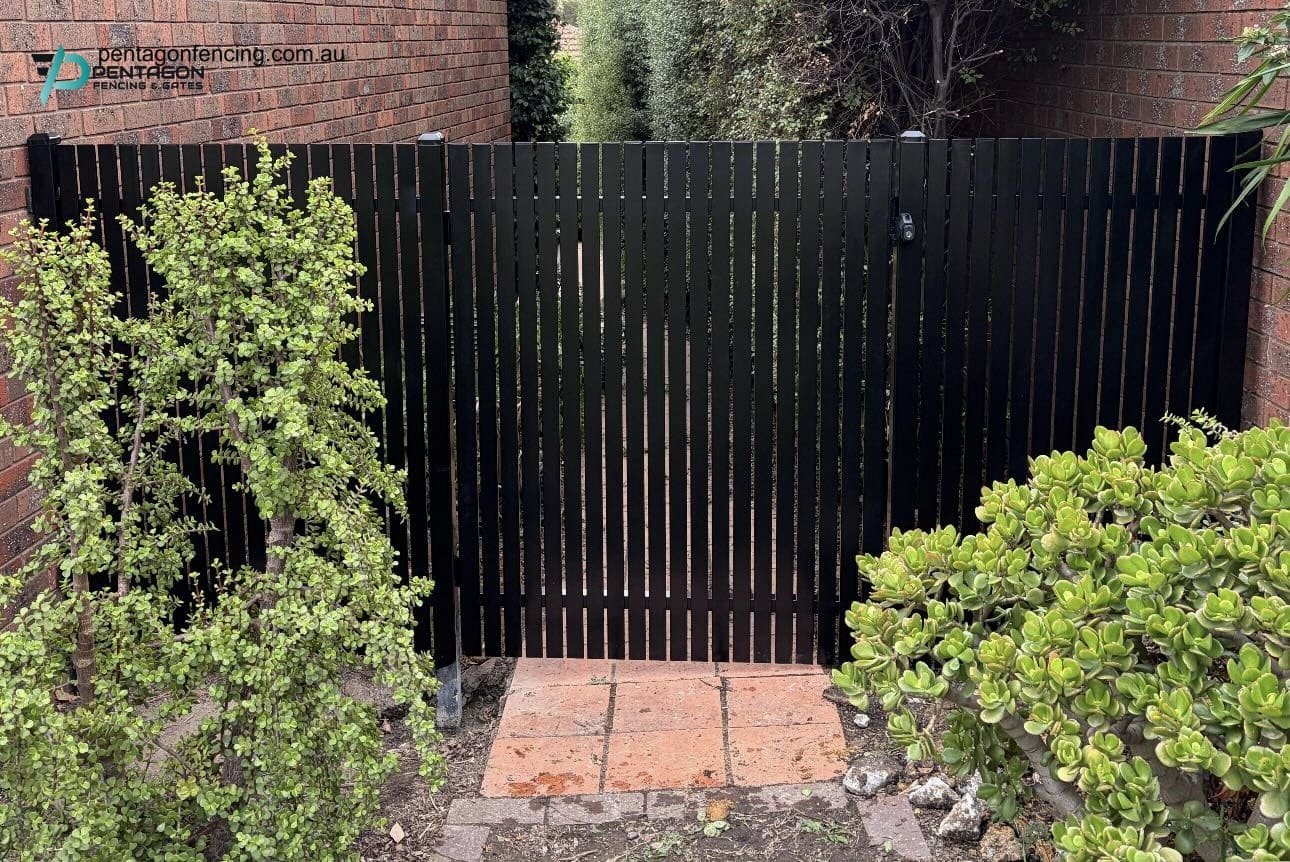
For a side gate Melbourne project, check whether the gate leaf, latch position, intercom, queuing area and signage can be used without people standing in a driveway or hidden side passage. If the gate is part of a shared residential or commercial boundary, Victorian guidance also says property owners should check council planning rules and understand dividing-fence obligations before building or replacing boundary fencing [10].
What affects side and pedestrian gate cost?
Side and pedestrian gate pricing should be compared by equivalent scope, not only by the gate leaf size. A basic gate can become a larger project when access control, electrical work, fence modification, concrete, drainage, site access or safety requirements are included.
| Cost driver | Effect on the quote | Caveat | Evidence to request |
|---|---|---|---|
| Gate material and infill | Steel, aluminium, timber, COLORBOND® and mesh options change fabrication, finish, weight and maintenance. | The cheapest gate leaf may not match the adjacent fence, visibility need or security requirement. | Material schedule, frame drawing, infill type, finish and warranty terms. |
| Posts, hinges and alignment | Heavy gates, soft ground, uneven surfaces and existing fence conditions can require stronger posts or foundation work. | A gate that sags or binds often becomes a security and usability problem. | Post size, footing assumptions, hinge rating, clearances and adjustment method. |
| Latch, lock and closer | Self-closing hardware, lockable latches and protected strike plates add hardware and installation time. | Residential, school and commercial requirements may need different latch heights or egress functions. | Hardware model, operating side, egress method and maintenance instructions. |
| Access control | Keypads, readers, intercoms, electric strikes, maglocks, wiring, conduit and commissioning add scope. | Hardware alone will not solve visitor flow if signage, reception process and credential control are unclear. | Access-control schedule, power plan, reader location, release process and user groups. |
| Fence modification and site works | Cutting into an existing fence, rebuilding posts, matching materials, concrete, drainage and path work can add labour. | A retrofit gate can be more complex than a new gate planned with the fence. | Existing fence condition, demolition scope, path levels, drainage and make-good details. |
| Safety, lighting and signage | Public-facing, school and industrial entries may need signs, lighting, line marking, barriers or safety devices. | These items are often excluded from a gate-only quote but affect whether the access point works safely. | Site-flow plan, traffic plan, lighting scope, signage plan and responsibility split. |
Six-step access planning flow for side gates Melbourne
- Identify user groups. Separate staff, students, visitors, residents, contractors, deliveries, maintenance users and emergency responders.
- Map the route beyond the gate. Confirm whether the gate opens to a safe path, reception point, walkway, courtyard, side passage or shared vehicle zone.
- Choose the gate type. Decide whether the access point needs a manual pedestrian gate, self-closing gate, electrically released gate or powered pedestrian swing gate.
- Specify the hardware. Lock the frame, material, hinges, latch, closer, lock, egress function, intercom, keypad, reader or electric release.
- Coordinate safety and visibility. Review lighting, CCTV, signage, blind corners, gate-swing direction, vehicle interaction and public-facing visibility.
- Plan handover and maintenance. Record keys, credentials, manual release, emergency procedure, service intervals and who can change access permissions.
Pedestrian gate project checklist
- Gate location: confirm the fence line, boundary, path alignment, visibility and whether users can find the correct entrance.
- Opening size: define clear width, height, swing direction, ground clearance, slope and accessibility expectations for the site.
- Gate frame and infill: match the adjacent fence while checking visibility, privacy, weight and maintenance requirements.
- Posts and hinges: specify post size, footing, hinge rating, adjustment method and protection from impact.
- Latch and lock: confirm key, keypad, reader, intercom, electric release, closer, egress and emergency access.
- People and vehicles: ensure the gate does not release pedestrians into forklift, truck, car-park or driveway movement without controls.
- Visitor flow: add signs, lighting and reception direction so visitors do not default to a vehicle gate.
- Handover: record keys, fobs, codes, admin rights, operating instructions, maintenance plan and fault response.
Maintenance and handover notes
Pedestrian gates are used repeatedly and are often handled by people who are not thinking about the gate itself. Regular checks prevent small faults from becoming access, safety or security problems.
- Check whether the gate self-closes and latches consistently in normal weather and after heavy use.
- Inspect hinges, posts, latches, closers, electric strikes, maglocks, readers and intercoms for movement or damage.
- Review user access regularly so old keys, fobs, cards or codes are removed from service.
- Keep the gate approach clear of bins, storage, vegetation and climbable objects.
- Test emergency release, manual operation and power-loss procedure where electronic access control is installed.
- Record faults and restrict use if a powered or electrically released gate cannot operate safely.
Common mistakes to avoid
- Using the vehicle gate as the pedestrian route. This can place people into the same path as cars, trucks or forklifts.
- Choosing hardware before mapping users. A latch that works for a home may not suit a school, warehouse, apartment or commercial service entry.
- Ignoring the path after the gate. A pedestrian gate is only safe if it connects to a safe internal route.
- Adding access control without administration. Credentials need an owner, revocation process and backup procedure.
- Letting the side gate become a weak point. Posts, hinges, latch protection, adjacent fence panels and lighting all matter.
- Skipping maintenance. A sagging, misaligned or unreliable gate is more likely to be propped open or bypassed.
How Pentagon Fencing can help
Pentagon Fencing & Gates can design and install side security gates, pedestrian swing gates, matching fence sections, swing gates, automation and access-control-ready gate packages for residential, commercial and industrial sites across Melbourne [1] [2].
- Assess whether a manual, self-closing, electrically released or automated pedestrian gate fits the site’s staff, student, visitor or contractor flow.
- Coordinate the side gate with the adjacent fence, vehicle gate, access-control hardware, pedestrian path, lighting and site-security requirements.
- Prepare a site-specific scope covering materials, posts, locks, closers, automation, gate handover and ongoing maintenance requirements.
FAQ
What is the difference between a side gate and a pedestrian gate?
A side gate describes the location or purpose of the access point, often along a side passage or secondary boundary. A pedestrian gate describes the user type: people rather than vehicles. Many side gates are pedestrian gates, but pedestrian gates can also appear at frontages, schools, warehouses, apartments and commercial entries.
When does a site need a separate pedestrian access gate?
A separate pedestrian gate is useful when people would otherwise walk through a vehicle gate, loading bay, driveway or forklift area. It is especially important where staff, students, visitors or contractors need a clear and controlled route.
Is a pedestrian swing gate suitable for schools?
Yes, but it should be planned with school fencing, supervision, visitor direction, emergency access and vehicle separation. Hardware choices such as self-closing, self-latching, intercom or access-control release should match the specific school setting.
Can a side security gate include electronic access control?
Yes. Side gates can use keypads, intercoms, electric strikes, maglocks, fobs, swipe cards or mobile credentials. The quote should include power, cabling, release logic, emergency egress, credential management and maintenance responsibilities.
What affects the cost of a commercial side gate?
Cost drivers include gate material, frame size, posts, hinges, latch, lock, closer, access control, electrical work, fence modification, path levels, lighting, signage, site access and maintenance handover.
What to Keep in Mind
- Start with people movement: staff, students, visitors, residents and contractors may need a different route from vehicles.
- Make the side gate part of the whole perimeter system, including fencing, lighting, CCTV, access control and maintenance.
- Do not release pedestrians into a driveway, warehouse traffic route or forklift zone without a controlled path.
- Specify latch, lock, closer, egress, emergency access and credential control before fabrication.
- Compare complete scopes, not just gate leaf prices, especially when electronic access or site modifications are included.
References
- Pentagon Fencing & Gates, “Side Gate,” Pentagon Fencing & Gates. Accessed: Jun. 23, 2026. [Online]. Available: https://pentagonfencing.com.au/service/side-gate/
- Pentagon Fencing & Gates, “Swing Gates,” Pentagon Fencing & Gates. Accessed: Jun. 23, 2026. [Online]. Available: https://pentagonfencing.com.au/service/swing-gates/
- Victorian School Building Authority, “5. Technical specifications,” schoolbuildings.vic.gov.au. Accessed: Jun. 23, 2026. [Online]. Available: https://www.schoolbuildings.vic.gov.au/building-quality-standards-handbook/technical-specifications
- WorkSafe Victoria, “Metal fabrication: Improving safety through traffic management layout and design,” WorkSafe Victoria. Accessed: Jun. 23, 2026. [Online]. Available: https://www.worksafe.vic.gov.au/metal-fabrication-improving-safety-through-traffic-management-layout-and-design
- WorkSafe Victoria, “Forklift hazards and risk controls,” WorkSafe Victoria. Accessed: Jun. 23, 2026. [Online]. Available: https://www.worksafe.vic.gov.au/forklift-hazards-and-risk-controls
- Health and Safety Executive, “Ensuring powered doors and gates are safe,” HSE. Accessed: Jun. 23, 2026. [Online]. Available: https://www.hse.gov.uk/work-equipment-machinery/powered-gates/safety.htm
- Health and Safety Executive for Northern Ireland, “Electrically powered gates – risks of crushing to pedestrians,” HSENI. Accessed: Jun. 23, 2026. [Online]. Available: https://www.hseni.gov.uk/alert/electrically-powered-gates-risks-crushing-pedestrians
- Victoria Police, “Business premises security,” Victoria Police. Accessed: Jun. 23, 2026. [Online]. Available: https://www.police.vic.gov.au/securing-business-premises
- Department of Transport and Planning Victoria, “6.4 Barriers and fences,” Planning Victoria. Accessed: Jun. 23, 2026. [Online]. Available: https://www.planning.vic.gov.au/guides-and-resources/guides/urban-design-guidelines-for-victoria/objects-in-the-public-realm/barriers-and-fences
- State Government of Victoria, “Fencing in Victoria,” vic.gov.au. Accessed: Jun. 23, 2026. [Online]. Available: https://www.vic.gov.au/fencing-victoria