
Table of Contents
A fencing project checklist helps commercial sites avoid the common problem of buying a fence, gate and automation system as disconnected parts. A secure fence can still fail operationally if the gate is undersized, the pedestrian route enters a vehicle path, the access-control device is badly placed, the contractor has not allowed for power, or the handover does not define inspection and maintenance responsibilities.
For Melbourne commercial, industrial and mixed-use sites, the practical scope should cover the full fence gate automation package: perimeter purpose, fence type, gate movement, access control, traffic flow, public-facing design, safety devices, installation staging and maintenance. Pentagon Fencing & Gates states that it provides robust fencing and gate systems for commercial and industrial sites across Melbourne, including large-scale installations and custom access solutions [1].
Why fence, gate and automation projects become harder than expected
- You select the fence type before mapping how staff, visitors, delivery drivers, contractors and pedestrians will enter the site.
- You price a sliding or swing gate before confirming clear opening, gate weight, run-back, swing arc, traffic queues, power and access-control position.
- You treat automation as a later add-on even though motor position, safety devices, cabling, manual release and maintenance access can affect the gate design.
- You allow one shared entry for vehicles and pedestrians where separate access would reduce collision and access-control risk.
- You compare contractor quotes without checking whether each quote includes removals, site preparation, posts, footings, gate hardware, automation, testing, handover and maintenance guidance.
Key Takeaways
- A fencing project checklist should start with site movement and security purpose, not only material selection.
- Commercial access control planning should define who enters, when, by which gate, with which credentials, and what happens during power failure, after-hours access or emergency entry.
- Powered gates should be planned as moving equipment. HSE guidance says a powered gate must respond safely when people interact with it and should account for foreseeable interactions, normal wear, weather and debris [4].
- Industrial gates need inspection and maintenance. SafeWork NSW reports 17 notified industrial gate incidents since 2017, including two fatal injuries, and says lack of maintenance was the main cause [5].
- The best quote-ready scope should cover fence, gate, automation, access control, traffic separation, installation staging, commissioning, handover and maintenance in one document.
How to use this checklist
This checklist is designed for business owners, facility managers, builders, developers, operations teams and project managers preparing a commercial fencing brief. It is not a substitute for engineering, electrical, WHS, building, planning or access-control advice. It gives the project team a structured way to collect the information a fencing contractor needs before a site assessment or quote.
Use it in three passes. First, identify the site zones and access problems. Second, convert those problems into a fence, gate and automation scope. Third, use the fencing contractor checklist section to compare whether each contractor is pricing the same deliverable.
Complete fence, gate and automation checklist
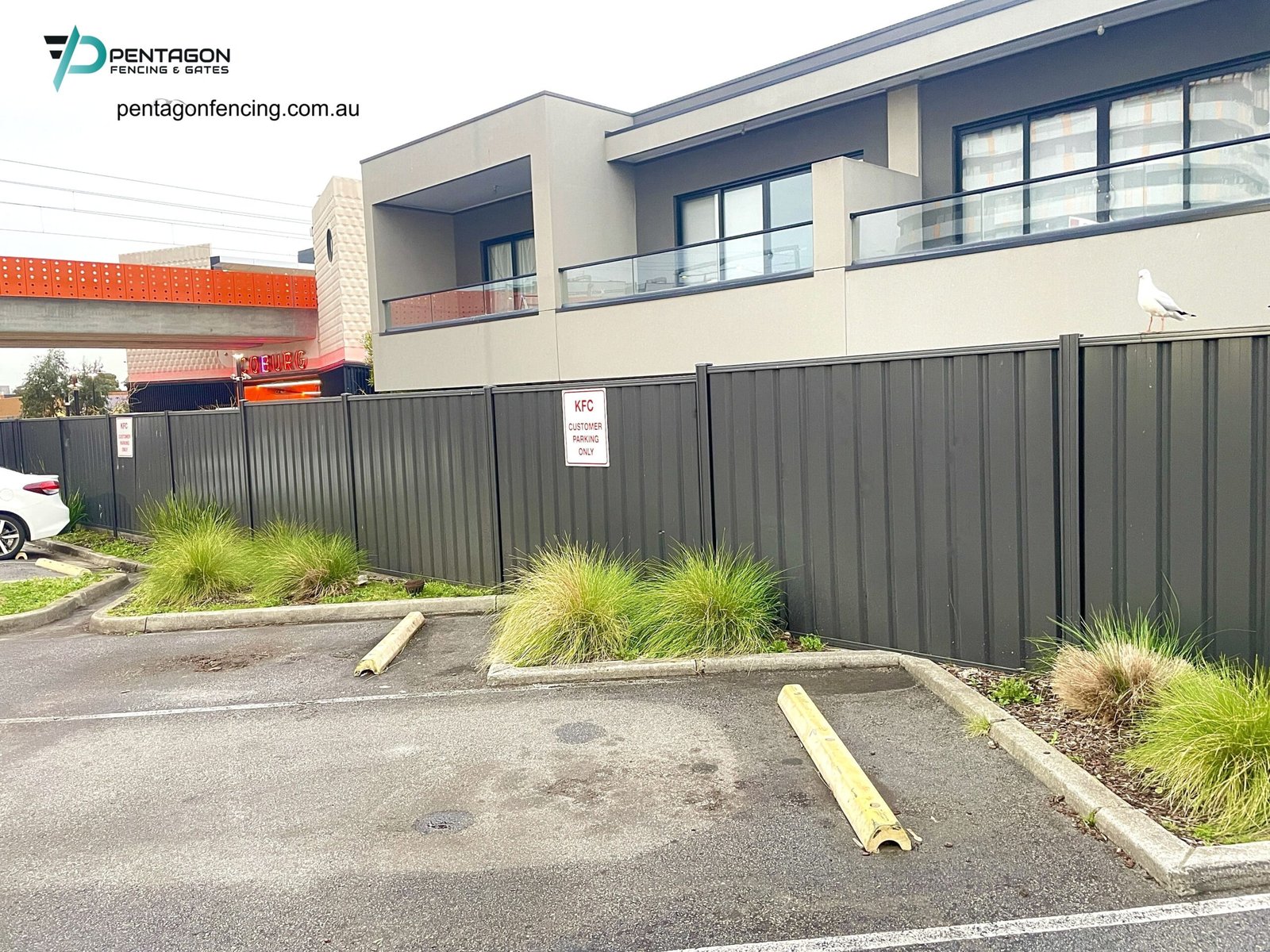
This master table turns the project into a quote-ready scope. For complex sites, complete the checklist by zone: street frontage, car park, loading area, staff entry, visitor entry, service yard, restricted storage, waste area and emergency access route.
| Checklist area | What to define | Evidence to prepare | Common failure |
|---|---|---|---|
| 1. Site purpose | Security, privacy, traffic control, public frontage, asset protection, after-hours locking, staff access or visitor management. | Site plan, photos, current access issues, incident notes, asset list and user groups. | The contractor prices a fence type before the real access and security problem is defined. |
| 2. Fence scope | Fence type, height, material, infill, posts, rails, top profile, coating, visibility, privacy and maintenance expectation. | Measured line lengths, marked-up zones, preferred materials, height schedule and existing fence removal notes. | Quotes look similar but use different post sizes, coatings, heights, removals or gate allowances. |
| 3. Vehicle gate scope | Sliding, cantilever, swing, double swing, manual, automated, opening width, gate weight, run-back, swing arc and duty level. | Driveway width, vehicle types, turning paths, traffic volume, gate cycle pattern and truck access needs. | The gate opens safely on paper but blocks traffic, pedestrians, parking, bins, loading or emergency access in daily use. |
| 4. Pedestrian access | Separate staff, visitor, contractor, student, public or emergency access points where needed. | Pedestrian desire lines, entry hours, visitor flow, accessibility needs and lock/latch requirements. | People use the vehicle gate because the pedestrian route is missing, inconvenient or poorly signed. |
| 5. Automation and access control | Motor readiness, power, conduits, keypad, intercom, fob, card reader, remote, CCTV interface, timer, manual release and battery backup. | Electrical point, comms pathway, user roles, credential policy, after-hours process and access-control device locations. | Automation is added after fabrication, creating avoidable cabling, device placement, safety or maintenance issues. |
| 6. Safety and traffic management | Pedestrian/vehicle separation, gate movement zones, vehicle queues, loading paths, bollards, barriers, signage, lighting and CCTV. | Traffic management plan, car park layout, loading-zone plan, pedestrian routes and hazard register. | The gate controls access but creates a new collision, crush, queueing or visibility hazard. |
| 7. Installation and staging | Work hours, temporary access, demolition, service locating, traffic control, deliveries, staff communication and site access during works. | Staging plan, contact list, service plans, access restrictions, permit requirements and temporary controls. | The project is technically correct but disrupts operations because installation access was not planned. |
| 8. Handover and maintenance | Keys, remotes, access credentials, manual release, commissioning, inspection schedule, cleaning, coating care and defect process. | Handover pack, as-built notes, user instructions, maintenance schedule and emergency contact process. | No one knows who maintains the gate, how to release it manually or when it must be inspected. |
Gate and access matrix for commercial sites
A complete fence and gate package should separate vehicle access, pedestrian access and controlled entry. For track-free sliding movement, Pentagon describes cantilever gates as sliding gates that move horizontally without a ground track across the entrance [3]. WorkSafe Victoria says traffic management is important where powered mobile plant and people operate in the same area, and that an effective traffic management plan depends on the space and activities carried out [7].
| Access zone | Typical gate direction | Checklist questions | Route deeper when |
|---|---|---|---|
| Main vehicle entry | Sliding or cantilever gate for high-traffic, limited swing-space or larger commercial openings. | What vehicles enter? How often? Where do they wait? Is there enough run-back, track condition or cantilever support space? | The opening is high-cycle, used by trucks or limited by driveway depth. |
| Secondary service entry | Swing, double swing, sliding or manual service gate depending on clearance and frequency. | Will the gate be used by waste collection, maintenance vehicles, contractors or emergency services? | The gate is not used daily but must work reliably during urgent access. |
| Staff pedestrian entry | Separate pedestrian gate with latch, closer, access credential or controlled entry point. | Does the gate release people into a safe path, or into a vehicle/forklift route? | People currently walk through vehicle gates or across loading areas. |
| Visitor or reception entry | Pedestrian gate or controlled vehicle entry with intercom, keypad, signage and clear waiting area. | Can visitors identify the right entry without entering a restricted or vehicle-only area? | The site mixes public, staff, delivery and contractor traffic. |
| Car park entry or exit | Sliding gate, boom gate, barrier, bollards or controlled access point depending on risk and throughput. | Are pedestrians, vehicles and delivery movements separated? Is signage, lighting or CCTV required? | The car park has shared pedestrian paths, blind spots or delivery vehicle overlap. |
Commercial access control planning checklist
Commercial access control planning should describe how access works in normal hours, after hours, during deliveries, during maintenance and during an emergency. A keypad, intercom or card reader is not a plan by itself. It has to be positioned so users do not stand inside the gate movement path or force vehicles to queue in an unsafe location.
| Access-control item | Planning question | Design implication |
|---|---|---|
| User groups | Who enters: staff, managers, visitors, cleaners, delivery drivers, contractors, emergency services or tenants? | Different users may need different gate permissions, time windows, routes and credentials. |
| Credential method | Will access use remotes, keypad codes, fobs, cards, intercom approval, phone entry or a mixed method? | Device choice changes conduit, mounting post, visibility, weather protection and management process. |
| Device location | Can drivers and pedestrians use the device without entering a crush, swing, slide or vehicle conflict zone? | Access-control posts may need setbacks, bollard protection, lighting and clear approach space. |
| Manual release | Who can open the gate during power failure, motor fault, emergency access or maintenance? | Manual release should be documented, controlled and safe for the person operating the gate. |
| Audit and handover | Who manages codes, remotes, lost credentials, tenant changes, staff exits and service access? | The system needs an owner, not only hardware. |
Safety checks before automation is approved
Automation can improve convenience and control, but it also changes the safety profile of the gate. WorkSafe NSW describes industrial gates as barriers that control movement of vehicles, people and animals into private property, and warns that gates can weigh hundreds of kilograms [5]. That makes commissioning, inspection and maintenance part of the project scope, not an optional afterthought.
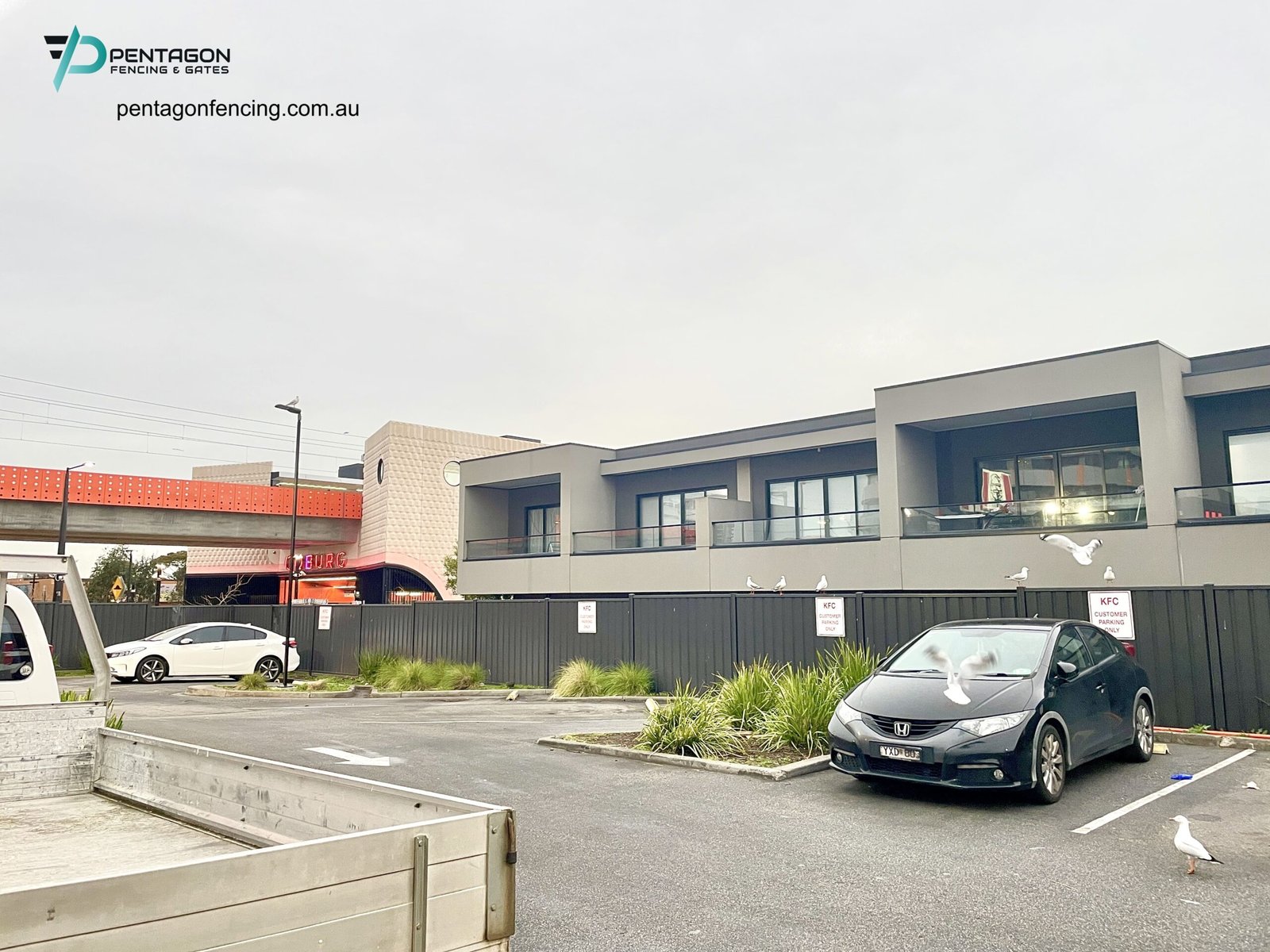
For traffic and pedestrian movement, Safe Work Australia recommends working through the hierarchy of control and gives physical separation of pedestrian routes from vehicle areas as an example of eliminating traffic risk where reasonably practicable [6]. WorkSafe Victoria also identifies car-park hazards involving collisions with vehicles, pedestrians and structures, and recommends controls such as separating delivery vehicles and forklifts from pedestrians, physical barriers or adequate walkways, clear signage and CCTV where relevant [8].
- Gate movement zone: mark where the gate slides, swings, stops and reverses, then keep people and vehicles out of that zone.
- Crush and trapping points: review posts, walls, rails, hinges, guides, stops, racks, rollers and nearby structures.
- Safety devices: confirm sensors, edges, force settings, warning devices and guarding with a qualified installer or relevant specialist.
- Traffic separation: keep pedestrian gates, marked walkways and vehicle gates coordinated with the site traffic plan.
- Maintenance access: ensure rollers, tracks, hinges, guides, motors, controls and emergency release points can be inspected safely.
- Operating conditions: consider wind, rain, debris, slope, surface condition, lighting, night use and public-facing behaviour around the gate.
Fencing contractor checklist: what to compare between quotes
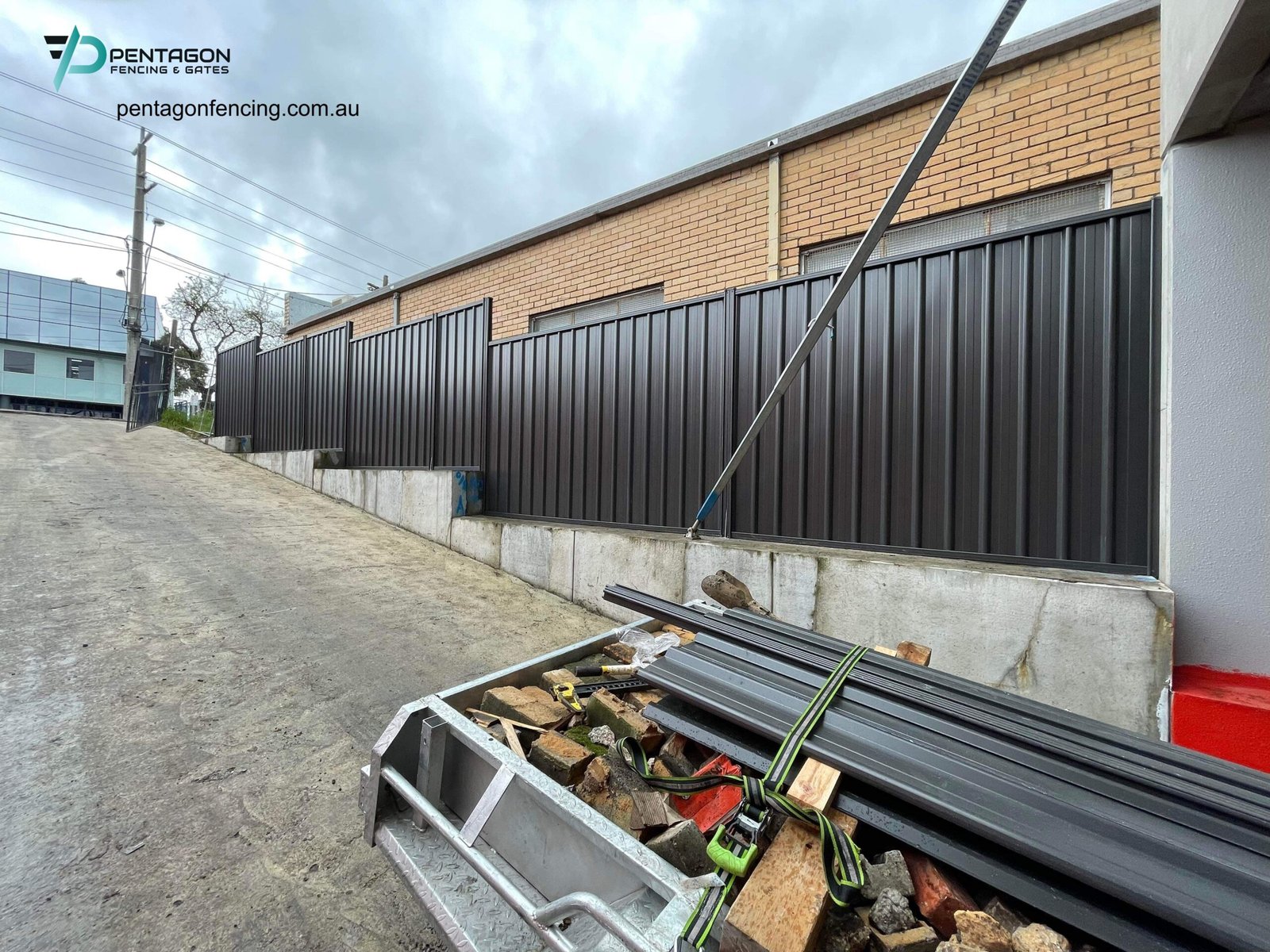
A useful fencing contractor checklist compares scope evidence, not only final price. Use this table to check whether each contractor is quoting the same project.
| Quote item | What the quote should clarify | Red flag |
|---|---|---|
| Measured scope | Fence length, height, zones, gate openings, removals, ground conditions and exclusions. | A lump sum with no line length, height or gate schedule. |
| Fence specification | Material, infill, post size, rails, footing assumption, coating, finish and top profile. | A product name without specification details. |
| Gate specification | Gate type, clear opening, frame, infill, posts, hinges/rollers, stops, locks, guides and manual release. | The gate is priced as a generic allowance rather than a measured access system. |
| Automation allowance | Motor, power, conduit, controls, safety devices, commissioning, user setup and interface with access control. | Automation is mentioned but not scoped. |
| Site preparation | Demolition, disposal, concrete cutting, service locating, temporary fencing, access constraints and traffic control. | The quote assumes a clean site even though the site has existing structures, services or live operations. |
| Handover | Keys, remotes, access credentials, operating instructions, maintenance schedule and defect process. | No handover pack or maintenance responsibility is documented. |
Public-facing frontage and visibility check
Commercial sites with street-facing boundaries should also check how the fence and gate affect public visibility, wayfinding and frontage character. Planning Victoria says barriers and fences can define boundaries and protect people from traffic hazards, and recommends low-height or partially transparent fence types on property boundaries abutting streets or public spaces to support informal surveillance [9].
- Frontage: decide whether the boundary needs openness, screening, deterrence, brand presentation or a mixed treatment.
- Gate approach: make visitor, staff, delivery and emergency entries clear before adding access-control hardware.
- Visibility: check sightlines for pedestrians, drivers, CCTV, reception staff and public-space users.
- Safety: avoid sharp or aggressive details where a public-facing or high-touch boundary needs a safer top profile.
Project scope template to send before a site assessment
Copy this structure as a simple fencing project scope outline before requesting a quote. It gives the contractor a consistent starting point and reduces the chance that important items are excluded from the first price.
- Site details: address, business type, operating hours, site contact, access restrictions and preferred inspection time.
- Project objective: security upgrade, new development, replacement fence, gate automation, access-control change, compliance improvement or staged works.
- Fence scope: approximate line lengths, required height, preferred material, visibility/privacy needs, existing fence removal and finish requirements.
- Gate scope: vehicle gate, pedestrian gate, sliding gate, cantilever gate, swing gate, clear opening width, daily use frequency and vehicle types.
- Automation scope: manual, automation-ready, automated now, keypad, intercom, remote, fob/card access, CCTV interface, battery backup or manual release requirement.
- Safety and traffic: pedestrian routes, loading areas, forklift/plant movement, car park flow, signage, lighting and CCTV requirements.
- Approval and constraints: planning/building permit status, council requirements, landlord approval, title boundary, easements and operating constraints.
- Handover: access credentials, training, operating notes, maintenance expectations, warranty/defect process and emergency contact path.
Where this checklist should route next
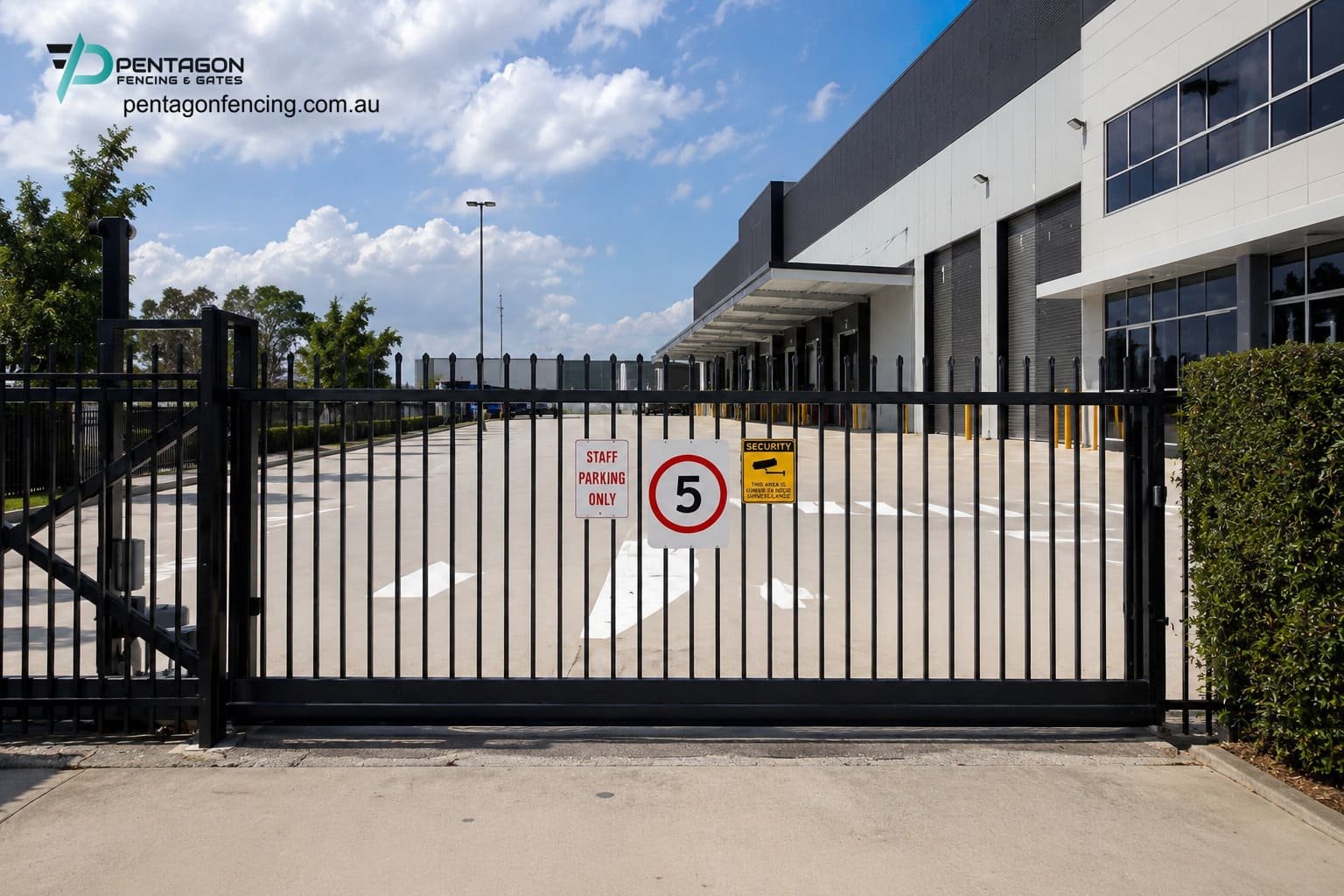
This article owns project-planning checklist intent. It should not replace product-specific or price-specific guides. Use it to prepare the brief, then route into the deeper article that matches the unresolved decision.
| Unresolved question | Next content route | Why route there |
|---|---|---|
| Which fence material should we use? | Metal fencing, aluminium fencing, steel fencing, Colorbond, timber or modular wall guides. | Material choice needs its own security, privacy, frontage, durability and maintenance comparison. |
| Should the vehicle gate slide or swing? | Sliding gate vs swing gate guide. | Gate movement depends on clearance, traffic, automation, slope and budget. |
| What automation or access-control system is needed? | Commercial gate automation guide. | System-level access control should cover credentials, devices, safety, power, user management and maintenance. |
| Do height or permit checks apply? | Fence height and permit basics in Victoria. | Height, front boundary, corner sites, gates and mixed-use projects can trigger council or building checks. |
| What information is needed for pricing? | Industrial fencing quote or commercial fencing cost guide. | Pricing needs measured scope, site conditions, material, gates, removals, access and staging assumptions. |
How Pentagon Fencing can help
Pentagon Fencing & Gates can help Melbourne commercial and industrial sites turn a broad project brief into a practical fence gate automation package. Its gate range includes swing gates and sliding gates, and its sliding gate service covers commercial, industrial and large-scale projects such as warehouses, logistics hubs, construction sites and manufacturing facilities [1] [2].
- Map fence runs, vehicle gates, pedestrian gates, access-control points and public-facing boundaries into one site-specific scope.
- Coordinate material selection, gate movement, automation readiness, traffic separation and handover requirements before fabrication.
- Prepare quote inputs covering measurements, site access, removals, gate hardware, automation, staging and maintenance expectations.
FAQ
What should be included in a fencing project checklist?
A fencing project checklist should include site purpose, fence type, height, material, gates, automation, access control, traffic separation, pedestrian access, installation staging, safety checks, handover and maintenance.
When should a commercial site plan gate automation?
Gate automation should be planned before fabrication. The gate frame, motor location, power, safety devices, access-control hardware, manual release and maintenance access can all affect the final design.
What is commercial access control planning?
Commercial access control planning defines who can enter a site, through which gate, at what time, with which credential and under which backup or emergency process. It includes hardware placement, user management and operating rules.
How do I compare fencing contractor quotes?
Compare whether each contractor has priced the same measured scope: fence length, height, material, post and footing assumptions, gates, automation, safety devices, removals, site preparation, staging, handover and exclusions.
Why is pedestrian access separate from vehicle gates?
Pedestrian and vehicle access should be planned separately where practical because shared movement can increase collision and gate-safety risk. WorkSafe Australia guidance gives physical separation of pedestrian routes from vehicle areas as an example of eliminating traffic risk where reasonably practicable [6].
What to Keep in Mind
- Plan fence, gate, automation and access control as one system, not separate purchases.
- Define vehicle and pedestrian movement before selecting gate type or automation hardware.
- Compare contractor quotes by measured scope, specifications, exclusions, safety checks and handover responsibilities.
- Document maintenance and manual-release requirements before the gate is handed over.
- Route deeper questions to material, gate, automation, permit or cost guides instead of overloading one checklist.
References
- Pentagon Fencing & Gates, “Gates & Automation,” Pentagon Fencing & Gates. Accessed: Jul. 8, 2026. [Online]. Available: https://pentagonfencing.com.au/gates-automation/
- Pentagon Fencing & Gates, “Sliding Gates,” Pentagon Fencing & Gates. Accessed: Jul. 8, 2026. [Online]. Available: https://pentagonfencing.com.au/service/sliding-gates/
- Pentagon Fencing & Gates, “Cantilever Gates,” Pentagon Fencing & Gates. Accessed: Jul. 8, 2026. [Online]. Available: https://pentagonfencing.com.au/service/cantilever-gates/
- Health and Safety Executive, “Ensuring powered doors and gates are safe,” HSE. Accessed: Jul. 8, 2026. [Online]. Available: https://www.hse.gov.uk/work-equipment-machinery/powered-gates/safety.htm
- SafeWork NSW, “Industrial gate safety,” SafeWork NSW. Accessed: Jul. 8, 2026. [Online]. Available: https://www.safework.nsw.gov.au/advice-and-resources/campaigns/industrial-gate-safety
- Safe Work Australia, “General Guide for Workplace Traffic Management,” Safe Work Australia. Accessed: Jul. 8, 2026. [Online]. Available: https://www.safeworkaustralia.gov.au/system/files/documents/1703/traffic-management-general-guide.pdf
- WorkSafe Victoria, “Metal fabrication: Improving safety through traffic management layout and design,” WorkSafe Victoria. Accessed: Jul. 8, 2026. [Online]. Available: https://www.worksafe.vic.gov.au/metal-fabrication-improving-safety-through-traffic-management-layout-and-design
- WorkSafe Victoria, “Safety in workplace car parks,” WorkSafe Victoria. Accessed: Jul. 8, 2026. [Online]. Available: https://www.worksafe.vic.gov.au/safety-workplace-car-parks
- Department of Transport and Planning Victoria, “6.4 Barriers and fences,” Planning Victoria. Accessed: Jul. 8, 2026. [Online]. Available: https://www.planning.vic.gov.au/guides-and-resources/guides/urban-design-guidelines-for-victoria/objects-in-the-public-realm/barriers-and-fences