
Table of Contents
Barriers and bollards Melbourne projects are usually triggered by a practical site problem: cars drifting into pedestrian areas, delivery vehicles clipping roller doors, forklifts operating close to staff walkways, trucks entering areas with low clearance, or shopfronts needing extra protection without turning the whole boundary into a fence.
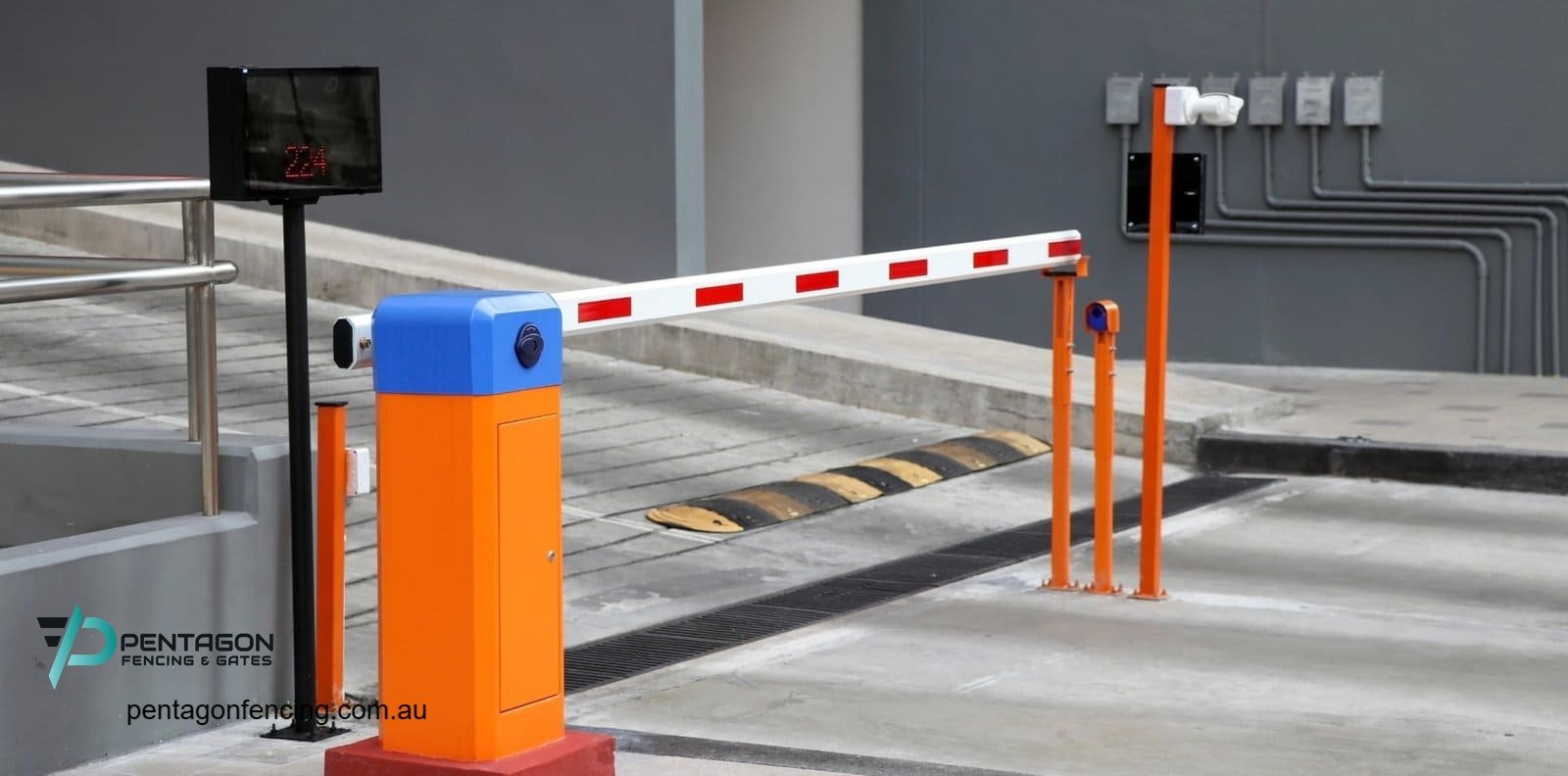
For car parks, loading zones, warehouses, retail frontages, schools, childcare centres and public-facing commercial sites, the right barrier or bollard is the one that controls the movement problem without creating a new access, visibility or maintenance issue. Pentagon Fencing & Gates supplies and installs barriers and bollards in Melbourne for traffic control, asset protection, pedestrian safety and site access management, including height restriction barriers, low-level barrier gates and fixed bollards [1].
Why bollards and barriers are easy to specify incorrectly
- You ask for bollards before defining the risk: accidental vehicle impact, unauthorised vehicle access, forklift movement, car park separation, loading-zone protection or shopfront security.
- You use line marking where physical separation is needed, or use heavy barriers where a removable access-control point would work better.
- You install car park bollards Melbourne without checking pedestrian paths, wheelchair access, pram movement, car-door swing, emergency access or night visibility.
- You choose a height restriction barrier without measuring the tallest authorised vehicles, fire appliance requirements, delivery routes and clearance signage.
- You compare unit prices without checking foundations, surface condition, impact rating, removability, finish, council approval, staging and ongoing maintenance.
Key Takeaways
- Barriers and bollards Melbourne projects should start with site movement: where vehicles travel, where pedestrians wait, where assets sit and where access must remain flexible.
- WorkSafe Victoria notes that workplace car parks should identify and control hazards at entries and exits, separate delivery vehicles and forklifts from pedestrians, use physical barriers or marked walkways where needed and provide signage for speed, load and height restrictions [2].
- Safe Work Australia’s traffic management guide shows physical barriers, guardrails and walkways marked with bollards as examples of separating people from powered mobile plant, and it recommends physical barriers or bollards to prevent vehicles crossing into walking areas in parking areas [3].
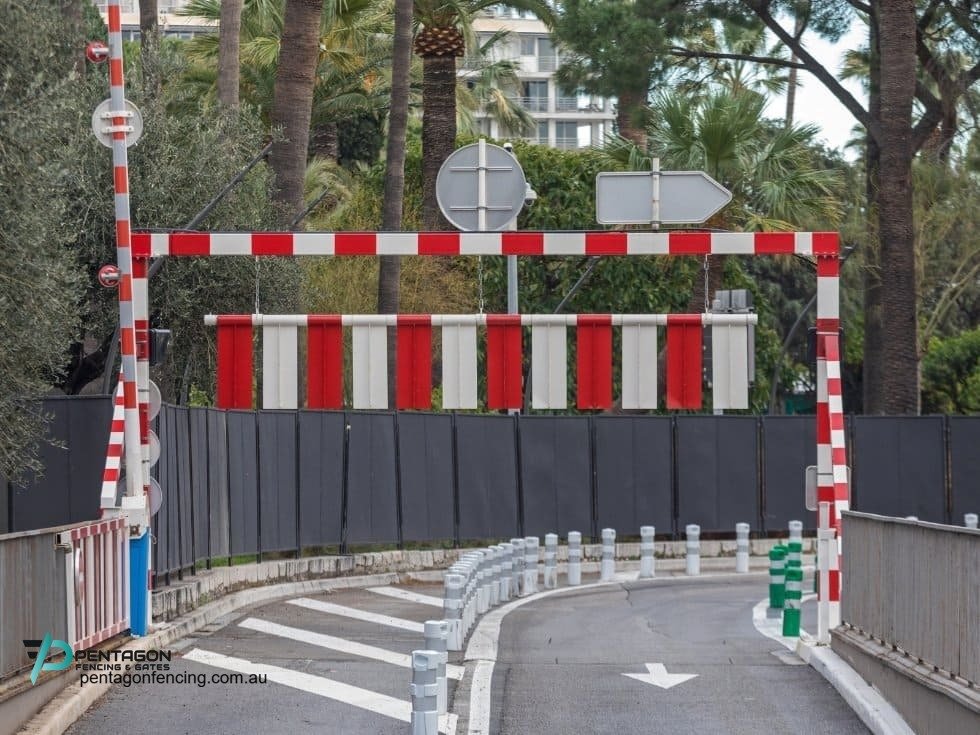
- Height restriction barriers are useful where oversized vehicles must be kept out of car parks, loading docks, warehouses, drive-through lanes or underground access points, but the height limit and signage must be site-specific [1].
- Bollards should not be treated as universal crash protection. For hostile-vehicle or high-impact requirements, use a vehicle-dynamics and specification-led review; Australian crowded-place guidance states that barrier systems should clearly define vehicle and pedestrian spaces and be used within design specification [4].
What are barriers and bollards?
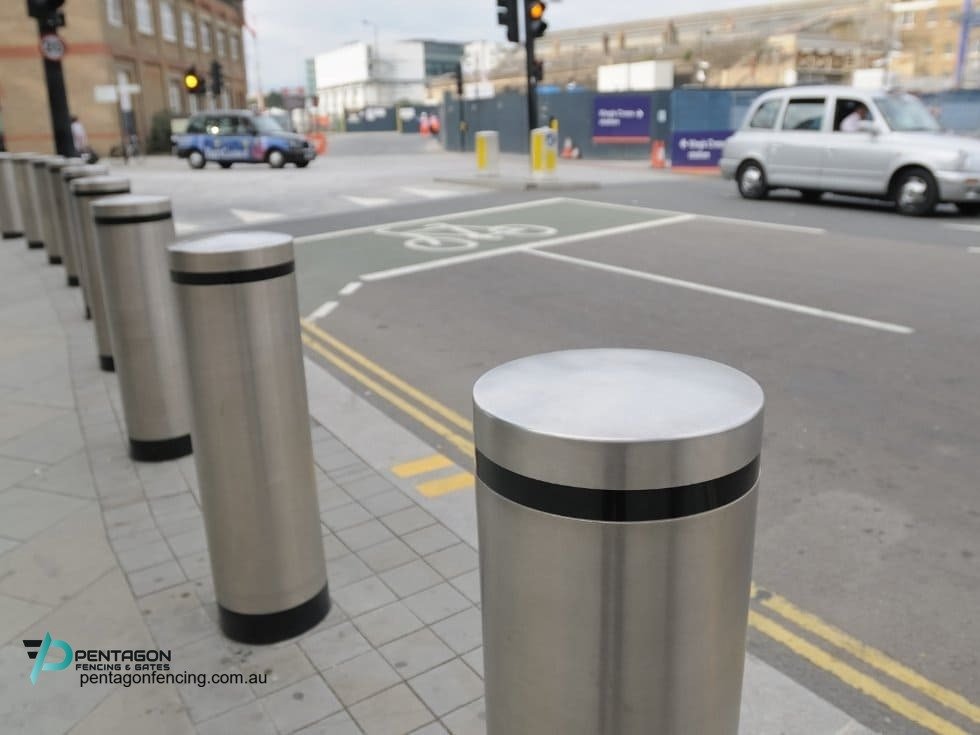
Bollards are short vertical posts used to restrict vehicle movement, protect assets, guide access or separate people from vehicles. They may be fixed, removable, retractable, surface-mounted, in-ground, stainless steel, galvanised, powder-coated, decorative or heavy-duty depending on the site risk and finish requirement.
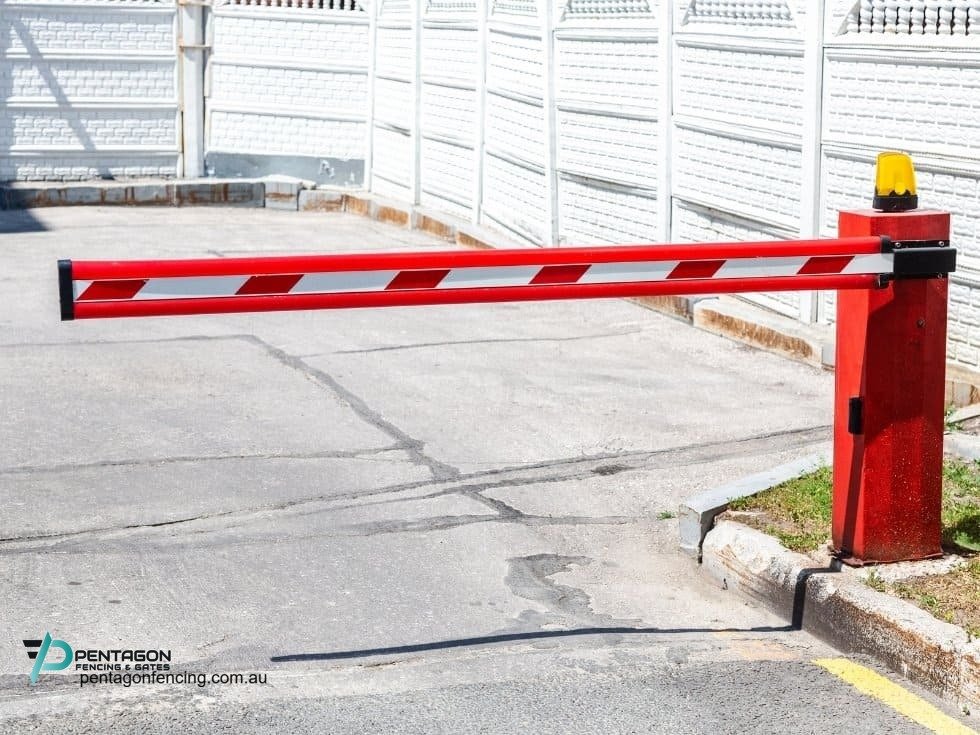
Barriers are broader physical controls used to block, redirect, slow or separate movement. They can include height restriction barriers, low-level barrier gates, guardrails, handrails, column protectors, wheel stops, pedestrian rails, crash barriers, temporary barriers and loading-zone protection systems.
A practical traffic control barriers specification should define the purpose, vehicle type, approach direction, speed environment, pedestrian path, foundation, finish, visibility, access requirements, inspection schedule and whether the barrier is intended for guidance, asset protection, pedestrian separation or impact resistance.
Site-zone matrix: car parks, loading zones and pedestrian areas
This matrix maps common site zones to the barrier or bollard decisions that should be made before pricing.
| Site zone | Main risk or pressure | Barrier or bollard direction | Access-control check | Watch-out |
|---|---|---|---|---|
| Commercial car park entry | Vehicle queues, entry/exit confusion, low clearance, customer movement and night visibility. | Use height restriction barriers, low-level barriers, bollards, wheel stops or signage to guide movement and protect structures. | Check whether boom gates, intercoms, keypads or card access are needed, but keep automation separate from the bollard scope. | Do not narrow pedestrian paths or create hidden trip or visibility hazards near the entry. |
| Loading dock or delivery bay | Trucks, forklifts, pallet movement, reversing, dock edges, building columns and waiting drivers. | Use high-impact barriers, fixed bollards, railings and driver safety zones to keep people away from forklifts and truck movement. | Define where drivers stand, where pedestrians cross and whether a gate or removable bollard is needed for service access. | A painted walkway may not be enough where powered mobile plant and people operate close together. |
| Warehouse aisle or racking end | Forklift impact, racking protection, pedestrian shortcutting and plant or equipment damage. | Use warehouse bollards, racking-end barriers, column guards, pedestrian rails and clearly defined exclusion zones. | Confirm whether the barrier is protecting people, stock, racking, plant or a building element. | Barrier placement should not block forklift turning, emergency exits, fire equipment or maintenance access. |
| Pedestrian walkway through car park | People walking between parked cars, reversing vehicles, wet surfaces and poor visibility after dark. | Use bollards, rails, line marking, lighting and crossing points to make the pedestrian route clear. | Keep clear path width, disability access, pram movement and accessible parking routes in scope. | Bollards should guide movement without becoming hard-to-see obstacles. |
| Shopfront or building entry | Vehicle overrun, accidental impact, ram-raid risk, glazing protection and customer access. | Use fixed bollards, removable bollards, planters, kerbs or barrier lines according to the risk and frontage design. | Maintain emergency access, door swings, queuing space and accessibility around the entry. | Do not claim hostile-vehicle mitigation unless the specification, rating and foundation are designed for that purpose. |
| School, childcare or public pedestrian edge | Children, parents, visitors, drop-off movement, bikes, scooters and visibility at entry points. | Use highly visible bollards or barriers to filter vehicles while preserving pedestrian movement and supervision. | Confirm emergency and maintenance vehicle access before selecting fixed or removable products. | Public-facing barriers should support safety without creating a hostile or cluttered frontage. |
Bollard and barrier type matrix
Each product type solves a different movement problem. The table below helps prevent over-specifying or under-specifying the site.
| Type | Best fit | Strength | Watch-out | Specification check |
|---|---|---|---|---|
| Fixed in-ground bollards | Shopfronts, building entries, loading-zone corners, warehouse columns and public walkways. | Permanent vehicle exclusion or asset protection where access does not need to change daily. | Foundation depth, concrete condition, underground services and impact requirement drive the real scope. | Diameter, wall thickness, embedment, footing, finish, spacing and visibility treatment. |
| Removable or lockable bollards | Occasional delivery access, emergency access, parks, service lanes and maintenance routes. | Allows a site to block everyday unauthorised vehicle access while retaining controlled access for approved users. | Keys, sleeves, drainage, trip covers, storage and user process must be managed. | Lock type, sleeve detail, removal process, emergency access and maintenance responsibility. |
| Surface-mount bollards | Low-to-moderate risk delineation, car park edges, column protection and retrofit areas where excavation is difficult. | Fast retrofit and lower disruption where the slab or surface is suitable. | Pentagon notes surface-mount bollards typically offer lower impact resistance than in-ground options and are more suited to low-to-moderate risk uses [1]. | Base plate, anchor type, slab thickness, surface condition and intended impact level. |
| Height restriction barriers | Car parks, warehouses, loading docks, underground entries, drive-through lanes and apartment or shopping-centre access. | Prevents oversized vehicles entering low-clearance or sensitive areas before they reach the hazard. | The clearance, warning distance and signage must be clear before drivers commit to the entry. | Clearance height, approach speed, sign visibility, authorised vehicle height and emergency access. |
| Low-level barrier gates | Commercial car parks, private roads, warehouse entries, strata access and staff parking zones. | Controls vehicle access while preserving open visibility across a site [1]. | It is not the same as full perimeter security and may need fencing, bollards or pedestrian controls around it. | Manual/automated operation, power, duty cycle, access trigger, safety and fail-open/fail-closed behaviour. |
| Guardrails, high-impact barriers and column protectors | Loading docks, internal warehouse routes, racking ends, plant areas and car park ramps. | Creates a continuous protection line or impact buffer where isolated bollards would leave gaps. | Must be positioned around real vehicle paths, turning circles, pedestrian access and maintenance access. | Impact direction, mounting, repairability, deflection, visibility and replacement parts. |
Pedestrian safety and traffic flow controls
Barriers and bollards are most useful when they support a wider traffic-management plan. Safe Work Australia notes that pedestrian routes should be clearly marked, unobstructed, well maintained and well lit, and that pedestrian crossings can use controls such as physical barriers, rails, traffic lights, warning gates and clear ground markings [3].
For car parks, WorkSafe Victoria says people and vehicles are constantly moving in, around and out of car parks, creating hazards such as collisions with safety barriers, vehicles or pedestrians. It recommends controlling hazards at entries and exits, using physical barriers or marked walkways, separating delivery vehicles and forklifts from pedestrians, and providing clear speed, load and height restriction signage [2].
- Use physical separation where the consequence is high. Loading zones, forklift areas and blind corners often need more than paint.
- Keep routes visible and lit. Bollards should be seen by drivers, pedestrians, cyclists and people with vision impairment.
- Do not block accessibility. Barrier spacing and placement must preserve safe access for wheelchairs, prams, mobility aids and emergency movement.
- Control driver behaviour before the conflict point. Speed signs, height restriction warnings and visual narrowing should occur before vehicles reach the hazard.
- Inspect after use. A bent bollard, loose anchor, damaged rail or missing cap can become a new hazard.
Loading zone protection and warehouse bollards
Loading zone protection is a higher-risk use case because trucks, forklifts, drivers, pedestrians, stock, racking and building structures often operate in the same area. WorkSafe Victoria recommends using exclusion zones with fixed physical barriers to prevent forklifts operating near entrances, exits, amenities, offices and time clocks, and it gives fixed barriers and gates as an example of separating pedestrians and forklifts [5].
WorkSafe Victoria also says truck drivers should be kept at a safe distance from trucks and forklifts during loading and unloading, and that driver safety zones can use fixed physical barriers such as high-impact barriers, bollards or steel railings [5].
- Racking ends: use bollards or guardrails where forklifts turn near racking, stock or building columns.
- Dock edges: use barriers and line marking to define where pedestrians may stand, wait or cross.
- Driver waiting areas: protect the waiting area with fixed barriers where loading activity happens nearby.
- Plant and machinery: use bollards around exposed equipment, switchboards, pipework, tanks and roller-door frames.
- Vehicle routes: maintain enough width and turning space so barriers do not force vehicles into a worse path.
Shopfront, entry and public-area protection
For retail frontages, service stations, showrooms, medical entries and public-facing business premises, bollards can support both safety and crime prevention. Victoria Police advises businesses to install exterior lighting at entry points and boundaries, keep fences and gates well-built and secured, install good-quality locks, install bollards or similar protective measures over points of entry, and keep boundaries clear of climbing aids [6].
Planning Victoria also provides public-realm guidance for bollards and barriers. It says bollards should allow free pedestrian movement while controlling vehicle access, be highly visible to pedestrians, drivers and cyclists, use highly visible materials for day and night visibility and use non-injurious details [7].
For public-facing traffic control barriers, the design must preserve pedestrian flow, accessibility, emergency access and street character. A bollard line that blocks vehicle access but forces people into a narrow footpath pinch point is not a good public-realm outcome.
When hostile-vehicle or high-impact review is needed
Most commercial bollard projects are about practical asset protection, traffic guidance or pedestrian separation. Some sites, however, need a more formal vehicle security barrier review, such as crowded places, civic frontages, event areas, high-risk building entries or sites with a credible vehicle-borne threat.
Australian hostile-vehicle guidance explains that separating vehicle and pedestrian spaces can be achieved by placing vehicle security barriers to define those spaces, and that metal bollards can protect pedestrians when correctly integrated with the environment [4]. It also warns that permanent and temporary barriers should be used within design specification, and that assessment should consider factors such as vehicle approach, speed, impact angle, emergency access and post-impact penetration distance [4].
For this reason, do not describe general-purpose bollards as crash-rated, HVM-rated or ram-raid proof unless the product, foundation, spacing and site assessment support that claim.
Risk-control matrix for barriers and bollards
This matrix keeps the decision tied to the hazard. It avoids choosing a product before the site problem is understood.
| Risk area | Control direction | Evidence to request | Common mistake |
|---|---|---|---|
| Pedestrian and vehicle conflict | Use physical barriers, bollards, rails, crossing points, signage and lighting to separate or clearly control interactions. | Traffic plan, pedestrian path, vehicle route, sightline check and accessibility review. | Relying on paint alone where mobile plant or vehicles operate close to people. |
| Low clearance vehicle entry | Install height restriction barriers with clear approach signage and enough turning or rejection space for oversized vehicles. | Clearance height, authorised vehicle schedule, sign plan and emergency access requirements. | Placing the restriction point too late, after the driver has already committed to the entry. |
| Asset impact protection | Use fixed bollards, guardrails, column protectors or impact barriers around vulnerable structures and equipment. | Asset map, vehicle path, impact direction, foundation condition and repair process. | Protecting the asset but blocking maintenance access, fire equipment or turning clearance. |
| Unauthorised vehicle access | Use fixed, removable or lockable bollards depending on whether authorised vehicles still need access. | Access list, key control, emergency access, removable sleeve detail and user instructions. | Installing removable bollards without a process for keys, storage, drainage or replacement. |
| Public-facing frontage | Balance protection with pedestrian movement, visibility, night detection, accessibility and street character. | Council/public-realm check, footpath width, visibility treatment and emergency access plan. | Using bulky barriers where spaced, visible bollards would filter vehicles while preserving pedestrian choice. |
What affects barriers and bollards cost?
Barriers and bollards Melbourne quotes should be compared by complete scope, not only by product count. The same number of bollards can cost very differently depending on site conditions and performance requirements.
| Cost driver | Effect on quote | Caveat | Evidence to request |
|---|---|---|---|
| Product type and performance level | Fixed, removable, retractable, surface-mount, in-ground, height restriction and high-impact systems have different hardware and installation requirements. | Do not compare decorative delineation bollards with impact-rated or HVM-specified barriers. | Product data sheet, intended use, rating or non-rating statement and finish schedule. |
| Foundation and surface condition | Concrete slab thickness, asphalt, soil, drainage, services, core drilling, excavation and reinstatement can change labour and equipment needs. | Surface-mount options may reduce excavation but may not provide the same impact resistance as in-ground systems. | Slab information, service scan, anchor detail, footing design and make-good requirements. |
| Spacing, layout and quantity | More units, tighter spacing, curves, corners, wide protected frontages and multiple access points increase material and labour. | Spacing should follow the access, pedestrian and vehicle-control task, not only visual preference. | Marked-up layout, pedestrian clearance, vehicle swept path and access-control points. |
| Finish and visibility | Galvanising, powder coating, stainless steel, high-visibility bands, reflective strips, caps and heritage finishes affect supply and lifecycle cost. | A low-visibility finish can create a new hazard, especially at night or in public areas. | Colour, coating system, reflectivity, lighting and maintenance method. |
| Access control and removability | Removable bollards, lockable posts, retractable systems and barrier gates add hardware, keys, sleeves, drainage and user procedures. | Flexible access is valuable only if the owner can manage keys, locks, replacement parts and user training. | Keying schedule, lock type, sleeve cover, emergency access and operating instructions. |
| Live-site staging and approvals | Traffic control, staged works, night works, business continuity, public-footpath approvals and council interfaces can add scope. | Private property work is different from work in a footpath, road reserve or public realm. | Approval responsibility, work hours, traffic control, exclusion zones and handover timing. |
Seven-step selection flow
- Define the site problem. Separate pedestrian safety, vehicle exclusion, asset protection, traffic flow, low clearance, shopfront protection and high-impact risk.
- Map movement before hardware. Mark vehicle routes, pedestrian paths, parking bays, loading areas, blind corners, doors, emergency routes and maintenance access.
- Select the control type. Choose fixed bollards, removable bollards, height restriction barriers, guardrails, low-level barrier gates, column guards or wheel stops according to the task.
- Check surface and foundations. Confirm concrete, asphalt, soil, underground services, drainage, slab thickness and reinstatement requirements.
- Review visibility and accessibility. Ensure the layout is visible, detectable, lit and does not obstruct accessible paths or public movement.
- Confirm approvals and access needs. Resolve council, road reserve, footpath, tenancy, emergency access and owner-operation requirements early.
- Compare complete scopes. Require product data, installation method, finish, layout, staging, maintenance, warranty and exclusions from each quote.
Barriers and bollards project checklist
- Site type: car park, warehouse, loading dock, shopfront, school, childcare, public space, strata site, hospital, aged-care site or industrial yard.
- Risk: accidental impact, unauthorised vehicle access, ram-raid concern, forklift separation, low clearance, pedestrian exposure or asset protection.
- Product family: fixed bollards, removable bollards, retractable bollards, height restriction barriers, low-level barriers, guardrails, wheel stops or column protectors.
- Layout: spacing, alignment, pedestrian clearances, vehicle swept path, doorway access, emergency access and maintenance access.
- Installation: surface mount, core-drilled, in-ground, chemical anchors, concrete footing, asphalt repair, slab condition and service scanning.
- Visibility: colour, reflective bands, night lighting, signage, contrast, tactile cues and hazard-marker separation.
- Access control: removable keys, lockable sleeves, authorised users, emergency services, delivery access and after-hours procedures.
- Handover: product data, warranty, keys, inspection schedule, replacement parts, damage response and maintenance responsibility.
Common mistakes to avoid
- Choosing bollards before mapping vehicle paths. Bollards work best when placement reflects real approach angles, turning paths and pedestrian routes.
- Using surface-mount posts for higher-impact risk. Surface-mount may be useful for delineation, but impact resistance depends on product and substrate.
- Forgetting authorised access. Fixed bollards can block maintenance, waste collection, emergency access or delivery paths if flexible access is not planned.
- Installing height restriction barriers without a rejection route. Oversized vehicles need enough warning and space to turn away safely.
- Creating pedestrian pinch points. Bollards should protect people without obstructing wheelchairs, prams, mobility aids or high-flow pedestrian paths.
- Making crash-rating claims without evidence. Impact-rated, HVM-rated or ram-raid-resistant claims require specific product, foundation and site-design evidence.
How Pentagon Fencing can help
Pentagon Fencing & Gates supplies and installs barriers and bollards across Melbourne for traffic control, asset protection, pedestrian safety and site access management, including car parks, warehouses, loading zones, commercial frontages, schools, public spaces and healthcare sites [1].
- Assess whether fixed bollards, removable bollards, height restriction barriers, low-level barrier gates, guardrails or column protection best fit the site.
- Coordinate bollard and barrier layout with fencing, gates, access control, pedestrian paths, lighting, signage and emergency access.
- Prepare a site-specific scope covering product type, spacing, foundations, finishes, approvals, installation staging and maintenance handover.
FAQ
What are bollards used for in commercial car parks?
Bollards can guide vehicle movement, protect walkways, prevent vehicles entering restricted areas, protect columns or equipment, and separate pedestrians from cars. The layout should preserve accessible paths, emergency access and clear visibility.
When should a site use height restriction barriers?
Use height restriction barriers where oversized vehicles need to be stopped before entering a low-clearance area such as an underground car park, loading dock, warehouse entry or drive-through lane. The height, signage and rejection route should be confirmed before installation.
Are surface-mounted bollards enough for loading zone protection?
Sometimes, but not always. Surface-mounted bollards can be useful for low-to-moderate risk delineation, but loading-zone impact risk may require in-ground bollards, high-impact barriers, guardrails or an engineered solution.
Do bollards need council approval in Melbourne?
It depends on location. Work entirely inside private property is different from work on a footpath, nature strip, road reserve or public realm. Confirm council and asset-owner requirements before installation.
What affects the cost of barriers and bollards?
Cost drivers include product type, quantity, spacing, foundations, surface condition, service scanning, finish, visibility treatment, access-control requirements, staging, traffic control, approvals and maintenance requirements.
What to Keep in Mind
- Start with the movement problem: car park flow, loading-zone risk, pedestrian separation, low clearance or asset protection.
- Use bollards and barriers as part of a traffic-management and perimeter plan, not as isolated posts or rails.
- Protect pedestrian movement, accessibility, night visibility and emergency access when placing bollards.
- Do not use general-purpose bollards for high-impact or hostile-vehicle mitigation unless the rating, foundation and site assessment support it.
- Compare complete scopes that include product data, layout, foundations, finishes, approvals, staging, maintenance and handover.
References
- Pentagon Fencing & Gates, “Barriers & Bollards,” Pentagon Fencing & Gates. Accessed: Jul. 6, 2026. [Online]. Available: https://pentagonfencing.com.au/service/barriers-and-bollards/
- WorkSafe Victoria, “Safety in workplace car parks,” WorkSafe Victoria. Accessed: Jul. 6, 2026. [Online]. Available: https://www.worksafe.vic.gov.au/safety-workplace-car-parks
- Safe Work Australia, “General Guide for Workplace Traffic Management,” Safe Work Australia. Accessed: Jul. 6, 2026. [Online]. Available: https://www.safeworkaustralia.gov.au/system/files/documents/1703/traffic-management-general-guide.pdf
- Australian Government, “Hostile Vehicle Guidelines for Crowded Places,” Department of Home Affairs. Accessed: Jul. 6, 2026. [Online]. Available: https://www.nationalsecurity.gov.au/crowded-places-subsite/Files/hostile-vehicle-guidelines-crowded-places.pdf
- WorkSafe Victoria, “Forklift hazards and risk controls,” WorkSafe Victoria. Accessed: Jul. 6, 2026. [Online]. Available: https://www.worksafe.vic.gov.au/forklift-hazards-and-risk-controls
- Victoria Police, “Business premises security,” Victoria Police. Accessed: Jul. 6, 2026. [Online]. Available: https://www.police.vic.gov.au/securing-business-premises
- Department of Transport and Planning Victoria, “6.4 Barriers and fences,” Planning Victoria. Accessed: Jul. 6, 2026. [Online]. Available: https://www.planning.vic.gov.au/guides-and-resources/guides/urban-design-guidelines-for-victoria/objects-in-the-public-realm/barriers-and-fences