
Table of Contents
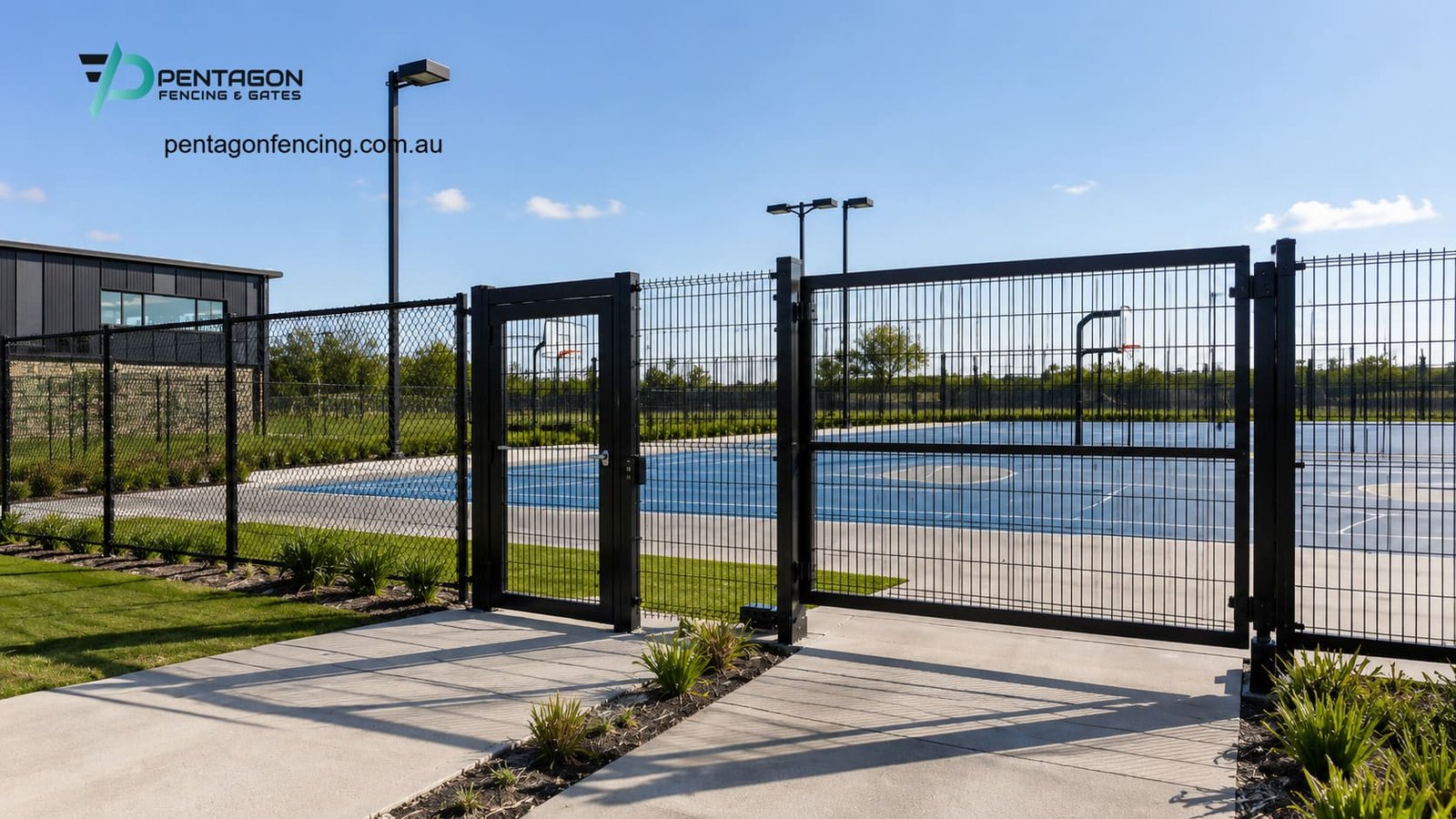
Sports facility fencing Melbourne projects need to do more than mark a boundary. A hard court fence has to contain balls without creating unsafe contact points. A public park fence has to guide movement without making the reserve feel closed off. A club facility may need chain mesh for ball control, weldmesh for visibility and durability, and access gates for players, maintenance vehicles and emergency services.
Pentagon Fencing & Gates supplies and installs steel fencing and gate systems across Melbourne, including palisade, spear top, rod top, weldmesh, tubular steel and chain wire options for industrial, commercial, government, infrastructure, school and selected residential applications [1]. For sports and public infrastructure sites, the practical decision is how chain mesh, weldmesh, gates, barriers and public-realm design work together.
Why sports and public infrastructure fencing is easy to specify incorrectly
- You choose chain mesh because it is familiar without defining the sport, ball size, court run-off, spectator zone, access gates or required height.
- You use weldmesh because it looks stronger without checking player contact zones, rebound behaviour, impact resistance, fixings, gates and public-facing appearance.
- You design the fence line before deciding where players, officials, maintenance teams, spectators, emergency vehicles and the public need to enter.
- You treat a hard court, oval, dog park, public reserve, utilities boundary and transport-adjacent site as the same fencing problem.
- You compare metre rates without checking mesh aperture, wire diameter, post size, rail system, coating, gate widths, maintenance access, existing removals and council requirements.
Key Takeaways
- Sports facility fencing Melbourne projects should be selected by use case: hard courts, sports fields, public parks, club entries, service gates and public-facing edges may all need different treatments.
- Chain mesh sports fencing can suit courts and field enclosures because it maintains visibility and can be produced in different apertures and heights; Pentagon notes that sport, ball size, player contact, gates and applicable sports-fencing requirements should be checked [2].
- Weldmesh can be useful where a sports or infrastructure boundary needs panel rigidity, visibility and stronger access control than a flexible mesh system; Pentagon positions weldmesh as a visibility-and-security solution used across construction and infrastructure projects [3].
- Sports-fencing selection is sport-specific. SAPCA’s sports fencing code notes that sport type and multi-sport use influence the suitable fence type, including rolled weldmesh, twin bar mesh, chainlink and pedestrian barriers [4].
- Public infrastructure sites should include access and inclusion, not only containment. Sport and Recreation Victoria’s Design for Everyone Guide includes fencing and gates with accessible latches and effective lighting for night-time activation, passive surveillance and security [5].
What does sports and public infrastructure fencing include?
Public infrastructure fencing can include the outer boundary, internal separation, court enclosure, ball-stop fencing, access gates, service gates, pedestrian gates, vehicle gates, spectator separation, low barriers, bollards, rails, coatings and maintenance interfaces. It can also include gate automation or access control when a site needs controlled vehicle entry.
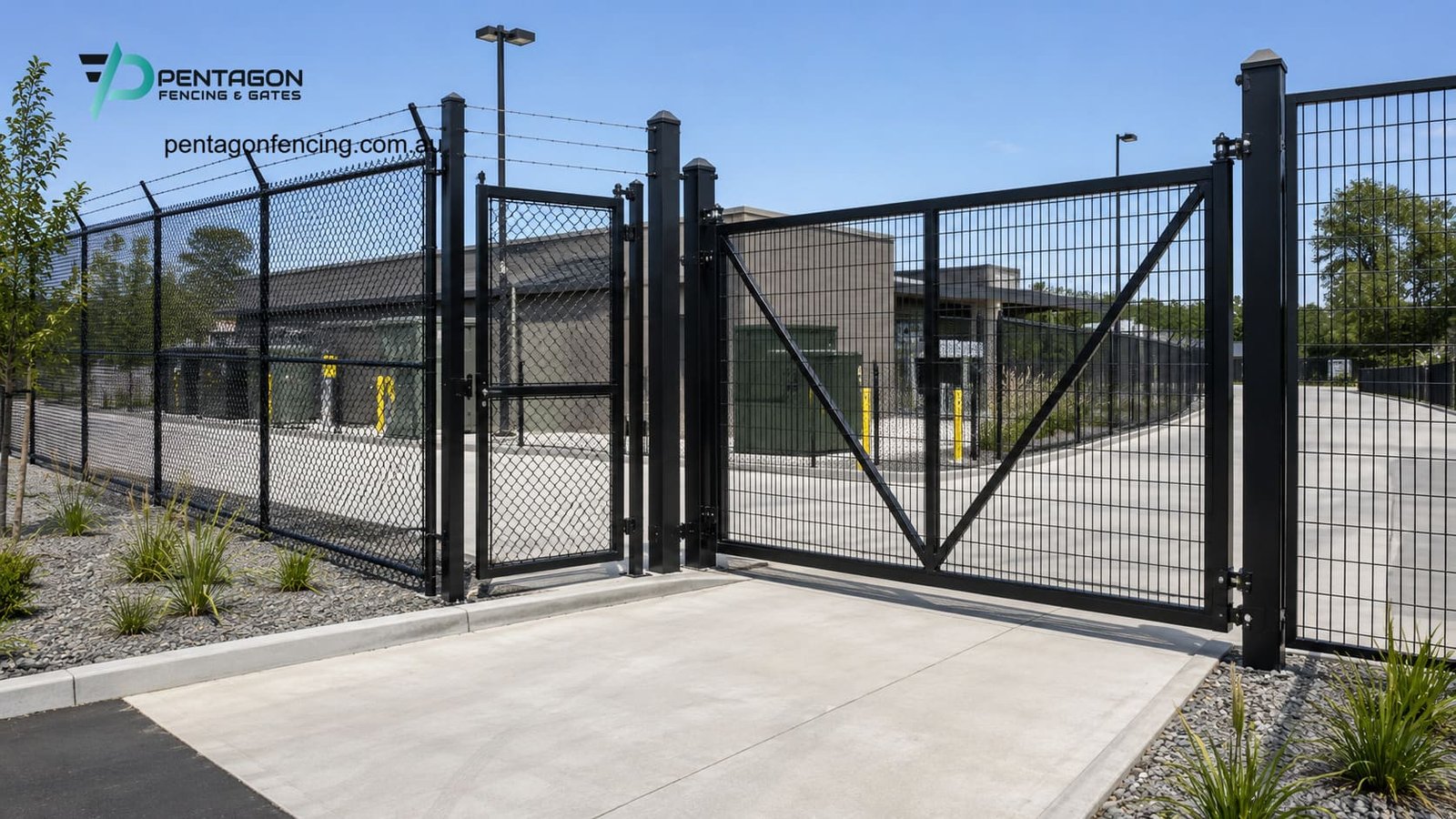
For a sports field fencing project, the fence may need to contain balls, protect spectators, guide players, separate public movement, keep maintenance access clear and resist repeated impact. For a public park or infrastructure site, the same fence may need to preserve visibility, support wayfinding and avoid a hostile public edge.
The quote should therefore define the sport or public-use scenario, the fence type, height, mesh or panel specification, posts, rails, footings, gates, hardware, coatings, public-facing visibility, access requirements and maintenance plan. Product names alone are not enough.
Site-zone matrix for sports and public infrastructure fencing
The best design usually combines more than one fence or access type. Use this matrix to route each zone before requesting final specifications.
| Site zone | Main requirement | Fence direction | Gate/access direction | Watch-out |
|---|---|---|---|---|
| Hard courts | Ball containment, player safety, run-off space, spectator visibility and controlled entry. | Shortlist chain mesh, weldmesh or sport-specific mesh according to ball size, rebound behaviour, fence height and impact exposure. | Plan pedestrian gates, maintenance gates and emergency access before locking the fence line. | Do not place posts, gate leaves or protruding hardware where players may collide with them. |
| Ovals and sports fields | Public movement, ball egress, maintenance access, club operations and event management. | Use chain mesh or another open system where visibility and long-run coverage matter; add higher ball-stop zones only where the sport and site require it. | Allow for mower, goal, lighting, ambulance and service access. Sport and Recreation Victoria advises planning access routes and gate sizes around the largest item or vehicle that may need to enter the facility [6]. | A narrow gate can make future maintenance or emergency access difficult even if daily pedestrian access works. |
| Public park or reserve boundary | Open visibility, safe access, public wayfinding, vehicle filtering and boundary definition. | Use open mesh, tubular, rod top or low barrier treatments where a solid screen would reduce passive surveillance. | Coordinate pedestrian gates, maintenance gates, removable bollards and vehicle controls with council operations. | Do not create hidden corners, dark approach paths or inaccessible latch locations. |
| Club entry and spectator area | Clear entry, ticket/event control, accessible movement, crowd flow and after-hours locking. | Use a fence or barrier type that keeps sightlines open and presents a welcoming public interface. | Provide gates that support accessible latches, signage, lighting and visitor wayfinding. | A secure gate that is hard to find or hard to use can push users toward informal openings. |
| Public infrastructure or utilities edge | Restricted access, public visibility, service access and long-term durability. | Use weldmesh or steel fencing where rigidity, visibility and stronger deterrence are needed; use chain mesh where long-run visibility and cost control are the main priorities. | Match gate infill, hardware, locks and service access to the adjoining fence. | A strong fence is undermined by an underspecified access gate or weak latch. |
| Vehicle service or maintenance entry | Controlled entry for grounds vehicles, trailers, waste collection, emergency access and event setup. | Design the adjacent fence so the gate opening does not become the weakest or least visible part of the perimeter. | Use swing, sliding, cantilever or removable access according to clearance and frequency. Pentagon designs sliding gate systems for commercial, industrial and large-scale projects, including sports and leisure, parklands, open-space and public-realm applications [7]. | A vehicle gate should not invite pedestrians into maintenance traffic unless the path is clearly separated. |
Chain mesh, weldmesh and access gates compared
This comparison keeps the article at sports/public use-case level. Product-specific details should be routed to the chain wire, weldmesh or gates guide when procurement moves into final specification.
| Option | Best fit | Why it works | Watch-out | Specify deeper when |
|---|---|---|---|---|
| Chain mesh or chain wire | Tennis, netball, multi-court areas, ball-stop enclosures, large reserves and long visible boundaries. | Open mesh retains visibility, can be built in different heights and apertures, and is practical for larger perimeters. | It can require tension and repair over time; it should not be treated as the highest-security option by default. | Aperture, wire diameter, height, rails, strainers, bracing, coating, ball size and gates materially affect the scope. |
| Weldmesh fencing | Public infrastructure fencing, monitored reserves, utility interfaces, hard courts and boundaries needing rigid panels plus visibility. | Rigid welded panels can preserve sightlines while improving panel stability and reducing casual climbing opportunities when correctly specified. | Player contact, impact, edge details and gate integration should be checked before using rigid panels around active play zones. | The buyer is comparing close-aperture mesh, 358-style security, V-bend panels, public visibility or infrastructure security. |
| Rod top, tubular or low public-facing fencing | Entries, public park frontages, community buildings, car parks and spectator approaches where a non-hostile appearance matters. | Open vertical fencing can define boundaries while retaining visual connection to the public realm. | It may not contain balls or deter climbing as effectively as sports-specific mesh unless detailed for that purpose. | The boundary is mainly about public presentation, informal surveillance and safe top profile. |
| Ball-stop netting or high mesh zones | Behind goals, courts near roads, shared boundaries, adjacent playgrounds or areas where ball egress creates risk. | Height and netting can target specific ball trajectories without making every fence section equally tall. | Wind load, poles, maintenance access, replacement netting and visual impact must be checked. | Balls are leaving the play area toward roads, neighbours, water, rail, car parks or public paths. |
| Pedestrian access gates | Player access, officials, spectators, public park entries, after-hours locking and controlled facility access. | They guide people to the right route while keeping the fence line continuous. | Latch, closer, clear width, accessible operation, visibility and opening direction matter. | A gate is used by children, people with disability, staff, contractors, event users or unsupervised public visitors. |
| Vehicle or maintenance gates | Mower access, goal storage, emergency access, waste collection, utility maintenance and event setup. | They allow operational access without removing panels or creating informal gaps. | Undersized gates create long-term operational problems; oversized unmanaged gates can become security weaknesses. | Maintenance vehicles, ambulances, trailers, turf equipment or goal frames need regular or emergency access. |
How to think about hard court fencing
Hard court fencing is usually judged by ball containment, visibility, player run-off, gate placement and maintenance. A tennis, netball, basketball, futsal or multi-use court does not automatically need the same mesh, height or gate layout. The fence has to match the sport, the users and the surrounding environment.
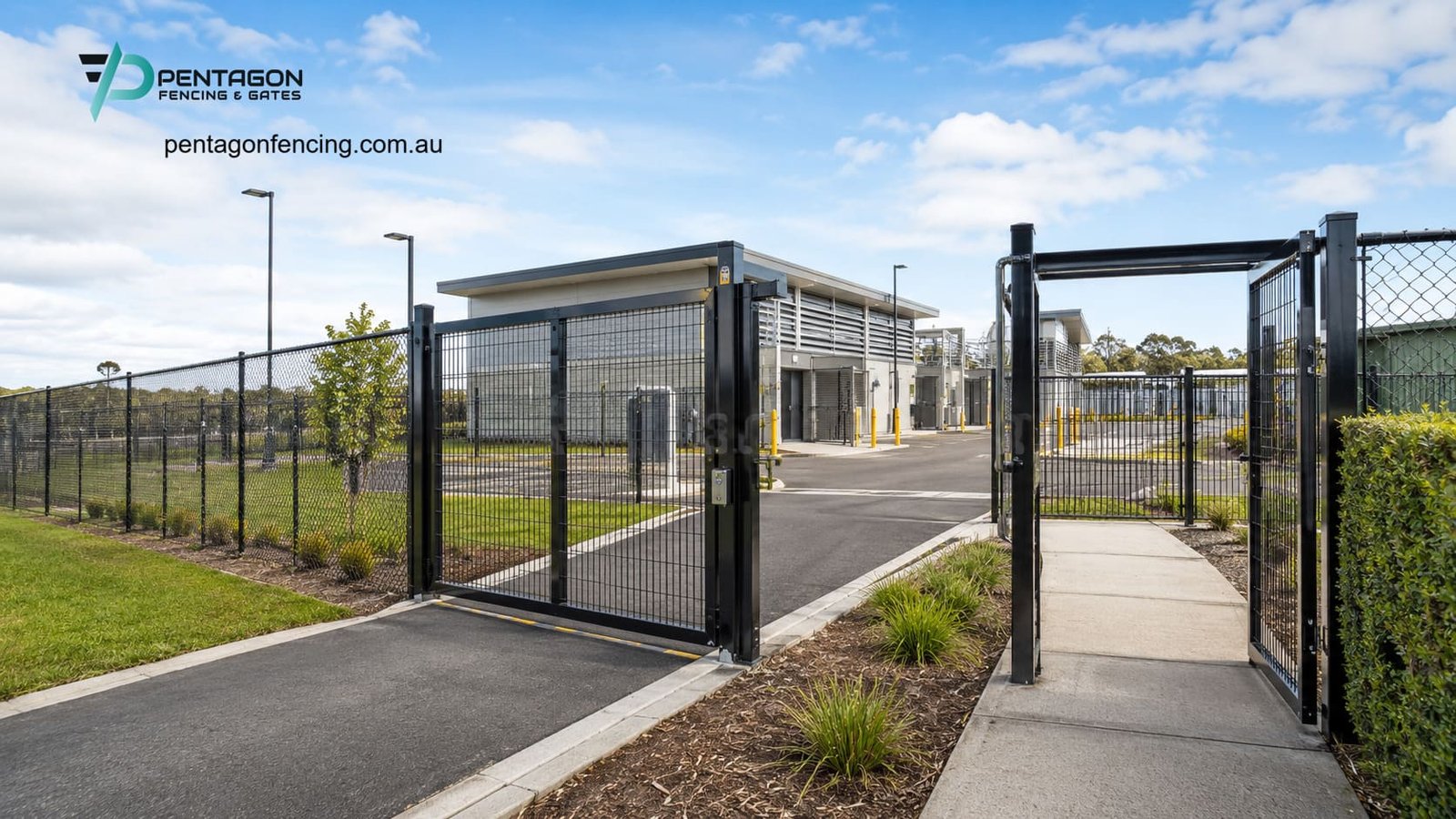
For courts near roads, neighbouring properties, car parks or other sports areas, height and ball-stop strategy become more important. For courts used by community clubs or councils, accessible entry and maintenance access can be as important as ball containment. Sport and Recreation Victoria’s Design for Everyone Guide also highlights clear wayfinding, high-contrast signage where appropriate, accessible latches and lighting as part of sport and recreation settings [5].
- Sport type: identify the primary sport and whether the court is single-use or multi-use.
- Ball behaviour: confirm ball size, speed, rebound needs, ball-stop height and nearby hazards.
- Player contact: keep posts, fixings, gates and sharp edges away from run-off zones where practical.
- Viewing: maintain visibility for coaches, parents, spectators, supervision and CCTV where relevant.
- Access: define gate widths for players, wheelchairs, equipment and emergency or maintenance access.
Public park fencing and public-realm visibility
Public park fencing should not be treated like a closed industrial boundary. Public infrastructure has to balance safety, security, access, visibility and community feel. A fence that blocks informal surveillance or creates hidden edges can work against the public purpose of the site.
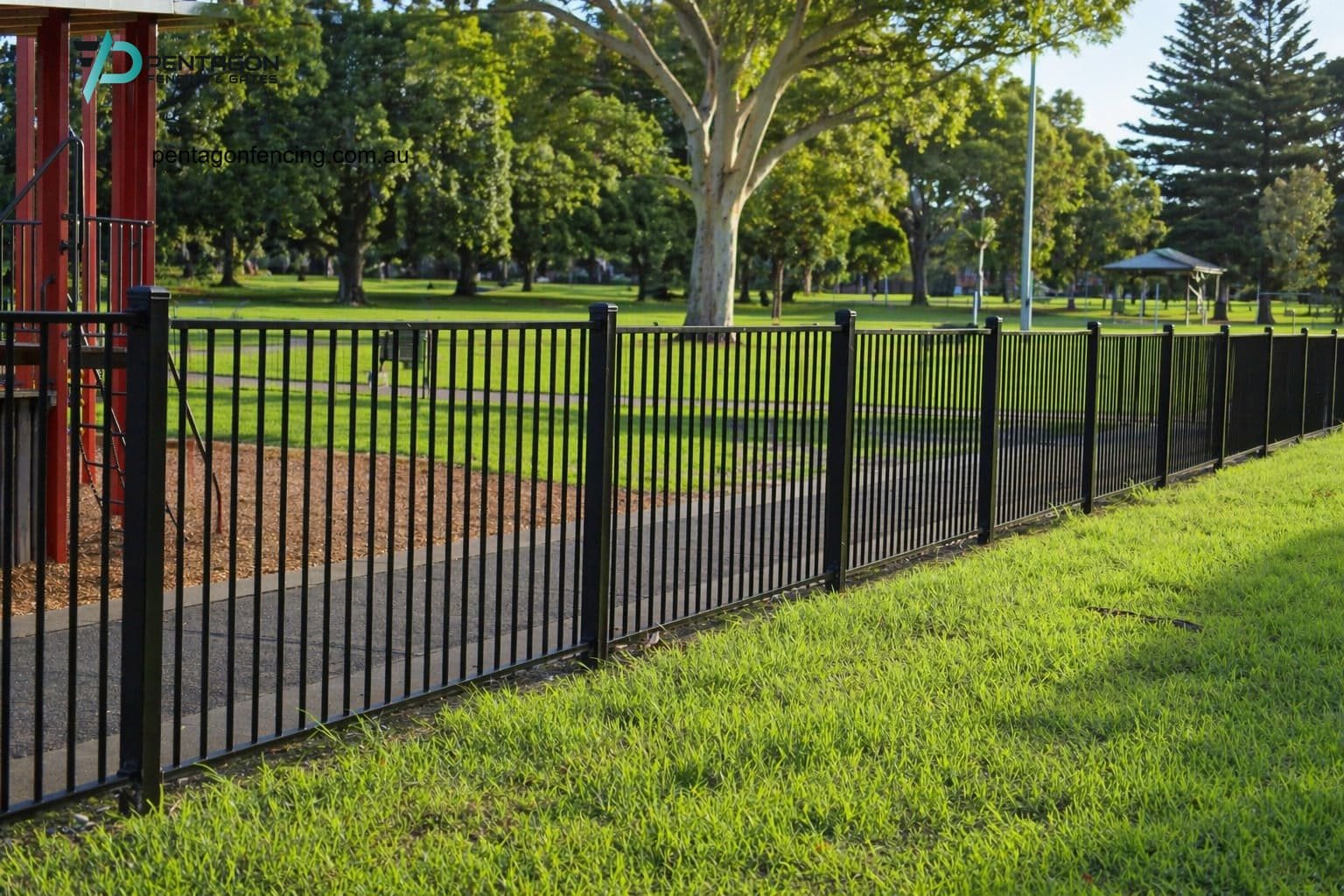
Planning Victoria says barriers and fences can define boundaries and protect people from traffic hazards and level changes, and that bollards can filter movement while allowing pedestrian and cyclist choice. It also recommends non-injurious top rail details and low or partially transparent fence types on property boundaries abutting streets or public spaces to support informal surveillance [8].
- Use openness deliberately: mesh, tubular or rod top fencing can preserve sightlines where supervision and passive surveillance matter.
- Use solid screening selectively: privacy fencing may be appropriate around plant, bins or neighbours, but not automatically around active public edges.
- Make gates easy to understand: users should know which gate is public, which is for maintenance and which is locked after hours.
- Control vehicle access without blocking people: removable bollards, low barriers or gates may be better than continuous fencing at some reserve entries.
- Plan lighting and contrast: public paths, gates and barriers should be visible in low light.
Access gates: do not leave them until the end
Access gates are usually where a sports or public infrastructure fence succeeds or fails in daily use. The fence may be well specified, but the site can still struggle if the gate is too narrow, badly located, hard to latch, difficult to access with equipment or unsafe for public users.
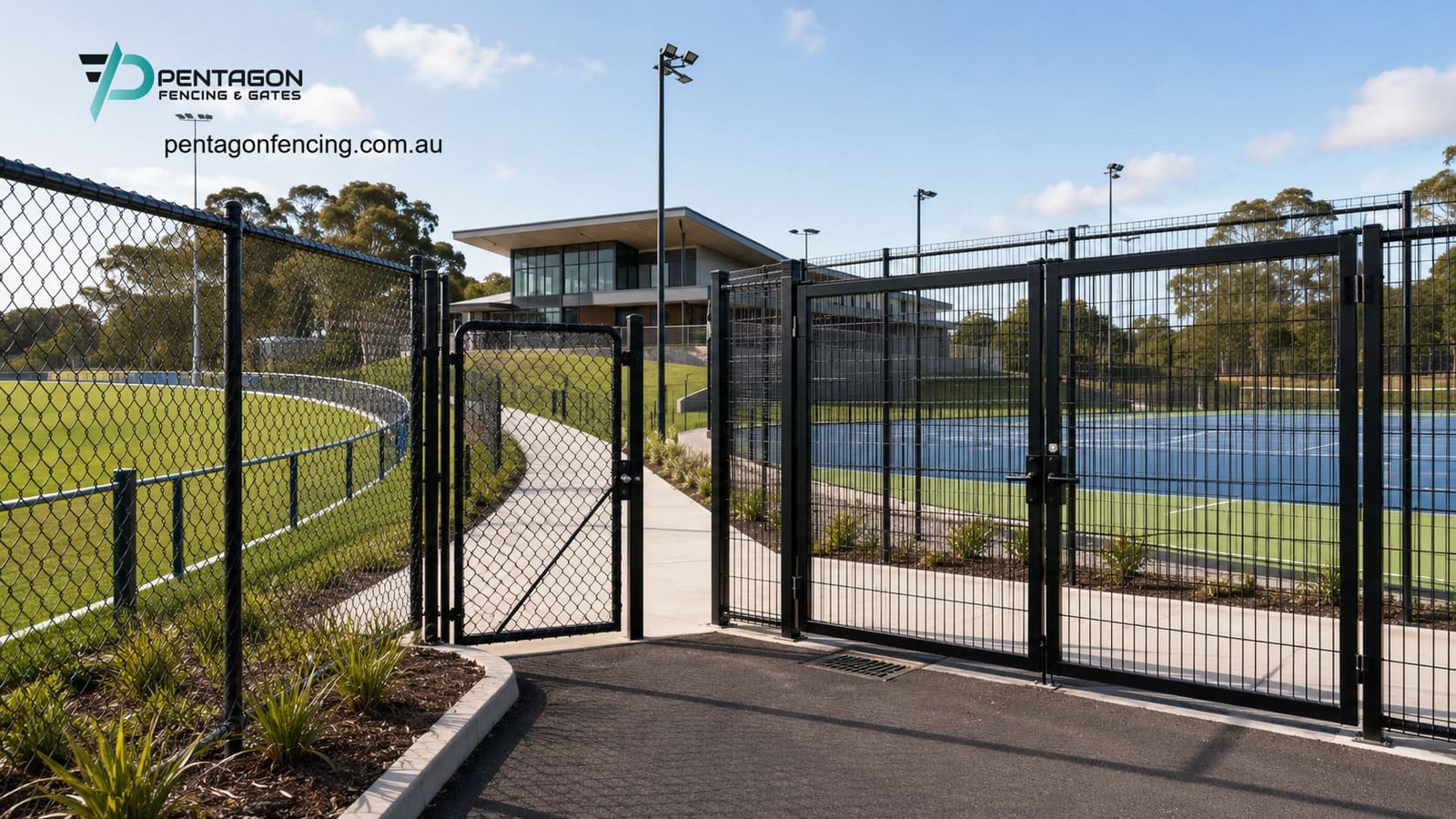
Pentagon’s side gate service describes side gates as functional access solutions that can be made from materials such as aluminium, steel, timber and COLORBOND® steel and tailored to match the surrounding fencing and access need [9]. For sports and public infrastructure sites, the gate package should be designed with the fence rather than added as a generic allowance.
| Gate type | Typical users | Design check | Common failure |
|---|---|---|---|
| Public pedestrian gate | Players, parents, spectators, park users, students and community visitors. | Clear width, accessible latch, self-closing or lock function, signage, lighting and opening direction. | Gate is secure but hard to identify, hard to open or too narrow for expected users. |
| Team or officials gate | Athletes, referees, coaches, trainers and event staff. | Direct connection to run-off zones, change rooms, bench areas or field-of-play entry points. | Users create informal openings because the official route is too far from real movement. |
| Maintenance gate | Grounds teams, mowers, utility crews, lighting contractors, waste collection and event setup. | Vehicle width, turning angle, surface condition, lock control and clear path to equipment or field. | Gate is sized for people but not the largest equipment that must enter. |
| Emergency access gate | Ambulance, emergency services, council or facility managers. | Clear route, key or code process, signage, no parked-vehicle blockage and all-hours operation. | Emergency route exists on the plan but is blocked by storage, parked vehicles or a locked gate process. |
| Vehicle gate or sliding gate | Maintenance vehicles, delivery vehicles, event setup, utilities and controlled car-park access. | Run-back, swing clearance, safety devices, manual release, access control and pedestrian separation. | Vehicle access is mixed with pedestrian entry because the site does not provide a better route. |
Specification checklist for chain mesh sports fencing
Chain mesh sports fencing should be specified as a complete system, not only as “chain mesh”. SWI lists chain mesh fencing applications including sporting facilities and identifies relevant Australian Standards across tennis court fencing, cricket net fencing enclosures and sports ground fencing [10]. The standard itself and project drawings should still be checked for the actual sport and site.
- Sport and use: tennis, netball, cricket practice, hockey, multi-use court, oval boundary, dog park, public reserve or utility interface.
- Ball and aperture: confirm mesh opening size against the ball, puck, training equipment or animal-control purpose.
- Height: define baseline, sideline, goal-end and ball-stop heights rather than using one height everywhere.
- Framework: specify posts, rails, strainers, bracing, footing depth, corner treatment and stepped sections.
- Finish: confirm galvanised, PVC-coated, powder-coated or colour-matched finish and maintenance expectations.
- Gates: match gate infill, height, bottom clearance, hardware and locks to the fence system.
- Safety: review player contact zones, sharp edges, protrusions, snag points, trip points and night visibility.
What affects sports and public infrastructure fencing cost?
Sports and public infrastructure fencing quotes should be compared by complete scope, not by headline metre rate. The same boundary length can cost differently depending on height, mesh, gates, coating, removals, access and staging.
| Cost driver | Effect on quote | Caveat | Evidence to request |
|---|---|---|---|
| Fence type and sport requirement | Chain mesh, weldmesh, ball-stop netting, tubular fencing and barriers use different materials and installation methods. | The lowest-cost fence may be wrong if it fails ball containment, visibility or access needs. | Sport type, use case, risk level, required height and relevant specification. |
| Height and high ball-stop zones | Tall fence sections, netting, stronger posts, wind load and extra bracing increase supply and installation costs. | Not every section needs the same height; strategic high zones can be more practical than uniform overspecification. | Height schedule, wind/load assumptions, post size and location of high-risk ball egress zones. |
| Gates and access hardware | Pedestrian gates, maintenance gates, vehicle gates, locks, closers, hinges, intercoms or access control add scope. | A gate can cost and perform differently from the same width of fixed fencing. | Gate schedule, clear opening, latch type, accessible operation, hardware and emergency access process. |
| Posts, footings and ground conditions | Rock, fill, asphalt, concrete, drainage, services, tree roots and slope can affect excavation and footing design. | A flat-plan quote can change when underground services or ground conditions are confirmed. | Site measure, service scan, footing assumptions, drainage review and root/retaining interfaces. |
| Coating and maintenance environment | Galvanising, PVC coating, powder coating, colour selection and repair requirements affect lifecycle cost. | Colour alone does not define corrosion protection or maintenance expectations. | Coating specification, damaged-finish repair method and inspection schedule. |
| Live-site staging and removals | Existing fence removal, temporary separation, user access, traffic control, school/club hours and council staging can add labour. | Public facilities may need parts of the site kept safe and accessible while works are underway. | Staging plan, removal limits, disposal, temporary controls, work hours and handover sequence. |
Six-step selection flow
- Map the facility zones. Separate hard courts, sports fields, public park edges, spectator areas, maintenance entries, club rooms and service zones.
- Define the purpose of each fence run. Clarify whether the run is for ball containment, security, visibility, public access, vehicle control, safety or presentation.
- Choose the fence family. Shortlist chain mesh, weldmesh, tubular, rod top, ball-stop netting, low barriers or bollards according to the zone.
- Plan gates before pricing. Define pedestrian, team, maintenance, emergency and vehicle gates with clear widths, latch hardware and access responsibilities.
- Review public-realm and accessibility factors. Check visibility, accessible latches, lighting, signage, non-injurious top details and informal surveillance.
- Compare complete scopes. Require consistent assumptions for mesh, posts, height, gates, coatings, footings, removals, staging and handover.
Sports and public site fencing checklist
- Site type: tennis court, netball court, multi-use game area, oval, soccer field, cricket practice, public park, dog park, utilities edge or transport-adjacent boundary.
- Users: players, spectators, coaches, officials, students, club staff, council crews, cleaners, maintenance contractors and emergency services.
- Fence system: chain mesh, weldmesh, tubular, rod top, ball-stop netting, low barrier, bollards or mixed perimeter.
- Specification: height, aperture, wire diameter, panel type, posts, rails, strainers, bracing, footings and coating.
- Gates: public pedestrian gate, officials gate, maintenance gate, emergency gate, vehicle gate, latch, closer, locks and accessible operation.
- Safety: player run-off, protrusions, sharp edges, snag points, non-injurious top detail, public visibility and night lighting.
- Public interface: informal surveillance, wayfinding, accessible paths, landscaping, signage and compatibility with the surrounding reserve.
- Handover: product information, gate instructions, keys or credentials, coating maintenance, inspection schedule and defect process.
Common mistakes to avoid
- Using one fence height everywhere. Sports sites usually need targeted height based on ball movement, run-off, visibility and surrounding hazards.
- Under-specifying access gates. Players may need one gate, but maintenance and emergency users often need wider, different or separately controlled access.
- Choosing solid screening at public edges. Public parks and infrastructure often need openness, informal surveillance and visible routes.
- Forgetting player contact zones. Posts, clamps, gate hardware and protrusions should be reviewed where people may run into the fence.
- Treating chain mesh as the full specification. Aperture, wire, height, rails, posts, gates, coating and tension details all matter.
- Skipping maintenance planning. Loose mesh, rusted coating, bent gates, damaged posts and worn latches quickly reduce performance.
How Pentagon Fencing can help
Pentagon Fencing & Gates can support sports facility and public infrastructure fencing projects across Melbourne with steel fencing, chain wire, weldmesh, tubular steel, rod top, side gates, sliding gates and access-control-ready gate packages [1] [2] [3] [7] [9].
- Map the facility into hard court, sports field, public frontage, maintenance, access and infrastructure zones before selecting fence types.
- Coordinate chain mesh, weldmesh, gates, bollards, barriers and access-control requirements into one site-specific scope.
- Prepare a quote-ready brief covering fence system, height, gates, coatings, ground conditions, removals, staging and maintenance handover.
FAQ
What is the best fencing for sports facilities?
There is no universal best option. Chain mesh can suit courts and field enclosures, weldmesh can suit visible and rigid boundaries, tubular or rod top can suit public-facing edges, and ball-stop netting can be added where ball egress is the main issue.
When should chain mesh be used for sports fencing?
Chain mesh is useful when visibility, ball containment, flexible height, long-run coverage and cost control are priorities. The specification should match the sport, ball size, aperture, height, posts, rails, gates and maintenance expectations.
Is weldmesh better than chain mesh for public infrastructure?
Weldmesh can be better where the site needs rigid panels, visibility and stronger access control. Chain mesh can be better where flexible long-run coverage and sports containment are the main priorities. The better choice depends on the site zone and risk.
What gate sizes are needed for sports fields?
Gate sizes should be based on the largest users and items that need access, including players, wheelchairs, goals, mowers, service vehicles and emergency vehicles. Maintenance and ambulance access should be checked before fabrication.
What affects the cost of sports facility fencing?
Major cost drivers include fence type, height, mesh aperture, wire diameter, post size, rails, ball-stop zones, gates, coatings, ground conditions, removals, site access, staging and maintenance requirements.
What to Keep in Mind
- Start with facility zones and movement patterns before choosing chain mesh, weldmesh, tubular fencing or access gates.
- Match fencing to sport type, ball size, public visibility, player contact zones and maintenance access.
- Plan pedestrian, maintenance, emergency and vehicle gates with the fence line, not after the panels are priced.
- Use open, visible and non-injurious boundary treatments where public-realm safety and informal surveillance matter.
- Compare complete scopes that include mesh, height, posts, gates, coatings, ground conditions, staging and handover.
References
- Pentagon Fencing & Gates, “Steel Fencing Melbourne: Palisade, Weldmesh, Tubular, Rod Top and Chain Wire Options,” Pentagon Fencing & Gates. Accessed: Jul. 7, 2026. [Online]. Available: https://pentagonfencing.com.au/steel-fencing-melbourne/
- Pentagon Fencing & Gates, “Chain Wire Steel Fencing Melbourne: Cost-Effective Security for Large Perimeters,” Pentagon Fencing & Gates. Accessed: Jul. 7, 2026. [Online]. Available: https://pentagonfencing.com.au/chain-wire-steel-fencing-melbourne/
- Pentagon Fencing & Gates, “Weldmesh Steel Fencing Melbourne: Anti-Climb Security Without Blocking Visibility,” Pentagon Fencing & Gates. Accessed: Jul. 7, 2026. [Online]. Available: https://pentagonfencing.com.au/weldmesh-steel-fencing-melbourne/
- SAPCA, “Code of Practice for the Construction and Maintenance of Fencing Systems for Sports Facilities,” Sports and Play Construction Association. Accessed: Jul. 7, 2026. [Online]. Available: https://sapca.org.uk/wp-content/uploads/2022/02/CoP_for_fencing_ed_2-3.pdf
- Sport and Recreation Victoria, “Design for Everyone Guide: A Guide to Sport and Active Recreation Settings,” State Government of Victoria. Accessed: Jul. 7, 2026. [Online]. Available: https://sport.vic.gov.au/__data/assets/pdf_file/0008/2464298/Design-for-Everyone-Guide-a-Guide-to-Sport-and-Active-Recreation-Settings-March-2026.pdf
- Sport and Recreation Victoria, “Artificial Grass for Sport Guide, Part 5,” State Government of Victoria. Accessed: Jul. 7, 2026. [Online]. Available: https://sport.vic.gov.au/__data/assets/pdf_file/0016/2260240/Artificial-Grass-For-Sport-Guide-Part-5.pdf
- Pentagon Fencing & Gates, “Sliding Gates,” Pentagon Fencing & Gates. Accessed: Jul. 7, 2026. [Online]. Available: https://pentagonfencing.com.au/service/sliding-gates/
- Department of Transport and Planning Victoria, “6.4 Barriers and fences,” Planning Victoria. Accessed: Jul. 7, 2026. [Online]. Available: https://www.planning.vic.gov.au/guides-and-resources/guides/urban-design-guidelines-for-victoria/objects-in-the-public-realm/barriers-and-fences
- Pentagon Fencing & Gates, “Side Gate,” Pentagon Fencing & Gates. Accessed: Jul. 7, 2026. [Online]. Available: https://pentagonfencing.com.au/service/side-gate/
- SWI, “Chainmesh Fencing,” SWI. Accessed: Jul. 7, 2026. [Online]. Available: https://swi.com.au/product/chainmesh-fencing/