
Table of Contents
Pentagon Fencing & Gates describes its Melbourne weldmesh fencing as a visibility-and-security solution used across construction and infrastructure projects [1]. The right specification still depends on the mesh aperture, wire diameter, panel form, height, post and fixing system, gates, coating, ground conditions and the security risk the site needs to control.
Why weldmesh security projects are easy to under-specify
- You ask for “weldmesh” without defining whether the project needs general rigid mesh, reinforced V-bend panels or close-aperture 358 security mesh.
- You assume every welded mesh panel is anti-climb or anti-cut, even though aperture, wire size, weld strength, fixings and the complete installed system can vary.
- You prioritise visibility but do not map CCTV views, lighting, landscaping, gates or other objects that could create blind spots and climb aids.
- You select the fence before the pedestrian, swing, sliding or cantilever gates, allowing the openings to become less secure than the fixed panels.
- You compare powder-coated colours without confirming galvanising, surface preparation, cut-edge treatment and long-term coating maintenance.
Key Takeaways
- Weldmesh fencing is a product family, not one security rating. General welded mesh, reinforced panels and close-aperture systems should not be treated as interchangeable.
- 358 mesh fencing uses a close rectangular aperture designed to restrict finger and toe purchase while retaining visibility through the fence for patrols and CCTV [2].
- Anti-climb mesh fencing performance depends on the whole system: aperture, wire, height, panel rigidity, posts, fixings, gates, bottom gaps and nearby climb points.
- Schools and public facilities may value visibility and non-aggressive presentation, but the detailed safety, access and gate requirements must be verified for the actual project [5].
- Protective coatings should be specified for the site’s corrosion environment and maintenance plan, not selected by colour alone [8].
What is weldmesh fencing?
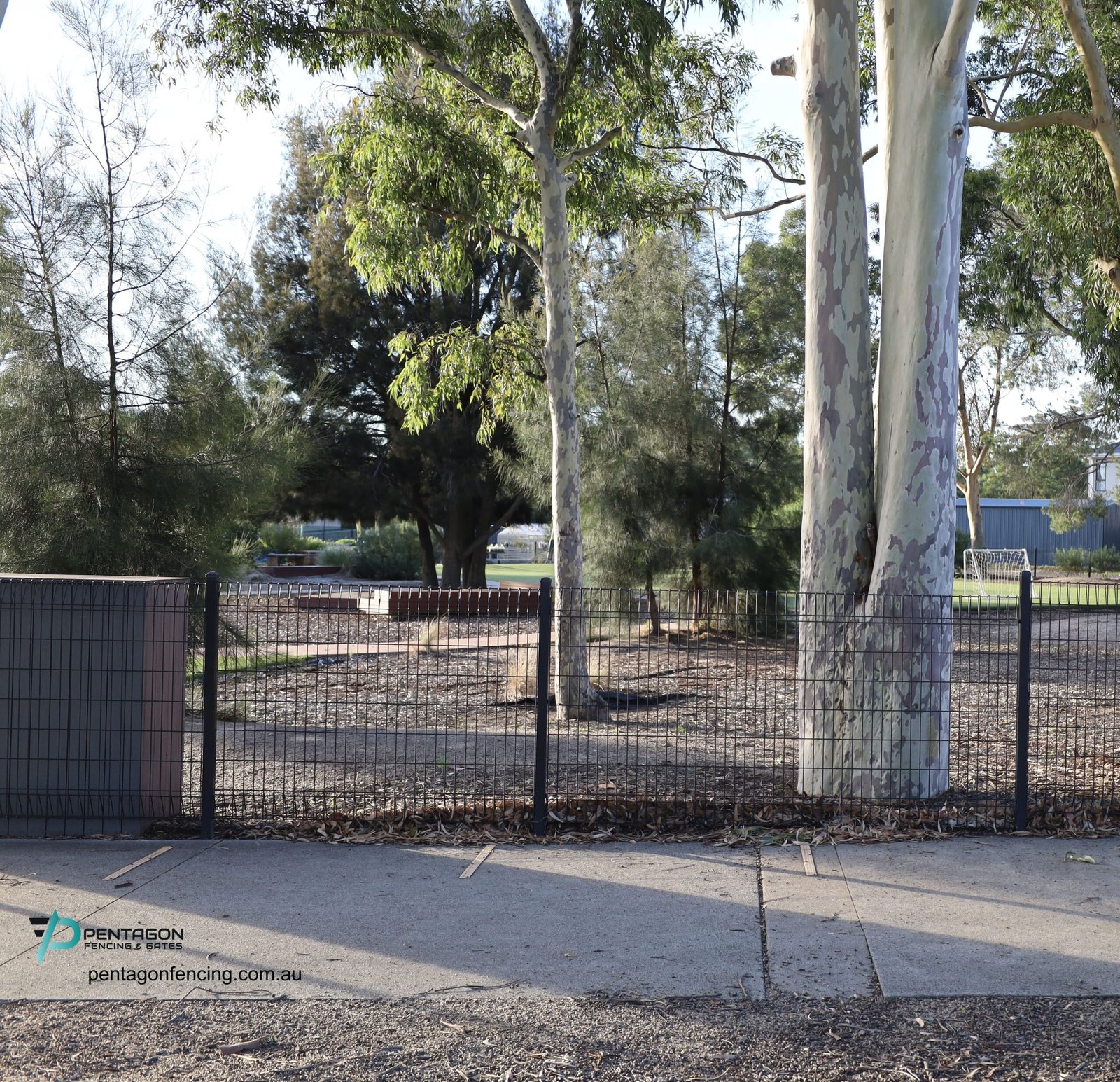
Weldmesh fencing uses steel wires welded together at their intersections to create rigid panels. Unlike flexible chain wire, a welded panel holds a defined aperture and panel shape. The panels are fixed to steel posts using clamps, brackets, rails or other project-specific connections.
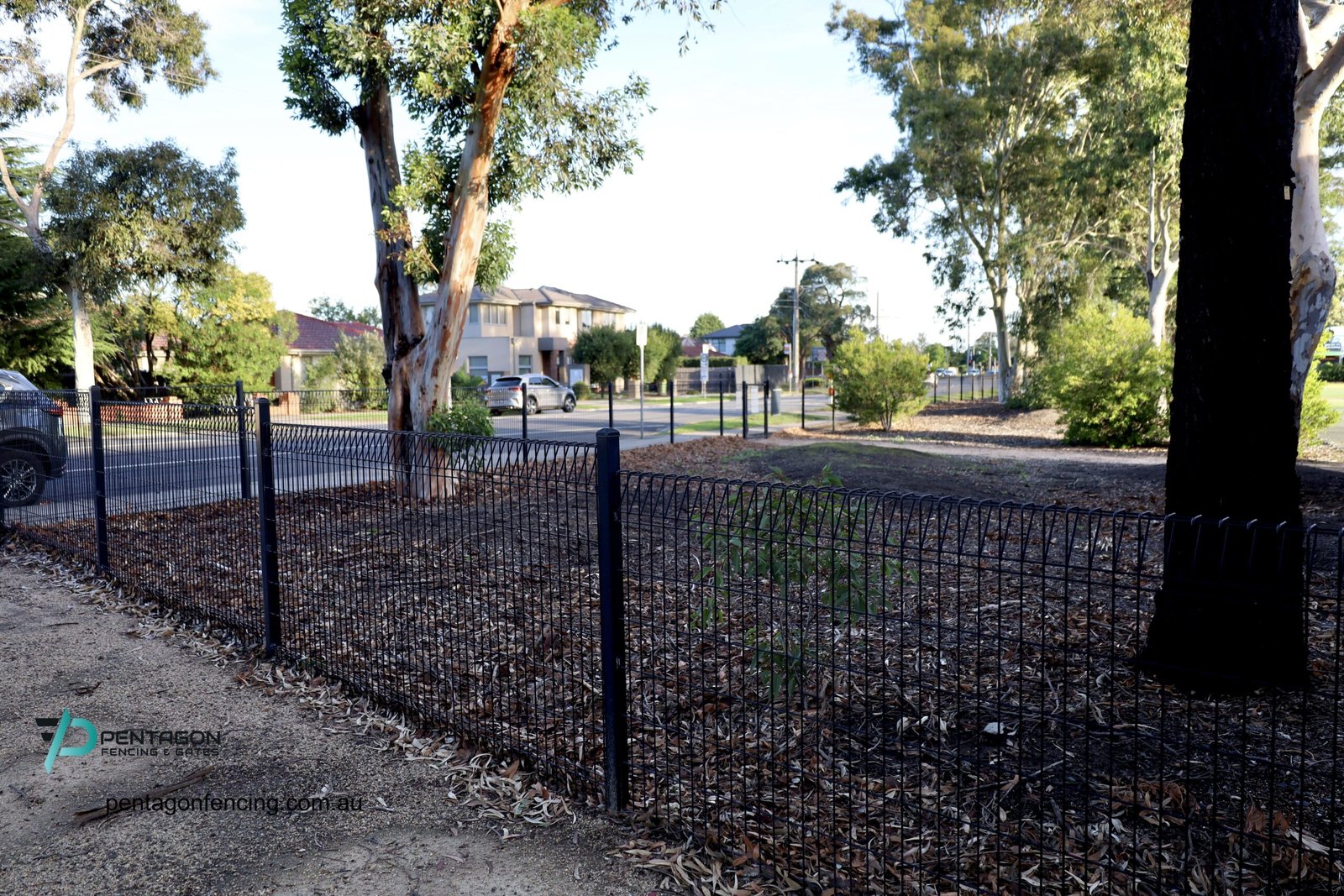
The term can cover several different specifications:
- General-purpose welded mesh: open rectangular or square apertures for visible boundary definition and lower-to-moderate security applications.
- Reinforced or V-bend mesh: welded panels with formed bends that increase panel stiffness while preserving an open appearance. Betafence describes its Securifor 3D as welded mesh with restricted apertures, V-bend reinforcement and clear visibility through the panel [3].
- 358 close-aperture mesh: a high-security welded panel format commonly based on an approximately 76.2 mm by 12.7 mm aperture. Betafence’s Securifor 358 combines anti-climb and anti-cut characteristics with visibility suitable for CCTV use [2].
- Denser security mesh: smaller-aperture or heavier-wire systems used where greater delay or penetration resistance is required. These must be assessed from the manufacturer’s tested or documented system information.
The specification should name the actual product or define the aperture, wire dimensions, panel form, post system, fixings and finish. The words “welded mesh” or “security mesh” alone are not enough for contractors to price or assess equivalent systems.
Weldmesh options compared
This comparison table supports early selection for welded mesh fencing Melbourne and 358 mesh fencing Melbourne projects. Product-specific drawings and technical data should govern the final specification.
| Mesh option | Stronger-fit direction | Visibility and security effect | Main limitation | Specification check |
|---|---|---|---|---|
| Open general-purpose weldmesh | Commercial boundaries, internal separation, sports or public-site zones where visibility and clear demarcation matter more than high-security delay. | Larger apertures provide clear sightlines and a lighter visual appearance. | Larger openings can provide more grip or tool access and should not be labelled anti-climb without evidence. | Aperture, wire diameter, panel bends, rails, post centres and intended risk level. |
| Reinforced or V-bend welded mesh | Schools, commercial sites, public facilities and infrastructure zones needing panel rigidity with an open appearance. | Formed bends can stiffen the panel while the mesh retains through-visibility [3]. | The bend does not automatically establish high-security, anti-cut or anti-climb performance. | Mesh dimensions, V-bend position, wire size, height, post system and gate infill. |
| 358 close-aperture mesh | Critical infrastructure, restricted commercial or industrial sites and other boundaries requiring stronger resistance to climbing and hand-tool attack. | The restricted aperture limits hand and foot purchase while maintaining clear views for CCTV and security patrols [2]. Australian 358 systems are available with engineered post and gate configurations [4]. | Higher material and structural requirements may be unnecessary for lower-risk or presentation-led areas. | Exact aperture, wire, panel width/height, post/fixing system, gate equivalence and documented security performance. |
| Higher-density security mesh | Maximum-security zones where the threat and required delay justify a denser, project-specific system. | Smaller openings and heavier configurations may further restrict penetration while preserving some visibility. | Cost, weight, foundations, installation, emergency access and surveillance angles need detailed assessment. | Threat assessment, tested system evidence, posts, fixings, foundations, toppings, gates and layered security controls. |
Visibility versus security matrix
The matrix below addresses the central search intent: how to increase perimeter resistance without creating a solid visual barrier.
| Decision priority | Stronger mesh direction | What it supports | Watch-out |
|---|---|---|---|
| Maximum open visibility | Open general or reinforced weldmesh | Clear views across sports, commercial and public-facing boundaries with a less fortress-like appearance. | Do not infer strong anti-climb or anti-cut performance from welded construction alone. |
| Visibility plus moderate deterrence | Rigid V-bend or tighter-aperture commercial mesh | Panel stiffness, controlled openings and sightlines for staff, lighting and surveillance. | The project still needs defined height, gaps, rails, gates and climb-point review. |
| Anti-climb and CCTV visibility | 358 close-aperture mesh | Restricted hand/foot purchase and clear through-visibility. Betafence identifies visibility for CCTV as a core benefit of 358 security mesh [2]. | Trees, signs, bins, rails, walls and poorly designed gates can bypass the panel’s anti-climb logic. |
| High security mesh fencing with resistance to cutting or penetration | Documented 358 or denser security system with compatible posts, fixings and gates | Greater delay against conventional hand tools when supported by the complete tested or engineered system. | Use “anti-cut” only where the selected product and system evidence support the claim; do not apply it to all weldmesh. |
| Privacy or visual screening | Route to slat, solid infill, modular wall or another screening-led system | Better alignment with concealment, privacy or acoustic goals. | Adding screening to weldmesh can increase wind load, reduce surveillance and change post or footing requirements. |
Where weldmesh fencing fits best
- Commercial and industrial sites: visible boundaries around warehouses, yards, factories, utilities and controlled compounds where staff or CCTV need to see through the fence.
- Infrastructure: rail, transport, energy, water and other sites that may require a close-aperture or engineered security-mesh system.
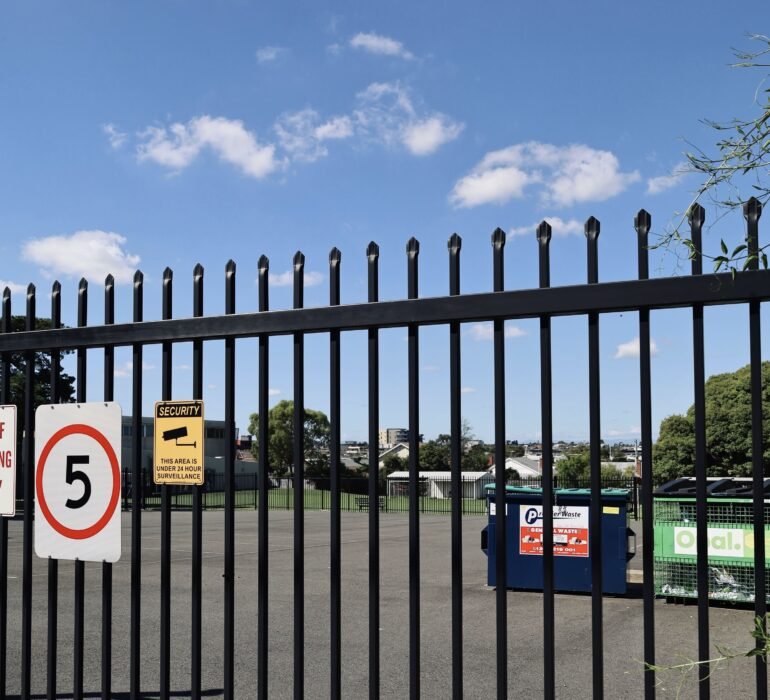
- Schools and public facilities: selected school weldmesh fencing boundaries where visibility, supervision and a less aggressive appearance matter. Victorian government school fencing must be fit-for-purpose, strong, durable and safe, discourage climbing, preserve relevant sightlines and integrate with pedestrian and vehicle gates [5].
- Sports and recreation facilities: visible separation of courts, fields, equipment or public areas where the mesh aperture and height are matched to the activity.
- Construction and staged sites: permanent or selected project-specific boundaries where the system is appropriate to the current hazards. WorkSafe Victoria states that site-security measures should control unauthorised access and protect workers and the public [7].
These are routing examples, not automatic approvals. The school article owns the full safety and access decision for educational sites, while sports and public-infrastructure projects may need their own activity, impact, crowd or authority requirements.
When weldmesh is not the best fit
- Privacy is the main goal: an open mesh panel does not conceal courtyards, parking, plant or service areas.
- An aggressive visual deterrent is required: selected palisade systems may communicate restriction more strongly, subject to the site’s public-facing safety context.
- Long, lower-risk coverage drives the decision: chain wire may provide a more economical solution where rigid close-aperture panels are not justified.
- The boundary needs a decorative frontage: tubular, rod top, aluminium or another architectural system may align better with the facade.
- The site needs vehicle-impact protection: weldmesh should not be treated as a substitute for engineered bollards, barriers or hostile-vehicle mitigation.
Specification checklist for weldmesh steel fencing Melbourne
Use this checklist before requesting a quote for anti-climb weldmesh steel fencing Melbourne projects:
- Risk and site zones: define casual trespass, climbing, cutting, vandalism, restricted assets and public-facing areas separately.
- Mesh format: identify general weldmesh, V-bend mesh, 358 or another documented security panel.
- Aperture and wire: record the exact horizontal and vertical openings, wire diameters and panel construction.
- Height and ground condition: define finished height, bottom gap, slopes, retaining edges and any need for below-ground or anti-burrow detailing.
- Posts and fixings: specify post type, centres, clamps, rails, tamper resistance, corner/end conditions and foundations.
- Visibility: map CCTV, lighting, staff sightlines, landscaping, signs and objects on both sides of the perimeter.
- Gates: match mesh aperture, height, frame gaps, bottom clearance, locks and anti-climb logic at every opening.
- Finish: confirm galvanising, powder coating or combined protection for panels, posts, brackets and gates.
- Evidence: request product data, system drawings, applicable test or certification information and clearly stated exclusions.
- Maintenance: plan inspection of coatings, fixings, panels, vegetation, ground gaps and gate alignment.
Gates must preserve the weldmesh security level
A close-aperture panel can lose much of its value if the gate uses wider infill, large frame gaps, exposed footholds or lightly protected hardware. The gate should match the effective height, aperture, bottom clearance and fixing logic of the adjoining fence.
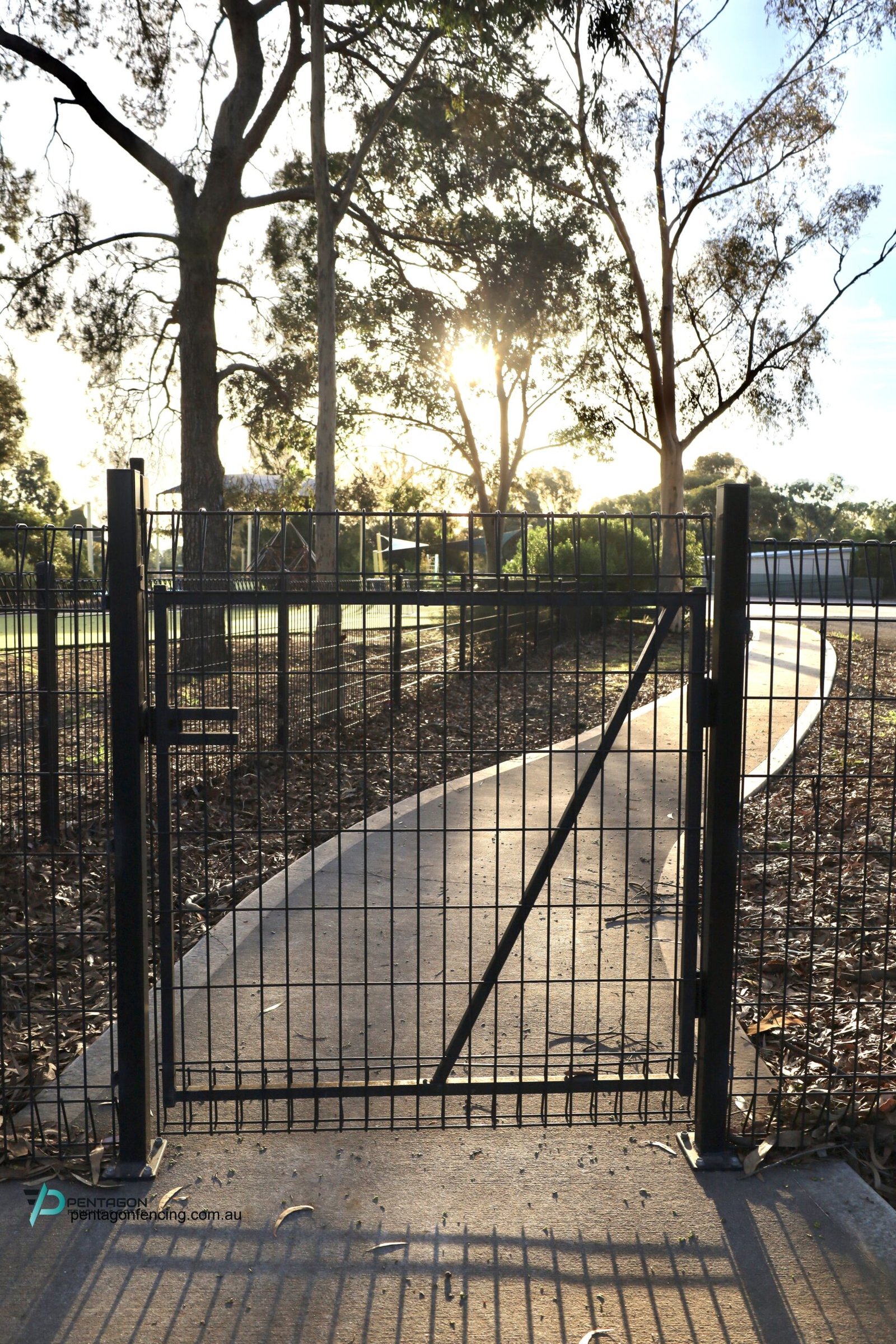
Pentagon’s cantilever gate range includes welded-mesh infill and is engineered around opening width, gate weight and daily usage [9]. Its wider gate range covers sliding, swing, side and cantilever solutions for different site conditions [10].
- Pedestrian gates: plan clear width, latch, lock, closer, intercom or credential reader and emergency access.
- Sliding or cantilever gates: confirm run-off, supports, stops, guides, counterbalance, automation and pedestrian separation.
- Swing gates: check hinge posts, opening arc, wind exposure, slope, locks and automated operator location.
- Gate infill: use a product and fixing method that does not create a more climbable or cuttable opening than the fixed fence.
- Surveillance: keep cameras, lighting and sightlines effective while the gate is open, closed and waiting for access authorisation.
Coatings, galvanising and maintenance
Weldmesh panels and posts may use galvanised wire, zinc-alloy coatings, hot-dip galvanised steel, powder coating or combined protection. The visible topcoat does not explain the full corrosion system.
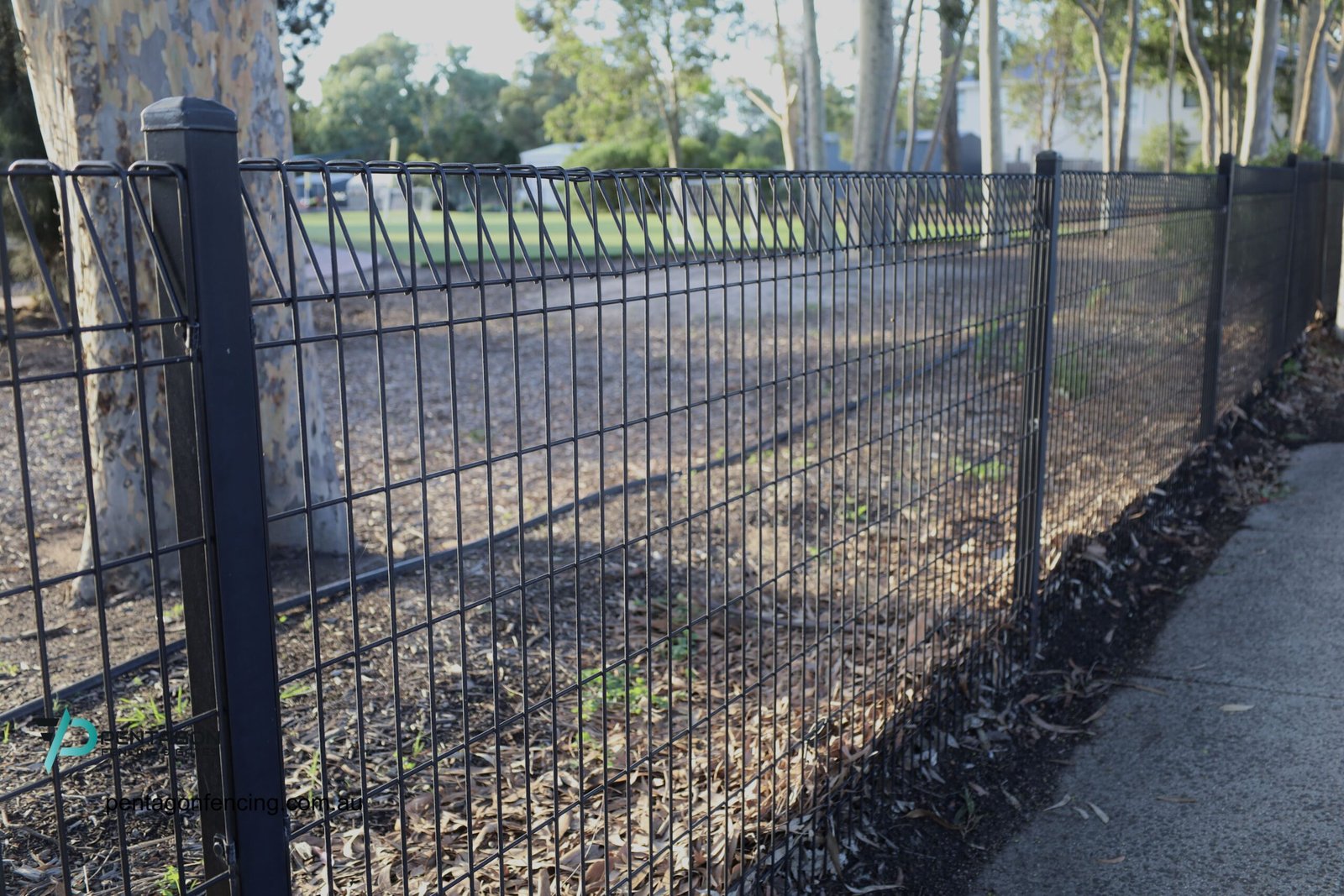
The Australian Steel Institute states that protective-coating selection should use a technically robust approach based on the intended corrosion environment, fabrication and whole-of-life maintenance. It identifies paint coatings and hot-dip galvanising under AS/NZS 2312 as key specification pathways [8].
- Confirm the coating on panels, posts, rails, clamps, brackets and gate frames.
- Ask how welds, cut edges, drilled holes and installation damage are protected.
- Account for coastal exposure, industrial contaminants, irrigation, soil contact and trapped vegetation.
- Inspect coating damage, loose fixings, bent panels, corrosion, ground gaps and gate alignment.
- Do not assume black powder coating provides the same service life across every Melbourne environment.
Visibility, streetscape and public-facing checks
Open mesh can support informal surveillance and a less fortress-like frontage. Planning Victoria recommends low or partially transparent fencing where visibility between a property and public space is important and also advises the use of non-injurious top details in the public realm [6].
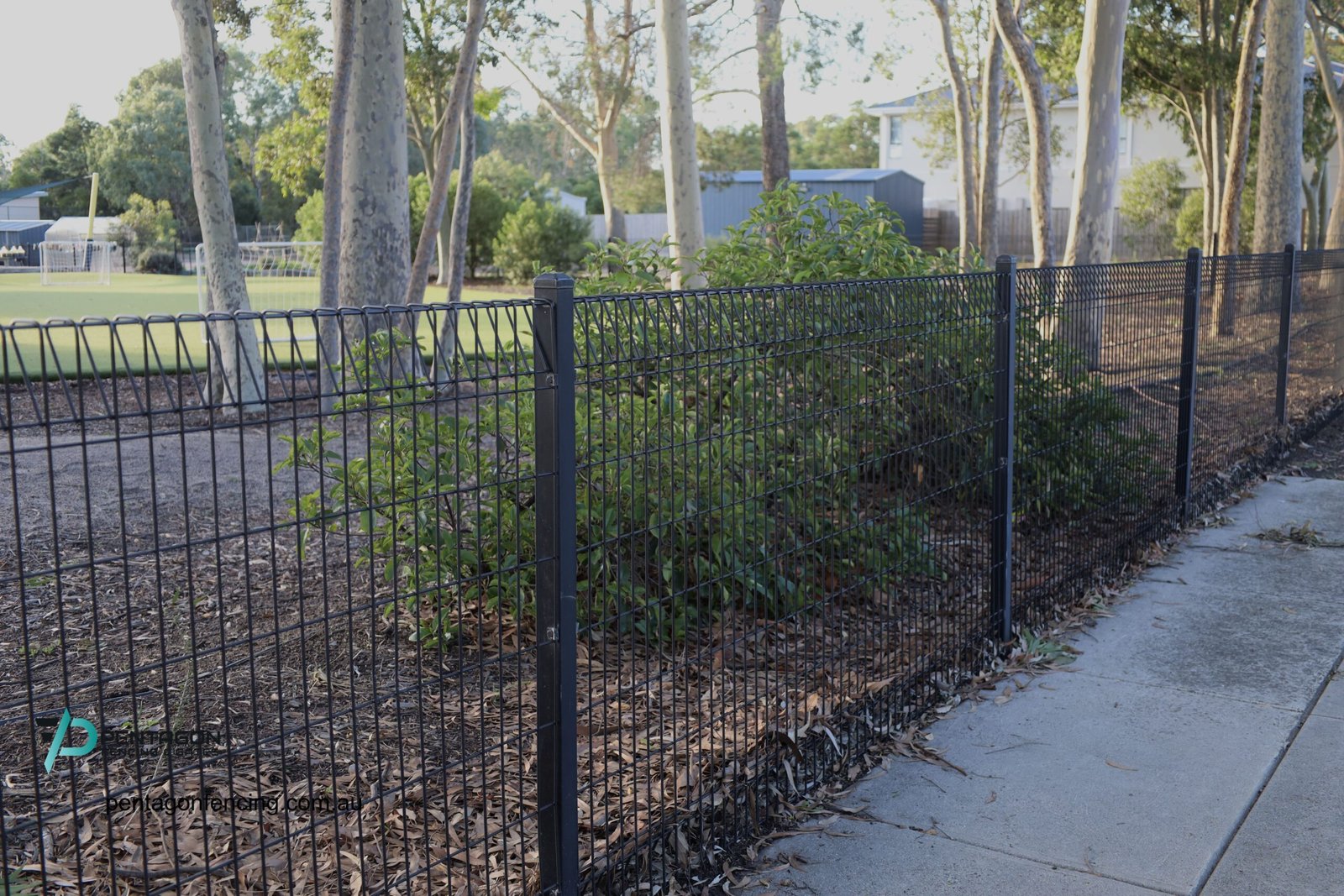
That guidance does not set one universal weldmesh specification. Schools, parks, commercial frontages and infrastructure projects can have different height, access, entrapment, safety, authority and planning requirements. Confirm the project address, users, council or asset-owner requirements and the function of each fence zone before fabrication.
Decision shortcut
- Shortlist general or reinforced weldmesh when visibility, panel rigidity and a clean public-facing boundary matter more than maximum security.
- Shortlist 358 mesh when the site needs stronger anti-climb and anti-cut performance while preserving CCTV visibility.
- Route to palisade when a more assertive deterrent profile is justified and appropriate for the users and frontage.
- Route to chain wire when large lower-risk runs and cost control matter more than rigid close-aperture panels.
- Route to a screening system when privacy or concealment is the dominant requirement.
Common mistakes to avoid
- Calling all welded mesh 358 mesh. Record the actual aperture, wire and panel form.
- Claiming anti-climb from appearance alone. Review the complete fence, gates, rails, gaps and surrounding climb aids.
- Using “anti-cut fencing” without product evidence. Cutting resistance varies with wire, aperture, welds, fixings and system design.
- Forgetting the gate specification. Wider infill or weak hardware can create the easiest route through the perimeter.
- Blocking sightlines after installation. Vegetation, signs, stored materials and screening can reduce the visibility that justified weldmesh.
- Choosing a colour instead of a coating system. Galvanising, surface preparation and repair requirements affect long-term performance.
How Pentagon Fencing can help
Pentagon Fencing & Gates supplies and installs weldmesh, steel security fencing and matching gate systems across Melbourne for commercial, industrial, construction and infrastructure projects [1].
- Compare general welded mesh, reinforced panels and close-aperture security mesh against the site’s visibility and risk priorities.
- Plan posts, fixings, pedestrian or vehicle gates, automation and access control as one perimeter package.
- Prepare a site-specific quote covering mesh specification, dimensions, coatings, removals and installation constraints.
FAQ
What is the difference between weldmesh and 358 mesh fencing?
Weldmesh is the broad family of rigid panels made from wires welded at their intersections. 358 is a close-aperture security-mesh format designed to restrict hand and foot purchase and improve resistance to climbing and cutting while retaining visibility.
Does weldmesh fencing block CCTV visibility?
Open and close-aperture mesh systems are commonly selected because they maintain views through the perimeter. The final camera view still depends on mesh angle, lighting, posts, gates, vegetation and objects placed near the fence.
Is every weldmesh fence anti-climb?
No. Anti-climb performance depends on aperture, wire, height, rails, fixings, gates, ground gaps and nearby footholds. Request product and system evidence for the selected specification.
Is weldmesh suitable for schools and sports facilities?
It can suit selected boundaries where visibility and controlled access are important. School, early-learning, sport and public-facility projects may have additional safety, entrapment, gate, impact or authority requirements that must be verified separately.
Can weldmesh fencing include automated gates?
Yes. Welded-mesh infill can be used in pedestrian, swing, sliding and cantilever gates. The gate frame, infill, bottom gap, locks, motor, safety devices and access control should be designed with the fence.
What affects the cost of weldmesh fencing in Melbourne?
Key cost drivers include mesh type, aperture, wire diameter, panel height and width, posts, fixings, foundations, coatings, gates, automation, ground conditions, removals and installation access.
What to Keep in Mind
- Define the aperture, wire, panel, posts and fixings instead of purchasing from the word “weldmesh” alone.
- Use 358 or another documented close-aperture system where anti-climb and anti-cut performance is a real project requirement.
- Preserve visibility by planning CCTV, lighting, gates, vegetation and site operations with the fence.
- Match gate infill, gaps, locks and automation to the security level of the fixed mesh perimeter.
- Verify school, public-facility, infrastructure and Melbourne-specific project requirements before fabrication.
References
- Pentagon Fencing, “Palisade Fencing & Steel Security Fencing Melbourne,” Pentagon Fencing. Accessed: Jun. 17, 2026. [Online]. Available: https://pentagonfencing.com.au/service/steel-security-fencing-melbourne/
- Betafence, “SECURIFOR 358 Trusted High-Security Fencing Panel System,” Betafence. Accessed: Jun. 17, 2026. [Online]. Available: https://www.betafence.com/en/securifor-358
- Betafence, “Securifor 3D Security Fencing Panels,” Betafence. Accessed: Jun. 17, 2026. [Online]. Available: https://www.betafence.com/en/securifor-3d
- Profence, “Promax 358 Mesh Fencing: High Security Anti-Climb Perimeter Protection,” Profence. Accessed: Jun. 17, 2026. [Online]. Available: https://profence.com.au/promax-security-fencing/358-mesh/
- Victorian School Building Authority, “5. Technical Specifications,” School Buildings Victoria. Accessed: Jun. 17, 2026. [Online]. Available: https://www.schoolbuildings.vic.gov.au/building-quality-standards-handbook/technical-specifications
- Department of Transport and Planning Victoria, “6.4 Barriers and Fences,” Planning Victoria. Accessed: Jun. 17, 2026. [Online]. Available: https://www.planning.vic.gov.au/guides-and-resources/guides/urban-design-guidelines-for-victoria/objects-in-the-public-realm/barriers-and-fences
- WorkSafe Victoria, “Construction Site Security Fencing,” WorkSafe Victoria. Accessed: Jun. 17, 2026. [Online]. Available: https://www.worksafe.vic.gov.au/construction-site-security-fencing
- Australian Steel Institute, “Corrosion Protection,” Australian Steel Institute. Accessed: Jun. 17, 2026. [Online]. Available: https://www.steel.org.au/what-we-do/focus-areas/steel-and-design/corrosion-protection/
- Pentagon Fencing, “Cantilever Gates,” Pentagon Fencing. Accessed: Jun. 17, 2026. [Online]. Available: https://pentagonfencing.com.au/service/cantilever-gates/
- Pentagon Fencing, “Gates,” Pentagon Fencing. Accessed: Jun. 17, 2026. [Online]. Available: https://pentagonfencing.com.au/service-category/gates/