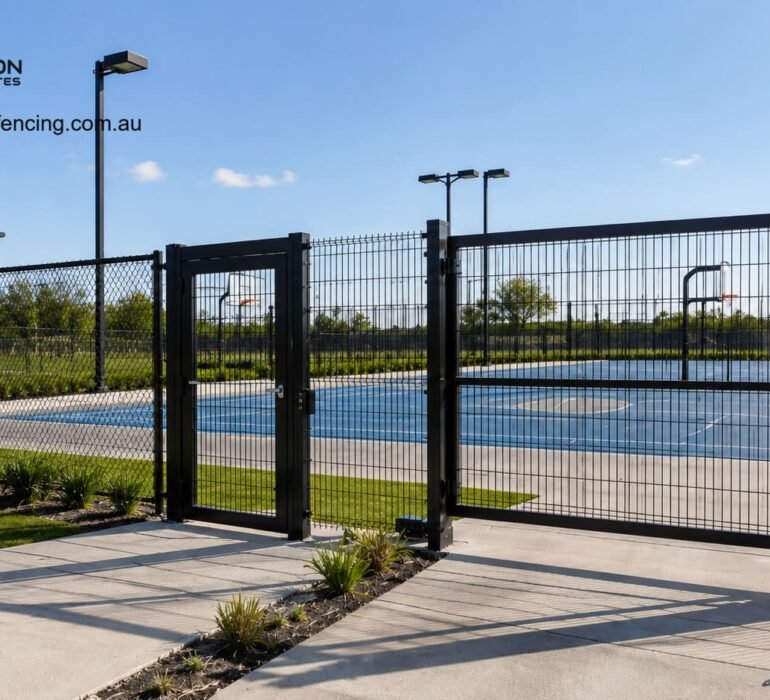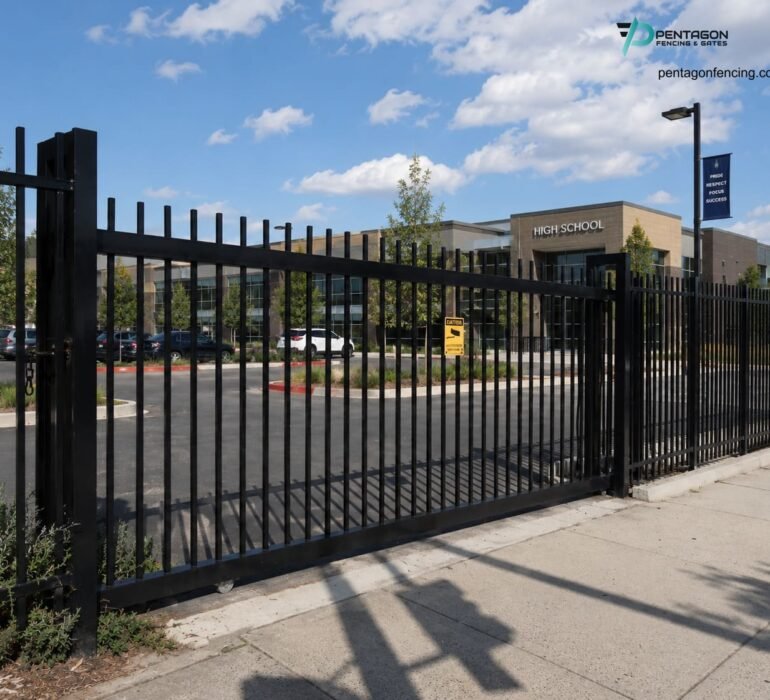

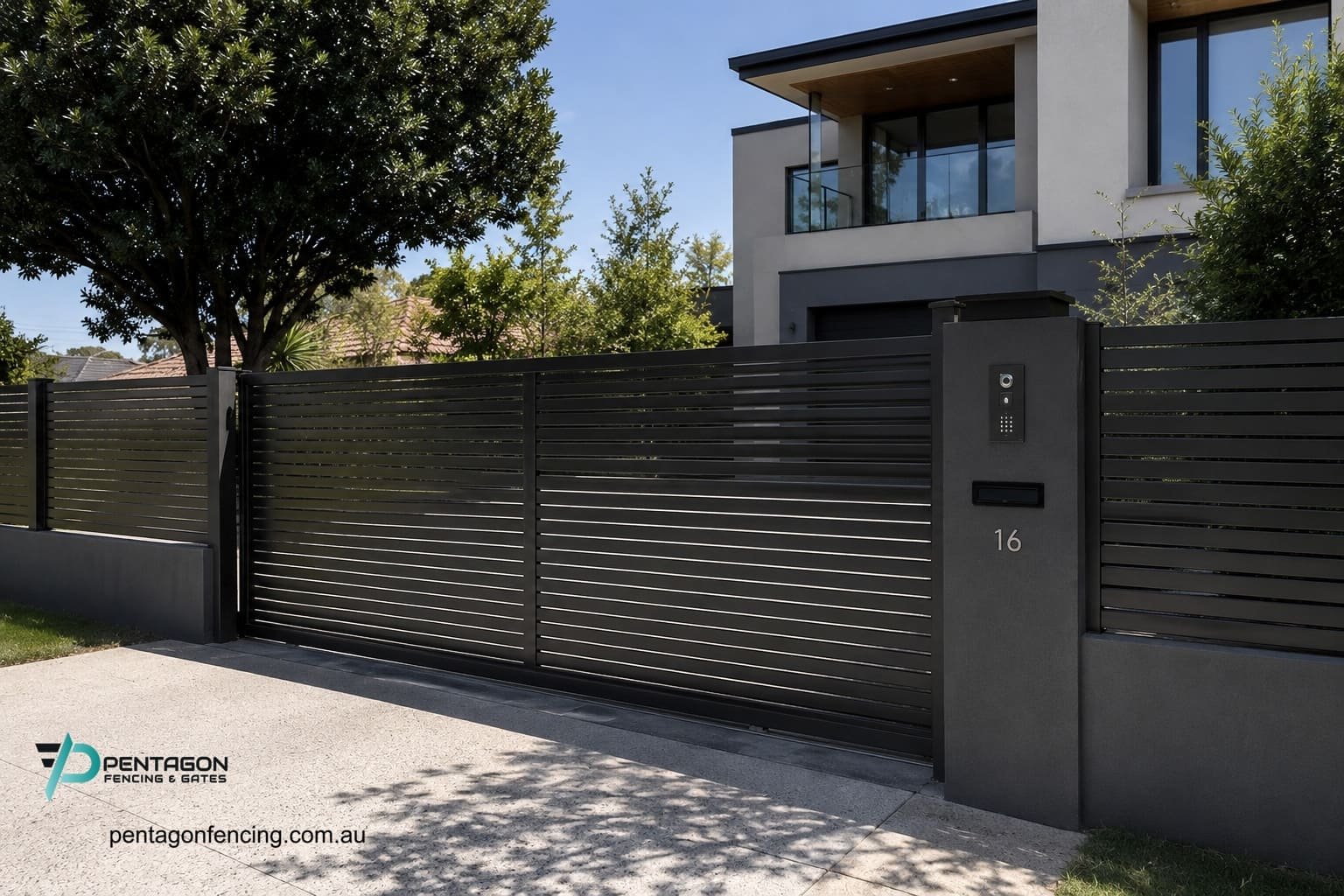
Table of Contents
Why industrial sliding gates are easy to specify incorrectly
- You choose a sliding gate only because it saves swing space, without checking run-back, ground condition, tail space, vehicle queues and the opening width needed for trucks.
- You compare a light commercial driveway gate with a heavy-duty industrial gate that needs stronger posts, guide systems, end stops, automation and access-control integration.
- You assume automation solves traffic flow, when the actual problem is poor entry sequencing, mixed pedestrian and vehicle movement, or undersized motor duty.
- You leave safety devices, manual operation and maintenance procedures out of the original scope, even though a powered gate is moving plant at the site entrance.
- You add access control later, creating mismatched keypads, remotes, intercoms, vehicle loops, CCTV coverage or emergency access procedures.
Key Takeaways
- Industrial sliding gates suit high-traffic sites when the entry needs a wide vehicle opening without the swing arc of a hinged gate.
- A warehouse sliding security gate should be specified as a complete access system: gate frame, infill, posts, track or cantilever hardware, motor, safety devices, access control and maintenance plan.
- Tracked sliding gates can suit level sealed surfaces, while cantilever sliding gates are often considered where heavy traffic, gravel, unsealed ground or debris make a ground track unreliable [2]. Pentagon also describes cantilever gates as track-free systems supported by roller carriages mounted to posts [3].
- SafeWork NSW warns that industrial gates can weigh hundreds of kilograms and that lack of maintenance has been a key cause of serious gate incidents, including fatalities [4].
- For commercial sliding gates Melbourne projects, the best gate is the one that fits traffic volume, opening width, ground conditions, safety obligations and maintenance controls. HSE frames powered-gate safety as a design, construction and maintenance issue, and WorkSafe Victoria’s Dandenong fatality case shows why repair-period controls matter [5] [6].
What is an industrial sliding gate?
An industrial sliding gate is a vehicle-access gate that moves horizontally across an opening. It may run on a ground track, operate as a cantilever gate without a track across the driveway, or use a multi-leaf telescopic arrangement where run-back space is restricted. The gate can be manual or automated, and it can use steel, welded mesh, chain wire, aluminium, Colorbond or other infill depending on the adjacent fence and security brief.
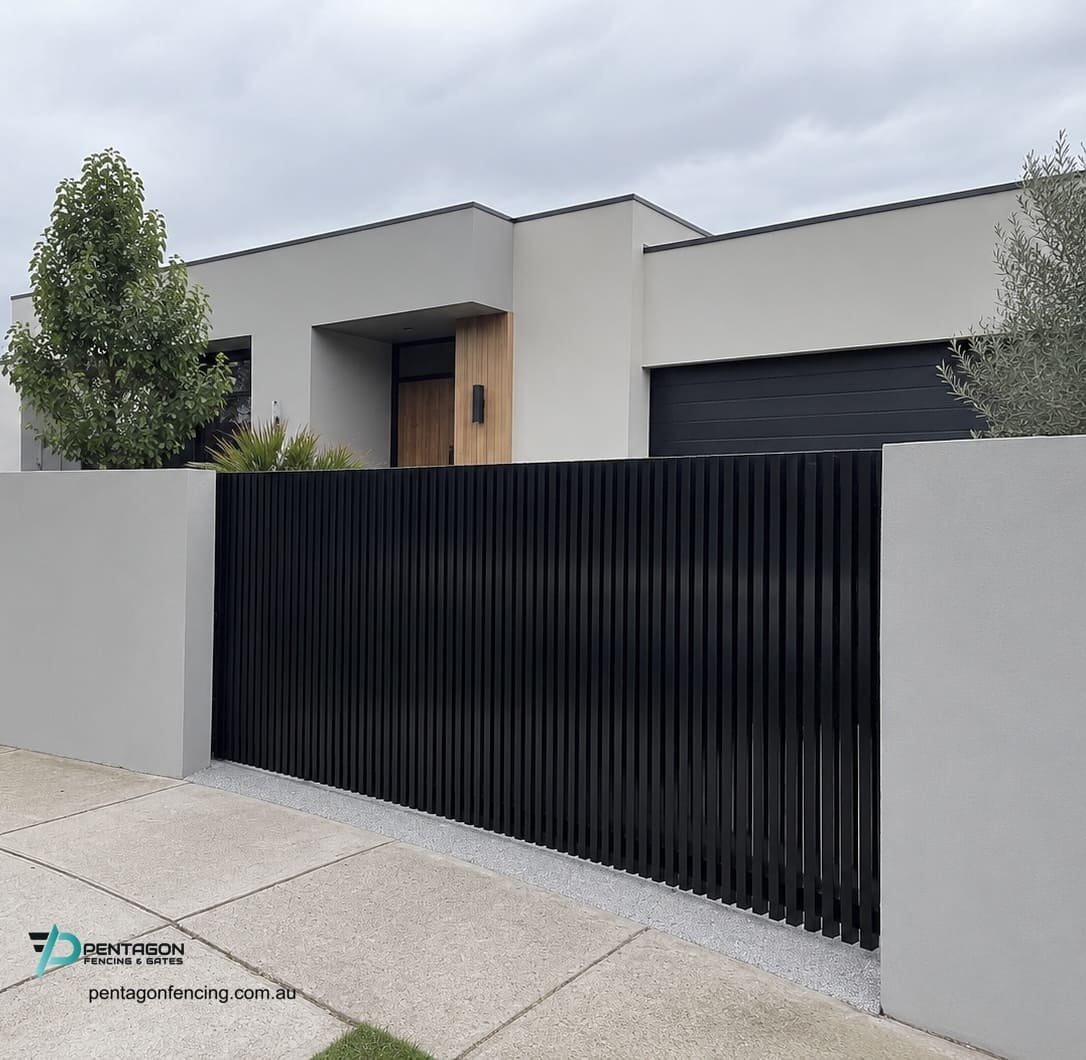
For a high-traffic site, the gate should be treated as part of the perimeter and vehicle-management system. A practical industrial sliding gate Melbourne specification should identify the clear opening, full gate length, posts, guide system, end stops, infill, finish, motor rating, safety devices, access-control triggers, power supply, manual-release procedure and maintenance schedule.
Gate type selection matrix
The table below compares common sliding-gate configurations for industrial and commercial sites. It is designed to guide scope discussions, not replace a site measure or engineering review.
| Gate type | Best fit | Watch-out | Specification check |
|---|---|---|---|
| Track-mounted sliding gate | Level, sealed concrete or asphalt entries where the ground track can remain clean, straight and protected from repeated impact. | Ground tracks can collect debris and can be vulnerable where heavy vehicles repeatedly cross at poor angles or where the surface moves [2]. | Track alignment, drainage, surface stability, wheel/roller rating, end stops, cleaning access and maintenance responsibility. |
| Cantilever sliding gate | Industrial yards, logistics entries, gravel or uneven surfaces, high-traffic crossings and sites where a ground track would be damaged or buried. | Needs enough run-back and counterbalance space beside the opening. Pentagon describes cantilever gates as track-free systems supported by roller carriages mounted to posts [3]. | Clear opening, total gate length, tail space, post footing, roller carriage rating, guide posts, wind exposure and automation mount. |
| Telescopic sliding gate | Constrained commercial entries where a wide clear opening is needed but straight run-back space is limited. | More moving leaves and synchronisation hardware can increase mechanical complexity and maintenance needs. | Leaf sequencing, support structure, guide alignment, motor load, service access and fail-safe behaviour. |
| Sliding gate with transparent security infill | Warehouses, schools, depots and monitored entries where visibility through the entrance helps CCTV, patrols or driver awareness. | Open infill does not provide privacy and should match the adjacent fence’s anti-climb or safety intent. | Weldmesh, rod top, palisade, chain wire or tubular infill; gap control; gate-frame strength; matching fence transition. |
| Sliding gate with solid or privacy infill | Commercial service yards, plant screens and mixed-use sites where a closed appearance or screening is useful. | Solid infill can increase wind load, reduce visibility and create concealed areas near the entrance. | Wind exposure, frame rigidity, sightlines, pedestrian separation, gate weight and motor rating. |
High-traffic site-zone matrix
A practical industrial gate design starts by mapping the entry zone, not by choosing hardware from a catalogue.
| Site zone | Traffic or access pressure | Gate implication | Control method | Maintenance note |
|---|---|---|---|---|
| Warehouse truck entry | Frequent heavy vehicles, wide turning paths, shift-change peaks and queue risk. | Prioritise opening width, robust posts, reliable travel, suitable motor duty and clear vehicle detection. | Loop detector, remote control, guard control, keypad or access-management integration. | Inspect track or roller hardware, end stops, guide posts, motor load and safety devices on a planned schedule. |
| Staff and visitor vehicle entry | Predictable daily cycles, user mix, visitor uncertainty and after-hours access. | Avoid long wait times and unclear intercom or keypad positioning that causes vehicles to stop in unsafe places. | Intercom, mobile access, keypad, swipe card, remote or scheduled open times. | Test user credentials, emergency access, battery backup and fault notification process. |
| Loading dock or forklift-adjacent area | Forklifts, trucks, pedestrians and delivery vehicles can interact within a confined zone. | Design the gate with separation, signage, stopping zones and operating logic that does not mix people and moving plant unnecessarily. | Traffic-management plan, clear pedestrian route, controlled vehicle triggers and supervised override where needed. | SafeWork NSW highlights the importance of separating mobile plant and pedestrians through traffic-management controls [7]. |
| Construction compound entry | Changing ground conditions, earthworks, machinery crossings, temporary layouts and after-hours risk. | A cantilever or track-free solution may be easier to keep reliable where mud, gravel or changing surfaces would affect a ground track. | Site manager control, scheduled deliveries, lockable manual operation or staged automation if power and ground conditions are ready. | Recheck alignment, support posts, temporary fencing interfaces and gate security after each site-stage change. |
| Restricted asset compound | Low traffic but high consequence if the entry is breached, left open or bypassed. | Match the gate infill, locks, automation and monitoring to the adjacent security fence and access policy. | Restricted credentials, audit trail, CCTV, alarms, interlock or remote monitoring depending on risk. | Test close confirmation, manual release security, credential changes and intrusion response procedure. |
Track, cantilever or swing: which gate movement fits?
A sliding gate is usually shortlisted when the site cannot give up the internal or external arc needed for swing leaves. That is common at truck entries, warehouse yards, loading bays and properties where a gate must stay close to the boundary line.
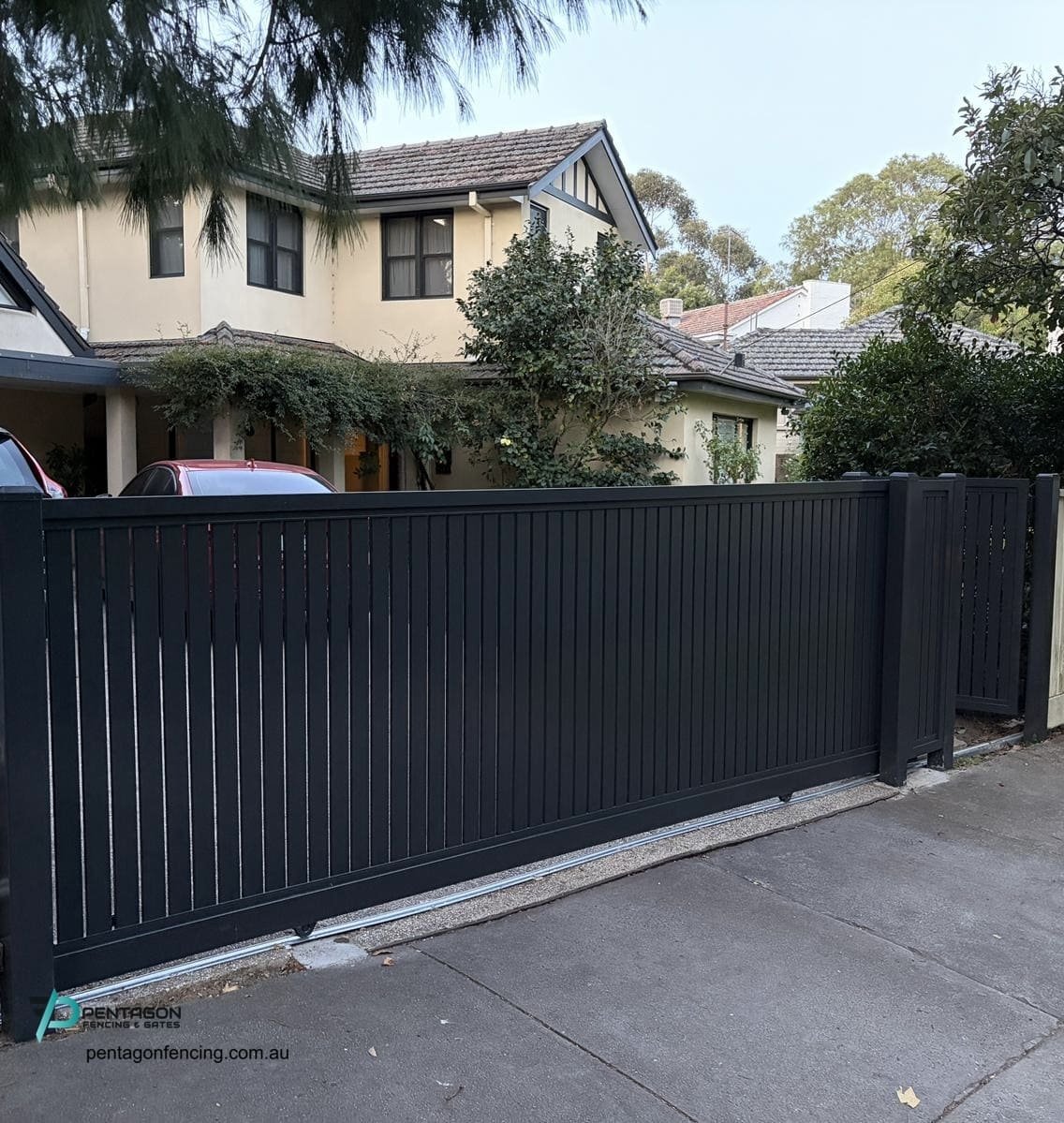
However, not every sliding gate should use the same movement system. A track-mounted gate needs a stable surface and a clean rail path. A cantilever gate removes the track across the opening but needs stronger side support and enough counterbalance space. A swing gate can still be the right choice where traffic is lower, the opening is narrower or the site has ample clear arc space, but it is usually less attractive for high-frequency truck entries.
For automated sliding gate Melbourne projects, the decision should be made before civil works, electrical rough-in and access-control planning, because the gate movement changes foundations, power position, sensor placement, conduit routes and emergency access.
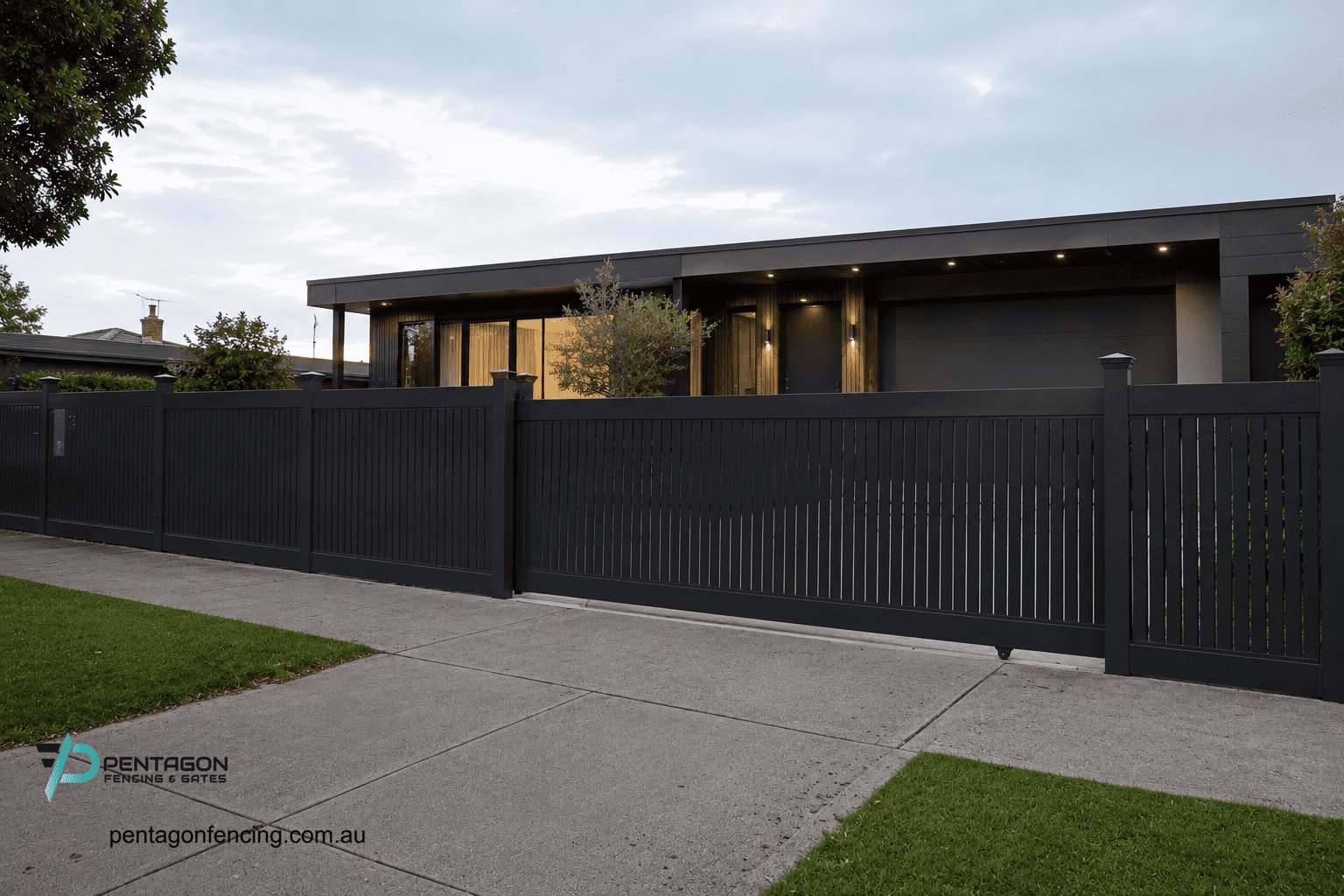
Traffic flow and access-control planning
Automation should reduce delays and improve control, not create a queue at the front boundary. A high-traffic gate needs the operating sequence mapped from both sides of the entrance.
- Approach lane: confirm where trucks stop, how drivers trigger the gate and whether a waiting vehicle blocks the street, footpath or internal driveway.
- Clear opening: allow for truck mirrors, turning paths, trailers, emergency vehicles and future changes to site use.
- Pedestrian route: separate pedestrians from the vehicle gate where possible rather than forcing staff and visitors through the sliding-gate opening.
- Vehicle detection: place loops, beams or sensors so they support the operating logic without encouraging unsafe stopping positions.
- Access credentials: choose remote, keypad, RFID, swipe, intercom, mobile app or guard control based on who enters, how often and how access is revoked.
- Monitoring: align CCTV and lighting so the gate area can be checked after-hours and during fault events.
- Emergency access: define how emergency services, maintenance technicians and site managers enter during power loss, network failure or motor fault.
Safety and risk-control matrix
A powered sliding gate should be assessed as a moving system. The safety controls must match the gate design, site users and foreseeable interaction around the opening.
| Risk area | Why it matters | Control direction | Evidence to request |
|---|---|---|---|
| Over-travel or falling gate | Damaged stoppers, rails, posts or guides can allow a heavy industrial gate to leave its intended travel path. | Use suitable end stops, catches, guides and competent inspection of posts, rails, tracks and drive mechanisms. | Commissioning record, inspection checklist, maintenance schedule and repair instructions. |
| Crush, shear and trapping points | Sliding gates create moving edges, fixed-object gaps, drive-gear exposure and potential trapping zones. | HSE guidance identifies design elimination, fixed guarding, speed control, force limitation, pressure-sensitive edges and non-contact sensors as safety methods for powered gates [5]. | Risk assessment, safety-device layout, force/sensor test record and user instructions. |
| Disconnected drive mechanism | When a drive mechanism is disconnected, anti-collision, travel limiter and speed-control features may not function as expected. | SafeWork NSW advises securing the gate and using a risk assessment and safe system of work if manual use is unavoidable [4]. | Lock-out or isolation process, temporary-use instructions and repair timeline. |
| Maintenance period control | Gate faults can create higher risk if the gate is left usable in an unsafe manual condition. | WorkSafe Victoria’s Dandenong fatality case highlights the need to secure a sliding gate during repair and provide appropriate instructions for manual operation or restricted use [6]. | Technician report, restricted-use signage, temporary securing method and handover note. |
| Vehicle and pedestrian interaction | High-traffic entries can mix trucks, forklifts, visitors, staff and contractors at the same opening. | Separate pedestrian access from vehicle movement where possible and align the gate with the site traffic-management plan. | Traffic plan, pedestrian route, signage, lighting and access-control map. |
Motor duty, gate weight and daily cycles
For a high-use entry, the motor should be selected from measured site requirements rather than guessed from gate appearance. The useful inputs are gate weight, leaf length, friction or rolling resistance, opening frequency, duty cycle, power conditions and the control features required.
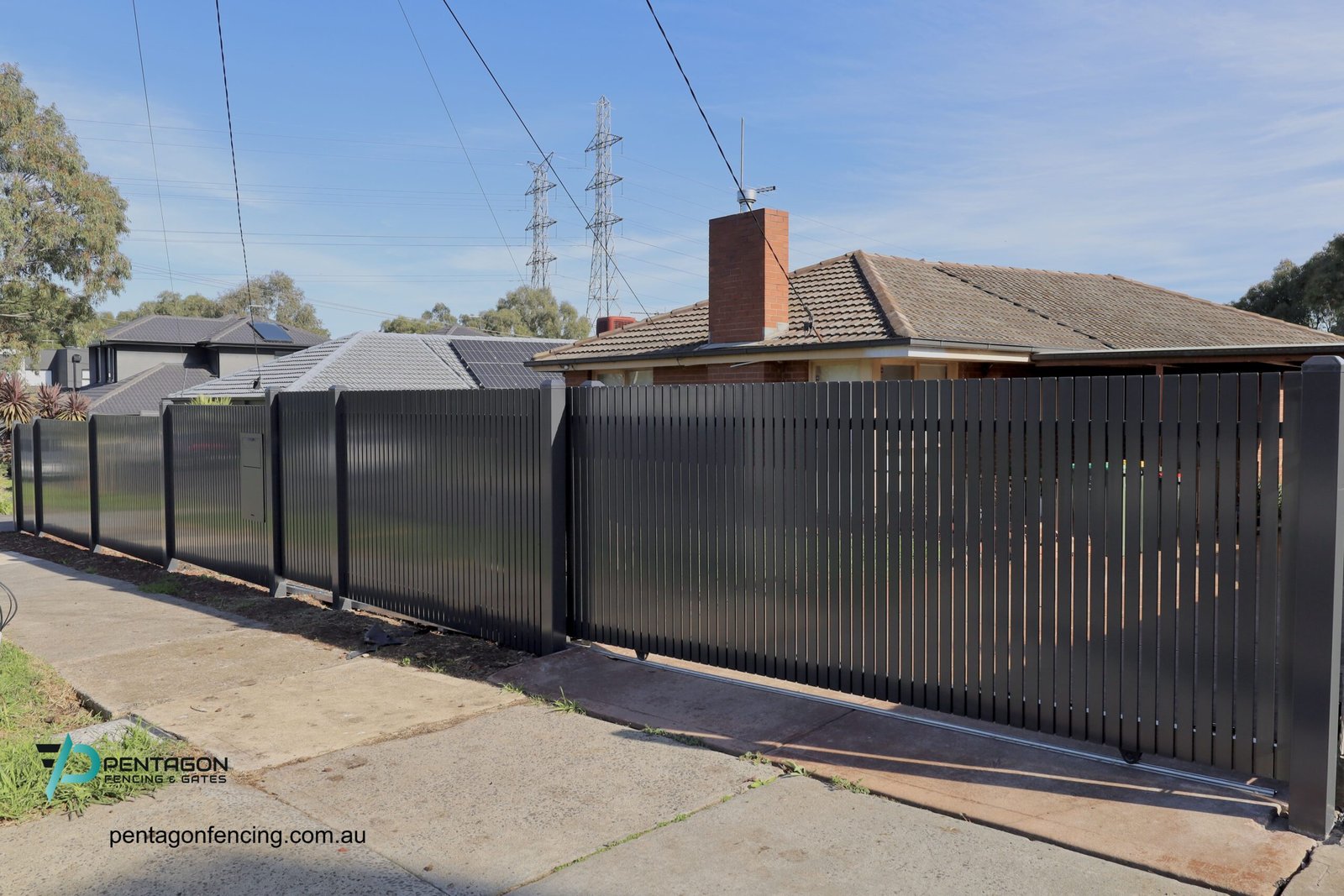
As one manufacturer example, Centurion Systems describes its D10 SMART industrial and commercial sliding gate motor as suitable for gates up to 1000 kg and up to 750 daily operations, with 24V battery backup [8]. This does not mean that model is right for every Melbourne site; it shows why a high-traffic specification should check rated gate weight and cycle demand instead of selecting a residential-grade motor for an industrial entry.
- Gate weight: include the frame, infill, cladding, hardware and any future additions.
- Cycle volume: count representative daily vehicle movements, including peak periods and after-hours activity.
- Duty cycle: check whether the motor can handle repeated operation without overheating or premature wear.
- Speed: balance throughput with safety, control and site visibility.
- Power and backup: plan mains supply, solar suitability, battery backup and manual release.
- Diagnostics: consider whether fault logs, remote monitoring or service alerts are useful for critical entries.
Material, infill and fence integration
The gate should match the risk and purpose of the fence it interrupts. A strong perimeter can be weakened by a gate with wider gaps, exposed horizontal rails, poor locks, light posts or a bottom clearance that invites crawling or lifting.
- Steel frame: common for industrial entries where strength, durability and long spans are required.
- Weldmesh or rod-top infill: useful where visibility, CCTV coverage and anti-climb intent matter.
- Chain wire infill: practical for large yards and cost-controlled industrial compounds where it matches the surrounding fence.
- Aluminium slat or blade infill: useful for commercial frontages where appearance, airflow and partial privacy matter.
- Colorbond or solid infill: appropriate for privacy or screening, but it can increase wind load and reduce surveillance through the entry.
- Security hardware: align locks, guides, anti-lift details and access-control housings with the site’s risk level.
What affects industrial sliding gate cost?
Industrial sliding gate Melbourne pricing should be compared by equivalent scope. A gate-only price is not enough when the project includes automation, civil works, safety devices, access control and operational constraints.
| Cost driver | Effect on the quote | Caveat | Evidence to request |
|---|---|---|---|
| Opening width and gate length | Wider truck openings increase frame size, infill, hardware, motor load and installation handling. | Cantilever gates also require tail or counterbalance length beyond the clear opening. | Dimensioned clear opening, full leaf length, run-back area and vehicle swept-path check. |
| Track or cantilever system | Track systems need rail and surface preparation; cantilever systems need stronger side posts, carriages and footings. | A cheaper track system may cost more over time if the site surface or traffic damages the rail. | Ground-condition assessment, post footing detail, track detail or cantilever carriage specification. |
| Gate frame and infill | Heavy steel, privacy cladding, mesh, palisade-style infill or architectural aluminium all change weight, fabrication and finish. | Do not compare a light aluminium commercial gate with a heavy-duty steel industrial security gate as if they are equivalent. | Frame drawing, infill schedule, coating, anti-lift details and adjacent fence transition. |
| Motor and automation package | Higher gate weight, more daily cycles, faster operation, backup power and diagnostics increase automation scope. | Undersizing a motor can create downtime and premature failure on a high-cycle entry. | Motor model, rated gate weight, cycle rating, duty assumptions, power requirements and warranty terms. |
| Safety devices | Safety beams, pressure edges, guarding, warning lights and commissioning tests add equipment and labour. | Safety scope should be based on the actual risk zones, not treated as an optional accessory bundle. | Safety-device layout, test results, user instructions and maintenance checks. |
| Access control and integration | Keypads, intercoms, RFID, remotes, loops, CCTV and remote monitoring require hardware, cabling and commissioning. | Integration can fail operationally if user groups and credential management are not defined. | Access-control schedule, wiring plan, user groups, admin process and integration responsibility. |
| Site works and disruption | Concrete, trenching, conduit, demolition, temporary security, traffic control and out-of-hours work can materially change the quote. | Live sites may need staged installation so the entry remains secure and usable. | Installation method, staging plan, temporary access, exclusions and handover requirements. |
Seven-step selection flow for high-traffic sites
- Measure the operational opening. Confirm truck width, swept path, approach angle, queues, pedestrian routes and emergency access before selecting the gate type.
- Map the ground and run-back conditions. Decide whether a track-mounted, cantilever or telescopic gate fits the surface, slope, debris risk and available side space.
- Define the security level. Match the gate infill, height, anti-lift detailing and access policy to the surrounding fence and protected assets.
- Calculate usage demand. Count daily cycles, peak-hour movements and after-hours access to select suitable motor duty and control logic.
- Design safety before automation. Identify crush, shear, trapping, over-travel, pedestrian and vehicle interaction risks before choosing sensors or controls.
- Specify access control and monitoring. Lock the user groups, trigger methods, credential process, CCTV, intercom, power and backup requirements.
- Plan handover and maintenance. Require commissioning records, user training, manual-release instructions, emergency procedure and a scheduled inspection plan.
Industrial sliding gate specification checklist
- Site type: warehouse, factory, logistics yard, construction compound, school, depot, retail loading area or restricted compound.
- Opening: clear width, full leaf length, run-back, tail space, vertical clearance, turning path and stopping zones.
- Gate type: track-mounted, cantilever, telescopic or another movement system.
- Structure: frame size, infill, posts, guides, rails, rollers, carriages, end stops, catches and anti-lift details.
- Ground and civil works: surface type, drainage, trenching, conduit, concrete, slope, services and interface with existing pavement.
- Automation: motor model, gate weight, duty cycle, speed, power supply, battery backup, diagnostics and manual release.
- Safety: risk assessment, safety beams, pressure edges, guarding, warning devices, emergency stop or isolation and commissioning tests.
- Access control: remote, keypad, intercom, RFID, swipe, mobile access, ANPR, loop detector, guard control or CCTV integration.
- Operations: hours of use, shift peaks, public exposure, delivery procedures, emergency access and maintenance downtime plan.
- Handover: as-built details, keys or credentials, user instructions, service schedule, fault response and restricted-use procedure.
Common mistakes to avoid
- Choosing track-mounted hardware on unsuitable ground. Heavy traffic, gravel, mud or debris can make a track difficult to keep reliable.
- Undersizing the motor. A gate that works during light testing may fail under real daily cycles, heat, wind, friction or peak traffic.
- Ignoring manual operation risk. If a drive mechanism is disconnected, the gate may not behave the same way as a working automated system.
- Mixing pedestrians with the vehicle gate. Staff and visitors should not be forced through a heavy sliding-gate opening when a separate pedestrian access route is practical.
- Leaving access control as an afterthought. Gate geometry, conduit, power and user-flow decisions should be made before installation.
- Comparing gate prices without safety and maintenance scope. A quote that excludes safety devices, commissioning, handover or scheduled inspection is not equivalent.
How Pentagon Fencing can help
Pentagon Fencing & Gates can design and install industrial sliding gates, cantilever gates, automation, vehicle detection, safety beams, access control and CCTV-integrated gate systems for commercial and industrial sites across Melbourne [1] [3].
- Assess whether a track-mounted, cantilever or other sliding gate configuration fits the site’s traffic, ground and security requirements.
- Coordinate the gate leaf, infill, posts, motor, safety devices, access control and adjacent fencing as one perimeter package.
- Prepare a site-specific scope covering vehicle flow, automation requirements, installation staging, commissioning and maintenance handover.
FAQ
What is the best industrial sliding gate for a high-traffic warehouse?
There is no single best gate for every warehouse. A track-mounted gate can suit a stable sealed entry, while a cantilever gate may be better where heavy vehicles, gravel, mud or surface movement would affect a ground track. The final choice should follow a site measure and traffic review.
When should I choose a cantilever sliding gate?
Shortlist a cantilever gate when the entry needs a sliding movement but the driveway surface is uneven, unsealed, gravel, prone to debris or heavily crossed by trucks. Confirm tail space and footing requirements before assuming it will fit.
What should be included in an automated sliding gate Melbourne quote?
The quote should identify the gate type, frame, infill, posts, track or cantilever hardware, motor, safety devices, access-control triggers, power, civil works, commissioning, handover and maintenance scope.
Are sliding gates safer than swing gates?
Not automatically. Sliding and swing gates create different hazards. A powered sliding gate still needs a risk assessment, suitable guarding or safety devices, reliable end stops and safe procedures for maintenance or manual operation.
How often should an industrial sliding gate be maintained?
The interval depends on cycle volume, site exposure, motor type, gate weight and manufacturer instructions. High-traffic sites should plan scheduled inspections rather than waiting for faults, especially for tracks, rollers, guides, stoppers, motors and safety devices.
What to Keep in Mind
- Start with traffic flow, opening width, ground conditions and pedestrian separation before choosing the gate type.
- Specify the gate leaf, support system, motor, safety devices and access control as one complete entry package.
- Use cantilever, tracked or telescopic sliding systems only where the site has the right space, surface and maintenance capacity.
- Require commissioning records, manual-operation instructions and a planned inspection schedule for high-traffic gates.
- Compare equivalent quotes that include civil works, automation, safety, access control, staging and handover.
References
- Pentagon Fencing, “Sliding Gates,” Pentagon Fencing. Accessed: Jun. 21, 2026. [Online]. Available: https://pentagonfencing.com.au/service/sliding-gates/
- National Entrance Systems, “Auto Sliding Gates Explained: From Motors To Repair Tips,” National Entrance Systems. Accessed: Jun. 21, 2026. [Online]. Available: https://nationalco.com.au/articles/auto-sliding-gates-explained/
- Pentagon Fencing, “Cantilever Gates,” Pentagon Fencing. Accessed: Jun. 21, 2026. [Online]. Available: https://pentagonfencing.com.au/service/cantilever-gates/
- SafeWork NSW, “Industrial gate safety,” SafeWork NSW. Accessed: Jun. 21, 2026. [Online]. Available: https://www.safework.nsw.gov.au/advice-and-resources/campaigns/industrial-gate-safety
- Health and Safety Executive, “Ensuring powered doors and gates are safe,” HSE. Accessed: Jun. 21, 2026. [Online]. Available: https://www.hse.gov.uk/work-equipment-machinery/powered-gates/safety.htm
- WorkSafe Victoria, “Company fined $350,000 after fatal gate crush,” WorkSafe Victoria. Accessed: Jun. 21, 2026. [Online]. Available: https://www.worksafe.vic.gov.au/news/2024-12/company-fined-350000-after-fatal-gate-crush
- SafeWork NSW, “Findings Report: Safety around moving plant and vehicles 2023,” SafeWork NSW. Accessed: Jun. 21, 2026. [Online]. Available: https://www.safework.nsw.gov.au/about-us/evaluation/findings-report-safety-around-moving-plant-and-vehicles-2023
- Centurion Systems, “D10 SMART industrial and commercial sliding gate motor,” Centurion Systems. Accessed: Jun. 21, 2026. [Online]. Available: https://www.centsys.com/d10-smart-2/