
Table of Contents
Industrial fencing Melbourne projects are not usually solved by one fence type around the whole site. A warehouse may need clear visibility at the loading yard, stronger deterrence around a restricted compound, practical large-perimeter coverage at the rear boundary and a sliding gate system that keeps trucks moving without creating a safety bottleneck.
For warehouses, factories, logistics yards, construction sites and large commercial properties, the useful question is not “which fence is strongest?” It is “which fence, gate and access-control package fits each site zone?” Pentagon Fencing & Gates supplies steel security fencing options across Melbourne, including palisade, spear top, rod top, weldmesh and automated gate systems for industrial, commercial, government and infrastructure projects [1].
Why industrial fencing is easy to specify incorrectly
- You choose one material for the entire perimeter before mapping site zones, vehicle flow, pedestrian access and after-hours risk.
- You compare palisade, weldmesh, chain wire, tubular steel and Colorbond as if they solve the same security, visibility and privacy problem.
- You focus on the fixed fence line while the vehicle gate, pedestrian access point or loading-yard opening becomes the weak part of the system.
- You ask for a “high security fence” without defining whether the concern is casual trespass, climbing, cutting, forced entry, vehicle movement, privacy or public-facing safety.
- You compare metre rates without checking height, posts, coatings, removals, ground conditions, gates, automation, access control and staging on a live site.
Key Takeaways
- Industrial security fencing should be selected by site zone, not by product name alone. The front boundary, loading yard, storage compound, pedestrian route and rear perimeter may need different treatments.
- Pentagon’s steel fencing range includes palisade, pressed spear top, rod top, weldmesh, tubular steel and chain wire, with matching gate and automation options across Melbourne [2].
- Palisade is best considered for high-deterrence industrial or restricted perimeters; weldmesh is useful where visibility and anti-climb intent matter; chain wire is practical for large, lower-to-medium-risk boundaries that need coverage and surveillance.
- Vehicle and pedestrian movement must be planned with the fence. WorkSafe Victoria recommends separating people from powered mobile plant with permanent physical barriers where practicable [3].
- For high-traffic industrial entries, the fence decision should include sliding gates, cantilever options, safety devices, access control, lighting, CCTV sightlines and maintenance from the start.
What does industrial fencing mean?
Industrial fencing is a perimeter and access-control system for operational sites such as warehouses, factories, logistics yards, depots, construction compounds, utilities and large commercial properties. It can include steel security fencing, chain wire, welded mesh, palisade, tubular steel, privacy screening, barriers, vehicle gates, pedestrian gates and gate automation.
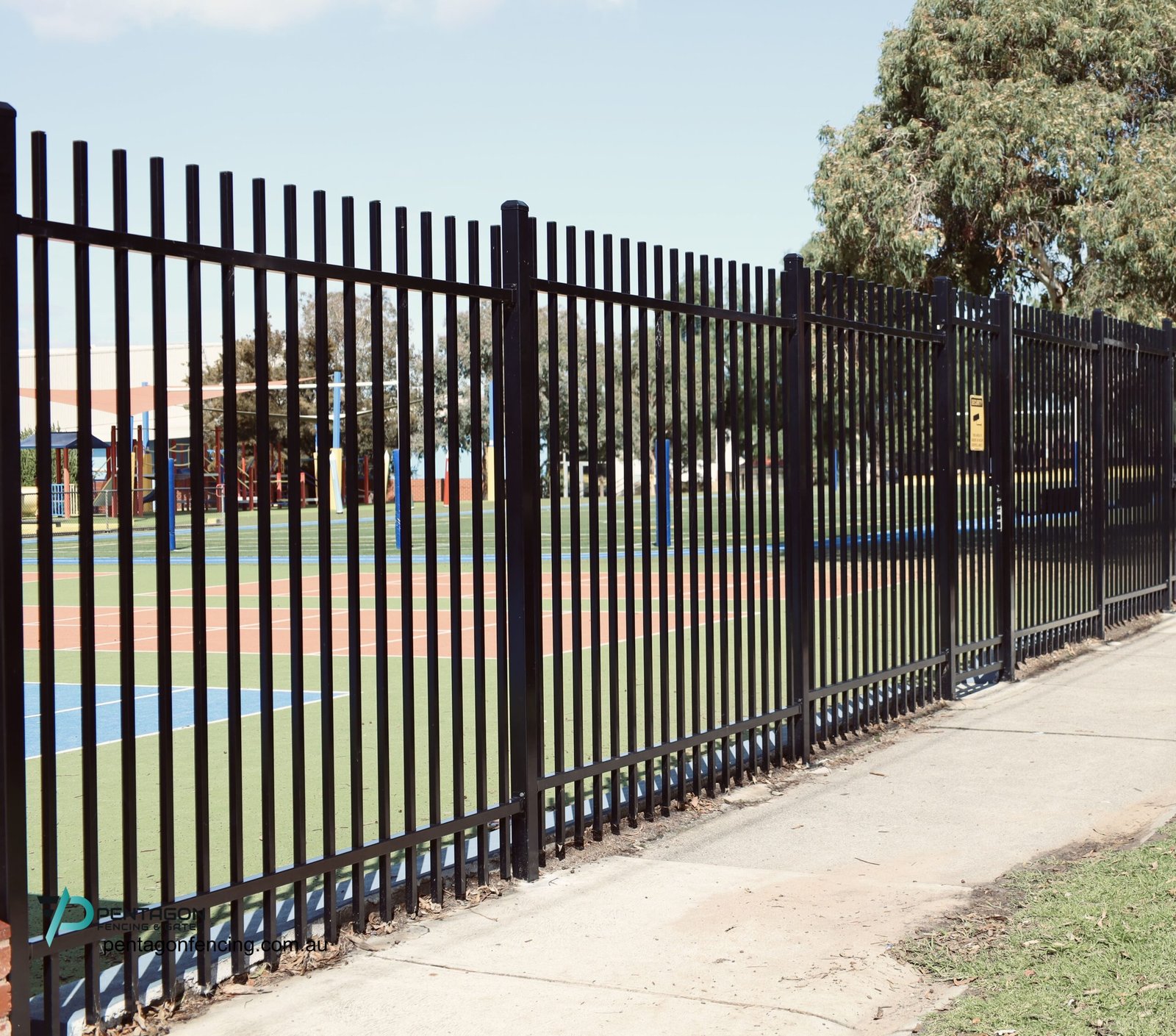
A practical industrial perimeter fencing specification should define the protected assets, boundary risk, visibility needs, vehicle movements, pedestrian access, gate openings, coatings, ground conditions, maintenance and handover requirements. The fence type is only one part of the decision.
Industrial fence type decision matrix
This matrix keeps the article at broad industrial-selection level. Product-specific details should be routed to dedicated palisade, weldmesh, chain wire, gate or cost guides when the buyer needs deeper specification work.
| Fence or access type | Best fit | What it helps control | Watch-out | Route deeper when |
|---|---|---|---|---|
| Palisade or spear top steel | High-deterrence perimeters, restricted yards, utility compounds, factories and high-risk asset boundaries. | Visible deterrence, difficult climbing, boundary definition and robust steel presentation. | Pointed profiles are not suitable for every public-facing edge; gates must match the same security logic. | The buyer needs W-pale, D-pale, pressed spear top, top-profile or anti-tamper fixing details. |
| Weldmesh or close-aperture mesh | Warehouses, schools, infrastructure, monitored yards and boundaries where surveillance through the fence matters. | Visibility, anti-climb intent, rigid panels and CCTV-friendly perimeter design. | Panel aperture, wire diameter, posts, fixings, ground gaps and gates change the real performance. | The project is comparing 358 mesh, anti-climb mesh, school visibility or public-facing security. |
| Chain wire, chain link or chain mesh | Large perimeters, storage yards, sports interfaces, construction staging and lower-to-medium-risk industrial boundaries. | Cost-controlled coverage, visibility, flexible alignment and large-area separation. | It should not be treated as the highest-security anti-climb option by default. Pentagon’s chain wire guide positions it around coverage, visibility and cost control [4]. | The quote depends on aperture, wire diameter, posts, rails, bracing, coating, gates or long-run pricing. |
| Tubular steel or rod top | Commercial frontages, public-facing edges, staff car parks and areas needing a less aggressive steel appearance. | Boundary definition, visibility, presentation and moderate deterrence. | Not automatically equivalent to palisade or close-aperture weldmesh for high-risk industrial assets. | The buyer is choosing flat top, rod top, ring top, loop top or spear-style tubular profiles. |
| Colorbond, timber or modular screening | Service yards, plant screens, bin areas, lower-risk privacy boundaries and mixed-use interfaces. | Privacy, visual control, neighbour separation and cleaner back-of-house presentation. | Solid screening can reduce informal surveillance and may increase wind or maintenance considerations. | The project is primarily about privacy, noise, boundary appearance or residential-commercial interface. |
| Sliding, swing and pedestrian gates | Vehicle entries, truck routes, staff access, visitor control and internal compounds. | Controlled openings, access policy, vehicle flow and separation of people from moving vehicles. | A strong fixed fence can fail operationally if gates are undersized, poorly located or not maintained. | The decision depends on traffic volume, run-back, swing clearance, motor duty, safety devices or access control. |
Site-zone matrix for warehouses, factories and large sites
The best warehouse fencing solutions usually combine different fence and gate types across the property rather than relying on one uniform perimeter specification.
| Site zone | Typical risk or pressure | Fence direction | Gate/access direction | Maintenance note |
|---|---|---|---|---|
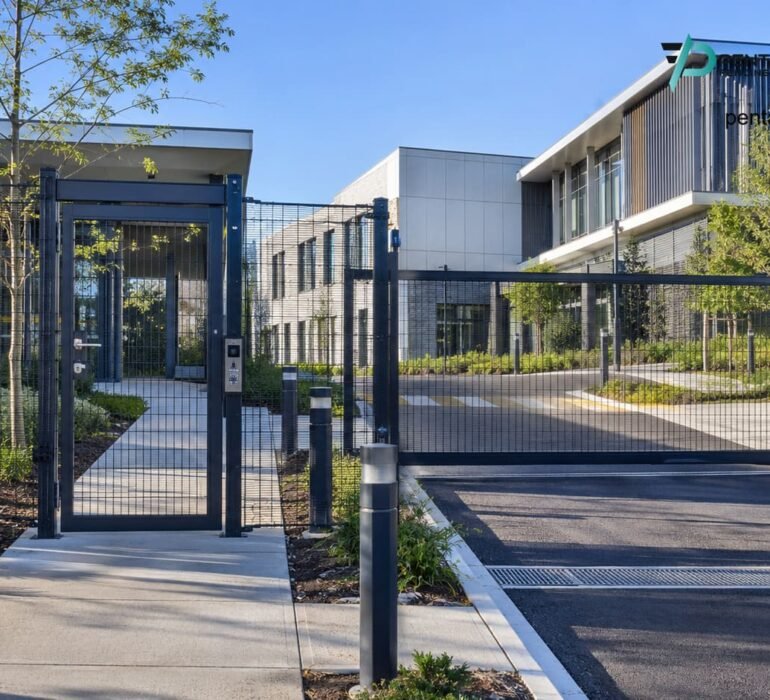
| Truck entry and loading yard | Heavy vehicles, shift peaks, queues, blind corners and access-control delays. | Use visibility-friendly fencing where CCTV, driver awareness and traffic control are priorities. | Plan industrial sliding gates, cantilever gates, vehicle detection and separate pedestrian access. Pentagon designs sliding gate systems for warehouses, logistics hubs and manufacturing facilities [5]. | Inspect gate rollers, tracks or cantilever hardware, safety devices, locks and impact-prone posts. |
| Rear or side industrial boundary | Long fence runs, adjoining industrial land, vegetation, stored materials and low surveillance. | Use chain wire for cost-controlled visibility or upgrade to weldmesh or palisade where repeated climbing, cutting or tampering is credible. | Minimise unnecessary openings; secure maintenance gates with the same logic as the fence. | Keep the boundary clear of potential climbing aids and vegetation that reduces visibility. |
| High-value internal compound | Equipment, fuel, tools, fleet assets, parts, materials or restricted operations. | Shortlist palisade, weldmesh or another higher-deterrence system rather than relying on a general boundary fence. | Use restricted credentials, lock protection, camera coverage and close-confirmation where appropriate. | Check panels, fixings, gate alignment, locks and lighting as part of routine security inspection. |
| Factory staff entry | People enter near forklifts, car parks, loading zones or service vehicles. | Use fencing and barriers to define a safe walkway rather than only closing the boundary. | Provide a pedestrian gate that does not release staff into mobile-plant movement. | Review the traffic plan whenever plant, pedestrian flow or site layout changes [3]. |
| Public-facing frontage | Street presentation, visitor wayfinding, informal surveillance and council/planning expectations. | Use tubular, rod top, aluminium or transparent mesh where a heavy industrial appearance or solid screen would be inappropriate. | Separate visitor entry from truck entry and make the correct gate obvious. | Planning Victoria recommends low or partially transparent fences at street or public-space boundaries to support informal surveillance [6]. |
| Construction or staging boundary | Changing ground, unauthorised access, temporary openings, deliveries and staged installation. | Separate permanent industrial fencing from temporary site-security fencing and staging controls. | Keep gates and joints from becoming weaker than the fence; plan secure delivery access. | WorkSafe Victoria warns against using reinforcing mesh as site fencing because it can provide hand and foot holds and protruding ends can cause injury [7]. |
Palisade, weldmesh and chain wire: use them for different jobs
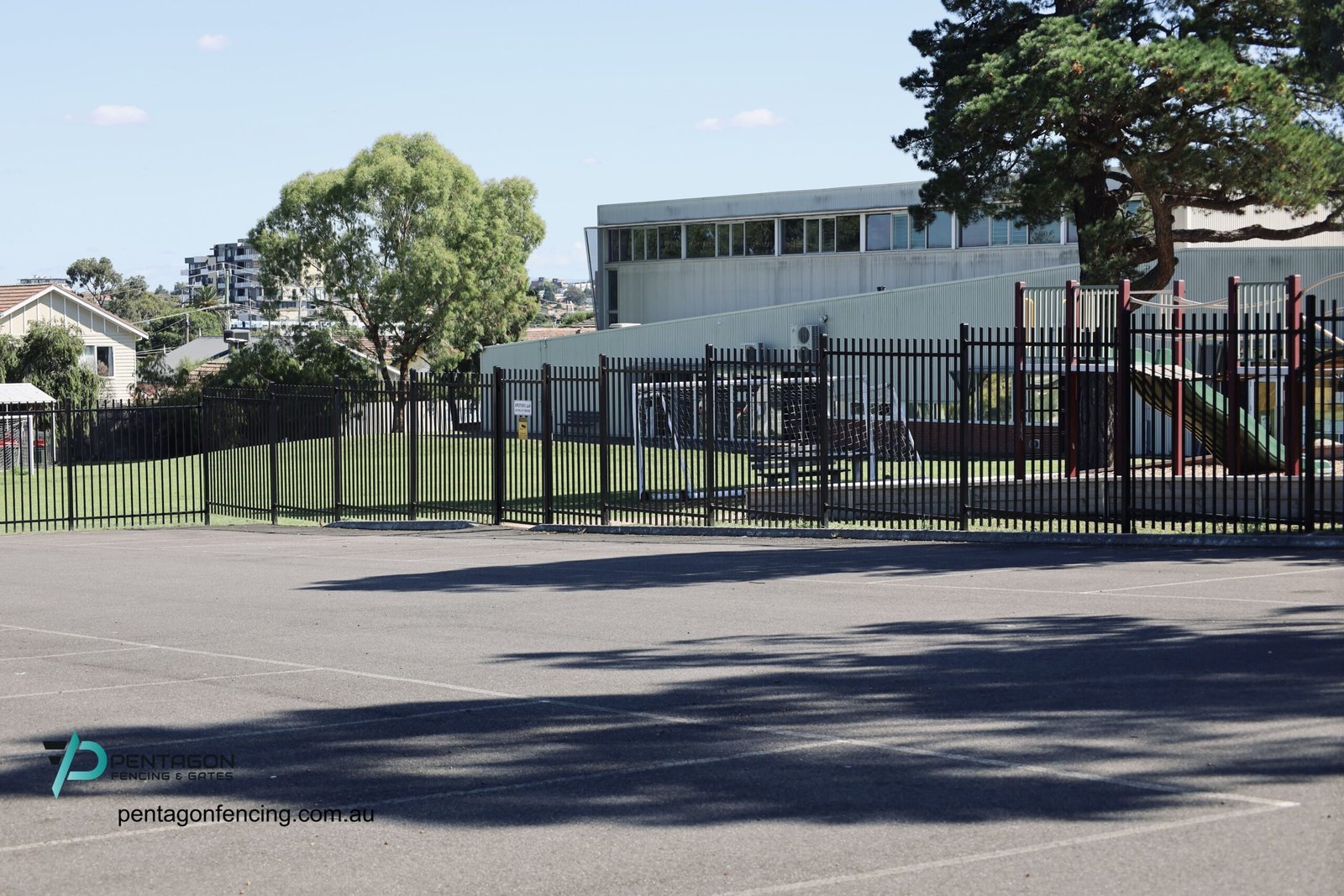
Factory fencing Melbourne searches often collapse multiple security problems into one phrase. In practice, palisade, weldmesh and chain wire should be treated as different tools.
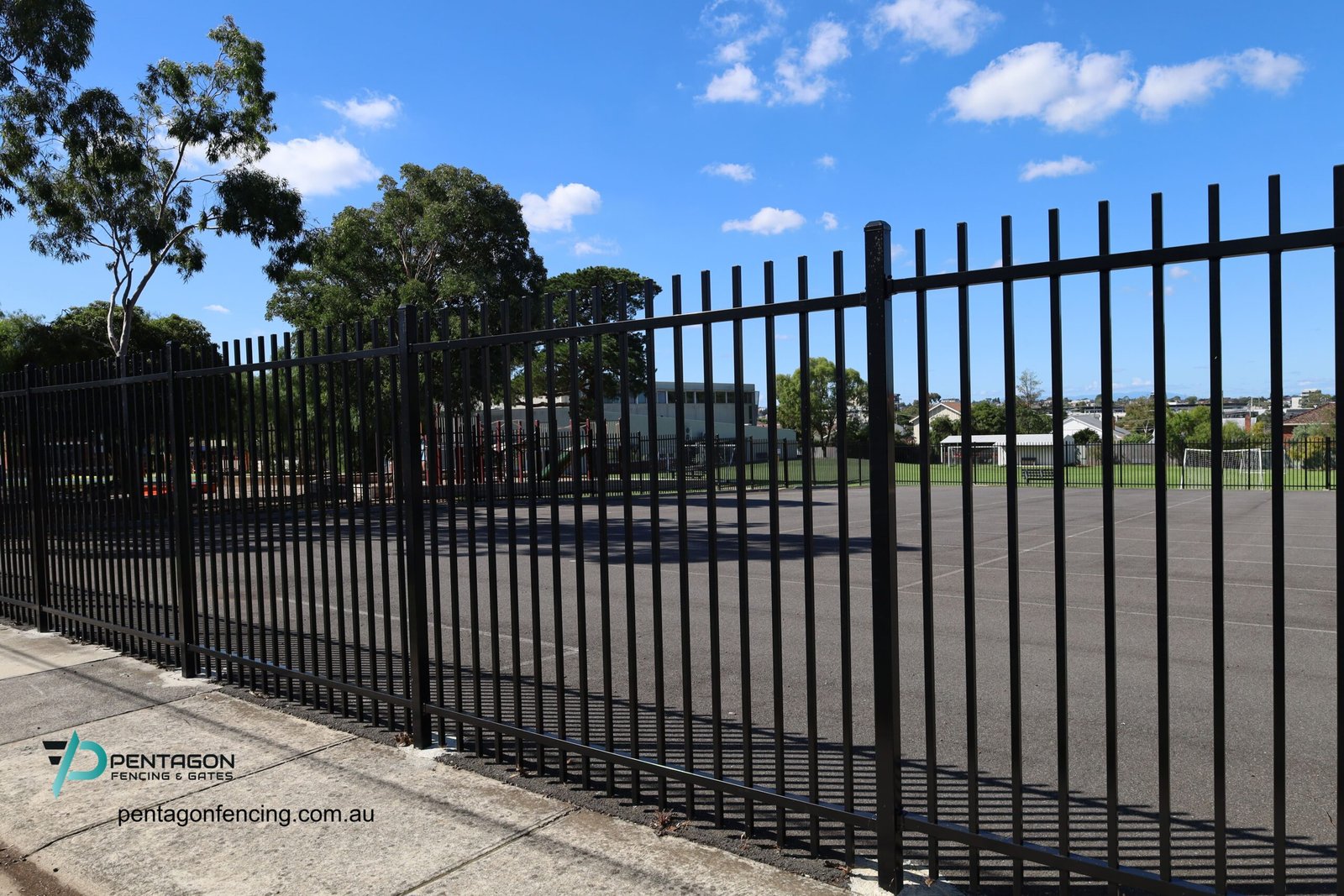
- Palisade: strongest where visible deterrence is important and the site can accept a more assertive steel perimeter. It suits restricted yards, infrastructure edges and high-risk industrial boundaries, but public-facing safety and gate matching must be checked.
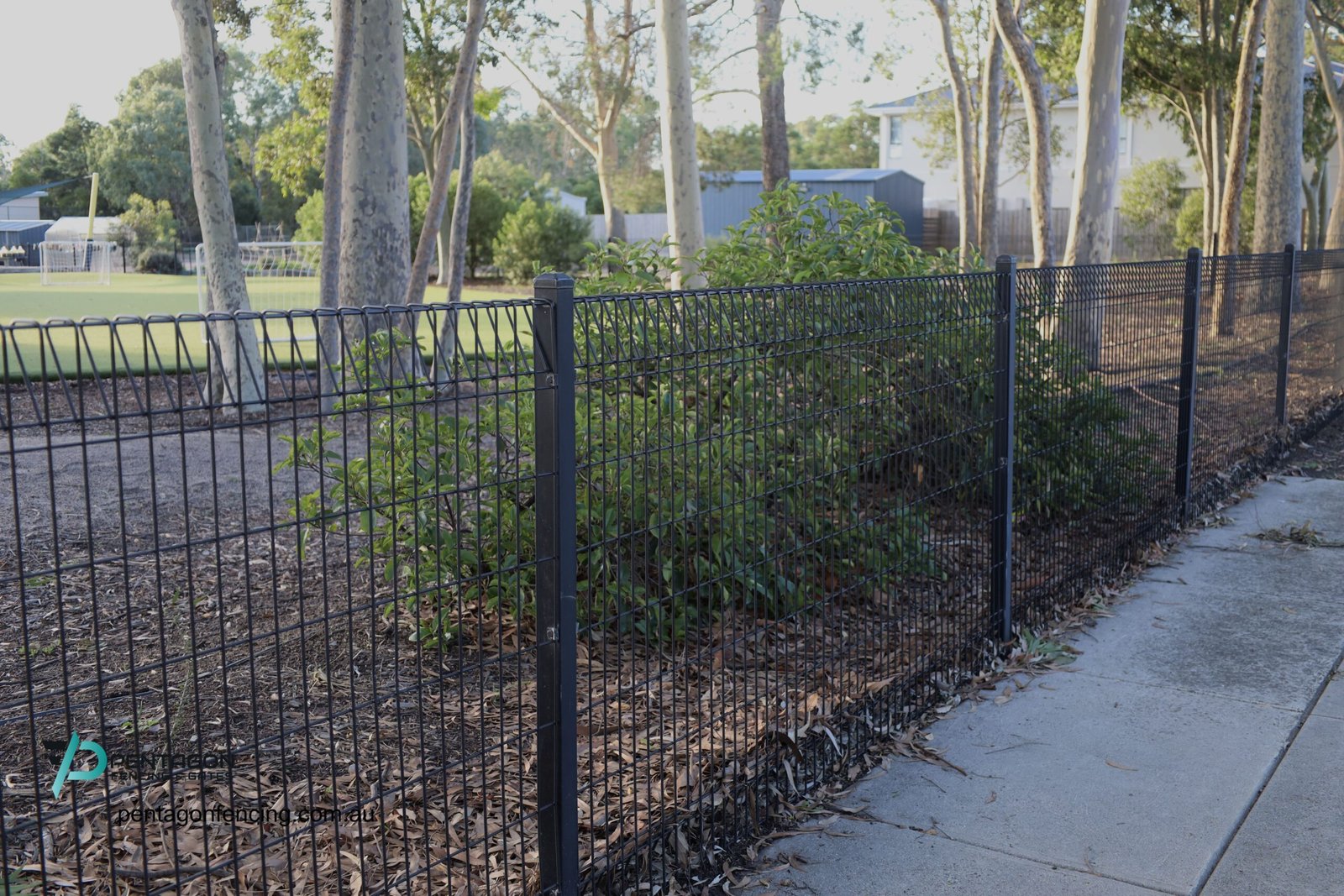
- Weldmesh: useful where the site needs security while maintaining sightlines for patrol, CCTV or public-facing supervision. It can be a good fit around warehouses, schools, sports interfaces and industrial compounds where visibility matters.
- Chain wire: practical for large boundaries where visibility and cost control are more important than maximum deterrence. The complete system still needs defined mesh, wire, posts, bracing, gates, coating and ground details [4].
The broad industrial article can shortlist these systems, but final specification should route to the detailed product guide before procurement.
Do not design the fence before the gates
Industrial gates are where the perimeter becomes operational. If the gates do not match the fence’s risk level, traffic flow and maintenance plan, the fixed fence may look correct while the site still fails in daily use.
For large industrial entries, a sliding or cantilever gate can preserve opening width without requiring swing arc space. Pentagon’s sliding gate service is designed for commercial, industrial and large-scale projects, including warehouses, logistics hubs, construction sites and manufacturing facilities [5].
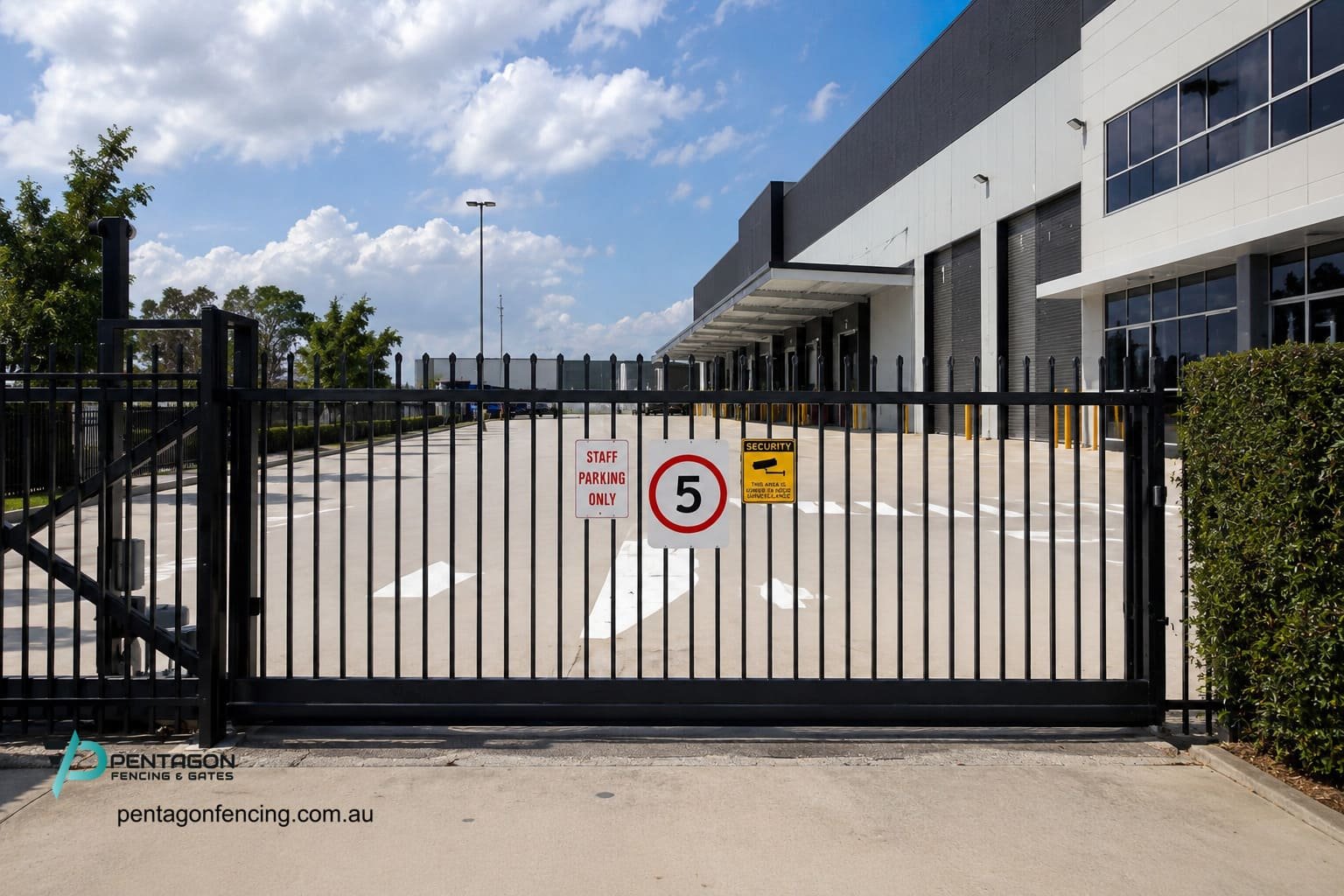
For powered gates, HSE guidance treats powered-gate safety as a design, construction, user-instruction and maintenance issue rather than a one-time hardware choice [8]. That matters when the gate sits at a high-traffic factory or logistics entrance.
- Vehicle gates: confirm truck swept paths, opening width, run-back, swing clearance, stopping areas and emergency access.
- Pedestrian gates: provide a separate route for staff and visitors where people would otherwise use a vehicle gate.
- Automation: choose motors, safety devices, access-control triggers and backup procedures based on real daily cycles.
- Gate infill: match palisade, weldmesh, chain wire, tubular, steel or privacy infill to the adjacent fence and security level.
- Maintenance: schedule inspections for rollers, tracks, hinges, locks, posts, closers, sensors, loops and manual-release procedures.
Security is layered: fence, lighting, locks and visibility
Even a strong fence is not a complete site-security system by itself. Victoria Police advises businesses to install exterior lighting at entry points and boundaries, ensure fences and gates are well-built, maintained and secured, install good-quality locks, use bollards or other entry protection where relevant and keep the boundary clear of potential climbing aids [9].
That guidance supports a layered approach to industrial security fencing:
- Use the fence to define and delay unauthorised access.
- Use lighting, CCTV and clear sightlines to support detection and monitoring.
- Use gates, locks and access control to manage authorised entry.
- Use bollards, barriers or layout changes where vehicle impact, theft or pedestrian exposure is a real risk.
- Use maintenance and housekeeping to keep vegetation, bins, pallets and stored goods from becoming climbing aids.
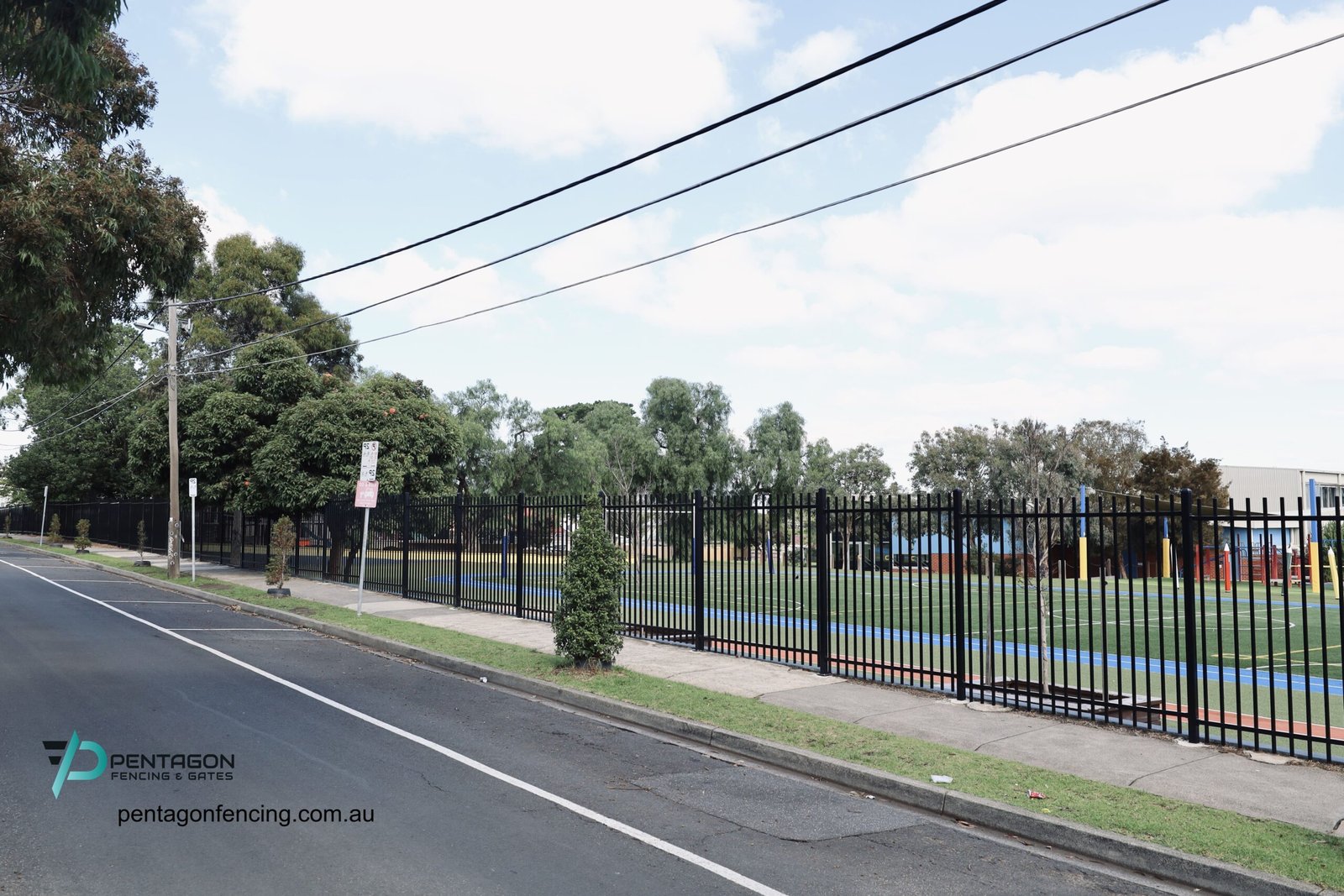
Boundary and public-interface checks in Victoria
Industrial land often sits beside residential, commercial or public-access boundaries. The fence may need to separate operations without creating poor public-facing safety, visibility or neighbour outcomes.
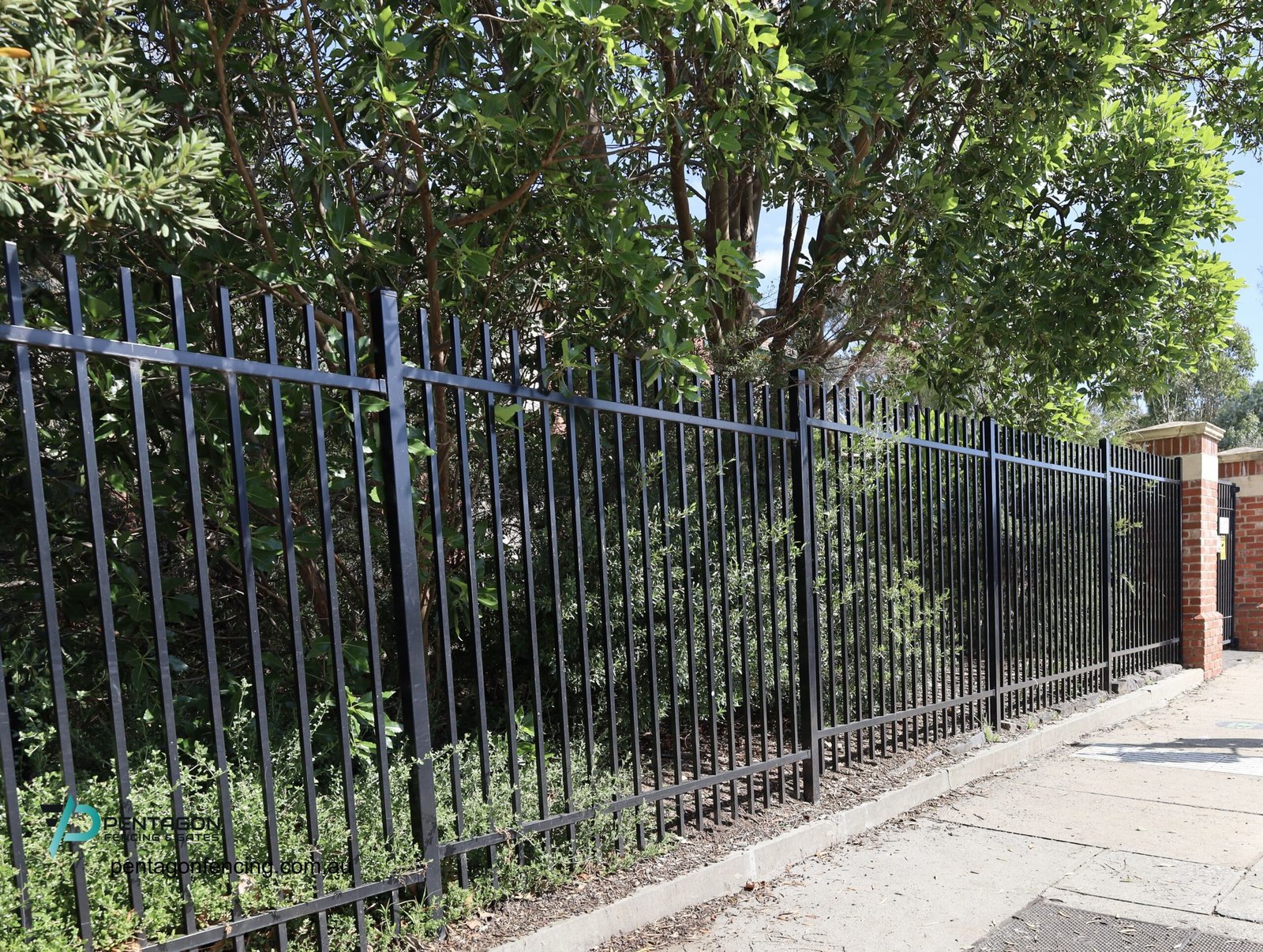
Victorian Government guidance on fencing says a sufficient dividing fence depends on factors such as existing fence style, how neighbouring land is used, reasonable privacy and security concerns and the types of fences used locally. It also gives rail/framing orientation guidance where residential, commercial and public-access land meet [10].
For Melbourne projects, check council, title, planning, building and asset-owner requirements before treating this article as a final specification. This content is decision support, not legal, planning or engineering advice.
What affects industrial fencing cost?
Industrial fencing Melbourne quotes should be compared by equivalent scope, not headline metre rate. The same fence length can price very differently once access, gates, coatings, removals and risk controls are included.
| Cost driver | Effect on the quote | Caveat | Evidence to request |
|---|---|---|---|
| Fence type and security level | Palisade, weldmesh, chain wire, tubular steel and privacy fencing use different materials, fabrication and installation methods. | A lower-cost large-perimeter solution may be wrong for a restricted asset compound. | Site-zone plan, risk level, product system and fence-type schedule. |
| Height, posts and foundations | Taller fences and heavier systems require more steel, stronger posts, larger footings and more handling time. | Height should follow risk, approvals and site conditions rather than being increased automatically. | Finished height, post schedule, footing assumptions and ground-condition notes. |
| Gates and automation | Sliding, swing, cantilever and pedestrian gates add frames, posts, motors, safety devices, power and access-control hardware. | A gate opening can cost and perform very differently from the same width of fixed fencing. | Gate schedule, opening widths, motor specification, access-control scope and safety-device layout. |
| Coating and exposure | Galvanising, powder coating, paint, PVC coating and repair requirements affect supply, finish and lifecycle planning. | Colour alone does not describe corrosion protection or maintenance needs. | Coating system for panels, posts, rails, gates, fixings and damaged-finish repair. |
| Ground, slope and services | Rock, concrete, buried services, retaining walls, drainage and sloping ground change excavation and alignment work. | A photo-only quote can change after service locations or footing conditions are confirmed. | Site measure, service information, slope treatment, retaining interfaces and bottom-gap approach. |
| Removal, staging and live-site access | Existing fence removal, disposal, temporary security, traffic control, restricted work hours and staged handover add labour. | Live industrial sites may need the boundary kept secure while the new fence is installed. | Staging plan, removal limits, disposal scope, temporary controls and site-access constraints. |
Seven-step selection flow for industrial fencing
- Map the site zones. Separate truck entry, pedestrian entry, public frontage, loading yard, rear boundary, internal compound and construction-staging areas.
- Define the risk in each zone. Clarify whether the issue is climbing, cutting, forced entry, vehicle access, privacy, visibility, pedestrian safety or operational flow.
- Select the fence family. Shortlist palisade, weldmesh, chain wire, tubular steel, rod top, privacy screening or barriers according to the site role.
- Design gates with the fence. Lock vehicle gates, pedestrian gates, gate infill, automation, access control and safety devices before pricing.
- Plan visibility and detection. Coordinate lighting, CCTV, sightlines, vegetation control and boundary housekeeping.
- Check Melbourne and Victoria constraints. Review council, planning, building, title, public-facing, school, construction-site and neighbour-interface requirements where relevant.
- Compare equivalent scopes. Ask each contractor to price the same materials, heights, posts, gates, coatings, removal work, staging and handover requirements.
Industrial fencing project checklist
- Site use: warehouse, factory, logistics yard, utility site, construction compound, storage yard, public facility or mixed-use boundary.
- Boundary plan: fence line, total length, corners, returns, levels, existing structures, gates, easements and services.
- Fence types: selected system by zone, including palisade, weldmesh, chain wire, tubular steel, Colorbond, timber, barriers or mixed perimeter.
- Gates: vehicle openings, pedestrian openings, sliding or swing movement, clear width, automation, access control and safety devices.
- Traffic and people: truck routes, forklifts, pedestrian paths, staff entries, visitor entries, loading zones and separation barriers.
- Security layers: locks, lighting, CCTV, signage, bollards, climbing-aid removal and maintenance responsibilities.
- Site works: removal, disposal, temporary fencing, trenching, concrete, drainage, coating repair and live-site staging.
- Handover: product information, gate instructions, keys or credentials, access-control admin, maintenance schedule and fault-response process.
Common mistakes to avoid
- Using one fence type everywhere. Most large sites need different treatments for frontages, high-risk compounds, vehicle entries and rear boundaries.
- Treating chain wire as high security by default. It can be practical for coverage and visibility, but higher-risk perimeters may need palisade or weldmesh.
- Blocking surveillance with privacy fencing. Solid screening can help service yards but may be wrong at monitored frontages or public edges.
- Leaving gates until after the fence price. Openings often drive the real cost, safety and day-to-day performance of the perimeter.
- Ignoring people and plant movement. A fence does not solve warehouse traffic risk unless it supports separated pedestrian and vehicle routes.
- Skipping maintenance planning. Damaged panels, loose posts, poor lighting, overgrown boundaries and faulty gates reduce the value of the original installation.
How Pentagon Fencing can help
Pentagon Fencing & Gates supplies and installs steel fencing and gate systems across Melbourne, including palisade, spear top, rod top, weldmesh, tubular steel and chain wire options for industrial and commercial projects [2].
- Map the site into practical zones so each warehouse, factory, yard, frontage and access point gets the right fence type.
- Coordinate fixed fencing with sliding gates, cantilever gates, pedestrian gates, automation, access control and maintenance requirements.
- Prepare a site-specific scope covering fence types, gates, ground conditions, coatings, removals, staging and handover.
FAQ
What is the best industrial fencing option for a warehouse?
There is no universal best option. Weldmesh can suit visibility and anti-climb intent, palisade can suit high-deterrence perimeters, chain wire can suit large visible boundaries, and gates should be planned around truck and pedestrian flow.
Is palisade better than weldmesh for factories?
Palisade is usually more visibly restrictive and deterrent, while weldmesh can provide security while keeping sightlines open. The better choice depends on the factory zone, public exposure, CCTV needs, gate openings and the risk being controlled.
When should chain wire be used on an industrial site?
Chain wire can suit large perimeters, lower-to-medium-risk storage yards, sports or staging areas and boundaries where visibility and cost control matter. It should be upgraded or replaced where repeated climbing, cutting or forced entry is a credible risk.
Should industrial fencing include automated gates?
Often, yes. Vehicle gates, pedestrian gates and access control should be planned with the fence so openings do not become weak points or traffic bottlenecks. The decision depends on traffic volume, user groups, power, safety devices and maintenance capability.
What affects the cost of industrial fencing in Melbourne?
Major drivers include fence type, height, posts, coatings, gate package, automation, access control, ground conditions, existing fence removal, temporary security, staging, site access and maintenance requirements.
What to Keep in Mind
- Start with site zones and risk levels before choosing palisade, weldmesh, chain wire, tubular steel or privacy screening.
- Plan vehicle gates, pedestrian gates, automation and access control with the fence, not after the fence line is priced.
- Keep visibility, lighting, CCTV, locks and boundary housekeeping in the security plan rather than relying on the fence alone.
- Use official safety and planning checks for construction sites, public-facing edges, pedestrian routes and vehicle movement.
- Compare complete site-specific scopes, including removals, coatings, gates, ground conditions, staging and handover.
References
- Pentagon Fencing, “Palisade Fencing & Steel Security Fencing Melbourne,” Pentagon Fencing. Accessed: Jun. 30, 2026. [Online]. Available: https://pentagonfencing.com.au/service/steel-security-fencing-melbourne/
- Pentagon Fencing, “Steel Fencing Melbourne: Palisade, Weldmesh, Tubular, Rod Top and Chain Wire Options,” Pentagon Fencing. Accessed: Jun. 30, 2026. [Online]. Available: https://pentagonfencing.com.au/steel-fencing-melbourne/
- WorkSafe Victoria, “Metal fabrication: Improving safety through traffic management layout and design,” WorkSafe Victoria. Accessed: Jun. 30, 2026. [Online]. Available: https://www.worksafe.vic.gov.au/metal-fabrication-improving-safety-through-traffic-management-layout-and-design
- Pentagon Fencing, “Chain Wire Steel Fencing Melbourne: Cost-Effective Security for Large Perimeters,” Pentagon Fencing. Accessed: Jun. 30, 2026. [Online]. Available: https://pentagonfencing.com.au/chain-wire-steel-fencing-melbourne/
- Pentagon Fencing, “Sliding Gates,” Pentagon Fencing. Accessed: Jun. 30, 2026. [Online]. Available: https://pentagonfencing.com.au/service/sliding-gates/
- Department of Transport and Planning Victoria, “6.4 Barriers and fences,” Planning Victoria. Accessed: Jun. 30, 2026. [Online]. Available: https://www.planning.vic.gov.au/guides-and-resources/guides/urban-design-guidelines-for-victoria/objects-in-the-public-realm/barriers-and-fences
- WorkSafe Victoria, “Construction site security fencing,” WorkSafe Victoria. Accessed: Jun. 30, 2026. [Online]. Available: https://www.worksafe.vic.gov.au/construction-site-security-fencing
- Health and Safety Executive, “Ensuring powered doors and gates are safe,” HSE. Accessed: Jun. 30, 2026. [Online]. Available: https://www.hse.gov.uk/work-equipment-machinery/powered-gates/safety.htm
- Victoria Police, “Business premises security,” Victoria Police. Accessed: Jun. 30, 2026. [Online]. Available: https://www.police.vic.gov.au/securing-business-premises
- State Government of Victoria, “Fencing in Victoria,” vic.gov.au. Accessed: Jun. 30, 2026. [Online]. Available: https://www.vic.gov.au/fencing-victoria